
Wardogs Gameplay, Popularity, and Crunch Controversy
Explore Wardogs gameplay, its rise in popularity, helicopter mechanics, and the developer crunch controversy in this detailed PC gaming overview.

Wardogs is no longer just a breakout, it is setting a multiplayer-shooter pattern
The shift is plain: Wardogs has become the PC shooter players are treating as a place to make their own stories, rather than merely another service game to grind between seasonal trailers.
The evidence is not confined to one Steam-chart spike. Wardogs passed 1.25 million copies within its first 24 hours of Early Access, then reached an all-time Steam concurrency peak of 428,666 on September 12. [3][6]
That peak matters, but weekday retention is the less glamorous number worth watching. The community tracker Wardogs Wiki recorded roughly 155,249 concurrent players on September 15, after the launch-weekend peak had already passed. [6]
That is still early data, not proof of a decade-long phenomenon. Multiplayer launches commonly shed players after the first rush, and Bulkhead CEO Joe Brammer has publicly anticipated that natural decline rather than pretending every peak is permanent. [3]
Still, Wardogs did not arrive from nowhere. Its closed beta reportedly peaked at 245,118 players and regularly exceeded 200,000, meaning a large audience had already stress-tested the basic loop before launch. [6]
Creators are also converging on the same observation from different angles. StoneMountain64’s match is about being broke after buying a sniper rifle and armour, while jackfrags spends much of a session happily operating transport helicopters instead of chasing infantry kills.
That distinction is the actual trend. Wardogs makes non-glamorous jobs legible, rewarding, and sometimes economically necessary. A shooter can have good gunplay and still fail if every player feels pressured into the same assault-rifle, sprint-to-objective routine.
The gameplay loop gives players jobs, not just classes
Wardogs’ economy puts a price on dying, but does not turn the game into a full extraction shooter. Players buy a loadout before each life with currency earned through normal play, and Bulkhead does not sell that currency for real money. [1]
That is an important line. It means a bad death can sting without leaving the player wondering whether the opponent simply bought more retries, better ammunition, or a faster route back into the fight.
The available community loadout data is provisional, having originated in closed alpha and beta builds. It places basic kits around 1,000 to 1,500 in-game currency, with advanced kits around 2,500 to 4,000. [2]
StoneMountain64’s footage shows what that risk feels like in practice. After spending 11,000 on a Mosin, attachments, and protective gear, the player’s bank balance dropped below the cost of replacing that setup.
The result is slower, more deliberate sniping. Rather than quick-scoping through disposable respawns, a high-cost marksman has a reason to spot vehicles, mark enemy positions, communicate, and take shots worth taking.
That is a quiet buff to recon players. A sniper who contributes information can be more useful than one who produces an impressive kill montage but abandons their squad, their forward operating base, and the active scoring zone.
The economy also makes logistics play feel less like role-play. In jackfrags’ Wardogs session, flying players and supplies to forward operating bases generates money, while passengers receive a quick route into the fight and potential parachute drops.
That mutual dependency is why the transport helicopter is more than scenery. A pilot can move a squad, bring supplies, establish a forward position, and earn cash, but loses both the aircraft and investment if they make an avoidable mistake.
Helicopters create the match stories, but they are not simple
Wardogs helicopters use separate inputs for collective lift, descent, pitch, roll, and yaw. On mouse and keyboard, that means Left Shift and Left Ctrl for vertical movement, W and S for pitch, A and D for roll, and Q and E for yaw. [4]
Those inputs sound intimidating in a controls list, but they create an immediately understandable skill ladder. A new pilot can move people from spawn to a safe forward base, while a strong pilot manages evasive flight, landing zones, countermeasures, and fast extractions.
GamesRadar’s controls guide also identifies controller mappings for the same basics, including triggers for collective movement, the left stick for pitch and roll, and shoulder buttons for yaw. [4] That accessibility matters for a game courting large, mixed-skill squads.
There is not yet enough independent testing to make serious claims that Wardogs’ helicopter model is superior to Battlefield 6, Call of Duty: Modern Warfare 4, or Microsoft Flight Simulator 2026. The comparative evidence simply is not there yet.
What is clear from player footage is that the helicopters support useful friction. Jackfrags notes weight imbalance when carrying an uneven supply load, has to replace flares after missile threats, and learns that a cheap parachute is sensible insurance.
That is the right kind of complication for this genre. It is not demanding a flight-sim cockpit checklist, but it gives pilots enough to think about that competent transport work becomes a recognisable team contribution.
The combat ceiling is higher still. StoneMountain64 describes rocket pods becoming profitable only once they hit spawn vehicles, ground vehicles, and clustered players. That discourages firing expensive ordnance randomly, at least until an aircraft earns its cost back.
Shroud’s Wardogs streams show the other side of the system: dense squads, forward bases, helicopters, APCs, anti-air positions, and towers can produce organised pressure, but also chaotic failures when too many players pile into one plan.
The notorious “clown car” truck strategy from Shroud’s group is funny because it works briefly, not because it is obviously healthy forever. A packed vehicle can surprise defenders, then a single rocket can erase the entire investment.
That is a balance pressure Bulkhead will need to monitor. If transport and mass infantry pushes remain risky but viable, they create drama. If they become the only efficient tactic, the meta will calcify faster than players think.
Why this is happening now
Wardogs benefits from landing in a shooter market where players are increasingly suspicious of premium pricing, battle-pass overload, and live-service launches that ask for trust before they demonstrate a reason to care.
The Standard Edition costs $39.99, while the $49.99 Supporter Edition adds cosmetic weapon and helicopter camos rather than power. [1] That is not cheap in the abstract, but it sits well below the usual $70 premium-release threshold.
Bulkhead has also committed to no monetisation beyond that cosmetic Supporter Edition during its planned two-year Early Access period. [1] As ever, a commitment is not the same thing as a permanent guarantee, but the current model is unusually direct.
The studio’s early messaging has helped. Bulkhead was unusually frank about bugs, uneven beta conditions, and even reasons potential buyers might wait. That tone is refreshing partly because major publishers have trained players to expect polished evasions.
But there is a less flattering example of the same public-first instinct. The studio faced backlash after prioritising 11 influencers for server queues, then apologised publicly and called itself “d*** heads,” according to GamesRadar’s reporting. [7]
That apology probably limited the damage because it admitted the actual problem. Still, it is a reminder that streamer visibility can accelerate a launch while also making ordinary players feel like unpaid audience members in somebody else’s event.
The crunch argument is not solved by bonuses or blunt honesty
Bulkhead CEO Joe Brammer’s comments on work culture have produced a controversy that should not be brushed aside because Wardogs is popular. A good game does not make a labour policy above criticism.
Brammer said he expects crunch at the studio and indicated that candidates who frequently post anti-crunch messages may not be a cultural fit. He framed the studio’s position as open about hard work and potential financial rewards. [7]
His later clarification matters. Eurogamer reported that Bulkhead’s June 2026 crunch period involved an optional extra two hours, Monday through Thursday, for four weeks, with four staff opting out and reportedly facing no consequences.
But “optional” is not a magic balance patch. In a close-knit studio, especially one publicly led by a CEO who says crunch is expected, social pressure can make an opt-out technically available and professionally uncomfortable.
Brammer has pointed to mitigating measures, including a four-day workweek trial, staff equity ownership, and time off after intensive work. Polygon reported his claim that 80 percent of Bulkhead shares are owned by 50 percent of staff.
Those policies may be meaningful benefits for the employees who receive them. They do not establish that overtime is harmless, nor do they answer whether staff without equity have comparable power when schedules become tight.
The social-media issue needs the same precision. Reviewing public material is not automatically unlawful in the UK, but government guidance requires employers to follow data-protection rules, use relevant information, and avoid unfair or discriminatory treatment. [7]
There is no documented regulatory action or legal challenge against Bulkhead over its hiring practice as of September 2026. That absence should stop anyone claiming the studio has already broken the law.
It should not end the ethical discussion. Screening candidates for criticism of crunch risks selecting for people least likely to challenge unsustainable planning, which is not obviously a strength for a studio building a live game over years.
What another developer should actually take from Wardogs
The replicable lesson is not “make a big military shooter.” It is to identify a player fantasy clearly enough that every supporting system, from progression to vehicles to map objectives, reinforces it.
Wardogs gives a player who cannot win every gunfight another way to matter. They can drive supplies, fly reinforcements, construct a forward base, mark targets, hold a tower, use anti-air, or fund a more ambitious next life.
That broadens the game’s social surface. It also creates clips organically, because the memorable moment is often a plan succeeding or collapsing under player behaviour, rather than a developer-scripted ultimate ability on a cooldown.
The non-replicable part is timing and scale. Wardogs entered Early Access with a huge beta audience, a clear creator ecosystem, and a launch far beyond Bulkhead’s reported expectation of 3,000 to 5,000 concurrent players. [3]
A smaller team should therefore plan for its likely population, not Wardogs’ peak. Systems that need 100 players per server, several active logistics roles, and constant vehicle turnover can feel empty or oppressive at lower concurrency.
Finally, do not read Wardogs’ success as evidence that crunch is a viable competitive advantage. Strong design direction, fair monetisation, community rapport, and a useful set of roles explain the player response far better than overtime ever could.
Frequently Asked Questions
How popular is Wardogs on Steam?
Wardogs sold more than 1.25 million copies within its first 24 hours of Early Access and reached an all-time concurrent player peak of 428,666 on September 12. After the launch weekend, it maintained a strong weekday concurrent player count of around 155,249. Its closed beta also saw peaks above 200,000 players, indicating a large and engaged audience before launch.
What makes Wardogs gameplay unique?
Wardogs emphasizes systemic teamwork through an in-game economy that assigns value to various roles like transport pilots, builders, scouts, infantry, and vehicle crews. This economy rewards players for non-glamorous but essential jobs, making roles like logistics and reconnaissance materially useful and economically necessary to a winning team, rather than focusing solely on combat kills.
How do helicopters work in Wardogs?
Helicopter pilots manage multiple controls including collective lift, pitch, roll, yaw, fuel, countermeasures, and passengers. Piloting requires skill to balance these inputs, and there is a meaningful financial risk because losing the helicopter also means losing the investment spent on it. This complexity makes helicopters central to memorable match stories without being simple killstreak machines.
What is the Wardogs in-game economy system?
Players earn in-game currency through normal play and use it to buy loadouts before each life, with basic kits costing around 1,000 to 1,500 currency and advanced kits between 2,500 to 4,000. The economy puts a price on dying but does not allow real-money purchases of in-game currency, encouraging deliberate play and making roles like sniping and logistics financially strategic rather than disposable.
What controversy surrounds Wardogs developer crunch?
Bulkhead’s CEO Joe Brammer has publicly accepted the inevitability of crunch during development, which has sparked a legitimate hiring and labor controversy. While the company’s public communication has built player trust, this stance on overtime and social-media screening has raised concerns within the industry and community.
How we researched this
This article was assembled from 5 video sources across 4 channels, 8 published articles, 7 cited references.
Nothing here is based on hands-on testing. Where a figure or finding appears, it belongs to the source cited beside it, and the writing says so rather than implying otherwise. Every source is listed below so you can check it.
Sources
Wardogs SNIPING Gameplay and making PROFIT — StoneMountain64
What The HELL Is Going On With Diablo 5, StarCraft & WoW?! — gameranx
WARDOGS Is Actually Incredible... — jackfrags
THE MOST OP STRAT IN WARDOGS — shroud
Epic X-Men Villain Is Absolutely Terrorizing Marvel’s Wolverine Players — Polygon
MindsEye studio Build A Rocket Boy appear to be making fresh redundancies, as one staffer says he's "helping wrap things up here in the HR department" — Rock Paper Shotgun
Wardogs CEO Officially Addresses Crunch Allegations With ‘The Other Side' — Polygon
"A dried husk of a product": former Doom producer berates Microsoft for making Halo a "mid-tier" game and mourns the "financialisation" of AAA — Rock Paper Shotgun
'Resident Evil' Review: A Near-Perfect Sci-Fi Thriller That Never Steps Off the Gas — Polygon
"We're trying to make it easier": Valve confirm the Steam Frame is just the start of plans to get Steam games working on compatibility-challenged ARM PCs — Rock Paper Shotgun
WARDOGS Player Count — Live Numbers, All-Time Peak, and Copies Sold
Watch Wardogs Popularity, Gameplay, and Crunch Controversy on Youtube
Also from the sources
Related Articles
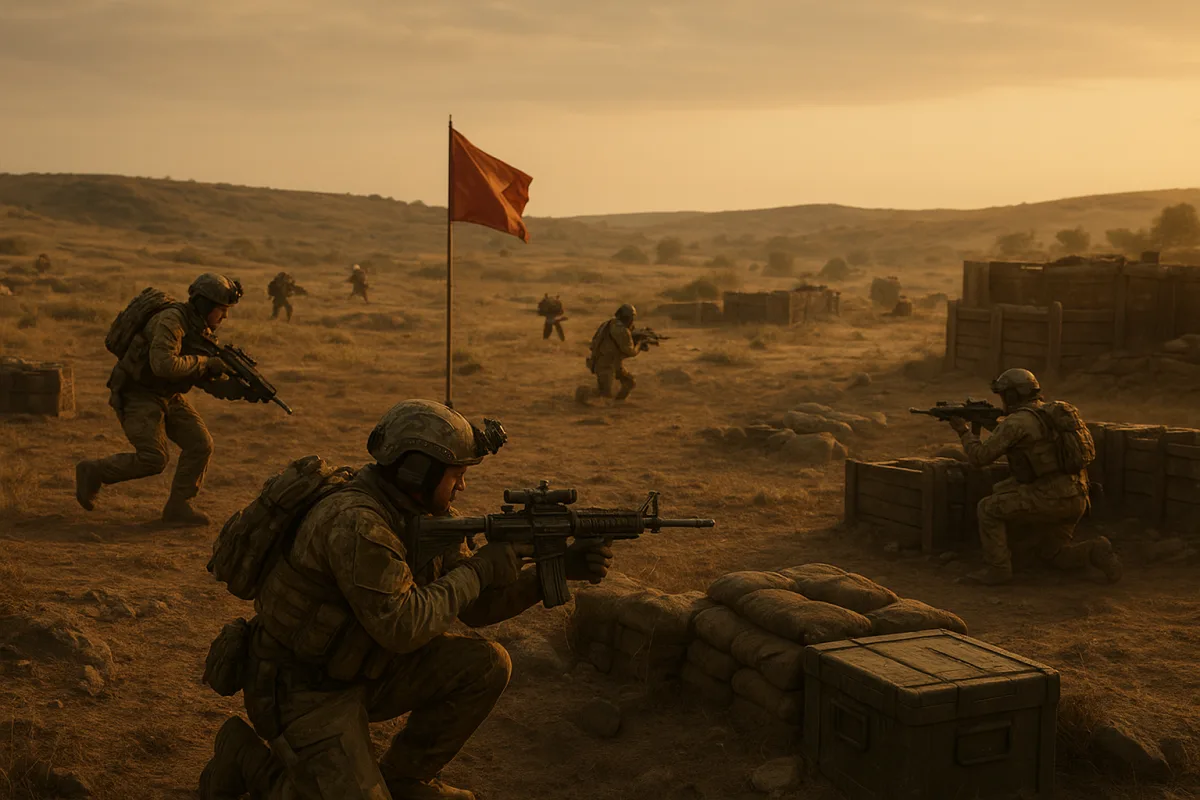
Wardogs Tactical FPS Gameplay Guide: Maps, Economy & Combat
Explore Wardogs tactical FPS gameplay, including maps, economy, combat, and base building strategies for PC players.
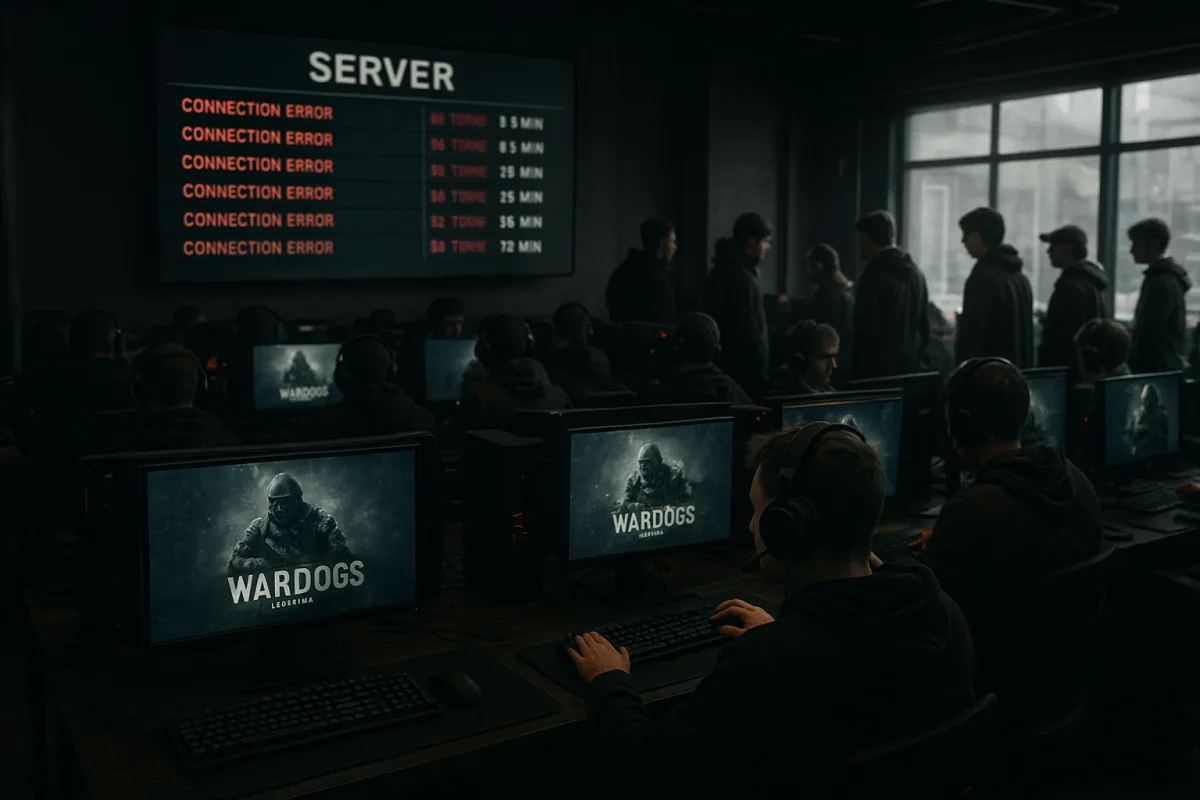
Wardogs Launch Impact: Sales, Players, and Server Challenges
Explore the Wardogs launch impact with sales, player peaks, and server issues shaping this multiplayer shooter’s early success.

Wardogs Early Success and Gameplay Insights on PC
Explore Wardogs early success, launch player stats, gameplay mechanics, and PC system requirements in this detailed Early Access overview.
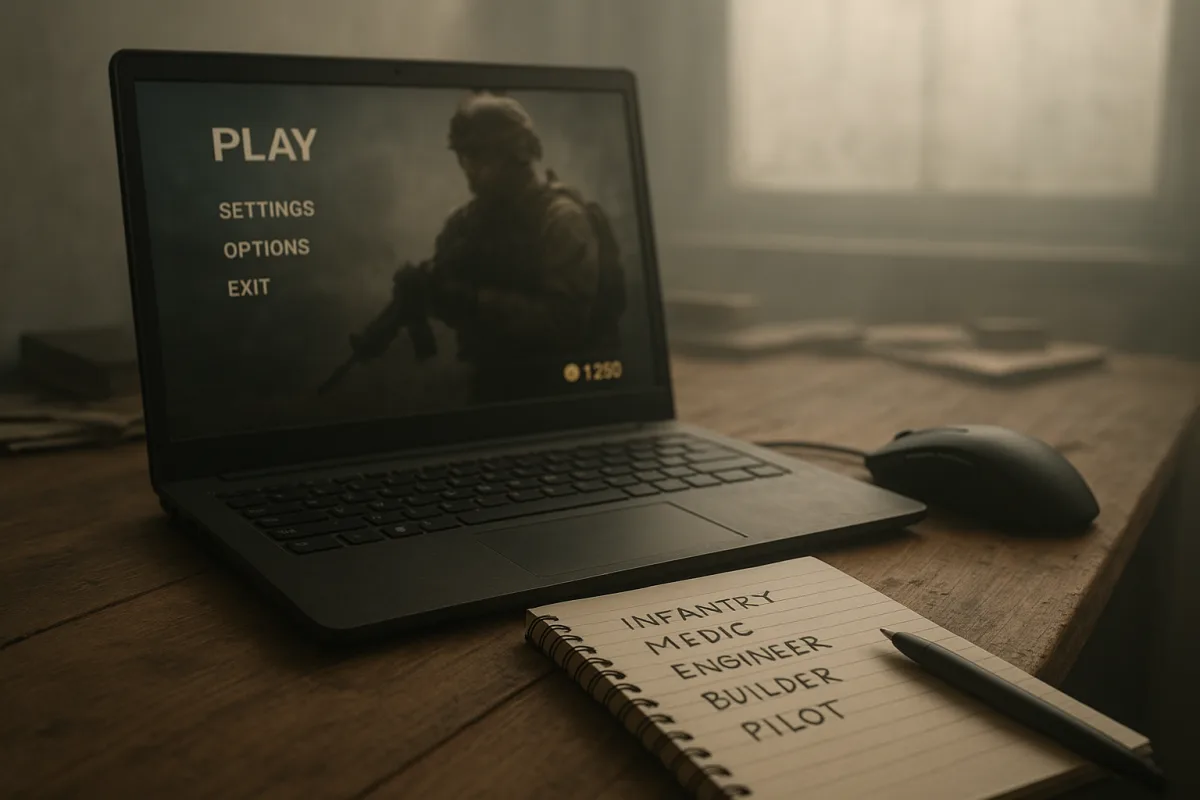
Wardogs Early Access Preview: Tactical FPS and Cash Economy
Explore Wardogs Early Access preview covering its tactical FPS gameplay, cash economy, roles, PC requirements, and known launch issues.