
Wardogs Tactical FPS Gameplay Guide: Maps, Economy & Combat
Explore Wardogs tactical FPS gameplay, including maps, economy, combat, and base building strategies for PC players.
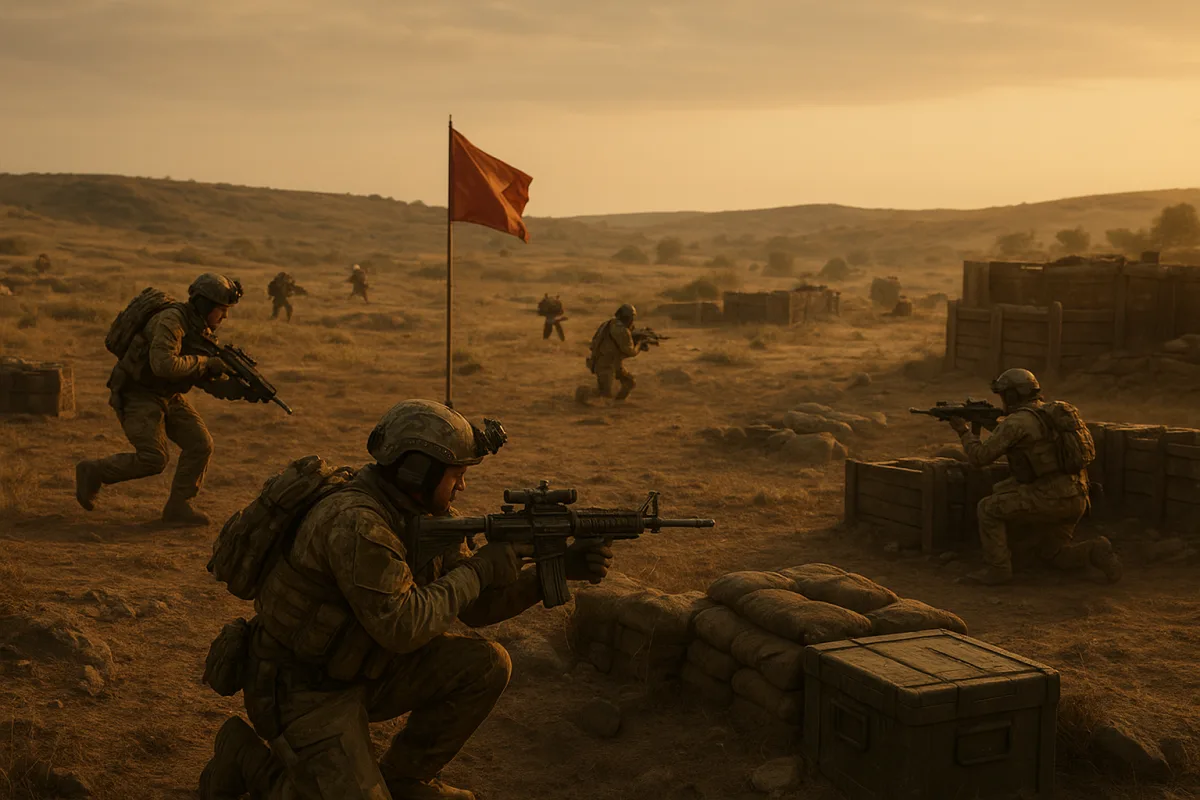
Wardogs Tactical FPS: What to Expect When You Drop In
Wardogs is carving out a unique niche in the tactical FPS landscape by blending massive, 256 km² open maps with a 100-player, three-team King of the Hill-style mode. This is not your typical small-scale squad shooter or tight 5v5 match, here, team tactics unfold over sprawling terrain, with progression and economy systems layered on top to drive player choices. After digging into hours of gameplay footage and early impressions from several PC-focused streamers, plus combing through pre-release economy and system specs, this guide will walk you through the practical challenges you’ll face when jumping into Wardogs, and how the game’s design shapes your approach.
First Contact: Understanding Wardogs’ Three-Team, 100-Player Chaos
Wardogs pits three factions against one another, each fielding squads that fight to control a massive 2x2 km “Action Zone” inside the larger map. The goal is to hold control points long enough to rack up points, with the first team to 100 points winning the match [1][3][4]. The mechanics echo the classic Arma 3 King of the Hill mod, but with modern polish and added economy layers [1].
The “hot zone” inside the action zone acts as a dynamic multiplier that moves around the circle, making control more volatile and encouraging constant movement and contest. Interestingly, the game allows players to manipulate the hot zone’s location by powering up oil drills built on towers scattered across the map. Holding these towers and fueling the drills pulls the hot zone toward your team’s positions, giving a tactical edge [1][3].
Practical Impact on Matches
Large team sizes and three-way conflict: With 100 players split into three teams, expect chaotic engagements where control zones shift rapidly. Unlike smaller tactical shooters (Highguard’s 3v3 or Battlefield’s 12-32 player modes), Wardogs demands wide-area awareness and sustained coordination across multiple squads [4][5][6].
Hot zone control and tower strategy: Teams that prioritize building and defending FOBs (forward operating bases) around towers can tactically steer the hot zone for maximum points. This means your squad should always have builders and supply runners ready to fuel and maintain these structures, or risk losing the scoring advantage [1][3].
Longer matches with ebb and flow: Because of the large map and dynamic hot zone, matches don’t feel like quick bursts of action. Instead, they evolve over time, with momentum swinging as teams establish and lose control. This pacing encourages both tactical patience and opportunistic strikes.
Economy and Progression: More Than Just Shooting
Wardogs incorporates an in-game economy resembling extraction games, starting players with $10,000 in cash per match [1][2]. You earn money and XP by performing a variety of team-centric actions: killing enemies, reviving teammates, delivering supplies, driving vehicles, and maintaining control of objectives [1][2]. This system incentivizes diverse gameplay roles beyond just fragging.
What You Need to Know About Spending
Equipment costs: Basic equipment ranges from $250 for simple stimulants to $2,000 for medical bags, with progression unlocking more advanced gear like rocket pods on helicopters and specialized ammo types [1][2].
Ammo management is not trivial: Buying a gun isn’t enough, you must also purchase magazines and then select ammo types to load. Some ammo, like “flesh damage” rounds, only unlock at very high player levels (level 85+), are expensive, but can disable limbs quickly if you hit the right spots [3].
Progression pacing is grind-heavy: Unlocking top-tier gear requires considerable time investment. Players report that grinding pilot levels to unlock helicopters like the Huey with mounted guns (unlocked around level 25) or the Apache-style chopper is addictive but slow [1][3]. This slow pace encourages specialization but can frustrate those wanting rapid access to powerful tools.
Team composition risks: Because Wardogs does not enforce fixed classes and players pick roles on the fly, teams can sometimes end up without critical roles like medics or engineers. This can unbalance matches and make progression uneven, especially in random squads [1][2].
Combat and Gunplay: Modern, Smooth, But Sometimes Too Easy
The gunplay in Wardogs is described as smooth and modern, with clean ballistics and solid leaning mechanics. There are no hitmarkers, but hit sounds provide satisfying feedback without cluttering the screen [1][3]. However, some players feel the gunplay is “a little too easy,” which may help accessibility but could dilute skill expression in firefights.
Tactical Consequences
Recoil and ADS quirks: Running then aiming down sights causes a wobble effect not seen in other milsims like Arma, which can throw off aiming if you’re rushing into fights [3].
Importance of ammo and armor: Armor piercing rounds that pierce vests unlock late and may shift meta towards prioritizing armor penetration. Early-game players will rely on standard ammo types and basic armor, which can influence how aggressively you play [3].
Vehicle and air support matter: Helicopters feel weighty and challenging to pilot, with no “arcadey” upside-down flying allowed. Skillful pilots who unlock rocket pods or miniguns become potent force multipliers on the battlefield [1][3].
Base Building and Logistics: The Backbone of Tactical Success
One of Wardogs’ distinguishing features is its base-building system. Players can purchase FOBs, build walls, doors, and defenses, and fortify towers that control the hot zone [1][3][4]. Helicopter pilots and support players deliver logistics crates containing ammo, fuel, building supplies, and mechanical parts essential for maintaining these bases.
What You’ll Encounter in Matches
Building is crucial but clunky: Early builds can be haphazard, with some players improvising “jank” fortifications. Doors, walls, and window barricades block enemy sightlines but require constant resupply and repair under fire [4].
Vehicles as mobile bases: Spawn trucks serve as mobile spawn points and can carry crates for FOB deployment. Protecting these vehicles is essential because losing them means losing a forward spawn advantage [4].
Mortars and artillery add long-range pressure: Players manning mortars can shell enemy towers and spawn trucks from afar, forcing defenders to spread thin or lose critical infrastructure [4].
Supply runs and logistics are high-value roles: Pilots who ferry supplies enable building and fueling of oil drills that pull the hot zone. Without these efforts, teams struggle to maintain control points and score efficiently [1][3].
Meta Development and Community Dynamics
Wardogs is still in Early Access (with closed beta ending August 2026), so the meta is fluid. Progression unlocks and player familiarity shape evolving strategies rather than fixed balance patches.
Because advanced gear unlocks are costly and slow to obtain, expect early matches to favor cautious, grind-heavy playstyles focused on steady accumulation of cash and XP [1][3][8].
The absence of enforced roles leads to organic team compositions, but also risks unbalanced squads missing key capabilities. This can prolong matches and make coordinated team play a premium skill [1][2][8].
Streamers noted that sandbox-style gameplay and large maps make score-checking less common during matches, as players focus on localized objectives and small squad missions rather than the scoreboard [1].
Community panic over balance issues seems premature given the Early Access state. The economy and progression system reward strategic teamwork but still require iteration to ensure viable role diversity and balanced pacing [1][8].
Hardware and Performance Considerations
Wardogs demands a mid-to-high-end PC to handle its large player counts and expansive maps smoothly.
Minimum specs target 1080p low settings at 60 fps with an Intel Core i5-8600 or Ryzen 5 3500 and GTX 1660 or RX 590 GPU [7][10].
Recommended specs push towards 1440p or 4K medium settings with an Intel Core i7-12700K or Ryzen 7 5700X and RTX 3070 or RX 6700 XT GPU [7][10].
SSD installation is advisable for faster load times and texture streaming, as the game’s vast map and assets strain slower drives [10].
No unique hardware bottlenecks have been reported, but CPU/GPU balance and stable frame rates are critical for competitive play given the scale [10].
Practical Tips for New Players
Start by picking a role and grinding it: Whether pilot, builder, medic, or support, focusing your XP and cash earnings on that role helps unlock meaningful gear like advanced helicopters or weapons [1].
Communicate tower codes and coordinate hot zone pulls: Understanding and sharing tower control codes lets your team pull the hot zone for double points, which is vital for winning [1][3].
Prioritize FOB building around towers: Secure a tower with a fortified FOB to maximize your team’s control and provide safe spawn points and defensive structures [1][4].
Manage ammo carefully: Buying a gun isn’t enough, you must also purchase magazines and select ammo types. Experiment with different ammo to find what fits your playstyle and the team’s needs [2][3].
Use helicopters not just for transport but logistics: Flying in supplies fuels your team’s ability to build and maintain bases, which is more impactful than just dropping players off [1].
Beware of shadow removal exploits: Disabling shadows in video settings lets you see through buildings, but it feels cheap and may be patched. Play with shadows on for a fair experience [3].
Expect a grind but enjoy the progression chase: Unlocking top-tier gear takes hours but is rewarding. Don’t rush the unlocks; instead, savor the incremental improvements [1][3].
Conclusion
Wardogs offers a complex, large-scale tactical experience that blends milsim-style gameplay with deep progression and economy systems. Its emphasis on teamwork, logistics, and base building sets it apart from other 2026 FPS releases, but the meta remains emergent and unpolished as of Early Access. Players willing to embrace the grind and master the sprawling maps will find a rewarding and challenging shooter, while newcomers should prepare for a learning curve shaped by large-scale chaos and evolving team dynamics.
If you’re looking for a tactical FPS that rewards strategic thinking, coordination, and persistence, Wardogs deserves a serious look. Just be ready to adapt to a fluid meta and invest time unlocking the full range of tools.
Frequently Asked Questions
What are the key gameplay mechanics in Wardogs tactical FPS?
Wardogs features three teams of up to 100 players fighting over a large 2x2 km “Action Zone” inside a massive 256 km² map. The main mode is a King of the Hill style where teams compete to control points and accumulate 100 points to win. A dynamic “hot zone” moves around the control circle, influenced by powering oil drills on towers, encouraging constant movement and tactical positioning.
How does the economy system work in Wardogs?
Each player starts matches with $10,000 in cash, which they spend on equipment, ammo, and supplies. Players earn money and XP by performing team-focused actions like killing enemies, reviving teammates, delivering supplies, and maintaining objectives. Equipment costs range from $250 for basic stimulants to $2,000 for medical bags, with higher-level gear unlocking through progression.
What strategies are effective for controlling the hot zone in Wardogs?
Effective control involves building and defending forward operating bases (FOBs) around towers to power oil drills. These drills pull the hot zone toward your team’s position, providing a scoring advantage. Maintaining builders and supply runners to fuel these structures is critical, as losing tower control can shift the hot zone and momentum to the enemy.
How does base building impact matches in Wardogs?
Base building around towers is essential for influencing the hot zone’s location. Constructing and defending FOBs allows your team to tactically steer the hot zone, which directly affects point accumulation. Teams that neglect base building risk losing control of the hot zone and falling behind in scoring.
What should new players know about Wardogs gunplay and progression?
Wardogs gunplay is smooth and modern, featuring clean ballistics and leaning mechanics with hit sounds instead of hitmarkers for feedback. Progression is grind-heavy, with advanced gear and ammo types unlocking slowly over time. Players must also manage ammo purchases separately from guns, and team roles are flexible but can lead to imbalanced squads if critical roles are missing.
Sources
Is Wardogs Worth It?, shroud
The fight to reclaim our Base! - DayZ with @heybarmby, FRANKIEonPC
Checking out WARDOGS!, FRANKIEonPC
Wardogs is kinda Awesome! - Closed Beta, FRANKIEonPC
WARDOGS System Requirements: Minimum and Recommended PC Specs, WARDOGS Wiki
Watch Wardogs Tactical FPS Emerges on Youtube
Also from the sources
Related Articles

Wardogs Gameplay, Popularity, and Crunch Controversy
Explore Wardogs gameplay, its rise in popularity, helicopter mechanics, and the developer crunch controversy in this detailed PC gaming overview.

Wardogs Early Access Preview: Tactical FPS and Cash Economy
Explore Wardogs Early Access preview covering its tactical FPS gameplay, cash economy, roles, PC requirements, and known launch issues.

World of Warcraft Forever Community, Tournaments
Explore World of Warcraft Forever's community, beta challenges, tournaments, and Blizzard's management of its evolving MMO platform.
Ace Combat 8 Wings of Theve Gameplay and Franchise Revival
Explore Ace Combat 8 Wings of Theve gameplay, new weather mechanics, system requirements, and how it revives the arcade flight combat franchise.