
Blizzard Upcoming Games 2026
Discover Blizzard's upcoming games in 2026 including Diablo 5, StarCraft open-world shooter, and Overwatch's new hero Doctrine with release dates and
Blizzard’s Upcoming Games Show a Studio Betting on Big Resets, Not Safe Sequels
Blizzard is moving from iteration to reinvention
The shift is plain: Blizzard is no longer presenting its biggest brands as games that merely receive another expansion, season, or remaster. At BlizzCon 2026, it presented three different forms of renewal, each with a different tolerance for risk.
Diablo 5 is a numbered sequel that dismantles Diablo 4’s fixed open world. StarCraft returns without its defining real-time strategy format. Overwatch, still the most immediately serviceable of the three, uses its new hero to push team utility into another direction.
These announcements are not proof that the whole PC market has abandoned sequels. They are evidence of one publisher making the same strategic move across several franchises: retain the recognisable name, then change the underlying player contract.
Rock Paper Shotgun’s BlizzCon reporting placed Diablo 5, the StarCraft shooter, and the World of Warcraft: Forever branch in the same reveal slate. That matters because it shows the reset is not confined to one team looking for a fresh idea. [6]
Blizzard president Johanna Faries framed the unusually distant dates as a confidence signal, saying Blizzard wants to “ship big” and “ship on time.” That is a meaningful change from the studio’s old habit of revealing projects without a reliable calendar. [10]
It is also a marketing bet. A spring 2029 Diablo 5 date and a 2030 StarCraft date create a long runway for community discussion, but every year before launch is another year for feature expectations to grow.
Diablo 5 is trying to fix the parts of Diablo 4 that expansions cannot
The Diablo 5 pitch is less “more Diablo” than “Diablo rebuilt around older Diablo instincts.” Blizzard’s GameSpot BlizzCon panel described a world where Diablo has already won, with players travelling as the heir of Westmarch through a ruined Sanctuary. [1]
The gameplay consequence is more important than the lore line. Diablo 5 replaces conventional towns with a moving caravan, and Blizzard says both the overworld and dungeons will be procedurally generated rather than built around Diablo 4’s persistent map. [1][5]
That is a direct response to a familiar Diablo 4 problem. A fixed world is useful for social spaces, events, and route planning, but it becomes solved quickly. Once players know the efficient dungeon, boss route, or Helltide loop, discovery turns into commuting.
Procedural regions should make map knowledge less permanent. The good farming route may still exist, because players are exceptionally good at converting randomness into spreadsheets, but route advantage should move from memorised geography toward build speed and adaptation.
Blizzard’s developers also mentioned returning item stat requirements, item tiers, multi-slot inventory items, and the belt slot in IGN’s BlizzCon interview. That is Diablo 2-style friction returning after Diablo 4’s cleaner, more forgiving equipment model. [1]
For buildcraft, that can be healthy or tedious depending on tuning. Stat requirements can kill the universal “equip the highest item power” path, because a powerful weapon may demand Strength that a Dexterity build cannot afford without sacrificing damage or defence.
The belt slot is not just visual kitbashing. Another gear slot creates another place for power to live, which can quietly nerf all-in-one legendary effects if Blizzard spreads bonuses across more equipment rather than stacking every must-have multiplier on weapons and rings.
The important caveat is that no numbers have been published. There are no disclosed stat thresholds, item-tier drop rates, affix pools, cooldown formulas, or endgame damage targets, so anyone declaring a Diablo 5 meta before a public build is selling fog of war.
The class count claim does not currently add up
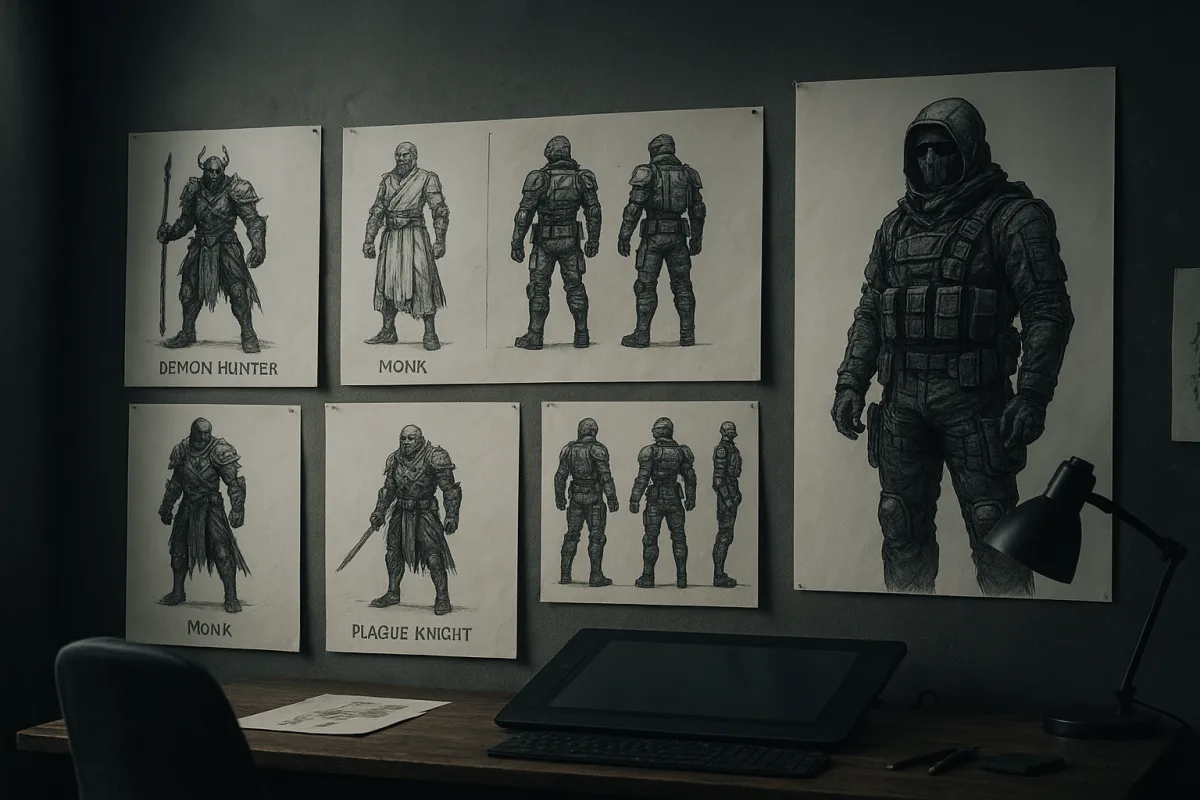
Blizzard game director Joe Shely said Diablo 5 will launch with more classes than any previous Diablo game. The confirmed roster, however, currently contains only returning Diablo 3 classes Demon Hunter and Monk, plus the new Plague Knight. [2][4]
That is three confirmed classes. Previous mainline launches had three in Diablo, then five each in Diablo 2, Diablo 3, and Diablo 4, according to PureDiablo’s franchise class overview. [3]
So the current public roster is not merely short of Blizzard’s claim, it is smaller than every mainline launch since 1996. The sensible reading is that Blizzard has unannounced classes ready for launch, not that three classes somehow represent a record.
It does not logically mean Diablo 5 must exceed every class ever released across the franchise. It only needs to exceed the largest single game’s launch roster, but Blizzard has left enough ambiguity here to invite exactly that kind of community arithmetic.
The Plague Knight is the useful clue. TechRadar describes it as a battlefield “walking death,” which suggests a damage-over-time, corpse, disease, or attrition toolkit rather than another clean elemental caster. [4]
If that reading holds, the first balance question will be whether plague effects scale from weapon damage, enemy maximum health, crowd-control states, or minion interaction. Those choices decide whether Plague Knight becomes a boss specialist, a speed-farmer, or an early-season trap.
Blizzard has confirmed neither price, platforms, system requirements, monetisation, nor a detailed expansion model for Diablo 5. The game is planned for solo and multiplayer play, but PC players should not infer Steam availability, console parity, or hardware targets from that. [1][5]
Meanwhile, Diablo 4 is not getting another paid expansion before Diablo 5. Eurogamer reported that Blizzard will continue seasons and add story material through them, with the Amazon class planned for the first half of 2027. [5]
That decision changes Diablo 4’s next three years. Seasonal builds may still receive disruptive balance changes, but players should not expect a new expansion system to overturn the item chase again. The broadest progression shake-up is being reserved for Diablo 5.
StarCraft is becoming a shooter because Blizzard wants a wider entry point
The StarCraft announcement is the bolder reset. Blizzard’s new game is an open-world shooter set roughly 70 years after StarCraft 2, led by former Far Cry executive producer Dan Hay, rather than a new competitive RTS. [7][9]
Blizzard’s GameSpot interview describes a named protagonist, a complete beginning-to-end story, exploration, armour improvement, and a current focus on the single-player “marine fantasy.” Co-op, competitive multiplayer, and actual RTS mechanics remain unconfirmed.
The appeal is obvious. Real-time strategy is legible to people who enjoy macro economy, build orders, and unit counters, but it asks newcomers to learn an interface before they can appreciate a Hydralisk bearing down on them.
A shooter makes the fantasy immediate. One rifle, one suit, one terrified Terran soldier, and a Zerg swarm is a much faster onboarding path than explaining why a player should build supply depots before they can make more Marines.
The broader market supports the attempt, at least in abstract. The open-world shooter market is projected to grow from $32.14 billion in 2026 to $67.26 billion by 2035, while more than 38 percent of 3.2 billion gamers engage with open-world games. [7]
That projection is not evidence that Blizzard’s specific game will succeed. Market forecasts measure category spending, not whether players want a StarCraft title that swaps the command layer for first-person shooting, especially after the cancelled StarCraft Ghost project.
The community concern is reasonable rather than hysterical. Blizzard has shown a CGI trailer and a 2030 date, not an encounter loop, mission structure, inventory screen, enemy AI showcase, or proof that the open world has more purpose than collectibles between combat arenas.
There is also a design tension worth watching. The team talks about using one faction against another, which could mean dynamic systemic play. It could also mean a few scripted moments where Zerg attack a Protoss patrol while the player waits behind cover.
For a StarCraft shooter to preserve the RTS identity, faction behaviour needs to matter mechanically. Zerg should overwhelm through numbers and terrain corruption, Protoss should demand positional discipline, and Terran gear should feel modular rather than just provide colour-coded loot.
Doctrine is a live-service balance test, not a distant promise
Overwatch’s Doctrine is more concrete because the Support hero is available for a September 12 to 14 trial before the October 6 Season 5 launch. Blizzard has named the kit, so players can already identify what compositions may gain. [11][14]
Doctrine uses the Eternal Scepter for mid-range healing and damage, including an empowered piercing shot. The hero’s Infuse mechanic upgrades the next ability, with reported options including piercing attacks, flight, and supportive drones. [11][12]
Invigorating Drones heal allies and increase their movement speed. That combination is not just extra sustain, it is tempo: a team receiving both healing and speed can rotate through a choke, escape a lost duel, or force a close-range engagement sooner. [11]
The immediate beneficiaries are heroes whose value rises when distance closes quickly, particularly brawlers and short-range damage dealers. The likely losers are stationary poke setups that survive by keeping opponents at a predictable range rather than winning every direct trade.
Doctrine’s Deliverance ultimate sends out drones that reduce enemy maximum health while giving allies overheal. Reducing maximum health is potentially more dangerous than ordinary damage because it changes breakpoints, making targets easier to finish even after the initial burst ends. [11][13]
Blizzard has not published the precise health reduction, duration, drone count, cooldowns, or healing-per-second values. Without those, claims that Doctrine will replace existing Supports are premature, because a five percent health reduction and a 25 percent reduction are different games.
The hero’s fiction, as outlined by Overwatch coverage, places the vampire-cyborg Support as a former Doomfist ally freed from Watchpoint: Grímsvötn in Iceland. The trailer establishes the escape, but narrative relevance is not the same as ranked relevance. [14][16]
The more revealing design signal is attack-speed interaction. Destructoid reported that Doctrine forced Blizzard to reconsider its cap on attack-speed buffs, although the hero reportedly does not reach that ceiling. [13]
That is the sort of patch-note line worth circling. Attack speed rarely buffs every character equally. It can turn a merely good hitscan into a breakpoint problem, accelerate ultimate generation, and expose animation or ammo-economy interactions that look harmless on a kit overview.
What smaller teams should take from Blizzard’s roadmap
For anyone planning a PC project, the useful lesson is not “make an open-world shooter” or “announce four years early.” Blizzard has brands that can survive an announcement cycle longer than many independent studios can survive a quiet quarter.
The real pattern is clearer: choose one promise that changes how the game is played, then show enough of it to make that promise testable. Diablo 5 has procedural exploration and harsher itemisation. StarCraft has ground-level faction conflict. Doctrine has stacked Support utility.
Do not confuse a genre label with a differentiator. “Open-world shooter” tells players the camera position and map scale. It does not explain why they will keep playing after the first impressive vista, or why they should care about your version of progression.
Blizzard’s StarCraft reveal currently demonstrates that risk. The setting and tone are clear, but the playable identity is still thin. By contrast, Doctrine’s ability list already gives players concrete questions to test in a match, which is healthier than pure speculation.
The meta also will not move at the same speed across these projects. Doctrine’s first week can reveal oppressive pairings immediately, although sensible balance action may take a patch cycle. Diablo 5’s item meta will need months of public testing and endgame data.
StarCraft’s meta is further away still. With no confirmed multiplayer mode and a 2030 launch target, there is no competitive ecosystem to analyse. For now, the correct response is neither panic over the RTS change nor faith in the brand, just a request for gameplay.
Frequently Asked Questions
What are Blizzard's upcoming games announced at BlizzCon 2026?
Blizzard announced three major projects: Diablo 5, a rebuild of the Diablo series with procedural generation and new gameplay systems; a new StarCraft game shifting from RTS to an open-world shooter releasing in spring 2030; and a new Overwatch Support hero named Doctrine, joining the game in October 2026.
When is Diablo 5 releasing and what new features does it have?
Diablo 5 is scheduled for release in spring 2029. It features a procedurally generated overworld and dungeons, replacing Diablo 4’s fixed map, and introduces gameplay elements like a moving caravan instead of towns. Confirmed classes include Demon Hunter, Monk, and a new Plague Knight, with Blizzard claiming the launch roster will be the largest in series history, though only three classes have been revealed so far.
What is the new StarCraft game announced for 2030?
The new StarCraft game, planned for spring 2030, is an open-world shooter that abandons the franchise’s traditional real-time strategy format. It focuses on "boots on the ground" immersive gameplay, led by former Far Cry executive producer Dan Hay, though no gameplay footage or detailed systems have been shown yet.
Who is the new Overwatch hero Doctrine and when can I play them?
Doctrine is a Support hero with vampire and cyborg themes, featuring abilities like a healing and damage weapon, supportive drones, and an ultimate that weakens enemies and boosts allies. Players can try Doctrine during a trial from September 12 to 14, 2026, and the hero officially joins Overwatch Season 5 on October 6, 2026.
How is Blizzard changing its game franchises with these new releases?
Blizzard is shifting from iterative expansions to major reinventions of its franchises. Diablo 5 rebuilds core ARPG systems with procedural generation and older gameplay instincts, StarCraft moves away from RTS to an open-world shooter, and Overwatch introduces a hero focused on layered team utility rather than straightforward healing. This reflects a strategic reset to retain franchise names while changing the fundamental player experience.
How we researched this
This article was assembled from 5 video sources across 2 channels, 6 published articles, 16 cited references.
Nothing here is based on hands-on testing. Where a figure or finding appears, it belongs to the source cited beside it, and the writing says so rather than implying otherwise. Every source is listed below so you can check it.
Sources
Diablo 5 To Launch With More Classes Than Any Other in the Franchise | Blizzcon 2026 — IGN
Overwatch - Official New Hero Doctrine Trailer | BlizzCon 2026 — IGN
Starcraft Learning More Details About the Game | Interview — GameSpot
New StarCraft Gameplay Details & a Promised Release Date — IGN
A StarCraft open-world shooter that's "Deadwood in space", Diablo 5, and a new classic-ish World of Warcraft branch out this year make up Blizzard of reveals — Rock Paper Shotgun
First Major Cast Member Confirms Appearance in GTA 6, Seemingly Going Off Rockstar's Script — IGN
A multiplayer mod for The Last of Us 2 was reportedly cancelled "at Sony's request" — Eurogamer
Blizzard confirms no more Diablo 4 expansions from now until Diablo 5's release — Eurogamer
Diablo 5: Everything you need to know about the next era of Diablo | GamesRadar+
Diablo 5 Will Have The Most Classes Of Any Game In The Series - Battle Royale Fanatics
Blizzard announces Diablo 5 and it's coming sooner than you think
Story-driven open-world shooter STARCRAFT announced - Gematsu
Why Did Blizzard Announce StarCraft for 2030 So Early? | Pixel Twelve
Blizzard explains early StarCraft and Diablo 5 release date reveals
Watch Blizzard's Upcoming Games: Diablo 5, StarCraft Shooter, and Overwatch Hero on Youtube
Also from the sources
Related Articles
Nintendo Switch 2 Game Announcements and Updates
Discover the latest Nintendo Switch 2 game announcements, release dates, and updates including Metroid Ravenous, Monster Hunter Wilds, and more.
PlayStation State of Play September 2026 Highlights
Discover key announcements from PlayStation State of Play September 2026, including Marvel’s Wolverine release dates and game highlights.
Exodus Sci-Fi RPG Preview
Explore the Exodus sci-fi RPG preview, its unique time dilation feature, gameplay, and release details compared to Mass Effect.
New and Upcoming PC Game Reviews and Previews 2026
Read detailed new and upcoming PC game reviews and previews for 2026, including Valheim 1.0, Aliens Fireteam Elite 2, NHL 27, and more.