
Phantom Blade Zero PC Gameplay and Performance Guide
Explore Phantom Blade Zero PC gameplay, system requirements, and optimization tips to ensure smooth performance and master combat mechanics.
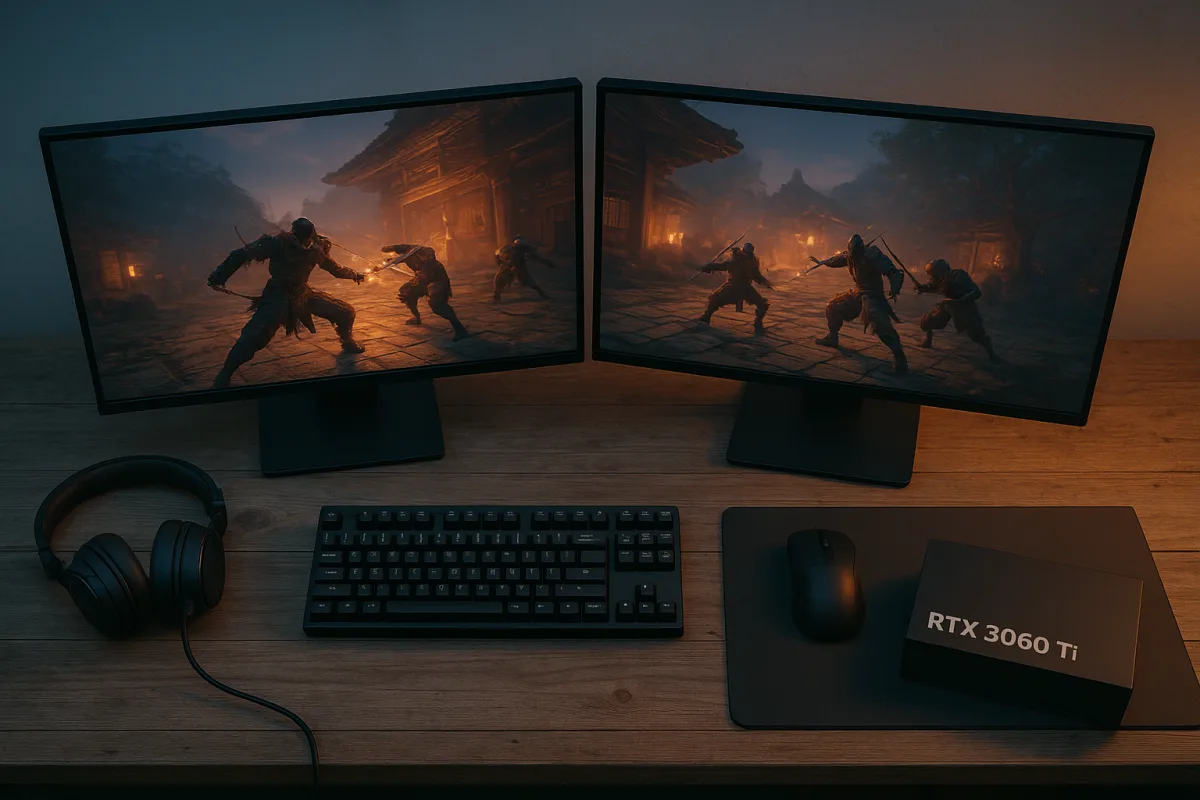
First problem: deciding whether this is worth buying before reviews exist
Phantom Blade Zero launches on PC and PlayStation 5 on October 29, 2026. The Standard Edition costs $59.99, while the Deluxe Edition costs $69.99, with pre-orders currently listed through Steam and the Epic Games Store. [1][2][12]
That is the easy part. The awkward part is that nobody has post-launch evidence yet. As of October 11, the game is still more than two weeks from release, so all enthusiasm, concern and combat analysis comes from controlled preview sessions rather than retail builds. [7]
That does not invalidate the previews. IGN and GameSpot each spent roughly six hours playing a late preview build, long enough to identify the combat loop, early bosses, exploration structure and one recurring worry: performance. It does mean you should not mistake a polished demo slice for proof of launch stability.
The $10 Deluxe premium is not automatically bad value, but the supplied pricing reports do not establish a gameplay reason to pay it. If you care principally about combat, build options and bosses, the Standard Edition is the sensible default until the exact Deluxe contents justify more. [1][2]
There is also no need to force Phantom Blade Zero into the Soulslike box before buying. S-Game’s director has said it is neither a conventional Soulslike nor a traditional action game, which sounds like positioning language, but the previews do support the basic distinction. [8]
It has demanding parries and bosses, yes, but it also appears more combo-driven and more generous about maintaining momentum than games built around slow, committed attacks. Go in expecting a wuxia action RPG with demanding defensive reads, not a Sekiro clone with Chinese scenery.
Second problem: getting the PC version running without sabotaging the combat
The official minimum specification is an Intel Core i7-8700K or Ryzen 5 3600, 16GB of RAM, and a GTX 1660 6GB or Radeon RX 5500 XT 8GB. An SSD, DirectX 12 and 64-bit Windows 10 or 11 are required. [5][6][12]
Those minimum parts target 1080p at 30 frames per second with upscaling enabled. That wording matters. It is not a native-resolution 30fps target, and it is not the profile to choose if your main reason for playing is tight parry timing. [5][6]
For the advertised 1440p, 60fps target with upscaling, Steam lists an Intel Core i5-10600K or Ryzen 5 5600X, 16GB of RAM, and either an RTX 3060 Ti 8GB or RX 6700 XT 12GB. [5][6][12]
Treat that recommended tier as the baseline if you want a clean first run. It is much easier to learn a game that asks you to spot coloured attack signals and parry inside a combo when frame pacing is stable, rather than when the game is technically reaching an average frame-rate target.
Do not buy hardware specifically for ray tracing or path tracing unless you know that visual setting is your priority. The stated ray-tracing target needs an RTX 5060 8GB for 1080p at 60fps, while path tracing calls for an RTX 5080 16GB for 4K at 60fps. Both targets still rely on upscaling. [5][6]
IGN’s previewer reported infrequent but severe frame-rate drops on what they described as a fairly powerful PC. S-Game said its remaining pre-launch work was focused largely on optimisation, but that is a promise, not a patch note. Wait for PC launch testing if you are close to minimum specification.
The sensible launch-day settings plan is boring but effective: install on the required SSD, begin with the preset closest to your hardware tier, leave upscaling on, and avoid maxing ray-traced options before establishing a stable baseline. This is a reaction-heavy game, not a screenshot benchmark.
Third problem: breaking the “my turn, your turn” habit
The first bad habit Phantom Blade Zero seems designed to punish is standing at medium range, waiting for an enemy to finish attacking, then taking your allotted counterattack. GameSpot’s hands-on analysis identified the game’s key wrinkle as its ability to blend attacking and defending in the same rhythm.
You still have light attacks, heavy attacks, combos, dodges and parries. The difference is that many attacks do not lock you into a long, helpless commitment, and GameSpot found that a successful parry could often be folded into an ongoing attack string rather than resetting the exchange.
Practically, start fights with pressure. Use light attacks to establish a simple sequence, watch the opponent rather than staring at your own animation, and be ready to parry without mentally declaring that your combo is over. Light attacks and dodges do not consume Sha-Chi. [3][4]
This is not evidence that you can mash safely. Enemies can parry you too, and GameSpot reports that a slightly mistimed parry may be blocked and cost Shi, while a full whiff can knock the player down and end their pressure. The system wants attention, not button density.
The public combat guides describe three readable categories: gold or orange attacks want a parry, red attacks want a last-moment dodge, and attacks without a colour cue can be blocked or parried. A successful parry or dodge can trigger Ghostep, repositioning your character behind the enemy. [3][4]
Start by treating the colour cue as the answer key. Parry gold and orange, dodge red, then use Ghostep to turn the successful defence into positional advantage. Once that is automatic, experiment with keeping light pressure active through less dangerous enemy patterns.
Do not overstate the system’s technical novelty. GameSpot’s preview makes a persuasive case that the game blurs offence and defence more aggressively than many action games, but no public source details the underlying implementation. It is not established that the game has invented some hidden simulation layer.
Fourth problem: spending Sha-Chi like it is a mana bar
Sha-Chi is the actual limiter on your big decisions. The publicly available guides say it governs heavy attacks and blocking, while light attacks and dodges are free. [3][4] That creates a very specific early-game trap: spending the meter on damage, then lacking the resources to survive pressure.
The practical fix is to use light strings while learning a new enemy, especially a boss. Save Sha-Chi until you can identify whether their next dangerous sequence asks for a block, a parry, a dodge, or a reposition. Heavy attacks become much better once you are exploiting a known opening.
IGN’s six-hour preview also saw weapon upgrades and skill-tree paths. The examples included active options such as cancelling an attack into a quick dodge, plus passive upgrades that restore Sha-Chi faster. That suggests build choices will shape your margin for error, even if the previewer did not find the RPG layer especially deep.
Do not expect one weapon to cover every situation cleanly. IGN found a secret optional boss rewarded a huge two-handed sword capable of very high damage, while a drunken-master boss granted a distinct fighting style with evasive movement and a telekinetically controlled blade that could be thrown.
That is more than cosmetic weapon collecting. The previewer described the movesets as different enough to require adjustment to their combos, strengths and weaknesses. If a boss keeps beating your preferred style, changing weapon or stance is a legitimate answer, not an admission of defeat.
Fifth problem: mistaking every boss loss for a reflex failure
The early bosses seen by IGN include familiar archetypes, such as a chain-blade fighter and a huge axe-wielding brute. Those encounters may teach basic spacing and timing, but the preview’s more interesting fights move beyond pure reaction checks.
A snake-themed boss strings together elaborate aerial attacks and tests your ability to read movement under visual noise. A lion-dancer encounter, by contrast, uses slower, well-telegraphed attacks but makes the enemy’s mask armour the central problem. The intended answer is apparently a specific way to unbalance it.
That is the boss-design signal to watch for. When a clearly telegraphed enemy remains durable, stop trying to win through cleaner DPS. Look for an armour rule, a positional weakness, a repeated recovery animation, or a counter opportunity that the fight is quietly teaching.
GameSpot played on the highest difficulty and praised the bosses, while GamingBolt says the game includes Hell Walker and 66 Days modes alongside easier options. GamingBolt also expects harder settings to use adaptive enemy behaviour that punishes predictable routines, though that feature still needs retail verification.
The likely meta, if those difficulty modes work as described, will not settle around one flashy combo in a weekend. Players will first discover safe parry routes and boss answers, then higher difficulties should push them toward varied strings, weapon swaps and deliberate Ghostep positioning. That is a healthier direction than an all-purpose stun loop.
Sixth problem: missing the good stuff because you follow the obvious path
Phantom Blade Zero has eight handcrafted interconnected regions, presented as a semi-open world that mixes linear progression with routes worth revisiting. PC Gamer reports that the game uses eight hand-painted Chinese ink-wash maps to guide exploration. [10]
That makes the practical rule simple: when you find a new traversal route, a locked-looking branch or a suspiciously quiet side area, investigate it before advancing the main objective. The game appears to reward curiosity with combat tools, not just flavour text.
IGN found weapons and gadgets that other preview attendees did not encounter, fought an entirely optional boss, and only discovered a hidden underground fortress after backtracking. That is strong evidence against rushing waypoint-to-waypoint, especially on a first playthrough.
Keep expectations calibrated, though. IGN described the side quests it saw as short errands involving kills or item collection. Their value was primarily that they exposed more combat encounters, story fragments and overlooked spaces, not that they transformed into elaborate quest chains.
The hook, then, is not simply that Phantom Blade Zero looks stylish. Its strongest preview case is a combat system that keeps your hands busy, bosses that ask different questions, and exploration that can materially change your toolkit. Just leave room for launch-day performance testing before treating that promise as settled fact.
Frequently Asked Questions
What are the recommended PC specs for Phantom Blade Zero?
The recommended PC specifications for Phantom Blade Zero include an Intel Core i5-10600K or Ryzen 5 5600X processor, 16GB of RAM, and either an RTX 3060 Ti 8GB or RX 6700 XT 12GB graphics card. The game requires DirectX 12, a 64-bit Windows 10 or 11 operating system, and an SSD. These specs target 1440p resolution at 60 frames per second with upscaling enabled.
How to optimize Phantom Blade Zero for smooth gameplay on PC?
To optimize Phantom Blade Zero for smooth gameplay, use hardware at or above the recommended specifications, such as an RTX 3060 Ti or RX 6700 XT GPU. Stable frame pacing is important for timing-based combat, so running the game at 1440p with upscaling on a capable system will help maintain responsiveness. Ensuring your PC meets the required SSD, DirectX 12, and 64-bit Windows 10 or 11 criteria also supports performance.
Is the Deluxe Edition of Phantom Blade Zero worth buying for PC players?
The Deluxe Edition costs $69.99 compared to the Standard Edition's $59.99, but current information does not identify gameplay advantages in the Deluxe Edition. If your main interest is combat, build options, and bosses, the Standard Edition is the sensible choice until the Deluxe contents are better justified.
What PC hardware is needed for stable 1440p 60fps in Phantom Blade Zero?
For stable 1440p at 60 frames per second, Phantom Blade Zero recommends an Intel Core i5-10600K or Ryzen 5 5600X processor, 16GB RAM, and either an RTX 3060 Ti 8GB or RX 6700 XT 12GB graphics card. Upscaling is required to reach this performance target, and an SSD plus DirectX 12 on Windows 10 or 11 64-bit are also necessary.
How does Phantom Blade Zero's combat system work on PC?
Phantom Blade Zero's combat system involves reading enemy attack cues, which are color-coded to indicate whether to parry, dodge, or block. Players can maintain combo pressure by attacking while responding to these cues rather than waiting for full enemy attack strings. Parrying and dodging successfully can trigger counters like the Ghostep, which teleports the player behind the enemy. The system emphasizes momentum and defensive reads over slow, committed attacks.
How we researched this
This article was assembled from 3 video sources across 3 channels, 12 cited references.
Nothing here is based on hands-on testing. Where a figure or finding appears, it belongs to the source cited beside it, and the writing says so rather than implying otherwise. Every source is listed below so you can check it.
Sources
I Played 6 Hours of Phantom Blade Zero and Can’t Stop Thinking About It | IGN Preview — IGN
The Secret Combat Detail Phantom Blade 0 Kept From Us — GameSpot
Can Phantom Blade Zero Become A Breakout Hit In 2026’s Crowded Final Stretch? — GamingBolt
Phantom Blade Zero Pre-Orders: Prices, Editions, and October 29 Launch
Phantom Blade Zero confirms October release date on PS5 and PC - Notebookcheck News
Phantom Blade Zero Gameplay & Combat System Guide | Phantom Blade Zero Wiki
Phantom Blade Zero PC Requirements: Minimum, Recommended, Ray & Path Tracing
Phantom Blade Zero's dark wuxia world feels like a playable kung fu movie
Watch Phantom Blade Zero: Gameplay and Impressions on Youtube
Also from the sources
Related Articles
Control Resonant Gameplay and Graphics Review Deep Dive
Explore Control Resonant gameplay, Gravity Shift mechanics, graphics settings, and edition comparisons for an optimized PC gaming experience.
Ace Combat 8 Wings of Theve PC Reception and Features
Explore Ace Combat 8 Wings of Theve PC reception, system requirements, editions, and multiplayer features before its October 2026 launch.
Ace Combat 8 Wings of Theve Gameplay and Franchise Revival
Explore Ace Combat 8 Wings of Theve gameplay, new weather mechanics, system requirements, and how it revives the arcade flight combat franchise.

Wardogs Early Success and Gameplay Insights on PC
Explore Wardogs early success, launch player stats, gameplay mechanics, and PC system requirements in this detailed Early Access overview.