
Control Resonant Gameplay and Graphics Review Deep Dive
Explore Control Resonant gameplay, Gravity Shift mechanics, graphics settings, and edition comparisons for an optimized PC gaming experience.
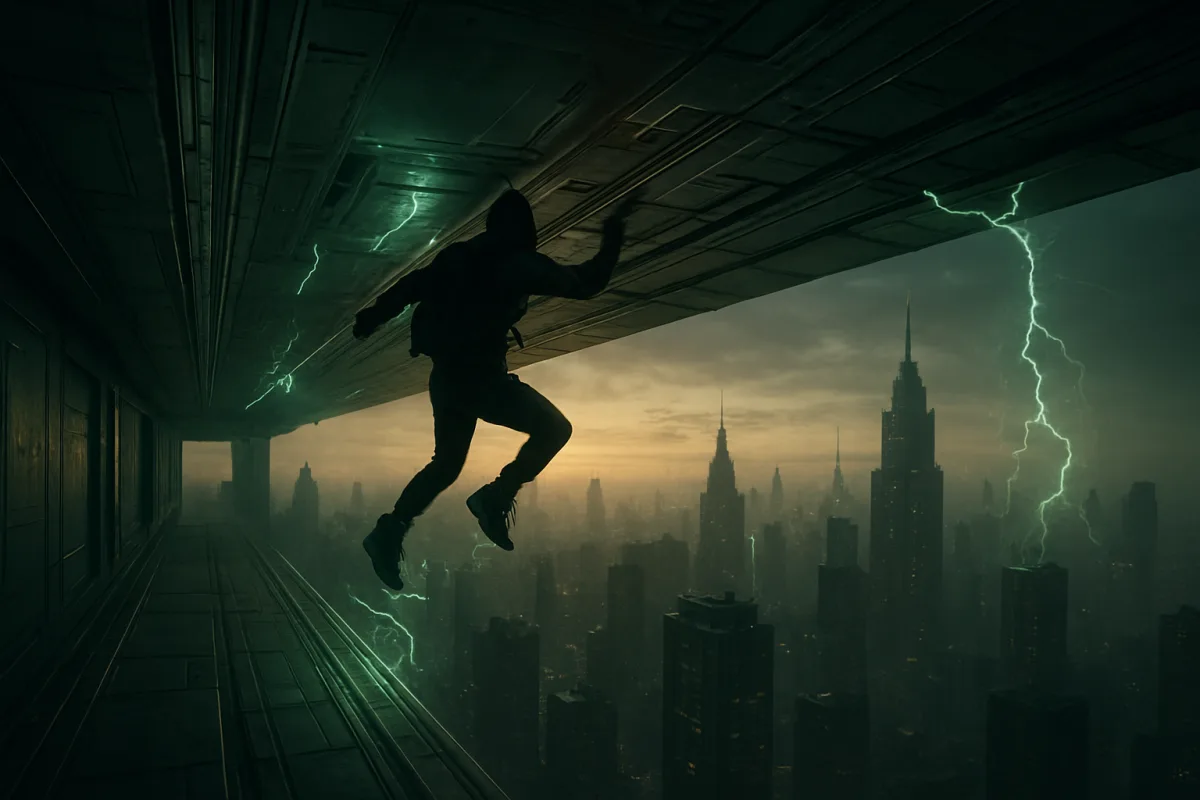
Gravity Shift is the idea that makes Control Resonant work
Control Resonant begins seven years after the first Control, with Dylan Faden, brother of Federal Bureau of Control director Jesse Faden, released into a Manhattan being rewritten by an interdimensional event. The basic premise is familiar Remedy material. The mechanical answer is not.
The first Control made Jesse Faden powerful through telekinesis and a transforming service weapon. Control Resonant gives Dylan a transforming melee tool, the Aberrant, but its more important upgrade is Gravity Shift, an ability that changes where “down” is.
That sounds like a traversal gimmick, the sort of feature used twice in a campaign trailer and then quietly retired. It is not. Gravity Shift is the system that determines how players read levels, approach enemies, locate routes, and eventually understand what Remedy means by Manhattan.
GamingBolt’s review describes Shift as allowing Dylan to walk on walls and ceilings, with the camera and world orientation readjusting around him. It becomes more useful once paired with Reach, a traversal move that crosses larger gaps, but Shift is the foundation. The city stops being flat.
In practical terms, Gravity Shift does not simply make Dylan fly. It selects a new physical surface, then treats that surface as solid ground. A wall becomes a floor. A ceiling becomes a route. A street that looked blocked can contain another navigable plane above it.
That distinction matters because it creates a different kind of level-design puzzle. A locked door is not always asking for a key. A collapsed road is not always a dead end. Sometimes the route exists already, but it is attached to the wrong direction.
IGN’s review compares the late-game sensation to Gravity Rush, though Control Resonant uses the concept more as environmental reorientation than free-form aerial movement. Dylan can still glide and hover, but his real mobility comes from choosing a new stable surface.
The cost is disorientation, and Remedy clearly knows it. When streets rise vertically or buildings fold over one another, players must mentally redraw the level. That is exciting when the geometry offers readable landmarks, but it can be exhausting when the map fails.
Creative Bloq characterises Control Resonant as open-ended, maze-like Manhattan zones rather than a fully open world, and that wording is more useful than the “full open-world” label used by TechRadar. [3][4] The disagreement is not pedantry, it explains the game’s rhythm.
A true open world usually sells freedom through distance. You ride, drive, or sprint across a large connected landmass. Control Resonant instead sells freedom through access. Areas open as Dylan gains the physical vocabulary to interpret walls, gaps, ceilings, and altered spaces differently.
That is why unlocking Shift changes old areas more dramatically than a standard double jump. A double jump extends reach. Gravity Shift changes the question being asked. You are no longer asking whether Dylan can reach a ledge, but whether that ledge is even relevant.
How it changes a fight
Gravity Shift also solves a problem that melee action games routinely have with vertical enemies. Dylan is primarily a close-range fighter, using the Aberrant in forms such as swords, scythes, hammers, clubs, drills, and other combo-specific weapon configurations.
GameSpot’s review frames the combat as aggressive character action, built around dodges, movement, abilities, finishers, and quick build changes rather than blocking or cautious ranged exchanges. That makes enemy positioning much more important than it was in the first game’s gunplay.
A standard arena fight initially asks Dylan to manage threats on one floor. Heavy enemies occupy space, lesser Hiss units swarm, and airborne attackers punish tunnel vision. Gravity Shift can change that geometry by letting Dylan escape pressure vertically or take an unexpected angle.
It is not a universal panic button. Moving to a wall may briefly separate Dylan from ground-based enemies, but it can also leave him exposed to flying targets or complicate the camera. This is why the best use is proactive repositioning, not last-second scrambling.
GamingBolt notes that later encounters use Shift to alter combat positioning as well as exploration. That matters because it turns environmental knowledge into damage uptime. A player who understands an arena can maintain pressure, reach targets, and avoid being cornered without relying solely on dodges.
The combat loop still revolves around Falter, the game’s stagger meter. Damage and certain abilities push enemies toward a vulnerable state. A finisher can then trigger Dominance, a temporary damage bonus that rewards pressing the attack rather than resetting to safety.
GameSpot explains the trade-off clearly: ordinary defeated enemies can leave health pickups, while finishing Faltered targets grants Dominance instead. That means a finisher is not automatically correct. Taking the damage buff may win a tough wave, but it can deny immediate healing.
Gravity Shift makes that calculation more interesting because position affects which reward is safer. If Dylan is low on health and surrounded, a normal kill for a pickup may be preferable. If he has a clean wall route toward a heavy enemy, Dominance can snowball.
This is also where builds determine whether Shift feels like a novelty or a core combat tool. IGN’s reviewer found that Ignite, which applies burn and removes mold poison, dramatically changed the pace of encounters by creating more Faltered enemies to execute.
That build has an obvious payoff. Ignite produces crowd-control pressure, Falter creates finishers, finishers create Dominance, and Dominance increases damage. The result is a momentum build that wants Dylan in the middle of a fight, using movement to stay aggressive rather than disengage.
The downside is that it may expose a balance issue. IGN argues that this can feel like discovering the “correct build,” because once burn, melee damage, and Falter generation align, the early game’s cautious rhythm gives way to more routine hacking through crowds.
That is the difference between a system with options and a system with equal options. Control Resonant appears to offer many Aberrant forms and six equippable abilities, but a build that solves damage, crowd control, and a status hazard at once will naturally become popular.
Why the meta may take time to settle
There is no competitive multiplayer meta here, but there is still a single-player build meta: the combination of tools that makes difficult encounters least demanding. Reviewers suggest it will move slowly because the game holds back essential traversal and combat pieces.
The supplied Skill Up review argues that several major traversal abilities are tied to “fault” sequences involving Jesse Faden, and that players can tackle content in an inefficient order. That is not merely an exploration complaint, it affects perceived balance.
A player who spends ten hours without Shift, Reach, or a preferred Aberrant form may conclude that navigation is tedious and combat shallow. Another player who unlocks those systems earlier may see the same content as a build-crafting action game with deliberate friction.
GamingBolt similarly notes that early upgrades can feel rudimentary and that weapon forms may require resource farming. This delays experimentation. A flexible combat system looks less flexible when the player has only a primary form, modest ability uptime, and limited upgrade materials.
That slow rollout explains the split in reception. The supplied GameSpot review praises the eventual combat depth and says it played 45 hours on an RTX 4070 without a hitch. IGN praises the foundations but criticises repetitive, high-health bosses and awkward aerial fights.
Neither reading cancels the other out. Regular enemy encounters seem built around momentum, positioning, Falter, and Dominance. Several bosses, by contrast, apparently reduce those advantages to a longer health-bar check. That is where a melee-first design risks feeling repetitive.
The main campaign runs about 30 hours, while a more comprehensive run can reach roughly 50 hours, according to Remedy’s estimate reported by GameNGuide. [10] That is long enough for late-game tools to redeem early weaknesses, but also long enough for players to quit first.
Critical consensus is positive rather than unanimous. Control Resonant sits at 84 on Metacritic and 85 on OpenCritic, according to the research brief. The praise centres on surreal environments, narrative ambition, and systems depth, not on every encounter being perfectly tuned.
Graphics settings: path tracing is not a free upgrade
Remedy’s Northlight engine is doing unusually heavy lifting here. Lighting, reflections, volumetric effects, destructible surfaces, particle effects, and geometry must stay readable while Dylan is running across walls or fighting enemies on different spatial planes.
GamingBolt’s technical analysis found substantial improvements in lighting, facial detail, animation transitions, reflections, and environmental density over the 2019 game. Its high-end PC test system, using an RTX 5080 and Ryzen 7 9850X3D, reportedly ran around 99 to 144 fps at maximum settings.
That is an impressive result, but it is not a useful baseline for most players. It is also not proof that Ultra settings are sensible. PC Gamer reports that full path tracing can heavily reduce frame rates, while lower presets retain much of the visual effect. [5]
The official requirement tiers make the gap clear. Minimum specification targets 1080p at 30 fps on low settings without ray tracing, using hardware such as a GTX 1070, RX 5600 XT, or Intel Arc A580, alongside 16GB of RAM and a 120GB SSD. [2]
Recommended specification targets 1080p at 60 fps on high settings with ray tracing, using an RTX 3070 or RX 6700 XT, plus an Intel Core i7-10700 or Ryzen 7 3700X. [2] That is the practical tier most PC players should treat as the intended experience.
The enthusiast target is 4K at 60 fps with path tracing, requiring an RTX 5080 and a Core i9-13900K or Ryzen 9 7900X. [2] Given reported Ultra path-tracing drops, read that as an aspirational target, not a guarantee of perfectly consistent performance. [5]
DLSS 4.5 and FSR 4.1, including frame generation support, are available across settings tiers. [2] They can help smooth performance, but they do not erase the cost of full path tracing, especially during fast camera movement and dense combat effects.
Console players should be more cautious than GamingBolt’s broadly positive platform analysis suggests. Notebookcheck reports PlayStation 5 frame-rate drops and image-quality problems, with PlayStation 5 Pro only partially improving them. [6] Do not buy hardware on the assumption this is flawlessly solved.
Editions and what you are paying for
Control Resonant launches on PC, PlayStation 5, and Xbox Series X|S on September 24, 2026. [8] The Standard Edition costs $59.99, digitally or physically, and suits players who only want the complete base game. [8][9]
The Digital Deluxe Edition costs $69.99 and includes the AWE Mission Outfit, Untapped Artifact wallet, starter bundle, digital artbook, and soundtrack. [9] It suits digital collectors, and PlayStation 5 buyers receive 48-hour early access, but none of those extras change the core campaign.
The $69.99 SteelBook Edition is an Amazon-exclusive physical release with physical extras. [9] It suits collectors who want packaging and memorabilia rather than gameplay advantages. Physical editions release October 15, after the digital launch window. [8]
There is no announced story expansion or DLC beyond those edition bonuses in the available research. That makes the Standard Edition the least speculative purchase. The Deluxe and SteelBook versions sell access timing, cosmetics, and collectables, not a different mechanical game.
Frequently Asked Questions
How does Gravity Shift affect gameplay in Control Resonant?
Gravity Shift changes Dylan Faden’s orientation to walls and ceilings, turning surfaces that were once vertical or overhead into new floors and routes. This system transforms level geometry into combat and traversal space, allowing players to navigate Manhattan in three dimensions rather than just along flat ground. It also changes combat dynamics by enabling Dylan to reposition vertically, which can separate him from ground enemies or create new attack angles.
What are the best graphics settings for Control Resonant on PC?
Ultra settings with full path tracing are not recommended for most PC players because they cause significant performance drops. Medium or high ray tracing presets offer a better balance between visual quality and frame rates. Additionally, features like DLSS 4.5 and FSR 4.1 with frame generation help improve performance across all settings without severely compromising the game’s lighting and effects.
How does Control Resonant's combat system differ from the original?
Control Resonant shifts from the original’s gunplay-focused combat to a more melee-heavy system centered on Dylan’s transforming melee weapon, the Aberrant. Combat emphasizes aggressive character action with dodges, finishers, and quick weapon form changes rather than cautious ranged exchanges. This change has drawn mixed reactions, with some players finding the melee combat repetitive compared to the first game’s tighter gun mechanics.
Which edition of Control Resonant is best for most players?
The $59.99 Standard Edition is the most sensible choice for most players, providing the full game without extras. The $69.99 Digital Deluxe Edition mainly appeals to collectors interested in digital extras like the AWE Mission Outfit, digital artbook, and soundtrack, and it offers a 48-hour early access window on PlayStation 5. Physical editions with additional collectibles are available but generally cost more and release later.
What performance can PC players expect from Control Resonant at different settings?
On minimum specs (e.g., GTX 1070), players can expect 1080p at 30fps on low settings without ray tracing. Recommended specs (e.g., RTX 3070) support 1080p at 60fps with high settings and ray tracing enabled. Enthusiast-level hardware (e.g., RTX 5080) is needed for 4K at 60fps with full path tracing, but even then, path tracing heavily impacts performance. Using medium or high ray tracing presets and frame generation technologies improves smoothness without drastically reducing visual quality.
How we researched this
This article was assembled from 5 video sources across 4 channels, 12 cited references.
Nothing here is based on hands-on testing. Where a figure or finding appears, it belongs to the source cited beside it, and the writing says so rather than implying otherwise. Every source is listed below so you can check it.
Sources
Control Resonant's Best Aspect Left Me Utterly Speechless - Review — GameSpot
Control Resonant Review - A Genuine Game of the Year Contender — GamingBolt
Control Resonant Graphics Analysis - Has Remedy Set a New Standard on PS5 Pro and PC? — GamingBolt
Control Resonant Review — IGN
Control Resonant System Requirements: Official PC Specs Explained
Control Resonant Tests the Limits of Remedy's Northlight Engine - Gamereactor
CONTROL Resonant Editions: Standard and Deluxe Comparison | CONTROL Resonant Wiki
'Control Resonant' Main Story Runs About 30 Hours, Up To 50 For Completionists, Remedy Says
Review: Control Resonant: Remedy's Tech Makes the Leap to a Wider Urban Sandbox — Games Newswire
Watch Control Resonant: Reviews, Graphics, and Gameplay Deep Dive on Youtube
Also from the sources
Related Articles
Onimusha Way of the Sword Review and Edition Comparison
Read our Onimusha Way of the Sword review with edition comparisons, PC requirements, and gameplay insights to help you decide before launch.
The Blood of Dawnwalker Gameplay Mechanics and Time Limit
Explore The Blood of Dawnwalker gameplay mechanics, including its unique 30-day time limit and PC performance insights.

GTA 6 Extended Gameplay Features and Relationship System
Explore GTA 6 extended gameplay features, including the relationship system, map size, and performance insights for PC and consoles.

Marvel's Wolverine Gameplay, Guides, and Reception Overview
Explore Marvel's Wolverine gameplay tips, PS5 settings, collectible guides, and critical reception in this comprehensive overview.