
Arc Raiders 2.0 Update
Explore the Arc Raiders 2.0 update with Frozen Trail, new maps, gameplay shifts, and future PvE/PvP plans in this detailed analysis.
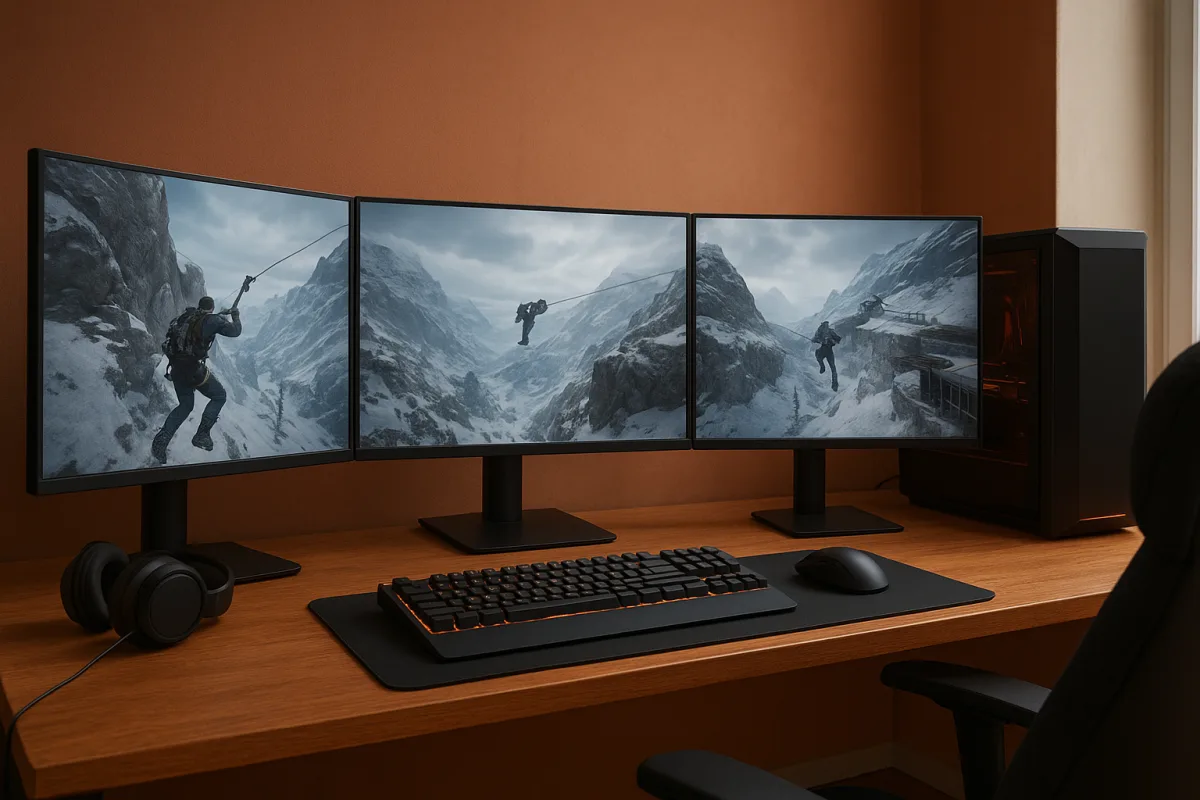
Arc Raiders 2.0 is not just a content drop. Frozen Trail is Embark Studios testing whether a once-declining extraction shooter can become a broader co-op scavenging game without throwing away the PvP tension that made it work.
The shift is toward exploration, not merely more loot
The plain version is that Arc Raiders is moving away from being an extraction shooter where Arc machines are obstacles between players and PvP. Frozen Trail makes the machines, terrain, traversal tools, and map mysteries into reasons to enter a raid.
Embark Studios launched the Frozen Trail 2.0 update on October 8, adding Pendola Pass, a snowy region built around the remains of an enormous Arc Emperor. The update also added the Frigate condition, new enemies, weapons, upgrades, an Outpost, and a revised skill tree. [9]
That sounds like the familiar patch-note pile, where “new map, new enemies, new progression” can mean three reskinned rooms and a rifle nobody keeps after week two. Here, the more consequential addition is a change in what players do with the world.
LevelCapGaming’s early coverage identifies that shift clearly. Pendola Pass is not just another arena with new sightlines. The Arc Emperor and Frigate turn giant machines into spaces to infiltrate, climb through, and loot, rather than bosses to erase.
That matters because it broadens the objective structure. A squad can arrive looking for a key, a route onto the Frigate, amplified-weapon materials, or a high-value container. PvP remains possible, but it is no longer the only story a match can produce.
The new Grappling Hook is part of that design rather than a random mobility toy. TheClick describes it as a rope-based system for climbing, swinging, and descending, a different proposition from the fluid web-swinging in Marvel’s Spider-Man or Just Cause 4’s combat-heavy tethering. [3]
Community shorthand has called it “Spider-Man” movement, which is understandable but technically lazy. The useful comparison is that it creates vertical routes and escape lines, then lets level designers place rewards where a normal sprint-and-ladder kit cannot reach.
That quietly buffs players who plan routes and carry utility, while it weakens the comfortable old assumption that the safest path to profit is taking a straightforward gunfight near a known extraction route. A grapple slot is now an economic decision.
LevelCapGaming also notes that the Frigate contains premium loot opportunities and asks players to bring traversal equipment. That is the right kind of friction for an extraction game. The valuable path is not simply locked behind a larger health bar.
The Steam spike is real, but its cause is mixed
Multiple independent reports point to the same short-term result. Itechguides and GamesRadar both report that Arc Raiders hit 131,388 concurrent Steam users on October 8, its highest Steam peak since April 2026. [1][2]
That is a real reversal from the quiet period before Frozen Trail. TheGamePost reported that Arc Raiders had lost roughly 93 percent of its all-time Steam peak before the update, so the game was coming back from a notably reduced active population. [10]
Still, 131,388 is not a declaration that the old audience has permanently returned. It is a launch-day concurrent peak, not a retention curve. Steam is also only one platform, and there is no verified public concurrent-player data for PlayStation 5 or Xbox Series X|S.
The timing also makes attribution messy. Frozen Trail arrived alongside a free trial running October 8 through 12 and a 50 percent discount, both of which lower the barrier to trying a game that had become easy to postpone. [2][9]
That does not diminish the update. It just means the honest takeaway is narrower: Embark got a lot of people through the door. Whether Pendola Pass and the revised progression systems keep them playing after the trial and discount end remains unproven.
The good sign is that the surge did not rest on one viral clip alone. GamesRadar highlighted the map, Frigate, skill-tree changes, and traversal tools, while RaidersData’s update breakdown records a much broader systems package. [2][9]
This is how a major seasonal update should operate. A new location creates novelty, a movement mechanic creates clips and fresh routes, progression gives repeat players a reason to return, and new loot targets keep the map from becoming solved immediately.
What 2.0 changes in an actual match
The three new Arc threats, the Bully, Skulker, and Hydra, matter less as named enemies than as pressure on raid tempo. Harder and more varied AI makes careless shooting costlier, which is important when players can also arrive from unexpected vertical angles.
The Outpost and amplified-weapon crafting extend that loop beyond the raid. LevelCapGaming’s reporting describes amplified weapons as offering properties such as fire damage and stat improvements. That creates another reason to pursue location-specific materials rather than simply extract with generic sellables.
The balance question is whether amplified weapons become mandatory rather than aspirational. There is not enough post-patch build data to call that yet. Any claim that a particular amplified setup has already “killed” the standard weapon meta is just opening-week noise.
The more immediate balance change is the Whole Cracker adjustment identified by LevelCapGaming: more damage against armor, less against exposed weak points. That should reduce its status as the automatic answer to every encounter and reward target selection.
In practical terms, the weapon becomes better for cracking armored targets but worse for precision damage once armor is bypassed. That is a healthy directional nerf if it works, because it limits one gun’s ability to cover both anti-armor and weak-point roles.
The redesigned skill tree is also more evolutionary than revolutionary. Embark replaced the old branch structure with midpoint binary choices and end-of-branch choices where players can select two of three skills, creating more build commitment than the previous layout. [9]
That can make the early meta move quickly, since players will test which paired skills best support grappling, stamina efficiency, stealth, or high-risk loot runs. It probably takes longer than a weekend to settle, because traversal changes invalidate old route assumptions.
The safe forecast is two to four weeks for recognizable preferred builds, assuming Embark does not hotfix a standout interaction. Extraction-game metas move slower than arena-shooter metas because gear loss, loot availability, squad composition, and map knowledge all muddy the numbers.
The Reward Pass is not the pay-to-win issue
The other predictable panic is the new Reward Pass, which replaces Raider Decks. The Frozen Trail Pass has 60 levels, with the free track requiring 150 Reward Points per level, or 9,000 points in total. [7]
Its premium track costs 1,150 Raider Tokens, approximately $10, and includes outfits, stencils, hairstyles, and backpack cosmetics. It does not offer gameplay advantages, a distinction some battle-pass arguments tend to bulldoze straight past. [7][8]
Completing the premium track awards 1,350 Raider Tokens, more than its entry cost. That does not make it charitable, since it still aims to keep players inside a recurring cosmetics economy, but it is far less predatory than selling power or expiring progress. [8]
The non-expiring pass structure is the more player-friendly call. LevelCapGaming notes that players can activate older passes later, avoiding the usual season-end pressure to grind cosmetics before an arbitrary deadline. That design suits a game whose core loop already asks for repeated risky sessions.
PvE could be the next real fork in the road
Frozen Trail’s biggest strategic experiment is not Pendola Pass. It is the PvE-only matchmaking test scheduled for October 13 through 20, where players can toggle into sessions in which Raiders cannot damage one another. [4]
Eurogamer reported Embark executive producer Aleksander Grøndal saying a permanent PvE and PvP split is “quite possibly” in the game’s future. Insider Gaming similarly reports that the studio sees a split as possible, depending on what it learns from the test. [5]
Embark’s own player data gives the test a rational basis. PC Gamer reports that 37 percent of players identify as friendly co-op players, 34 percent as pure PvP players, and 27 percent move between those approaches. [6]
More revealing, over 70 percent of friendly players and 40 percent of PvP-oriented players reportedly want fewer hostile encounters. A dedicated PvE option interests 51 percent of surveyed players. That is not a fringe request from players unwilling to learn the genre. [6]
But the split has an obvious cost. PvP uncertainty creates the uneasy social encounters that make a peaceful extraction feel earned. Remove player damage completely and some of the best stories, bluffing, betrayal, rescue, and last-second negotiation disappear with it.
The economic risk is just as important. If PvE raids offer comparable rewards with lower player risk, it could become the efficient progression lane. If rewards are reduced too sharply, PvE becomes a tourist mode that fails to satisfy the players it was meant to retain.
Embark has acknowledged limits. The test excludes Night Raids and the upcoming Frigate, and the studio has said the experiment is not a promise of a permanent PvE mode. [4][6] That restraint is sensible, because high-end loot is where mode separation becomes most sensitive.
For players, the sensible response is neither “PvE ruins extraction games” nor “PvP players should be segregated.” The test measures whether Arc Raiders can support two motivations without making either feel like the inferior way to progress.
What other projects should take from Frozen Trail
The project-planning lesson is not “add a grappling hook.” Plenty of games add one, produce two weeks of clips, then discover it bypasses combat spaces and trivialises every intended route. Arc Raiders has paired mobility with new places worth reaching.
Nor is it simply “ship bigger updates less often.” The current spike supports the appeal of a substantial package, but it does not prove that a twice-yearly cadence is sufficient. The free trial, discount, and pent-up demand are all entangled with the result.
The stronger lesson is to build several independent reasons for lapsed players to return. Frozen Trail offers a new place to learn, new routes to master, new enemies, altered character choices, a revised pass, and a prospective PvE option.
That is why the direction looks credible even if the long-term evidence remains thin. The player-count jump is verified, and the gameplay systems point toward a broader scavenging adventure. Retention, stable build diversity, and the viability of a PvE split still need time.
Frequently Asked Questions
What new features does the Arc Raiders 2.0 update introduce?
The Arc Raiders 2.0 update, known as Frozen Trail, added the Pendola Pass map, the Frigate event, new enemies, weapons, upgrades, an Outpost, and a revised skill tree. It also introduced a rope-based grappling hook for climbing, swinging, and descending, which changes traversal and exploration dynamics. These features shift gameplay focus toward exploration and varied objectives rather than solely PvP combat.
How does the Frozen Trail update change Arc Raiders gameplay?
Frozen Trail shifts Arc Raiders from a pure extraction shooter into a broader co-op scavenging game by making large machines and terrain part of exploration and infiltration rather than just obstacles or bosses. The update encourages players to pursue multiple objectives like keys, routes, and premium loot, supported by new traversal tools like the grappling hook. This reduces the emphasis on straightforward gunfights and familiar loot routes.
What is the significance of the Pendola Pass map in Arc Raiders?
Pendola Pass is a snowy region centered around the remains of an enormous Arc Emperor, designed to encourage exploration and infiltration. It features verticality and traversal challenges, including the Frigate event with premium loot opportunities. This map expands gameplay by offering multiple objectives and routes, making PvP only one of several possible match narratives.
Will Arc Raiders have a permanent PvE and PvP mode split?
As of October 2026, Embark Studios is testing a PvE-only matchmaking toggle but has not confirmed a permanent split between PvE and PvP modes. Executive producer Aleksander Grøndal has stated that a permanent mode split is possible, depending on player feedback and outcomes from the test period. The decision remains open and under evaluation.
How did the Arc Raiders 2.0 update affect player counts on Steam?
The Frozen Trail update caused a significant spike in concurrent Steam players, reaching 131,388 on launch day, the highest since April 2026. This peak reflects a successful relaunch weekend but does not prove long-term player retention or recovery. The increase coincided with free access and discounts, making it difficult to attribute the spike solely to the update’s content changes.
How we researched this
This article was assembled from 2 video sources, 3 published articles, 10 cited references.
Nothing here is based on hands-on testing. Where a figure or finding appears, it belongs to the source cited beside it, and the writing says so rather than implying otherwise. Every source is listed below so you can check it.
Sources
ARC Raiders Is A Different Game Now — LevelCapGaming
Battlefield 6 Season 5 New Maps, Weapons, Modes, & More Revealed — LevelCapGaming
Arc Raiders could eventually be split into PvE and PvP, says executive producer — Eurogamer
Star Trek: Starfleet Academy Returns For Its Final Season Early Next Year — Polygon
Arc Raiders' 2.0 Update and 'Spider-Man' Grappling Hook Drive Player Count to Reach 7-Month High — IGN
ARC Raiders Player Count: 131,388 Steam Peak After Frozen Trail
Arc Raiders hasn't had player counts like this in months: Steam flies past 125,000
ARC Raiders Is Testing a PvE Matchmaking Toggle in October 2026 | MMOHuts
ARC Raiders Producer Says PvE Split Is “Possible” - Insider Gaming
Arc Raiders is finally testing a PvE-only mode: 'We can't ignore what the data is telling us'
Frozen Trail Pass Rewards in ARC Raiders: All 60 Levels, Free and Premium
Arc Raiders Frozen Trail Reward Pass: Price, Skins, and How to Get | Beebom
Frozen Trail 2.0: Everything New in ARC Raiders | RaidersData
Watch Arc Raiders 2.0 Update and Future Game Direction on Youtube
Also from the sources
Related Articles
Marathon Shooter Update: Bungie's Revamp and Future Plans
Explore the Marathon shooter update, Bungie's revamp plans, new PvE and PvP modes, and strategies to boost player retention.

Wardogs Gameplay, Popularity, and Crunch Controversy
Explore Wardogs gameplay, its rise in popularity, helicopter mechanics, and the developer crunch controversy in this detailed PC gaming overview.

Wardogs Early Success and Gameplay Insights on PC
Explore Wardogs early success, launch player stats, gameplay mechanics, and PC system requirements in this detailed Early Access overview.
WoW Forever New Content and Player Experience Explained
Explore WoW Forever new content and player experience, including dungeons, contested tags, and social gameplay in the 2026 beta.