
Ace Combat 8 Wings of Theve Gameplay and Franchise Revival
Explore Ace Combat 8 Wings of Theve gameplay, new weather mechanics, system requirements, and how it revives the arcade flight combat franchise.
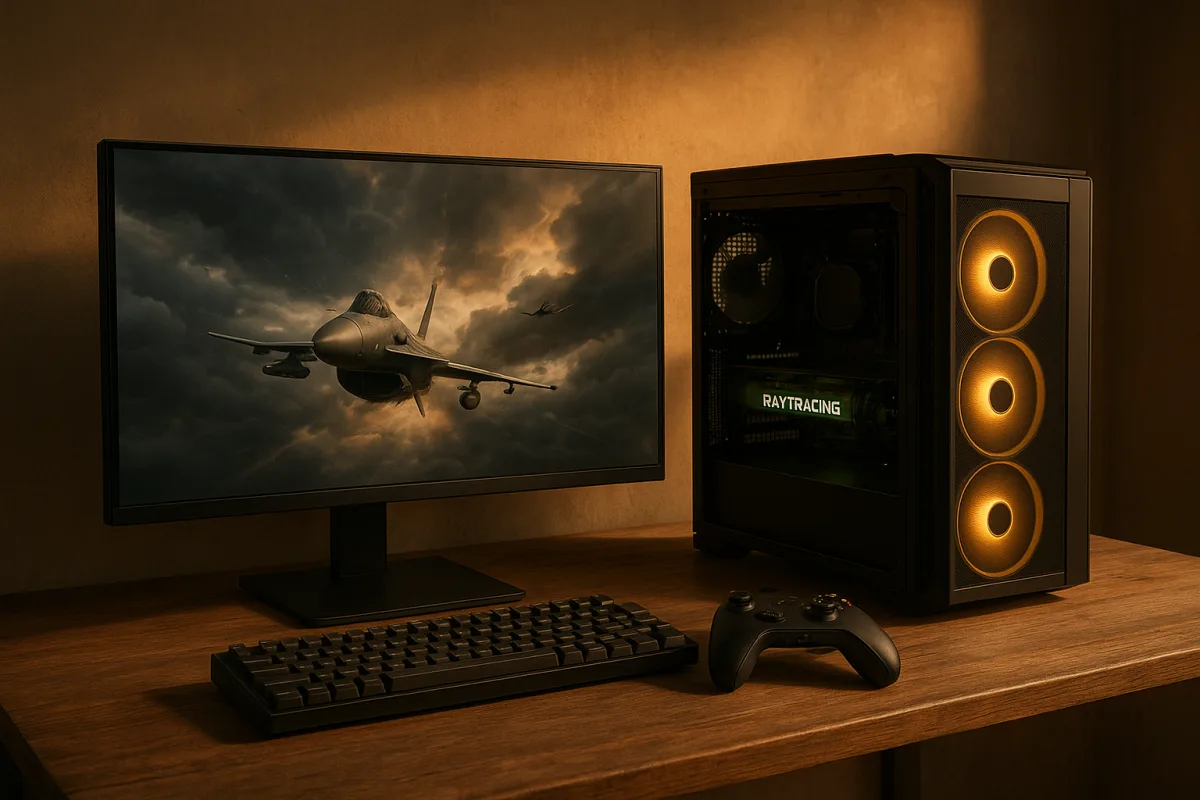
The big revival is not just about prettier contrails
Ace Combat 8: Wings of Theve is the first new mainline Ace Combat in seven years, which is long enough for a series’ habits to become mythology. Ace Combat 7: Skies Unknown launched in 2019 and has passed 7 million sales, according to GamesRadar, so Bandai Namco is not reviving a forgotten cult series. [6]
It is reviving a format with a clear identity: arcade flight action that wants the player to feel clever, fast, and slightly irresponsible. The trick is preserving that immediate lock-on-and-loop pleasure while adding systems that matter beyond the briefing screen.
That is why the most interesting confirmed change is not the new social hub, the avatar system, or the prospect of 100-player online matches. It is the weather, specifically the way Ace Combat 8 turns clouds into an active combat system.
Gematsu reports that the game combines Unreal Engine 5 with Bandai Namco’s proprietary Cloudly technology, producing dynamic weather that can interfere with missile locks. [1] That sounds like visual-fidelity copy until you consider what missile locks actually do to an Ace Combat fight.
Clouds are now part of the loadout check
In a conventional Ace Combat engagement, the core loop is wonderfully blunt. Identify an enemy, maneuver until the target is inside your weapon’s engagement conditions, wait for the lock tone, fire, then either confirm the hit or start the chase again.
The lock is the game’s quiet referee. It tells you that your aircraft position, nose direction, range, and weapon choice have created a credible shot. Without that reassurance, firing missiles becomes a gamble rather than a reliable finish.
Ace Combat 8’s cloud system complicates that bargain. The confirmed detail is that clouds can disrupt missile locks, not merely hide aircraft from the player’s eyes. [1] A cloud bank can therefore interrupt the final stage of an attack even when the target is visibly close.
That matters because it changes the value of positioning. In earlier arcade air-combat games, the ideal pursuit is often simple: stay behind the opponent, close the distance, and keep turning until the target cannot shake the lock.
With lock disruption in play, “stay behind them” may not be enough. If the target dives into heavy cloud, the pursuer must choose between following blind, holding position until the target emerges, switching targets, or using a different attack angle.
None of the available material specifies the exact cloud rules. We do not know the lock-loss timer, the cloud density threshold, whether every missile family is affected equally, or whether a lock breaks instantly versus degrading over time.
That missing detail is important. Community panic about “missiles being useless” would be premature, but so would assuming clouds are purely cinematic. Until players can test the system after launch, Cloudly’s balance impact remains a question of tuning, not an established fact.
Still, the direction is clear. Clouds become soft cover, not hard cover. They are not a mountain that blocks every line of attack, but a temporary disruption tool that can buy a defending pilot enough time to escape a clean missile solution.
What this does to a match
Imagine two fighters at medium altitude. The attacker has a standard rear-quarter pursuit, enough speed to stay close, and a missile lock beginning to form. The defender reaches a broad, dense cloud layer first.
If the lock disruption works consistently, the defender has created a decision point. The attacker can enter the cloud and risk losing visual orientation, remain outside and surrender distance, or climb above it in anticipation of an exit path.
That is a more interesting exchange than simply flying through fog. The defender has spent altitude, heading freedom, and possibly situational awareness to deny a missile shot. The attacker has spent time and positional advantage to keep pressure on the target.
This is the kind of system that quietly buffs disciplined players more than flashy ones. A pilot who watches terrain, sun angle, cloud cover, and exit routes should convert more kills than one relying entirely on close-range turning contests.
Kotaku’s hands-on preview described pursuing an enemy aircraft into the sun and being briefly blinded, with developers suggesting the enemy was using the light to break pursuit. The cloud mechanic appears to belong to that same design philosophy: the sky itself creates openings.
The likely casualty is the uncomplicated missile-spam approach, assuming the disruption occurs often enough to matter. A build focused solely on getting a fast lock from behind may remain strong in clear weather, but it loses consistency whenever targets can force engagements through cloud cover.
Ace Combat 8 also lets players equip two special weapons, SP1 and SP2, rather than committing to one special-weapon slot. [1] That could make cloud-heavy missions less punishing because players can carry tools for different target types instead of accepting a single-purpose loadout.
The sensible pairing, based on the confirmed systems rather than any published meta, is not necessarily two anti-air weapons. A player expecting unreliable aerial locks near clouds may value an air-to-surface option, then cash in on naval or ground targets when the sky becomes messy.
That does not mean clouds automatically nerf every air-to-air weapon. It means a match’s most dependable plan may no longer be “bring the biggest anti-fighter missile and solve every problem with it.” Exact weapon interactions are still unknown.
The meta will not move in a weekend unless the mechanic is overtuned. Players first need to learn where clouds appear, whether missions script their movement, which weapon types retain locks, and whether cloud cover helps human opponents as much as it helps AI aircraft.
For campaign players, that learning process should be immediate. For competitive multiplayer, it could take longer, especially because Ace Combat 8 is adding cooperative and social systems far beyond the series’ usual online offering. [2]
A campaign designed to teach the new rules
Kotaku reported that the first three campaign missions form a long-form tutorial, with mission four presented as the first “real” mission. That is a promising structure if the game wants weather to be a readable tactical system rather than a surprise failure condition.
The same preview says players can select aircraft, weapons, and squadmate equipment before missions. That matters because cloud disruption is more meaningful when preparation is a player choice, not an excuse for the game to invalidate a predetermined loadout.
Gematsu also reports real-time squad management aboard the carrier, interactive briefings, and wingman commands during missions. [1] These features suggest that Ace Combat 8 wants pre-mission planning and mid-mission execution to connect more directly than they did in Ace Combat 7.
The new chain-destruction system fits the same broader idea. Wreckage can physically affect other enemies, according to Gematsu, turning a successful strike into an opportunity to create follow-up damage rather than merely clearing a target marker. [1]
That is the tempting part of Wings of Theve’s ambition. An Ace Combat match has traditionally been about the immediate pleasure of flying and firing. This sequel appears to ask players to consider target order, weather, squad roles, and destruction cascades as connected tactical decisions.
The franchise’s old melodrama still has teeth
The campaign is not abandoning Ace Combat’s fondness for fictional geopolitics, military hardware, and radio chatter delivered with complete sincerity. IGN’s Hour Zero promotional episode frames the conflict through broadcaster Madison Haskell, whose daughter has enlisted to fly VTOL aircraft as an attack begins in Expo City.
That framing is useful because it suggests Wings of Theve is not treating war as only a scoreboard. Its public-facing story material puts civilians, propaganda, disrupted communications, and pilots’ families alongside aircraft spectacle, while the official story trailer confirms the campaign focus. [9]
Whether that lands depends on writing players have not yet seen, not on trailers. But the series has always worked best when its big, absurd air wars have enough conviction that a mission briefing feels like more than a queue for explosions.
Multiplayer is the real gamble
PC Gamer reports online airbase lobbies where players create pilotsona avatars, use emotes, and play small activities including Pac-Man. [2] It is an unusual direction for Ace Combat, a series whose best social feature historically has been arguing about planes and music.
The more consequential additions are Co-Op Assault and Co-Op Warfare, plus future PvP deathmatches and progression customization reported by PC Gamer. [2] Co-op is especially significant after Ace Combat 7 shipped without it, since coordinated roles could make weather and loadout choices matter more than in a solo sortie.
The returning Annihilation Battle mode offers veteran players a more recognizable anchor. PlayStation Blog confirms its return, preserving the score-chasing pressure of prior entries while the series experiments with hubs, squad structures, and much larger online ambitions. [9]
Kotaku’s preview reported plans for 100-player lobbies, seasonal content every two months, and a battle pass. Those are not automatically bad ideas, but they are not proof of longevity either. A live-service structure is only useful if its flight model and matchmaking give players reasons to return.
As of September 24, there are no post-launch patches, verified PC performance reports, or reliable community balance findings because the game has not launched. Do not mistake pre-release enthusiasm or pre-release dread for evidence.
The PC requirement is a real cost of admission
Steam lists Windows 11 64-bit, an Intel Core i7-10700K or AMD Ryzen 5 3600X, 16 GB RAM, and an RTX 2060 or Radeon RX 6600 XT as minimum requirements. Hardware ray tracing support, DirectX 12 with Shader Model 6.6, and 150 GB of SSD storage are mandatory. [8]
Recommended specifications rise to an Intel Core i7-12700K or Ryzen 5 5600X, 32 GB RAM, and an RTX 3070 or RX 6800. [8] That does not prove the game will run poorly on minimum hardware, but it does make clear that this is not an easy install for older PCs.
The Standard Edition costs $69.99 on Steam and suits players who want the base game, including the listed F-14A aircraft and Ace Combat Zero pre-order bonuses. The Deluxe Edition costs $89.99 and suits players who value three-day early access, cosmetics, and a Premium Ace Pass Plus voucher. [8]
Those prices are storefront edition prices, not a measure of the full PC upgrade bill. Anyone without a compatible GPU, sufficient SSD capacity, or 32 GB of memory for the recommended tier should price their hardware situation separately before treating Deluxe early access as the expensive part.
For a seven-year return, Ace Combat 8’s most credible promise is not that it will finally make players feel like fighter pilots. The series already knew how to do that. Its promise is that the airspace may finally fight back.
Frequently Asked Questions
What new gameplay mechanics does Ace Combat 8 Wings of Theve introduce?
Ace Combat 8 introduces several new mechanics, including real-time squad management on the aircraft carrier, interactive mission briefings, and wingman command during missions. It also features a physics-driven "chain destruction" system where wreckage can physically impact other enemies, and players can equip two special weapons simultaneously (SP1 and SP2), expanding combat options.
How does the weather affect missile locks in Ace Combat 8?
Dynamic clouds in Ace Combat 8 can disrupt missile locks, making weather an active tactical element rather than just scenery. Clouds can interrupt the final stage of a missile lock even when the target is visible, forcing players to consider positioning, cloud density, and timing to maintain or break locks. Exact lock-loss rules and timings have not been published yet.
What are the PC system requirements for Ace Combat 8 Wings of Theve?
The minimum PC requirements include Windows 11 64-bit, an Intel Core i7-10700K or Ryzen 5 3600X CPU, 16 GB of RAM, and a GPU with hardware ray tracing support such as an RTX 2060 or RX 6600 XT. Recommended specs are an Intel Core i7-12700K or Ryzen 5 5600X, 32 GB RAM, and an RTX 3070 or RX 6800 GPU. The game also requires DirectX 12 with Shader Model 6.6 or higher and 150 GB of SSD storage.
How does Ace Combat 8 change the arcade flight combat formula?
Ace Combat 8 preserves the series’ core arcade flight action but adds systems that matter beyond simple lock-on-and-fire gameplay. The introduction of dynamic weather, especially clouds that disrupt missile locks, adds strategic depth to positioning and engagement decisions. This change rewards disciplined play that considers environmental factors like terrain, sun angle, and cloud cover.
What multiplayer features are available in Ace Combat 8?
Multiplayer in Ace Combat 8 includes online airbase lobbies where players can customize "pilotsona" avatars, use social emotes, and play mini-games like Pac-Man. Modes include Co-Op Assault (PvE) and Co-Op Warfare (PvP), with plans for future PvP deathmatches and progression customization. The game also brings back the fan-favorite Annihilation Battle mode.
How we researched this
This article was assembled from 1 video source, 1 published article, 10 cited references.
Nothing here is based on hands-on testing. Where a figure or finding appears, it belongs to the source cited beside it, and the writing says so rather than implying otherwise. Every source is listed below so you can check it.
Sources
The First Ace Combat Game In Seven Years Is Playing For Keeps — Kotaku
Sick: Ace Combat 8 has online airbase lobbies where you can bum around as your own bespoke pilotsona
Impresiones de Ace Combat 8: Wings of Theve, la entrega más épica e inmersiva de la saga
Watch Ace Combat 8: Wings of Theve - Gameplay and Franchise Revival on Youtube
Related Articles
Ace Combat 8 Wings of Theve Online Modes and Gameplay Guide
Explore Ace Combat 8 Wings of Theve online modes, Co-Op Assault vs Warfare, gameplay mechanics, and progression in this detailed guide.
Control Resonant Gameplay and Graphics Review Deep Dive
Explore Control Resonant gameplay, Gravity Shift mechanics, graphics settings, and edition comparisons for an optimized PC gaming experience.
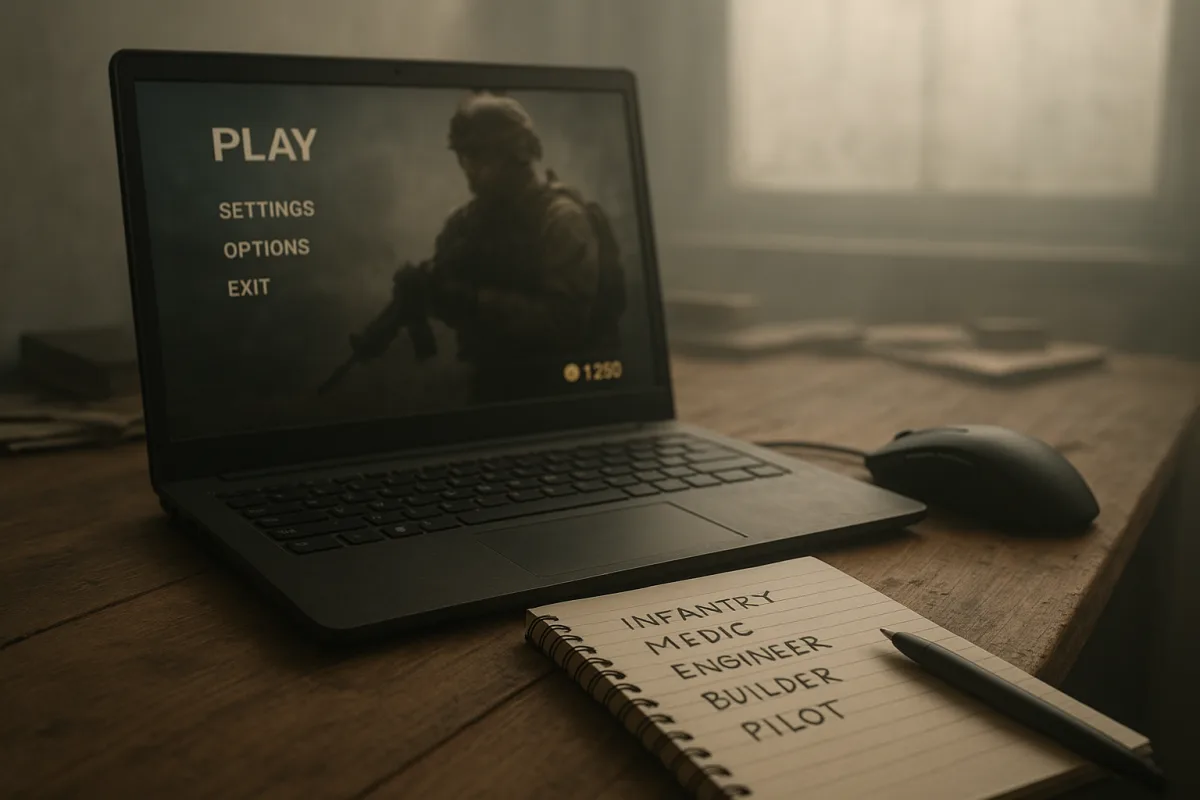
Wardogs Early Access Preview: Tactical FPS and Cash Economy
Explore Wardogs Early Access preview covering its tactical FPS gameplay, cash economy, roles, PC requirements, and known launch issues.
Onimusha Way of the Sword Review and Edition Comparison
Read our Onimusha Way of the Sword review with edition comparisons, PC requirements, and gameplay insights to help you decide before launch.