
Stranger Than Heaven PC Preview: Combat, Story, and Pricing
Get a detailed Stranger Than Heaven PC preview covering combat, story, release date, and where to buy the game at the best price.
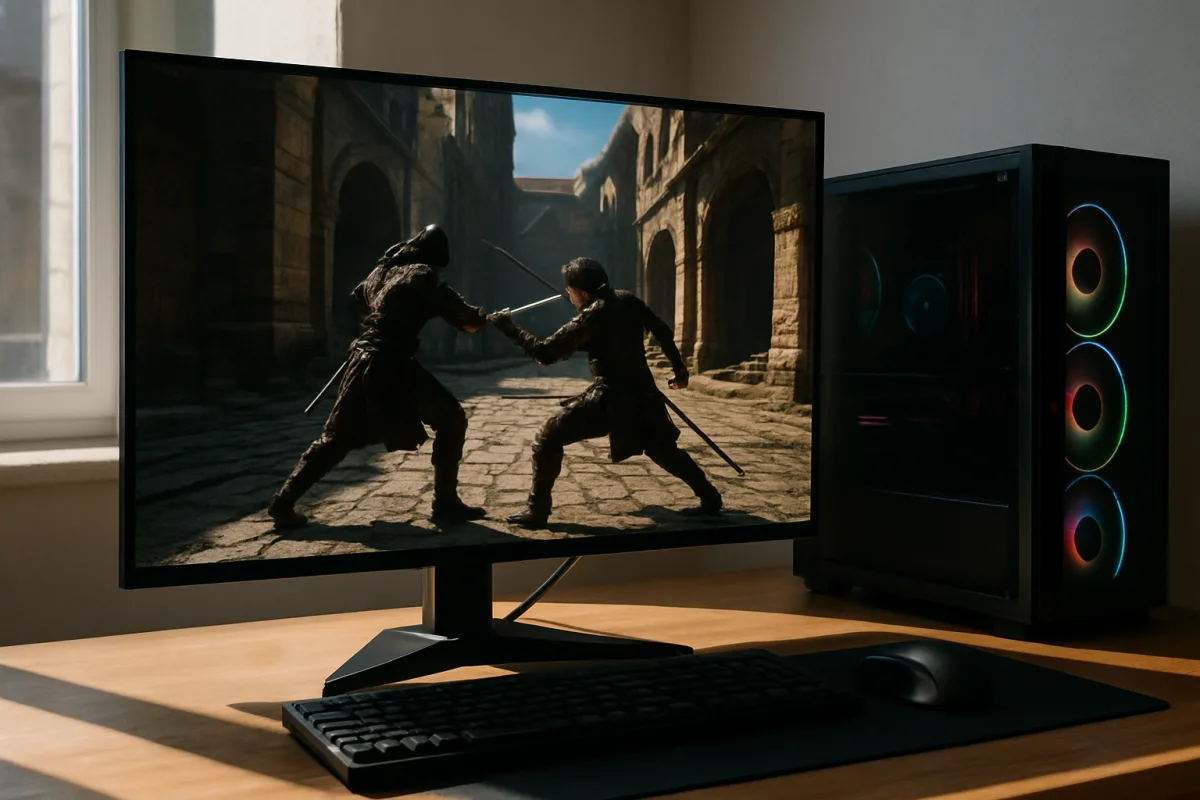
Stranger Than Heaven preview: RGG’s serious historical swing looks promising, if you can learn its parries
The quick list
Best overall: Steam pre-order, $69.99, for players who want the straightforward PC purchase and do not mind paying full price. [12]
Best value: Authorized third-party Steam keys, roughly $60.87 to $62.99, for patient PC players willing to check seller and region details before buying. [6]
Best for an Epic library: Wait, because Stranger Than Heaven is not currently available to pre-order on the Epic Games Store. [13]
Where to buy Stranger Than Heaven on PC
The practical decision is unusually simple. Stranger Than Heaven is not an early-access experiment with competing editions, performance benchmarks, or a pile of DLC bundles to audit. It is a $70 Sega release with a few legitimate cheaper key options.
Steam is the cleanest route, and its $69.99 price is the reference point as of late October 2026. Steam also confirms the January 15, 2027 release date, though its hardware requirement field still says TBD. [12]
Authorized key retailers offer the only meaningful price adjustment currently available. The research brief places GameBillet, Fanatical, and Green Man Gaming between $60.87 and $62.99, effectively a 10 to 13 percent cut from Steam’s list price.
That is a decent saving, not some wild grey-market miracle. The trade-off is the usual one: confirm the key activates in your region, check the retailer’s refund policy, and remember that the purchase still leads back to Steam.
European listings vary more sharply, with prices around €44.99 to €52.39 depending on the retailer and country. Idealo’s October 2026 listing shows the upper end at €52.39, which makes comparing local storefronts more useful than converting the US price yourself. [7]
Epic Games Store is not a competing option at launch, at least not yet. The store currently has no Stranger Than Heaven pre-order or sale listing, so players trying to consolidate PC libraries there have no purchase decision to make. [13]
| Option | Current price | What the price includes | Main trade-off | Best for |
|---|---|---|---|---|
| Steam | $69.99 | Base PC game and Steam activation | Full list price | Players who value direct purchasing and standard Steam refunds |
| Authorized third-party Steam retailer | About $60.87 to $62.99 | Usually a Steam key for the base game | Regional restrictions and retailer-specific refund terms | Players prioritising a modest legitimate discount |
| European third-party listings | About €44.99 to €52.39 | Base-game key, subject to country and seller | Price and activation availability differ by region | European buyers prepared to compare local offers |
| Epic Games Store | Not available | Nothing currently, no listed pre-order | No confirmed purchase route | Players willing to wait for a possible future listing |
No retailer price includes hardware upgrades, and nobody can credibly tell you what PC build Stranger Than Heaven needs today. Ignore speculative requirement pages and “can your PC run it” calculators for now. Official specifications have not been released. [12]
The serious RGG game, with the weird RGG game still inside it
The actual question is whether Stranger Than Heaven sounds like your kind of RGG game. The answer is not simply “do you like Yakuza?” This looks like a conscious change in rhythm, violence, and storytelling.
Ryu Ga Gotoku Studio’s new action-adventure follows Makoto Daito, a man of Japanese and American heritage, beginning in 1915 as he flees San Francisco after being framed for a crime. IGN’s extended preview describes immediate racist policing in America, followed by a different kind of exclusion once Makoto reaches Japan.
That setup matters because the tone appears less interested in the familiar Yakuza routine of noble gangsters, melodramatic betrayals, and absurd detours every five minutes. Makoto is initially timid, socially uncertain, and visibly treated as an outsider in both countries.
GameSpot’s hands-on report says director Mikinobu Abe framed the project around identity and belonging, then concluded the story needed a five-decade span. That is a big narrative bet, and it is more ambitious than merely placing another RGG crime plot in a historical costume.
The game moves from 1915 Kokura to 1929 Kure and 1943 Osaka, with five cities across roughly half a century promised overall. Eurogamer’s preview found the transitions persuasive, especially in how streets, nightlife, clothing, automobiles, and class divisions change alongside Makoto.
That is potentially the killer feature. RGG has always been good at making a dense district feel lived in, but Stranger Than Heaven’s structure lets it patch the same broad social world forward through time. Rather than adding map icons, it changes the map’s historical context.
Polygon’s preview particularly praised soot-covered 1915 Kokura, its foundry economy, open interiors, gambling dens, wooden streets, and increasingly modern city texture. It also noted that San Francisco is a prologue rather than a proper open-world location, which tempers expectations early.
There is an important caveat for anyone hoping for Assassin’s Creed-style historical reconstruction. RGG has said Stranger Than Heaven is not a reproduction of actual history. Its approach is fictional realism, a stylised period setting that knowingly permits anachronism rather than a museum exhibit. [4]
That means modern-feeling jazz, unusual genre shifts, and the presence of Snoop Dogg as Orpheus are not mistakes the studio accidentally left in the build. They are part of the pitch. Whether that lands is going to depend heavily on tolerance for RGG’s tonal mischief.
Combat is the balance change that matters
If Stranger Than Heaven has a make-or-break system, it is combat. The first short demo left IGN and GameSpot concerned by slow responses, awkward shoulder-button attacks, and parry timing that seemed more inconsistent than demanding.
The later three-hour demo changed that read. Both outlets reported that the October version felt more responsive, and director Mikinobu Abe confirmed the studio adjusted the combat after earlier hands-on feedback. This is not a total redesign, but it is exactly the kind of tuning pass an action game needs.
Instead of putting light and heavy attacks on face buttons, Stranger Than Heaven maps left and right strikes across the bumpers and triggers. Direction matters on defence too: with guard held, a correctly timed left or right input parries an incoming blow from the matching side.
That is the important mechanical distinction. Yakuza’s older street fights often reward getting a crowd under control, cycling through heat actions, and grabbing whatever ridiculous environmental weapon happens to be closest. Stranger Than Heaven appears built around reading animations, refusing greedy follow-ups, and taking small safe openings.
Think less “mash out a combo and finish with a bicycle,” more “you have a two-second punish window, do not waste it.” Eurogamer compared the result to a ferocious action film once its controls click, but warned that some players may bounce off the learning curve.
Weapons create the closest thing this game has to build choices. IGN found the massive hammer excellent for breaking guard and brutal finishers, but costly in mobility. The odachi brings reach and power, while one-handed knives and wooden clubs better support evasive play and quick directional parries.
That makes the knife and club look like the early sensible picks for players still learning the system. Mobility is a defensive stat here, even if it is not labelled that way. A slow weapon may win the damage spreadsheet, then get you clipped by the next attacker.
Polygon also reports that weapons can be upgraded at blacksmiths and carried between time periods, becoming more powerful as they are refined. That is a meaningful long-term progression hook, provided RGG gives enough material and technique variety to prevent one upgraded favourite from becoming the default answer.
The studio has also reportedly included an optional suit, accessed from Makoto’s room, that lets him absorb substantially more damage. Polygon’s preview identifies it as a way to soften the experience for players struggling with the new timing and controls.
That is a better accessibility lever than flattening every encounter. Let the parry-first build remain demanding for players who want it, then offer a survivability setup for those who want to see the story without bouncing off a factory boss for an evening.
Still, the usual pre-release warning applies. No broad player reception, difficulty data, or long-term balance consensus exists yet because the game is unreleased. We know the design intent, not whether the final upgrade economy or boss curve holds together over a full campaign.
Showbiz may be the real endgame time sink
Every RGG game needs a reason to neglect the main plot for three hours, and Stranger Than Heaven has several. Beigoma spinning-top battles, menko card slams, mahjong, gambling games, shooting galleries, arm wrestling, and fight clubs all return in period-appropriate forms.
The major diversion is Showbiz, a music-revue management activity combining the business simulation instincts of Yakuza’s cabaret systems with the performance timing of karaoke. You recruit performers, arrange musicians and stage effects, set ticket prices, select songs, and try to turn a profit.
That could have been a disconnected minigame, but the extended demos suggest it is tied directly to the game’s themes. Makoto can collect rhythms and sounds from the environment, including street noises and combat impacts, then work those samples into future performances.
Players can also alter song components, changing the mood or style of lead, rhythm, bass, drums, and other instruments. IGN’s preview describes turning a Balkan brass arrangement toward contemporary punk, which is about as historically pure as a vending machine in feudal Japan.
But that is the point. RGG’s stated fictional approach gives Showbiz permission to be a musical toybox rather than a strict 1910s simulation. More importantly, the minigame traces Makoto’s rise from unwanted outsider to someone shaping nightlife and popular culture.
Celebrity casting is where the pitch gets shakier. Japanese singer Ado voices and performs as Keiko, which hands-on impressions suggest fits naturally because the character is tied to Showbiz. Snoop Dogg’s Orpheus also has a thematic foothold, teaching Makoto cigarette crafting and joining the music-world outsider angle.
The Tupac Shakur likeness is harder to assess. IGN notes that RGG Studio obtained approval from Tupac’s estate and family, but permission is not the same thing as artistic necessity. Until the final game explains Amaru’s role, scepticism is more reasonable than either outrage or applause.
Who each option suits
Steam at $69.99 suits players who want the reliable, direct PC route. It is the low-friction purchase, especially for players who prefer Steam’s ecosystem, tracking features, and familiar refund process. It does not yet offer the reassurance of official PC performance targets. [12]
Authorized third-party Steam keys at roughly $60.87 to $62.99 suit value-focused buyers. The saving is real enough to matter, particularly on a new $70 release, but only if the seller is authorised and the key is confirmed for your region. [6]
European offers around €44.99 to €52.39 suit shoppers willing to compare local stores. Regional pricing can beat the US-equivalent cost meaningfully, though it is worth checking whether VAT, activation limits, and refund policies alter the apparent bargain. [7]
Waiting suits players unconvinced by deliberate parry combat or concerned about PC performance. Stranger Than Heaven’s story ambition looks substantial, but this is not a game that needs to be panic-bought before official specifications, launch reviews, and broader controller-versus-keyboard impressions arrive.
Frequently Asked Questions
What are the key combat mechanics in Stranger Than Heaven on PC?
Stranger Than Heaven features a combat system rebuilt around directional attacks, parries, dodges, and independent left-right limb inputs. This makes the fighting more tactical and deliberate compared to the combo-heavy style of previous Yakuza games, emphasizing methodical engagements over button-mashing. Weapons like knives and crowbars are integrated into the combat for added variety.
When is Stranger Than Heaven releasing on PC?
Stranger Than Heaven is scheduled to launch on PC on January 15, 2027. This release date is confirmed by the Steam store page as of late October 2026.
Where can I pre-order Stranger Than Heaven for PC?
The game is available for pre-order primarily through Steam, which lists the base price at $69.99. Authorized third-party retailers such as GameBillet, Fanatical, and Green Man Gaming also offer Steam keys at a modest discount, typically between $60.87 and $62.99. The Epic Games Store does not currently offer pre-orders for the game.
How does Stranger Than Heaven differ from previous RGG Studio games?
Stranger Than Heaven departs from the usual Yakuza formula by focusing on a more serious, historically inspired story spanning several decades and featuring a mixed-race protagonist. Its combat system is more deliberate and tactical, with independent limb control, contrasting with the looser, combo-heavy brawling of earlier titles. The tone is less about melodramatic gangster tropes and more about themes of identity and belonging.
What are the PC pricing options for Stranger Than Heaven?
The standard PC price on Steam is $69.99. Authorized third-party sellers offer discounted Steam keys ranging from about $60.87 to $62.99, representing a 10 to 13 percent saving. European pricing varies more by retailer and country, typically between €44.99 and €52.39. No official pricing or availability exists for the Epic Games Store at this time.
How we researched this
This article was assembled from 2 video sources across 2 channels, 6 published articles, 13 cited references.
Nothing here is based on hands-on testing. Where a figure or finding appears, it belongs to the source cited beside it, and the writing says so rather than implying otherwise. Every source is listed below so you can check it.
Sources
Stranger Than Heaven Finally Won Me Over | Extended Hands-On Preview — IGN
Stranger Than Heaven's Story Is Built On "Fictional Realism" | Preview — GameSpot
Pokémon Is Officially Planning a Big Retail Expansion in 2029 — Polygon
Stranger Than Heaven May Have Forgotten One Thing That Made Yakuza Great — Polygon
Dragon Ball Xenoverse 3 Spices Up Anime Fighters With the Soul Switching Mechanic | IGN Preview — IGN
Konami Has Staged the Biggest Unlikely Gaming Comeback of 2026 — Polygon
Stranger than Heaven (PC) desde 52,39 € | Octubre 2026 | Compara precios en idealo
In a Steam Next Fest plagued by AI slop, the biggest single-player demo is a game about fighting AI
Capcom's Recent Releases Lack Replayability for Fans : LevelUpTalk
Epic Games Store | Download & Play PC Games, Mods, DLC & More – Epic Games
Watch Stranger Than Heaven: New Yakuza Team Action-Adventure Preview on Youtube
Also from the sources
Related Articles
Exodus Sci-Fi RPG Preview
Explore the Exodus sci-fi RPG preview, its unique time dilation feature, gameplay, and release details compared to Mass Effect.
Onimusha Way of the Sword Review and Edition Comparison
Read our Onimusha Way of the Sword review with edition comparisons, PC requirements, and gameplay insights to help you decide before launch.
Valor Mortis system requirements and review
Get detailed Valor Mortis system requirements and an in-depth review covering gameplay, combat, and hardware needs for PC players.
Ace Combat 8 Wings of Theve Gameplay and Franchise Revival
Explore Ace Combat 8 Wings of Theve gameplay, new weather mechanics, system requirements, and how it revives the arcade flight combat franchise.