
Onimusha Way of the Sword Review and Edition Comparison
Read our Onimusha Way of the Sword review with edition comparisons, PC requirements, and gameplay insights to help you decide before launch.
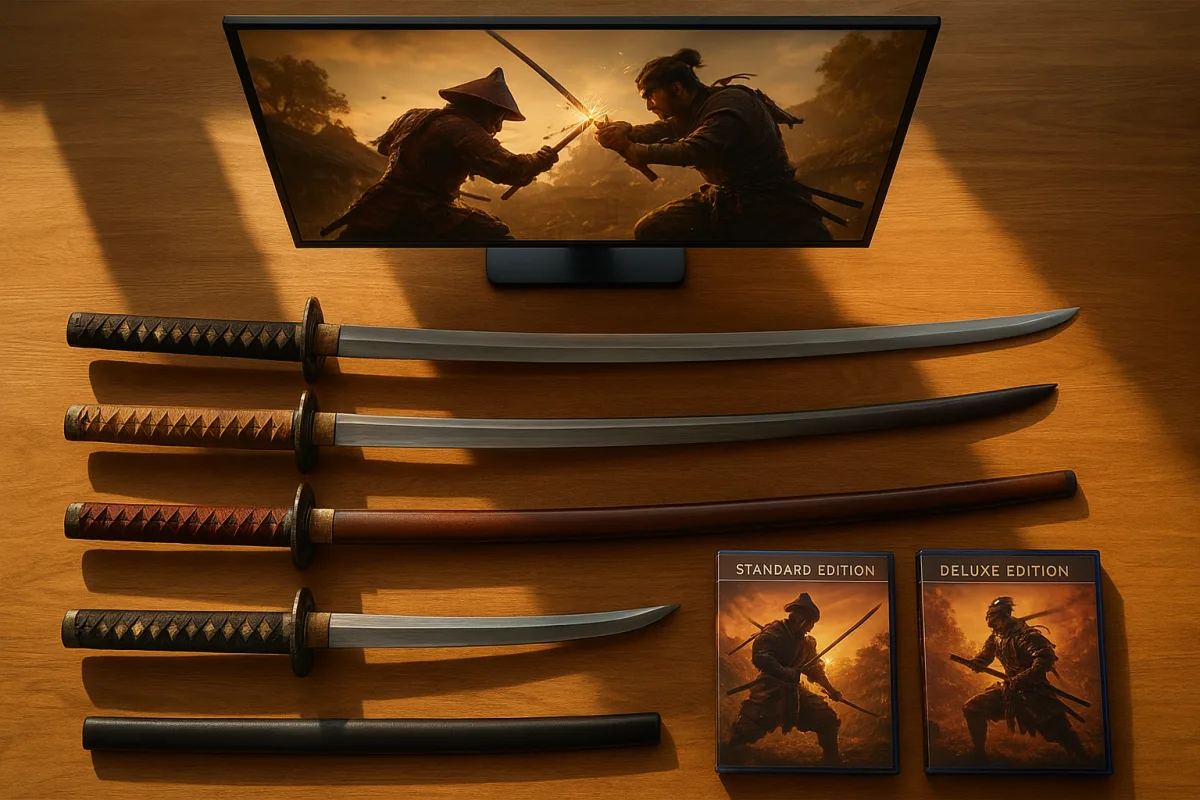
The quick list
- Best overall: Standard Edition, for players who want the complete action game without paying for menu cosmetics.
- Best for collectors of unlockables: Deluxe Edition, for players who know they will use extra charms and sword appearances.
- Best for PC completionists: Premium Deluxe Edition, for Steam players who want outfits, a haori, and a mini digital soundtrack.
Capcom’s first new Onimusha in roughly two decades is not really asking whether you remember the PlayStation 2 games. It is asking a more practical question: do you want a demanding, boss-heavy samurai action game at $69.99, even if its hub exploration is less sharp than its swordplay?
The reviews point to a fairly clear answer. Onimusha: Way of the Sword is a successful modernisation of the series, not a cautious remaster with a new camera. Its fundamentals are good enough that the edition choice matters more than any argument over whether the old fixed-camera format should have returned.
The game is scheduled to launch on September 25, 2026. [1] The Standard, Deluxe, and PC-only Premium Deluxe editions are all full versions of the same game, so this is not a case where the expensive package quietly contains a substantial campaign add-on.
Comparison table
| Edition | Price | Platforms | Included extras | Storage and PC performance context | The trade-off |
|---|---|---|---|---|---|
| Standard Edition | $69.99 | PS5, Xbox Series X and S, Switch 2, PC | Base game | PC version requires 50 GB SSD space. Recommended specification targets 1080p and 60 FPS on Medium with upscaling enabled. [2][[3]](https://gamers4all.com/onimusha-way-of-the-sword/pc-system-requirements/?utm_source=openai "Onimusha: Way of the Sword PC Requirements Explained | Gamers4All")[11] |
| Deluxe Edition | $79.99 | PS5, Xbox Series X and S, Switch 2, PC | Deluxe Kit, including extra charms and sword appearances | Same game size and system requirements as Standard | Costs $10 more for equipment effects and cosmetic presentation rather than new missions or bosses [10] |
| Premium Deluxe Edition | $89.99 | PC, Steam only | Deluxe Kit, outfits, haori, mini digital soundtrack | Same 50 GB SSD requirement, with published targets dependent on DLSS 4.5 or FSR 3.1 [2][[3]](https://gamers4all.com/onimusha-way-of-the-sword/pc-system-requirements/?utm_source=openai "Onimusha: Way of the Sword PC Requirements Explained | Gamers4All")[11] |
Prices above are digital storefront prices. They do not include potential platform subscription costs, controller purchases, expanded SSD storage, or the large required Switch 2 download attached to its Game-Key Card format. [1][11]
What is actually being revived
The original Onimusha games mixed Sengoku-era Japan, demons, soul absorption, and quick lethal counters. Way of the Sword keeps the Genma, the Oni gauntlet, and the Issen counter, but rebuilds them around a third-person action-game camera and a much deeper defensive system.
GamingBolt’s comparison with the PlayStation 2 games makes the key distinction well. This is a standalone story in early Edo-period Kyoto rather than a continuation of the Nobunaga storyline, so newcomers do not need to play Onimusha Warlords, Samurai’s Destiny, Demon Siege, or Dawn of Dreams first.
That time shift is more than historical wallpaper. The older games used the warfare and instability of the Sengoku period. Way of the Sword puts its demon invasion in an early Edo Kyoto associated with relative peace and cultural growth, then contaminates real landmarks such as Kiyomizu-dera with supernatural corruption. [6]
It is also why the game can feel recognisably Onimusha without feeling mechanically antique. The fixed angles and pre-rendered backdrops are gone. In their place is a wheel-and-spoke map built around Kyoto, plus more directed excursions to temples, forests, mountains, laboratories, and the Imperial Palace.
The combat change that matters
The important thing is not simply that Musashi has a parry. Plenty of games have one. The reviews agree that Capcom has separated defensive answers by function, so a player who learns enemy behaviour has faster and safer routes through fights than one who only rolls away.
Gameranx describes parries as most useful against sword attacks, while dodges handle physical and elemental attacks more reliably. A well-timed dodge can counter grabs, whereas other dangerous attacks require deflection. That distinction stops the system becoming a single parry button with different animations.
IGN breaks the loop down more precisely. Parries build the Blazing gauge and enhance Musashi’s sword, deflects inflict heavy stamina damage, and reflex dodges can feed into high-damage follow-up combos. Once an enemy is exhausted, a Break Issen lets players select a target point.
That target choice is a neat resource decision rather than pure spectacle. IGN notes that red targets deliver maximum damage, while purple targets offer roughly half the damage but produce extra souls. Those souls can restore health or fuel Oni armaments, so the obvious burst option is not always optimal.
The classic Issen remains the high-risk skill check. It demands an attack input at the instant an enemy strikes, rather than a conventional defensive response. GameSpot calls its timing tighter than parries, deflects, and reflex dodges, but regular enemies can die instantly and chained Issen counters reward mastery.
That is the balance change old Onimusha players should care about. Issen is no longer the one glamorous trick hovering above a simpler combat model. It now sits atop a complete stamina, meter, soul, dodge, parry, and deflect economy.
Skill Up argues that this lets a cautious player win a boss in about five minutes, while a player using the full toolkit can finish the same fight in a fraction of that time. That sounds like a good difficulty model in theory, because it rewards improvement without requiring perfect-play bravado.
The catch is that the game’s standard Action difficulty apparently does not stay at its gentle demo level. Gameranx found its back half unusually brutal for modern Capcom, particularly in boss fights. PC Gamer, Tom’s Guide, and Inven Global likewise identify difficulty spikes or an inconsistent curve as real criticisms. [7][8][9]
Community panic over the easy demo therefore looks premature. The larger concern is the opposite: a gradual system tutorial gives way to mid-game encounters that may demand much better command of systems the player has only loosely used until then. That is a pacing issue, not evidence that the combat is unfair.
Great duels, less convincing Kyoto
The boss fights are the consistent headline. Skill Up compares their spectacle and mechanical focus to Monster Hunter delivered as concentrated duels. Tom’s Guide similarly places the game’s bosses among the best since Sekiro: Shadows Die Twice, which is strong praise but not a promise that every player will enjoy their demands. [9]
Musashi is the other unusually unanimous positive. Capcom modelled the character on the late Toshiro Mifune, the Japanese actor celebrated for his samurai-film performances. IGN, GameSpot, and Skill Up all single out the facial animation, physical performance, and deliberately cocky personality as central to making him work.
That matters because the broad plot sounds familiar. A demon force corrupts Kyoto, Musashi receives power he does not want, and allies need him to save the city. GameSpot calls the main story straightforward, while Skill Up says the narrative is thin but its characters, villains, body horror, and tone give it weight.
The English performance is less secure ground. PC Gamer and other critical coverage flag grating English voice work, so players sensitive to dub quality may want to consider the Japanese-language option rather than assuming a prestige Capcom production automatically nails both tracks. [8]
Where the consensus gets messier is the city itself. IGN found exploration rewarding across a 39-hour completionist playthrough, citing charms, upgrades, shortcuts, folklore, Lady Murasaki’s linked side stories, and collectible lion dogs that unlock snippets of Japanese mythology.
GameSpot reaches almost the reverse conclusion. It finds Eastern Kyoto compact enough not to become overwhelming, but says its side quests are formulaic, with repeated errands, enemy clear-outs, and archery tasks that revisit old areas. The reviewer’s sharper complaint is that upgrade materials make skipping them unattractive.
Skill Up lands between those positions. It estimates roughly 25 to 30 hours with a modest amount of side content, but believes returning minibosses and repeated exploration loops make the game feel longer rather than richer. Gameranx similarly praises free-form demon-clearing but finds much of Kyoto visually drab and repetitive.
This is the trade-off to buy around. If you play action games to learn boss patterns, experiment with defensive timings, and optimise a clean kill, the hub is likely to be an acceptable delivery system. If you need every optional quest to introduce a new gameplay idea, expect some filler.
PC version, settings, and edition value
Gameranx reports a stable PC experience on a high-end system at maximum settings, with no hitching, slowdown, obvious visual problems, or bugs encountered. That is encouraging, especially after recent Capcom PC releases that made performance a reasonable pre-order concern.
It is still one reviewer’s experience, not a full hardware survey. The official-style requirements reported by All Things How and Gamers4All list an Intel Core i5-8400 or Ryzen 3 3100, 16 GB RAM, and GTX 1660 6 GB or RX 5500 XT 8 GB for 1080p at 30 FPS on Low. [2][3]
The recommended line moves to an i5-10400 or Ryzen 5 3600, 16 GB RAM, and RTX 2060 Super 8 GB or RX 6600 8 GB for 1080p at 60 FPS on Medium. Both targets use DLSS 4.5 or FSR 3.1, and both require 50 GB on an SSD. [2][3]
That upscaling clause is the footnote worth reading. Capcom has not published native-resolution performance targets, so do not read “RTX 2060 Super for 60 FPS” as a native 1080p guarantee. It is a 60 FPS target under a specified upscaling configuration.
As for editions, the Standard Edition is the sensible pick. At $69.99, it contains the whole story, combat system, bosses, hub, and side content. [11] The Deluxe Edition costs $79.99 and adds a Deluxe Kit of charms and sword appearances, which may appeal to players who enjoy build modifiers and visual customisation. [10]
The Premium Deluxe Edition is the least broadly useful option because it is PC-only through Steam. At $89.99, it includes the Deluxe material plus outfits, a haori, and a mini digital soundtrack. [10][11] None of those extras address the game’s actual weak point, namely repetitive optional content.
Who each option suits
Standard Edition suits most players. Buy it if you want the revived series for its highly regarded combat, boss fights, horror-inflected Kyoto, and expressive Musashi. It is also the sensible choice for anyone still unsure whether the semi-open hub structure will land for them.
Deluxe Edition suits players who care about charms and presentation. The $10 premium is defensible only if the added charms sound useful to your preferred difficulty approach or you value sword appearances. Do not choose it expecting extra story chapters, exclusive bosses, or a better campaign layout. [10]
Premium Deluxe Edition suits Steam-only collectors. The $89.99 package is for players who want every listed cosmetic extra and the mini soundtrack in one purchase. Its Steam exclusivity and $20 premium over Standard make it a poor value for everyone else. [10][11]
PC players near minimum specification should wait for broader testing. The listed minimum is explicitly built around Low settings, 1080p, 30 FPS, and upscaling. [2][3] Gameranx’s positive high-end report is promising, but it does not establish how the game behaves on GTX 1660-class hardware.
Series veterans who want the old format exactly should adjust expectations. Way of the Sword retains Issen, souls, Genma, and samurai horror, but its early Edo setting, free camera, elaborate defense matrix, and Kyoto hub make it a reboot in design terms. That is the point, and by most review accounts, it is why the revival works.
Frequently Asked Questions
Which edition of Onimusha Way of the Sword is best to buy?
The Standard Edition at $69.99 is recommended for most players who want the full game experience without paying extra for cosmetic items. The Deluxe Edition adds charms and sword appearances for $10 more but does not include new story or gameplay content. PC players interested in additional outfits and a mini soundtrack can consider the Premium Deluxe Edition, which is Steam-exclusive and costs $89.99.
What are the PC system requirements for Onimusha Way of the Sword?
The game requires about 50 GB of SSD space. Minimum specs include Windows 11, an Intel i5-8400 or AMD Ryzen 3 3100 CPU, 16 GB RAM, and a GTX 1660 6GB or RX 5500 XT 8GB GPU, targeting 1080p at 30 FPS with DLSS 4.5 or FSR 3.1 upscaling. Recommended specs are Windows 11, Intel i5-10400 or Ryzen 5 3600, 16 GB RAM, and an RTX 2060 Super 8GB or RX 6600 8GB GPU for 1080p at 60 FPS on Medium settings with upscaling. Native resolution performance without upscaling is not officially disclosed.
How does Onimusha Way of the Sword's combat system work?
The game retains core Onimusha mechanics such as the Genma enemies, Oni gauntlet, and Issen counter, but adapts them to a modern third-person action camera. Combat is praised for its layered sword duels and challenging boss fights, emphasizing timing and precision rather than button mashing.
Is Onimusha Way of the Sword a successful revival of the series?
Yes, reviews generally regard it as a strong revival rather than a mere nostalgia-driven remaster. It modernizes the series with solid fundamentals, especially in swordplay and boss design, though some critiques mention repetitive hub activities and side quests. It holds an 85/100 Metacritic score on PS5, reflecting positive reception.
What platforms is Onimusha Way of the Sword available on?
The game launches on September 25, 2026, for PS5, Xbox Series X and S, Nintendo Switch 2, and PC (Steam, Epic, Microsoft Store). Physical editions are confirmed only for Nintendo Switch 2 as a Game-Key Card with a large download; standalone physical editions for PS5 and Xbox Series X/S have not been officially confirmed.
How we researched this
This article was assembled from 5 video sources across 5 channels, 11 cited references.
Nothing here is based on hands-on testing. Where a figure or finding appears, it belongs to the source cited beside it, and the writing says so rather than implying otherwise. Every source is listed below so you can check it.
Sources
Onimusha: Way of the Sword - Before You Buy — gameranx
Onimusha: Way of the Sword vs. The Original PS2 Games - 15 BIGGEST Differences — GamingBolt
Fighting Is Everything In Onimusha: Way Of The Sword - Review — GameSpot
Onimusha: Way of the Sword launches September 25, demo now available - Gematsu
Onimusha: Way of the Sword PC Requirements and Performance (Sep 2026)
Onimusha: Way of the Sword PC Requirements Explained | Gamers4All
Onimusha Way of the Sword Story: Characters & Setting Overview - Onimusha: Way of the Sword Wiki
Why Kyoto Was The Perfect Setting For Onimusha: Way Of The Sword
'Onimusha: Way of the Sword' Debuts to Strong Reviews with 85 Metacritic Score - Inven Global
Watch Onimusha: Way of the Sword Revival and Reviews on Youtube
Also from the sources
Related Articles
Ace Combat 8 Wings of Theve PC Reception and Features
Explore Ace Combat 8 Wings of Theve PC reception, system requirements, editions, and multiplayer features before its October 2026 launch.
Control Resonant Gameplay and Graphics Review Deep Dive
Explore Control Resonant gameplay, Gravity Shift mechanics, graphics settings, and edition comparisons for an optimized PC gaming experience.
Halloween The Game Review: Editions, Gameplay, and PC Specs
Read our Halloween The Game review covering editions, gameplay impressions, PC specs, and early access issues before buying.
Valor Mortis system requirements and review
Get detailed Valor Mortis system requirements and an in-depth review covering gameplay, combat, and hardware needs for PC players.