
Exodus Sci-Fi RPG Preview
Explore the Exodus sci-fi RPG preview, its unique time dilation feature, gameplay, and release details compared to Mass Effect.
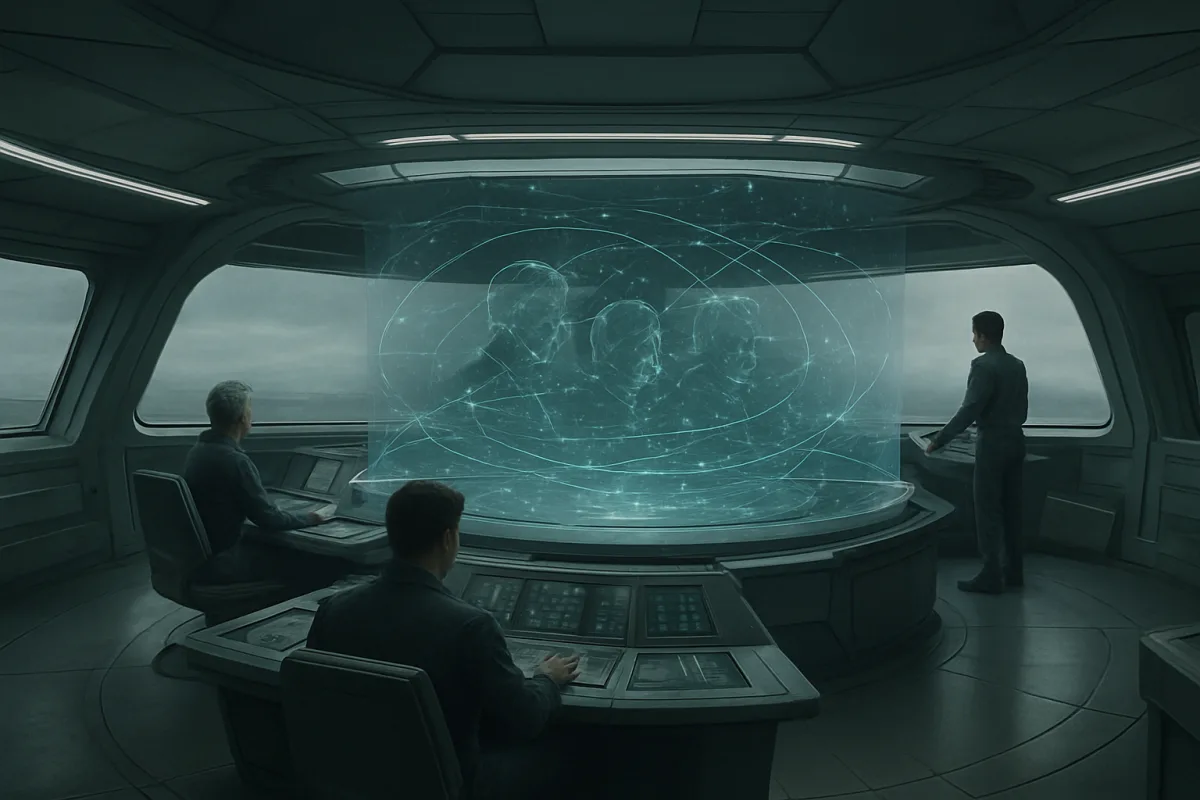
Time dilation is Exodus’ real Mass Effect difference
The easy comparison is obvious. Exodus is a third-person, cover-based sci-fi RPG with a protagonist, two mission companions, dialogue choices, a morality spectrum, romances, and a spaceship. Polygon’s preview says that description could practically be a Mass Effect pitch. [2]
That is not a criticism by itself. Mass Effect’s shooting-and-conversation loop still works, and the early hands-on reports from IGN and Polygon both found Exodus’ combat readable and satisfying, even if it wears its BioWare influences on its sleeve. [2][6]
The part worth watching is not the ability wheel, the blue-and-red dialogue presentation, or the mech companion. It is time dilation, the system Archetype Entertainment is building its campaign structure around. That could make Exodus feel meaningfully different. [2]
In Exodus, humanity has no warp drive, wormhole network, or other convenient way around the speed-of-light limit. Long-range travel means moving extremely close to light speed, and that makes time pass differently for travellers than it does for people at home. [2]
This is not just background lore meant to make a loading screen sound clever. Archetype calls these high-stakes journeys “Exodus missions,” and narrative director Drew Karpyshyn told Polygon they are intended as major narrative choices rather than routine errands. [2]
That distinction matters. In Mass Effect, Commander Shepard can visit a planet, resolve a quest, and return to the Normandy without the homeworld aging between missions. Plot urgency exists, but the calendar mostly stays where the writer needs it. [5]
Jun Aslan does not get that luxury. Polygon’s interview with Karpyshyn uses a five-light-year destination as the clearest example: the outward and return journeys take ten years for people not aboard the ship, even if they feel like days to Jun. [2]
The exact outcome is determined first by distance. A known destination has a known baseline cost, but the journey can become much more expensive if Jun is diverted, goes off course, or must travel onward to another system. [2]
That is the key mechanical promise. An Exodus mission starts as a decision with an expected time bill, but it can compound into a much longer absence. Karpyshyn told Polygon that a traveller might ultimately be away for 10, 20, or even 100 years. [2]
What the player is actually paying
The resource being spent is not fuel, credits, or a cooldown. It is shared time with everyone who remains in a system. Jun comes back biologically close to the person who left, but home may be politically and emotionally unrecognisable. [2]
That cost applies to companions as well. GameSpot’s two-hour preview stresses that a squadmate can leave on a mission to save their civilisation, then return to find there is no meaningful home left to save. [2]
This is where Exodus has a chance to escape the usual companion-RPG rhythm. Most games ask whether you have enough approval to unlock a personal quest. Exodus can ask whether helping a companion now will erase the life they expected afterward. [2]
It also changes the stakes of faction decisions. A local choice might not resolve while Jun is standing in the room. It may echo through decades, after institutions change, leaders die, or a newly liberated group has built a different future. [2]
Archetype’s fiction has room for that because information also travels slowly. Polygon notes that star systems are less connected than they are in most space operas, so societies may know other worlds exist without knowing much about current conditions there. [2]
That is a better fit for consequence than the usual “your decision changed a codex entry” approach. The player is not merely choosing a faction reward, they are potentially sending Jun away while the consequences grow beyond his ability to manage them. [2]
There is a caveat, because publishers love to make every narrative system sound like a revolution. Karpyshyn explicitly said not every mission triggers time dilation, so players should not expect every side activity to advance the universe by decades. [2]
That is probably sensible. If buying a shotgun mod aged the supporting cast ten years, the system would be exhausting rather than dramatic. The trick is whether Exodus missions occur often enough to shape the campaign without turning every departure into paperwork. [2]
The Khonsu mission shows the smaller layer
IGN’s hands-on preview took place on Khonsu, an orbital construct above the human world of Lidon. Jun and companions Elise Charroux and Suliman infiltrate it to free the Kay, a population of genetically uplifted frogs. [6]
Moment to moment, this is where the Mass Effect resemblance is strongest. Jun shoots from cover, commands two allies through a slowed-time ability wheel, and combines powers such as Petrify and Erupt for a familiar primer-and-detonator rhythm. [6]
IGN also reported useful wrinkles. Elise’s mech can break armour, Suliman can use stealth attacks, and Jun’s Glyph abilities double as traversal tools, opening routes or manipulating livestone structures beyond the standard combat arena. [6]
The preview build reportedly had some rough edges. IGN found the cover system unreliable and described the armoured bear boss as closer to a dodge-heavy war of attrition than a test of the game’s more interesting squad combinations. [6]
That is not a verdict on a game still months from release. It is, however, the kind of early warning worth filing away: tight guns and cooldown powers are not enough if boss design repeatedly sidelines the build tools the game gives players. [6]
The Kay mission’s central choice is more conventional. Suliman proposes altering the Kay’s communication beacons to secure their loyalty across generations, while Jun can leave the newly freed people independent and promise protection instead. [6]
It is a clean freedom-versus-security setup, perhaps a little too clean in the preview. But it demonstrates how Exodus separates immediate companion affinity from larger outcomes: agreeing with Suliman may help that relationship while changing the Kay’s future. [6]
Paladin, Immortal, and the information problem
Exodus labels its morality spectrum Paladin and Immortal, visually echoing Mass Effect’s Paragon and Renegade tracks. Archetype’s explanation is more interesting than the colours suggest: it is about preserving humanity or embracing Celestial power and detachment. [6]
The Celestials are post-human figures shaped by extreme genetic and technological development. Jun can interact with their technology because of his own unusual biology, making the morality path partly a question of what he is willing to become. [2]
Paladin is not simply “be nice,” according to Karpyshyn’s explanation to IGN. It means retaining empathy and resisting potentially dangerous Celestial alterations, even when refusing those tools may leave Jun at a practical disadvantage. [6]
Immortal is not automatically cartoon villainy either. It is the route that accepts greater strength, survival, and Celestial upgrades, while risking colder and more ruthless decisions. Whether the game supports that ambiguity is still unproven. [6]
The more distinctive component is Jun’s predictive ability during “breakpoint” decisions. IGN reports that these moments show possible consequences, framed not as prophecy but as sophisticated modelling, with more information available as Jun develops the ability. [6]
That could be a smart answer to a real problem with delayed consequences. If an outcome arrives 40 in-game years later with no warning, it is not necessarily a meaningful choice, it can just feel like the game hid the rules. [6]
Prediction gives the player partial information without making the decision painless. The interesting design question is how precise those forecasts become. If they reveal everything, the system becomes a guidebook. If they reveal too little, it becomes roulette. [6]
Romance is part of the cost, not a build bonus
The romance system fits this structure because Exodus is explicitly treating relationships as vulnerable to the same choices that shape politics and mission outcomes. IGN’s interview with Karpyshyn says dialogue, optional companion content, and story decisions all affect affinity. [4]
Players can select a male or female version of Jun, and romance options are not gender-locked. Karpyshyn said character reactions are not substantially different based on Jun’s gender, with relationships driven instead by player behaviour and decisions. [4]
There is no accidental romance flag, either. The player must take the initiative, and Archetype allows attempts to pursue more than one person. That is not confirmation of a consequence-free dating roster, because companions can react badly. [4]
More importantly, romance is not being sold as combat optimisation. IGN reports that Archetype is keeping relationships separate from direct gameplay bonuses, so players should not expect a damage perk for saying the correct line at dinner. [4]
That is a quiet but welcome departure from the worst “approval meter as vending machine” habits. If Exodus follows through, the choice to disappoint a favoured companion for a wider cause should sting because of the relationship, not lost weapon stats. [4]
Not every companion is available. IGN confirmed that Salt, the Awakened octopus who fights from a specialised mech and survival tank, cannot be romanced because she finds humans unappealing. The scenes that do occur are described as reserved rather than explicit. [4]
What we still do not know on PC
Exodus is scheduled for April 7, 2027 on PC, PlayStation 5, and Xbox Series X|S. Gematsu and the official Exodus support FAQ list Steam and Epic Games Store for PC, but neither gives a base price or edition breakdown. [1][8]
There are also no official Windows system requirements, benchmark results, ray-tracing details, ultrawide support commitments, or handheld-PC targets. Any claimed RTX 3080-class recommendation is speculation, not a requirement sheet. [8]
For rough historical context only, Metro Exodus required an Intel Core i5-4440, 8GB of RAM, and a GeForce GTX 670 at minimum when it released. That says nothing reliable about Exodus, a much newer and visually different game. [3]
There is likewise no public beta, early-access test, or useful body of player performance reports yet. Early impressions come from invited press previews, which are valuable for identifying systems and rough edges, but cannot establish launch stability. [6]
Frequently Asked Questions
What makes Exodus different from Mass Effect?
Exodus shares many structural similarities with Mass Effect, such as third-person, cover-based combat, party management, and dialogue choices. However, its defining difference is the narrative system based on relativistic travel and time dilation, where missions can span years or decades for those left behind, reshaping companion stories and societies in ways Mass Effect does not explore.
How does time dilation affect gameplay in Exodus?
Time dilation means that while the protagonist experiences a mission as lasting days, years or even decades can pass for people back home. This makes long-range travel a major narrative commitment rather than a simple fast-travel option, with consequences that can alter political landscapes, companion relationships, and the game world itself by the time the player returns.
When is the release date for Exodus?
Exodus is scheduled to launch on April 7, 2027.
What platforms will Exodus be available on?
The game will be available on PC through Steam and the Epic Games Store, as well as on PlayStation 5 and Xbox Series X|S.
How do romances work in Exodus?
Romances in Exodus are player-initiated and not restricted by gender. The system is designed to reflect emotionally realistic relationships where choices can damage relationships, and pursuing multiple partners may lead to conflicts. Unlike some RPGs, romances are not tied to stat buffs but focus on narrative consequences.
How we researched this
This article was assembled from 2 video sources across 2 channels, 7 published articles, 8 cited references.
Nothing here is based on hands-on testing. Where a figure or finding appears, it belongs to the source cited beside it, and the writing says so rather than implying otherwise. Every source is listed below so you can check it.
Sources
Exodus: The First Preview – Can it Fill the Mass Effect-Sized Hole in Our Hearts? — IGN
Don't Write Off Exodus As Some Mass Effect Rip-Off | Preview Impressions — GameSpot
Something strange is happening to the Starcraft website, as BlizzCon inches ever closer — Eurogamer
After 2 Hours, Exodus Feels Like the Second Coming of Mass Effect | Preview — Polygon
Exodus Romance Options Are Not Gender-Locked for Both Male and Female Leads — IGN
6 Upcoming Steam Games That Need To Be on Your Wishlist — Polygon
Exodus Plays Exactly How a New Mass Effect Should | IGN Hands-on Preview — IGN
How Explicit Are the Sex Scenes in Exodus? It Sounds Like Mass Effect Fans Will Find Them Familiar — IGN
Exodus: Everything you need to know about the sci-fi RPG from former Mass Effect devs
Mass Effect Romance Options: All Pairings, How They Work, And How To Unlock Them - GameSpot
Watch Exodus: The Mass Effect-Inspired Sci-Fi RPG Preview and Features on Youtube
Also from the sources
Related Articles
Blizzard Upcoming Games 2026
Discover Blizzard's upcoming games in 2026 including Diablo 5, StarCraft open-world shooter, and Overwatch's new hero Doctrine with release dates and

Persona 4 Revival vs Persona 4 Golden
Compare Persona 4 Revival and Persona 4 Golden: release dates, voice cast, gameplay, and which version PC players should choose.
Ocarina of Time Switch 2 Remake Features and Gameplay
Discover key features of the Ocarina of Time Switch 2 remake, including the jump button, puzzle redesigns, and updated combat mechanics.
Gears of War E-Day Editions, Launch Date, and PC Specs
Learn about Gears of War E-Day editions, launch date, PC specs, and which version offers the best value before the October 6 release.