
Modern Warfare 4 DMZ Mode Issues and Player Impressions
Explore Modern Warfare 4 DMZ mode issues, gameplay impressions, and tips to improve your extraction runs and handle server problems.
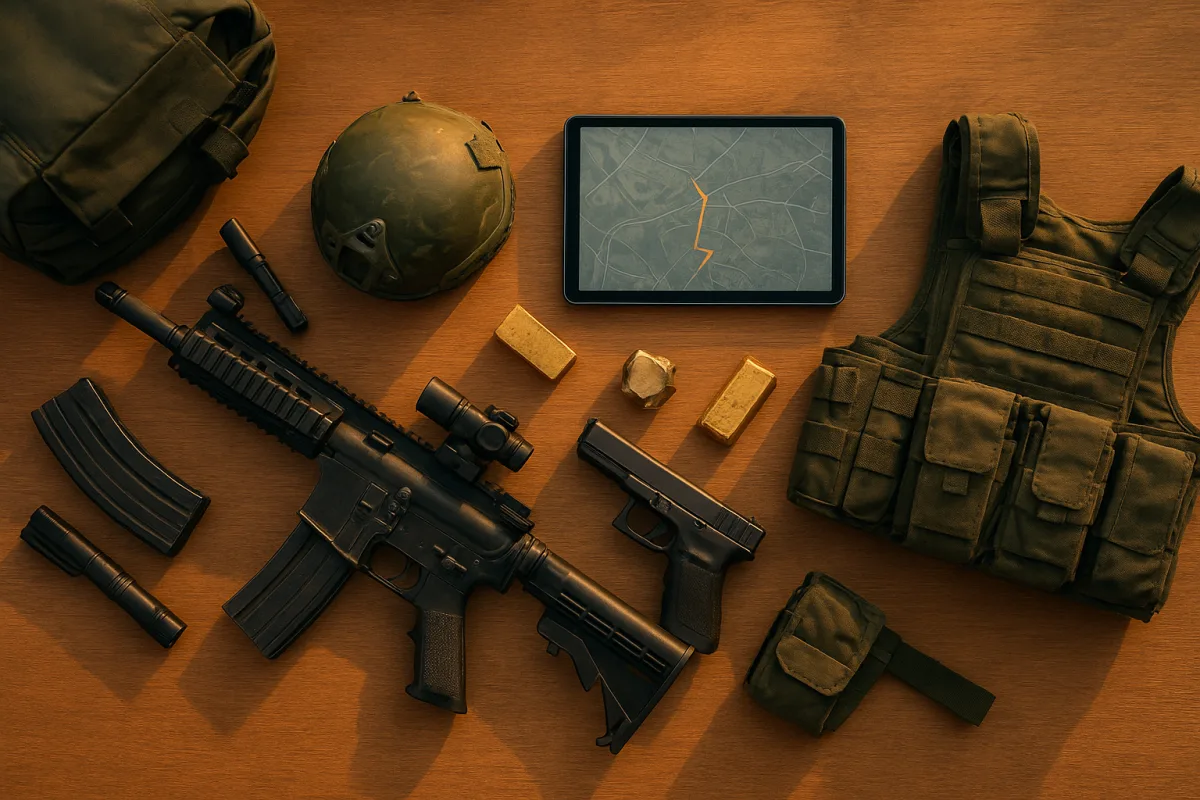
DMZ’s real game is getting out with the stuff
Modern Warfare 4’s DMZ is easy to misread during its first few matches. It has Call of Duty gunplay, AI patrols, objectives, helicopters, bounties and enough red markers to make it look like multiplayer with errands. It is not.
The important system is extraction. Everything else, from a suppressor to a gold bar, only matters because it changes what you can bring home. You do not win a deployment just by completing an objective or killing another squad.
You win when the game records an extraction. That sounds obvious, but it is the difference between a useful 20-minute run and a very expensive 20-minute run. A backpack full of cash, equipment and weapons remains at risk until the exit succeeds.
Infinity Ward’s setup places solo players, duos and three-player squads into matches with up to 60 players, or 20 full trios. [5] That number matters less as a battle royale headcount than as a pressure multiplier around objectives and extraction routes.
A lobby of 60 players is not necessarily 60 people rushing the same building. Missions, loot routes, contracts and random spawns spread them around. But DMZ repeatedly pulls those separate plans back together at the points where players must reveal themselves.
That is why an extraction shooter can feel quiet for ten minutes, then suddenly become the loudest, most consequential Call of Duty match of the night. The final helicopter or exit is not merely a loading-screen trigger. It is the moment the map asks who gets paid.
The extraction loop, step by step
A standard deployment begins with an operator selected and a loadout assembled from the player’s available stash. Weapons, backpack capacity, armour and medical equipment establish how much punishment the squad can absorb and how much value it can carry.
The early DMZ walkthrough published by jackfrags shows that structure clearly. The mode asks the player to equip a weapon, backpack, armour vest and med kit before entering the map, then rewards a successful operation with cash, gear and progression choices.
The initial decision is not “what is the strongest gun?” It is “how much am I willing to lose?” A basic rifle is replaceable. A customised weapon with attachments and an expensive carrier is a commitment.
That commitment changes the pace of play. A fully loaded trio has reason to avoid pointless fights, even if it would comfortably win them. A lightly equipped squad may choose fights because stealing another player’s equipment is the fastest route back into relevance.
The casino-vault mission shown by jackfrags is the cleanest example of DMZ’s intended risk curve. Two players restore power, reach the vault, drill it, transfer physical cash bags to a truck, then haul those bags to an extraction helicopter.
That mission is not just a scripted Payday-style distraction. Its key mechanic is visibility. The vault takes time to open, the bags need moving, the vehicle needs driving and the final extraction becomes exclusive only after the objective has exposed the team.
Each stage creates a window for other players to intervene. A rival squad does not need to have accepted the same mission. It only needs to hear the gunfire, see the activity, spot the vehicle or arrive at the extraction point.
The reward is therefore not simply the cash. It is the chance to convert coordination into a defensible escape. The mission quietly rewards a squad that brings enough ammunition, plates and smoke, assigns jobs, and does not panic when the drill attracts attention.
Why killing is often a bad investment
Modern Warfare 4’s most interesting DMZ rule is its escalating hostility system. Jackfrags describes it as a GTA-style wanted level: kill enough AI enemies and the game raises your visibility, sends more resistance and makes a clean route progressively uglier.
This is an unusually direct answer to a common extraction-shooter problem. If shooting every AI is free, then the optimal play is usually to clear every building, vacuum every crate and turn the map into a firing range.
Here, gunfire can create a bill that arrives later. Clearing guards might make an immediate objective easier, but it can also raise the local threat level before a squad has secured the objective item or found a safe exit.
Suppressors gain practical value in that environment. They are not magic stealth devices, and they will not prevent an enemy player from noticing bodies or movement. But they reduce the audio information handed to every nearby player.
This is also why the early access footage makes the basic distinction between a mission build and a PvP build matter. A loud high-damage weapon may win a sudden close-range fight, while a suppressed rifle can prevent that fight from beginning.
The balance is not settled yet, and it should not be declared solved from a few days of early access. Still, the direction is clear: DMZ is trying to charge players for indiscriminate aggression rather than simply rewarding the highest kill count.
That can quietly buff patient players. A solo player who picks a small contract, avoids patrols and extracts early may make more consistent progress than a trio that turns every run into a map-wide gunfight.
Possum turns a down into a second engagement
The trait drawing the sharpest early criticism is Possum, which allows a self-revive once per match. Players have called for its removal, and the complaint is understandable, although “overpowered” needs more precision than most launch-week discourse gives it. [6]
Possum does not make someone invulnerable. It changes the cost of winning the first engagement. Normally, downing a solo opponent can create a brief decision point: confirm the elimination, loot, reposition or use the opening to escape.
Against Possum, that decision point is unreliable. The downed player may re-enter the fight without needing a teammate to reach them. If the winner has pushed onward, begun looting or started plating, the supposedly finished duel can restart immediately.
For squads, the effect is smaller but still meaningful. A player who self-revives preserves team numbers, denies an easy finish and forces the attackers to spend more ammunition, time and attention while other enemies may be closing in.
The trait is strongest around extraction because that is where time matters most. A revived player does not need to win a long hunt across the map. They only need to delay the other squad long enough to miss the helicopter window.
That is the actual balance concern. Possum may not dominate a clean open-field gunfight, but it can convert one mistake into an extra body contesting a high-value exit. In an extraction game, timing is frequently worth more than a kill.
The sensible fix is not necessarily removal. A longer revive animation, louder audio cue, reduced health on revival, or a restriction preventing use during the final extraction sequence could all lower its ability to flip a completed fight.
None of those changes has been announced. For now, players should assume a downed opponent is still an active threat until the squad has confirmed the elimination, particularly when the extraction helicopter is already inbound.
Server problems make the wager feel unfair
DMZ can be punishing without being unfair. Losing gear because another squad outplayed you is the intended bargain. Losing it because the server disconnects, crashes or fails to preserve progress is a different category of problem.
Early access players have reported instability leading to lost loot, and Infinity Ward has acknowledged server-related frustrations. Technical failures hit harder in DMZ because the game’s persistence gives every carried item a history and a replacement cost.
A bad multiplayer match costs a few minutes and a poor scoreboard. A bad DMZ disconnect can cost the weapon you tuned, the armour you found, the valuables you had not yet banked and the time spent building that kit.
That is why “it is only early access” is not much comfort. Early access is precisely when players are learning which items matter, assembling their first capable loadouts and deciding whether the mode’s extraction stakes feel compelling or merely brittle.
Frame pacing is another practical issue, especially on older CPUs. Large player counts and dense AI encounters can produce heavier scenes, and an extraction shooter is a particularly bad place for a hitch when crossing a road or fighting near an exit.
The public technical picture remains thin. Activision and Infinity Ward had not disclosed detailed server-stability protocols, spawn-protection mechanics or DMZ-specific infrastructure information as of October 22, 2026. Players should not confuse silence with a hidden safety net.
Spawn deaths are not a normal extraction risk
Eurogamer reported examples of players spawning into the path of enemy patrol vehicles and being flattened before they could meaningfully act. [3] That is not the same as choosing a risky insertion point or failing to check a road.
The important distinction is agency. DMZ can fairly punish a player who crosses an exposed street after hearing an engine. It cannot fairly punish a player who receives control after the infil sequence with a vehicle already occupying their spawn.
Eurogamer’s report said a patch had addressed some cases of AI running players over while infilling. [3] However, the available pre-launch research conflicts with that account: as of October 22, no official DMZ patch notes had documented a spawn-location fix.
That leaves players with the frustrating answer: there is no confirmed spawn-protection system to rely on, and no formally documented repair for deaths on spawn. Watch the immediate area after gaining control, but understand that awareness cannot solve a bad placement.
There is at least an acknowledged workaround for the separate Gear Up progression bug. Players blocked by it have been directed to deploy as a squad, though that is a workaround rather than a proper fix. [11]
DMZ is expensive enough to demand a stable launch
DMZ is not a free on-ramp designed to build a massive extraction audience overnight. Access requires the full game, with the Standard Edition at $69.99 and the Vault Edition at $99.99. [10]
The extra $30 for the Vault Edition buys digital bonuses, not a different extraction queue, superior server access or a second chance at lost loot. No public details currently establish DMZ-specific microtransactions, season-pass terms or post-launch monetisation plans.
That pricing makes the mode’s early promise more important. The campaign-style operations shown by jackfrags, including hostage-style extraction and the casino heist, suggest Infinity Ward is aiming beyond a generic loot-and-leave loop.
It also explains the concern around reliability. A mission where a squad drills a vault, ferries cash bags through hostile territory and calls a dedicated exit can create excellent tension. A server failure at the final minute turns that tension into wasted time.
The meta will take longer than a weekend to settle. Players still need to learn which missions reliably pay, which routes attract hunters, whether Possum remains untouched, and how frequently technical problems interrupt otherwise successful runs.
For now, the best DMZ habit is deliberately unglamorous: extract earlier than feels necessary. Until server stability, spawn behavior and the self-revive trait are better understood, banking modest gains is likely stronger than carrying one more bag into a fight you do not need.
Frequently Asked Questions
What are the common issues in Modern Warfare 4 DMZ mode?
Early access players have reported server instability that can cause loot loss after successful runs. There are also performance concerns related to high AI density and large player counts, which may affect frame pacing on older CPUs. Additionally, some bugs like the "Gear Up" progression blocker exist, with no formal patches released yet.
How does the Possum trait affect gameplay in MW4 DMZ?
The Possum trait allows a player to self-revive once per match, effectively giving a second chance in combat. This changes the dynamics of final fights, especially for solo players, and has drawn criticism for being potentially overpowered, though it does not make a player invulnerable.
Why is extraction important in Modern Warfare 4 DMZ mode?
Extraction is the key objective because only successfully extracted gear and valuables become permanently banked. Without extraction, all loot and equipment carried during the match remain at risk of loss, making the act of leaving the map safely more important than kills or mission completion.
What technical problems affect loot retention in MW4 DMZ?
Server failures during early access have caused players to lose loot even after completing successful runs. These technical instabilities make the risk of losing valuable gear more significant than in typical multiplayer modes.
How should PC players prepare for Modern Warfare 4 DMZ mode?
PC players need to ensure their systems support TPM 2.0 and Secure Boot, as these are required for running DMZ mode. These requirements apply even though the campaign mode does not have the same restrictions.
How we researched this
This article was assembled from 2 video sources, 2 published articles, 11 cited references.
Nothing here is based on hands-on testing. Where a figure or finding appears, it belongs to the source cited beside it, and the writing says so rather than implying otherwise. Every source is listed below so you can check it.
Sources
Modern Warfare 4 DMZ is better than expected... — jackfrags
Modern Warfare 4 DMZ Gameplay and Impressions... — jackfrags
Call of Duty: Modern Warfare 4 introduces extraction shooter mode ‘DMZ’ - Gematsu
I tested MW4's new DMZ mode, and the experience was way stranger (and better) than expected
MW4 players already want “OP” second life trait removed from DMZ - Dexerto
Infinity Ward details Modern Warfare 4's DMZ extraction mode · BetterFPS
Modern Warfare 4 Launches October 23 as a Standalone Release
MW4 DMZ Not Working? Official 'Gear Up' Bug Workaround + DMZ Locked Fixes (Oct 20)
Watch Call of Duty: Modern Warfare 4 DMZ Mode Issues and Impressions on Youtube
Also from the sources
Related Articles
Call of Duty Modern Warfare 4 Multiplayer and Story Recap
Get a full recap of Call of Duty Modern Warfare 4 multiplayer features, story, editions, and PC requirements in one comprehensive guide.
Call of Duty Modern Warfare 4 Switch 2
Get key updates on Call of Duty Modern Warfare 4 for Switch 2, including file size, beta dates, console pricing, and gameplay controls.
Wardogs Launch Impact: Sales, Players, and Server Challenges
Explore the Wardogs launch impact with sales, player peaks, and server issues shaping this multiplayer shooter’s early success.

Halloween The Game Review: Editions, Gameplay, and PC Specs
Read our Halloween The Game review covering editions, gameplay impressions, PC specs, and early access issues before buying.