
Phantom Blade Zero Critical Acclaim and Review Overview
Explore Phantom Blade Zero critical acclaim, pre-launch reviews, edition comparisons, and PC requirements before its October 2026 release.
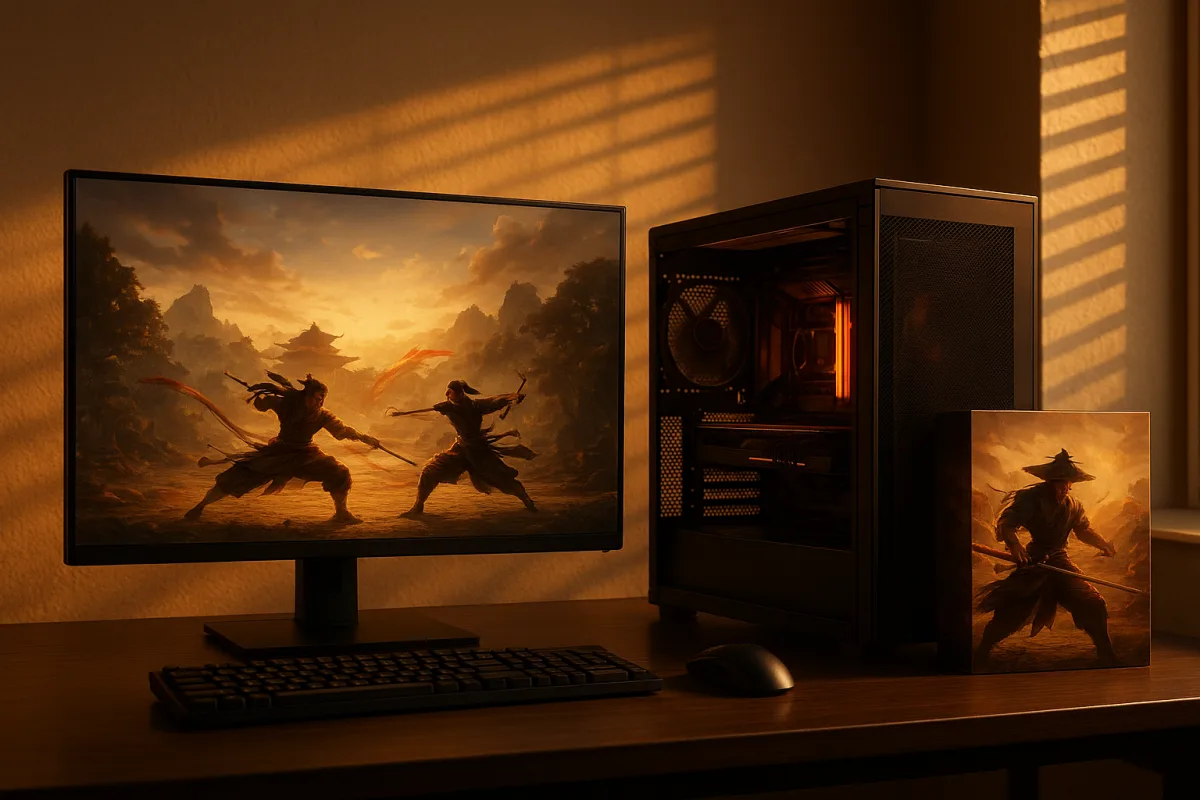
Phantom Blade Zero critical acclaim: what the pre-launch coverage actually says
The quick list
- Best overall: Phantom Blade Zero PS5 Standard Edition, $59.99, for players who want the straightforward console version without paying for digital bonuses. [3]
- Best PC choice: Phantom Blade Zero PC Standard Edition, $59.99, for players with a reasonably current SSD-equipped system who want the same base game. [8]
- Best for collectors: Phantom Blade Zero PS5 Digital Deluxe Edition, $69.99, for PlayStation players who specifically value the artbook, soundtrack, and cosmetic extras. [3]
- Best deluxe PC option: Phantom Blade Zero PC Digital Deluxe Edition, $69.99, for PC players who want the bonus pack and accept that it does not change the combat package. [8]
The actual decision here is less “is Phantom Blade Zero acclaimed?” and more “should I preorder a $60 action game on the strength of pre-release coverage?” The answer is cautiously positive for players hungry for cinematic Wuxia combat, but not yet a blank cheque.
S-GAME’s Phantom Blade Zero launches October 29 for PlayStation 5 and Windows PC, following a delay from its earlier September date. Both platform stores list preorders or pre-purchases, rather than a released game with a settled technical record. [3][8]
That distinction matters because the supplied coverage includes material labelled as full reviews, including an IGN score of 9 out of 10 and Polygon reporting an 88 Metacritic average. The independent research brief says the game remains unreleased as of October 26, however.
So, treat those score claims as pre-launch editorial positioning, not evidence that Phantom Blade Zero has “beaten every Soulslike” or become one of 2026’s confirmed best-reviewed games. Community excitement can be real without being the same thing as launch reception.
What does survive that qualification is a clear pattern in the hands-on material. Writers broadly admire the speed, animation work, visual identity, and willingness to make combat look like a Wuxia film instead of another grey, weighty imitation of Dark Souls.
Editions and platform comparison
| Option | Price | Platform | Included extras | Main trade-off | Best fit |
|---|---|---|---|---|---|
| Phantom Blade Zero PS5 Standard Edition | $59.99 [[3]](https://www.playstation.com/en-us/games/phantom-blade-zero/?utm_source=openai "Phantom Blade Zero - PS5 Games | PlayStation (US)") | PlayStation 5 | Base game | No digital artbook, soundtrack, or listed cosmetics |
| Phantom Blade Zero PC Standard Edition | $59.99 [8] | Windows PC | Base game | Requires a capable PC and SSD | Players who meet the hardware target |
| Phantom Blade Zero PS5 Digital Deluxe Edition | $69.99 [[3]](https://www.playstation.com/en-us/games/phantom-blade-zero/?utm_source=openai "Phantom Blade Zero - PS5 Games | PlayStation (US)") | PlayStation 5 | Base game, Wulin Legend, Blood-Steel Form, digital artbook, digital soundtrack | $10 more for extras that do not alter the reported core progression |
| Phantom Blade Zero PC Digital Deluxe Edition | $69.99 [8] | Windows PC | Base game, Wulin Legend, Blood-Steel Form, digital artbook, digital soundtrack | Same $10 premium, plus PC hardware requirements | PC collectors with suitable hardware |
The price comparison is refreshingly simple. Standard costs $59.99 and Digital Deluxe costs $69.99 on both listed platforms, so there is no hidden “PC value” angle in the sticker price. [3][8]
The Deluxe upgrade includes Wulin Legend, Blood-Steel Form, a digital artbook, and a digital soundtrack on the PlayStation and Steam listings. Neither store description establishes a gameplay advantage, extra maps, weapons, or campaign chapters. [3][8]
That makes the $10 decision easy. Buy the Deluxe Edition if you actively want cosmetics and production material, especially the soundtrack or artbook. Do not buy it because you expect it to smooth the early-game difficulty curve or fix a weak build.
Why the combat is getting the attention
The most consistent praise in the supplied IGN, Eurogamer, and Polygon coverage concerns the mechanical rhythm. Phantom Blade Zero uses parries, dodges, weapon skills, secondary tools, and rapid weapon switching to produce something more aggressive than a conventional Soulslike.
Eurogamer’s preview coverage describes a Sha-Chi resource, used for blocking, parrying, and heavy attacks. Crucially, switching between the two equipped primary weapons refreshes that resource, subject to a short cooldown.
That one rule changes the match-up logic substantially. A stamina system normally tells you to back off after spending your resource. Here, it appears to tell you to switch weapons, keep pressure, and treat two movesets as one combined loadout.
IGN’s supplied review material frames the same mechanic as posture restoration. In either description, the result is clear: a player who refuses to swap weapons is declining a core defensive and offensive reset button.
That quietly kills the single-weapon comfort build. If you only learn one sword’s strings, you may still clear ordinary encounters, but bosses that drain your posture or Sha-Chi can force an awkward retreat rather than rewarding momentum.
It also quietly buffs players who enjoy lab work. IGN describes easy respecs for weapon investment, while Eurogamer describes tuning one loadout toward crowd control and another toward breaking boss guard. That is a much healthier build loop than permanent upgrade traps.
Polygon’s supplied assessment adds an important caveat. It argues that later weapon swapping and Sha-Chi upgrades can make resource management too forgiving, reducing the intended stamina tension after the first ten hours.
If that remains true at release, expect the early meta to settle around aggressive swap loops rather than patient guard management. Players will look for the strongest two-weapon cycle, not merely the strongest individual blade.
Polygon specifically identifies the Scarlet Wraithblade, a weapon that creates lilies draining enemy health and Sha-Chi, as a tool it had little reason to abandon. That is not enough evidence to call it overpowered, but it is exactly the sort of early standout that deserves launch-day testing.
Bosses: spectacular design, unresolved pacing question
The boss design sounds like Phantom Blade Zero’s best argument for its premium price. IGN’s supplied coverage says the game maintains surprising variety over roughly 50 hours, with dozens of bosses and unusual set pieces rather than a parade of enlarged regular enemies.
The friendliest quality-of-life change is carried across IGN and Eurogamer’s accounts: clear the first stage of a multi-phase boss, die in phase two, and the next attempt begins at phase two rather than sending you through the solved opener again.
That does more than reduce annoyance. It lets S-GAME use nastier phase-two surprises, including one-hit attacks, without making every failure require a full rehearsal of familiar material. It is a smart way to preserve spectacle without wasting retries.
IGN’s writer reportedly completed most major encounters in two or three attempts even on the hardest difficulty. That suggests Phantom Blade Zero may be less interested in the prolonged punishment associated with the genre than in giving players repeated cinematic payoffs.
Eurogamer’s supplied review reaches nearly the opposite conclusion on certain bosses. It says early and mid-game bosses can feel spongey, with successful parries and dodges producing too little damage or Sha-Chi pressure to make the intended answer obvious.
That is the most useful disagreement in the whole batch. It does not mean one outlet is wrong. It means the game may feel excellent when its weapon, phantom-edge, and boss-counter systems communicate clearly, then grind when they do not.
Eurogamer gives a concrete example: a shielded early boss appears to demand a particular secondary weapon, but the effectiveness of the obvious axe option was unclear until repeated use or a charged version. That is not hard combat, it is poor feedback.
The publication also reports that S-GAME pushed a 67GB update shortly before the review embargo, including performance, bug, boss, enemy, ability, and weapon-stat changes. Eurogamer could not replay the entire game afterward, so its boss-sponginess conclusion remains version-specific.
That is precisely why the current acclaim needs an asterisk. A 67GB balance and technical update just before launch can alter the feel of progression, weapon viability, and frame pacing. It can improve the game, or move problems around.
Style, story, and exploration
The strongest stylistic point is not merely that Phantom Blade Zero is Chinese fantasy. The supplied Polygon coverage argues that its Wuxia choreography prioritises the beauty and readability of martial-arts movement over complex execution barriers.
The reported control scheme sounds intentionally approachable. Rather than demanding long fighting-game inputs for every stylish sequence, it appears to use normal attacks, heavy attacks, timed defense, special moves, and weapon swaps to trigger elaborate animation work.
That is a trade-off, not an automatic victory. Players who want Ninja Gaiden-style execution tests may find the command structure too simple. Players who want to look competent before spending ten hours in training mode may prefer S-GAME’s approach.
The narrative is the area where the coverage is far less unified, though nobody makes it the selling point. IGN calls the timeline and terminology overstuffed, while Eurogamer criticises lore delivered through dense text and hard-to-follow character factions.
Polygon is more sympathetic, suggesting the story asks players to accept unfamiliar terms and let the world explain itself gradually. Even there, the assessment stops short of calling Soul, the protagonist, a particularly compelling character.
For a buyer, the practical reading is simple: do not preorder Phantom Blade Zero for a clean revenge story. Preorder it if atmospheric Wuxia locations, martial-arts spectacle, and weapon experimentation matter more than instantly legible lore.
IGN also describes eight maps, hand-drawn navigation, missable quests, and tools such as bows and grappling hooks that serve both exploration and combat. That indicates a denser level-based adventure, not a single giant open world.
The same material flags collision issues, invisible boundaries, and occasional performance drops. But these reports cannot be treated as launch-state findings, because the available independent brief confirms no post-launch technical record exists yet.
PC requirements are the real pre-purchase check
PC is not automatically the best-value version merely because it shares the $59.99 entry price. The listed minimum specification requires Windows 10 or 11 64-bit, 16GB RAM, DirectX 12, an SSD, and either a GTX 1660 6GB or RX 5500 XT 8GB. [1]
The CPU line deserves extra scrutiny. The published minimum requirement lists an Intel Core i7-8700K or AMD Ryzen 5 3600, while the recommended tier lists a Core i5-10600K or Ryzen 5 5600X. [1]
The AMD progression looks sensible, but the Intel labels do not neatly scale upward. A Core i7-8700K being placed below a Core i5-10600K in the tier list may be an error, or it may reflect a specific test configuration.
Until S-GAME clarifies that discrepancy, do not use the CPU names alone as a buying signal. Compare your actual cores, clocks, generation, graphics card, memory, and SSD situation against the full published requirements.
The recommended GPU target is an RTX 3060 Ti 8GB or Radeon RX 6700 XT 12GB, aiming for 1440p at 60fps with upscaling. Ray tracing and path tracing climb to RTX 5060 and RTX 5080 tiers respectively for 4K 60fps targets. [1]
Those are ambitions, not independent benchmarks. The useful takeaway is that path tracing is very much an enthusiast setting here, while the more realistic target for many PCs is 1440p with upscaling and the recommended GPU class.
Who each option suits
Phantom Blade Zero PS5 Standard Edition suits the player who wants the least complicated route into S-GAME’s action game. At $59.99, it contains the core combat, campaign, maps, weapons, and bosses without charging extra for material unrelated to performance. [3]
Phantom Blade Zero PC Standard Edition suits players whose systems already meet the SSD, memory, CPU, and GPU requirements. It costs the same $59.99, but the value disappears quickly if your hardware needs a major upgrade first. [1][8]
Phantom Blade Zero PS5 Digital Deluxe Edition suits fans who know they value an artbook, soundtrack, and cosmetic items. It is not the edition to choose because you are worried about hard bosses, since the listed bonuses do not promise mechanical help. [3]
Phantom Blade Zero PC Digital Deluxe Edition suits the same collector-minded audience, provided their machine is ready. The $10 premium is reasonable for wanted digital extras, but it is not a substitute for waiting on independent PC frame-rate and stability testing. [1][8]
Frequently Asked Questions
Is Phantom Blade Zero critically acclaimed before launch?
Pre-launch coverage includes some high review scores, such as IGN’s 9/10 and an 88 Metacritic average reported by Polygon, but these are based on preview material rather than post-launch data. Since the game has not released yet, these scores should be seen as editorial positioning rather than confirmed critical consensus.
What do pre-release reviews say about Phantom Blade Zero?
Pre-release reviews generally praise the game’s fast, fluid combat, animation quality, and Wuxia-style choreography. However, opinions differ on aspects like boss pacing and build depth, indicating some uncertainty about how well these elements will hold up.
Which edition of Phantom Blade Zero is best for PC players?
The Standard Edition at $59.99 is recommended for most PC players who want the base game without paying extra for digital extras. The Digital Deluxe Edition costs $69.99 and includes artbook, soundtrack, and cosmetic content but does not add gameplay content.
What are the PC hardware requirements for Phantom Blade Zero?
The minimum PC specs require a relatively strong system: Windows 10/11 64-bit, Intel Core i7-8700K or AMD Ryzen 5 3600 CPU, 16 GB RAM, GTX 1660 6GB or RX 5500 XT 8GB GPU, DirectX 12, and an SSD. Recommended specs list a somewhat lower-tier CPU (Intel Core i5-10600K or Ryzen 5 5600X) with an RTX 3060 Ti or RX 6700 XT GPU for 1440p 60fps gameplay, though this CPU discrepancy is unusual and should be verified.
How does Phantom Blade Zero's combat system work?
The combat system emphasizes parry, dodge, weapon swapping, and cinematic Wuxia-style choreography. Pre-release coverage highlights these mechanics as the game’s strongest features, creating a fast-paced and visually striking action experience.
How we researched this
This article was assembled from 1 video source, 4 published articles, 11 cited references.
Nothing here is based on hands-on testing. Where a figure or finding appears, it belongs to the source cited beside it, and the writing says so rather than implying otherwise. Every source is listed below so you can check it.
Sources
Phantom Blade Zero Reviews Just Beat Every Soulslike In 2026 — Polygon
Phantom Blade Zero review — Eurogamer
Phantom Blade Zero Is the Perfect Martial Arts Game, For Better or Worse — Polygon
Phantom Blade Zero PC Requirements: All Four Official Tiers — Phantom Blade Zero Wiki
Upcoming 2026 games: All the new PC games you won't want to miss, from big hits to hidden gems
Phantom Blade Zero Release Date: October 29, 2026 After the Delay | Phantom Blade Zero Guide
Phantom Blade Zero State of Play dives deep into combat and the Wulin world – PlayStation.Blog
Las 6 claves de Phantom Blade Zero tras jugar las 6 primeras horas: ¿se viene otro candidato a GOTY?
Watch Phantom Blade Zero Critical Acclaim and Review on Youtube
Related Articles
Phantom Blade Zero PC Gameplay and Performance Guide
Explore Phantom Blade Zero PC gameplay, system requirements, and optimization tips to ensure smooth performance and master combat mechanics.
Ace Combat 8 Wings of Theve PC Reception and Features
Explore Ace Combat 8 Wings of Theve PC reception, system requirements, editions, and multiplayer features before its October 2026 launch.
Onimusha Way of the Sword Review and Edition Comparison
Read our Onimusha Way of the Sword review with edition comparisons, PC requirements, and gameplay insights to help you decide before launch.
Valor Mortis system requirements and review
Get detailed Valor Mortis system requirements and an in-depth review covering gameplay, combat, and hardware needs for PC players.