
Ocarina of Time Remake Water Temple Analysis and Changes
Explore the Ocarina of Time remake Water Temple changes, puzzle fixes, and improved controls in this detailed analysis.
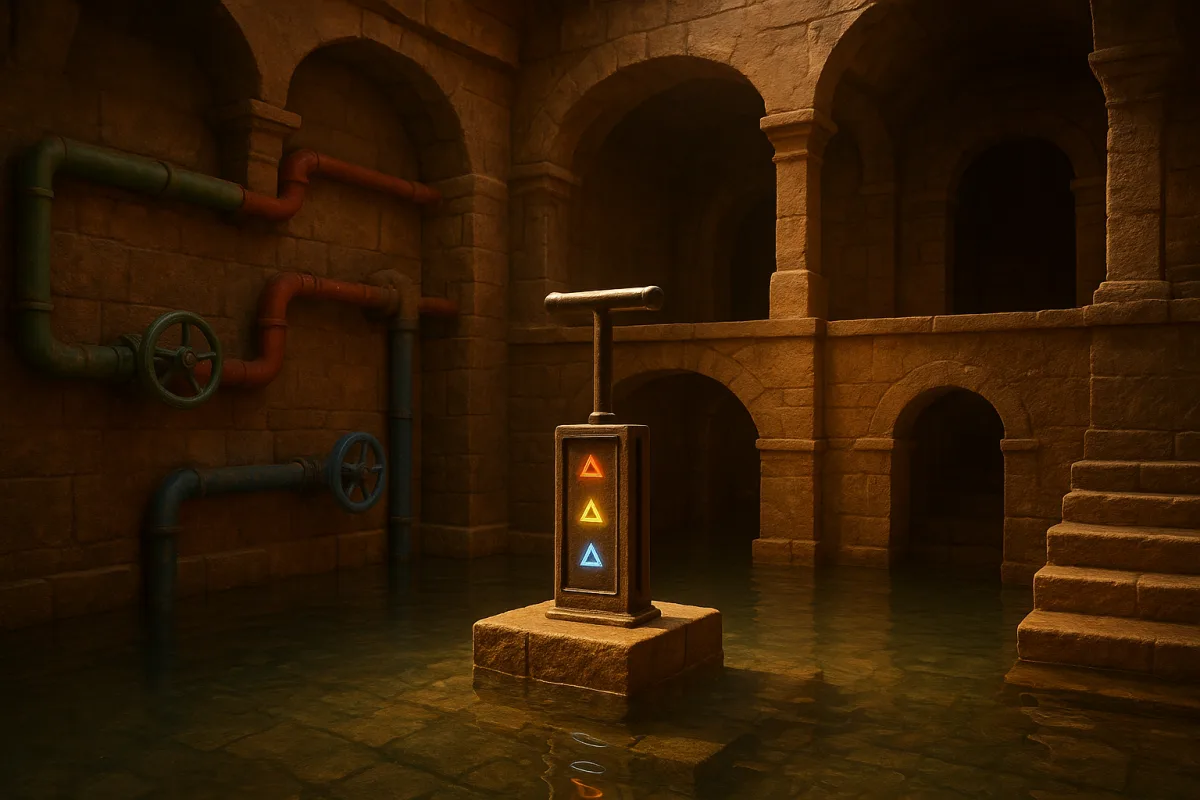
Ocarina of Time Remake’s Water Temple Fix Is About Information, Not Difficulty
The room you keep coming back to
You enter the Water Temple expecting the old punishment: a flooded central chamber, a stack of doors at different heights, and the nagging knowledge that changing one water level may strand you from another route.
The remake still asks you to understand that structure. It has not replaced the dungeon with a straight line, and it has not removed the three water states that make the temple work.
What Nintendo has changed is the information burden. The original Water Temple asked you to retain a mental model of four stories, several submerged corridors, and which song pedestal controlled which water level.
That was difficult partly because the dungeon was genuinely complicated, but also because Ocarina of Time’s 1998 interface forced you to carry too much administrative work. Remembering the route was one challenge. Constantly opening menus to equip Iron Boots was another.
Polygon describes the redesigned temple as a four-story building centered on a flooded hub, where water height determines which rooms, ledges, tunnels, and doors you can reach. The core loop remains intact: find a control room, play the required song, then re-evaluate the entire dungeon. [6]
That is the single idea behind the temple. Water is both your lock and your key. Raising it makes some platforms reachable and seals low paths; lowering it exposes routes that were previously underwater; the middle setting creates its own set of connections.
A walkthrough of the system, not a list of directions
Start by treating the central room as a diagram, not a hallway. Every return tells you what your last water-level decision changed, and every visible door becomes a future promise or a current route.
At the lowest water setting, you can access lower channels and floor-level passages. These are the places that would be inaccessible when the chamber is filled, and they often lead toward keys, switches, or routes that later connect upward.
At the middle setting, floating blocks, raised platforms, and intermediate doors become usable. This is usually the state where the dungeon asks you to recognize that a route does not begin where you currently stand.
At the highest setting, the water itself becomes transportation. You ride it toward elevated openings, then use the Hookshot to convert that vertical position into access to an entirely different wing.
The original’s notorious failure mode was simple. You would see an unopened door, change the water, travel through several rooms, and forget whether that door had required the low, middle, or high state.
Nintendo’s solution is architectural signposting. Polygon reports that the three water-control routes now use color-coded pipes, and the doors leading to water controls carry symbols that identify the resulting water level. [6]
That is a major change because it turns memory into observation. Instead of recalling a vague sequence from 20 minutes earlier, you can follow the visual language built into the temple’s walls.
The revised layouts also use lattice-style structures where the original sometimes relied on more obstructive solid walls, according to pre-release details reported by GamesRadar. The goal is clearer spatial awareness without flattening the dungeon into a corridor. [7]
If you are stuck, do not immediately search every room. First identify your desired destination in the central chamber, then determine its height, then find which water state makes its approach possible. The puzzle becomes manageable once you work backward.
The Iron Boots were the real tax
The Water Temple’s old reputation rests as much on equipment management as map design. Link needs the Iron Boots to sink, the Hookshot to cross gaps and hit targets, and the Ocarina to alter water levels.
On Nintendo 64, those tools competed for limited item slots. You could not keep every essential tool immediately available, so the dungeon repeatedly pushed you into the pause menu before you could test an idea.
That produces a very specific kind of difficulty. You know what to do, but the game requires several inventory operations before it lets you do it. In a puzzle dungeon, that can break the chain of thought.
The remake finally separates those jobs. IGN reports that the Ocarina and Lens of Truth now live on D-pad controls, while the Iron Boots can also be quick-swapped rather than repeatedly equipped through the pause screen.
The R-button quick menu then handles active tools such as the Hookshot, bombs, ranged weapons, and spells. Skill Up’s review calls out the ability to toggle the Iron and Hover Boots, Eye of Truth, and other frequently swapped gear without laborious menu diving.
For the Water Temple, this means you can leave the Hookshot on a main slot and treat the boots as movement gear. Sink, rise, aim, move on. The dungeon’s pace now reflects its design instead of its 1998 controller limitations.
Polygon argues this removes pause-menu management while preserving the dungeon’s logic, and that is the right reading. Nintendo did not delete the need to identify the correct tool. It deleted the chore of re-equipping the obvious one. [6]
Nintendo also removed some of the answer space
The controls are an unambiguous improvement. The harder call is what Nintendo has done to keys and puzzle signaling, because these changes alter how much deduction the dungeon asks of you.
IGN found that the Water Temple has two fewer small keys than the original. One formerly easy-to-miss key room has moved off the critical route, becoming material for completionists instead of a mandatory discovery.
That fix prevents players from reaching the end of their current route and realizing they have missed a tiny room several water-level changes ago. It also reduces the number of times the dungeon can surprise you.
More broadly, IGN’s review says several locked doors now sit closer to their matching keys, while specific-item interactions are more strongly telegraphed. In places that once required an inference, clear Hookshot targets now supply the answer.
This is where veteran frustration makes sense. A dungeon is at its best when an item changes how you read the environment, not when a large icon tells you to equip it.
Nintendo has not gutted the Water Temple. You still need to read water states, traverse a looping layout, use vertical space, and understand how a change in the hub affects distant rooms.
But it has narrowed the chance that you will be wrong in an interesting way. The remake gives you fewer moments of realizing that an overlooked detail had been visible all along.
We would call it a trade. New players get the temple’s central idea without the original’s tedious inventory tax, while returning players lose some of the deep satisfaction of rebuilding the dungeon’s entire logic in their head.
A remake built to make old Zelda legible
Producer Eiji Aonuma, who directed the original Ocarina of Time, described the Water Temple changes as “overdue homework.” He specifically asked the team to revisit the dungeon because of its longstanding reputation for difficulty. [6][7]
That language tells you what Nintendo believes the remake is for. It is not preserving every old inconvenience as sacred history. It is preserving the intended adventure while making the interaction model fit players raised on modern Zelda.
The same philosophy appears outside the temple. Link has a dedicated jump button, a sprint that does not consume stamina, a right-stick camera, third-person motion aiming, and the ability to move while aiming the slingshot or bow.
These additions make Link feel close to his Breath of the Wild and Tears of the Kingdom incarnation. Yet he still cannot climb every surface, and the world remains organized around particular dungeon items unlocking particular barriers.
Nintendo’s own developers told IGN that the remake’s younger staff were encouraged to interpret the original, while the production team separated what could change from the experience the 1998 game was trying to convey. [8]
The result is a traditional Zelda built with modern handling. You talk to townspeople, follow rumors, earn a tool in a dungeon, then notice all the cracked walls and unreachable ledges that tool has suddenly made relevant.
The map can solve too much for you
The revised map is generous. IGN reports that regional maps track collected Heart Pieces and Gold Skulltulas, while shops, minigames, fairy fountains, and other locations appear as marked points of interest.
That is good for a player trying to finish everything without keeping handwritten notes. It is less good for the particular tension of entering a dungeon room with no clue where its secret might be.
IGN recommends the remake’s minimal UI option, which removes almost every interface element including the mini-map. You can still pause for a full map, but you stop treating the on-screen display like a GPS.
We agree. Turn it on if you have finished Ocarina before, especially in the Water Temple. The rebuilt controls already remove its outdated friction, so you do not need chest and door icons erasing the remaining spatial problem.
The new Threads of Time quest log also gives broad objectives, while Navi interrupts less often. That keeps the main adventure moving without constantly telling you where the next solution sits.
A richer Hyrule, with some technical rough edges
The remake’s new art direction makes the Water Temple’s information system easier to accept because pipes, symbols, water reflections, and stonework are now readable parts of a physical-looking place.
IGN praises the reactive presentation across Hyrule: Link can visibly overheat and catch fire in Death Mountain Crater without appropriate gear, replacing the original’s survival timer with a direct environmental reaction.
Cutscenes now feature voiced dialogue, while Link remains silent. IGN verified Matthew Mercer returning as Ganondorf after Tears of the Kingdom, Erica Mendez as Zelda, and Lisa Reimold as Navi.
The orchestrated soundtrack, expanded dialogue, new lighting, and character animation make this feel like a retelling, not a high-resolution Nintendo 64 release. The story remains a child’s fairy tale, with its bright colors and broad personalities intact.
Performance is strong where it matters. Third-party testing reports stable 60 fps, with docked resolution ranging from 1080p to 1440p and handheld output ranging from 720p to 1080p. [4][8]
The caveat is image quality. Notebookcheck reports that the game uses AMD FidelityFX Super Resolution 1.0, not Nvidia DLSS, and reviewers have noted shimmering in larger areas and distortion around fine details such as hair and fur. [5]
Nintendo released version 1.1.1 on November 4, adding Zelda Notes companion-app support, including a daily 2,000-question quiz and a virtual ocarina, plus unspecified fixes. [5] No substantial post-launch balancing patch has been reported.
The argument is already clear
There is no broad post-launch player consensus on the Water Temple yet. Launch-day conversation has largely been critics and early players weighing relief against nostalgia, not a mature community verdict formed after thousands of completions.
Polygon lands firmly on relief, arguing that younger players should not have to inherit menu friction merely because older players did. IGN is more skeptical, praising the rebuilt temple while warning that wider dungeon streamlining reduces some big “aha” moments.
Both positions are fair because they are responding to different costs. One player wants a dungeon that communicates clearly enough to finish. Another wants a dungeon willing to let them wander, misunderstand it, and finally see its larger shape.
For a newcomer, the remake is the version we would play. The Water Temple still asks you to manipulate a whole building through a shared water system, which is the point. It now spends less time fighting its own controller.
Frequently Asked Questions
How does the Water Temple in the Ocarina of Time remake differ from the original?
The Water Temple in the remake retains its multi-level puzzle structure centered on changing water heights but introduces clearer architectural signposting. Color-coded pipes and symbols on doors indicate which water level they correspond to, reducing the need to memorize complex routes. The dungeon layout also uses lattice-style structures to improve spatial awareness without simplifying the overall design.
What improvements were made to the Water Temple puzzle in the Ocarina of Time remake?
The remake reduces the information burden by turning memory challenges into visual observation. It adds color-coded routes and marked controls to help players identify water levels needed for different areas. The layout changes improve navigation, and faster equipment swaps lessen interruptions, making the puzzle easier to manage without changing its core complexity.
How do the new controls affect gameplay in the Water Temple of the remake?
New controls allow quick swapping of essential items like the Iron Boots and Ocarina without repeatedly opening menus. The Ocarina and Lens of Truth are assigned to D-pad buttons, which streamlines equipment management and keeps the player’s focus on puzzle-solving rather than inventory juggling.
Are the Water Temple keys and puzzles easier in the Ocarina of Time remake?
The keys and puzzles themselves remain as challenging as before, but the remake makes their solutions easier to read through improved visual cues and dungeon design. The difficulty is not reduced by simplifying puzzles but by providing clearer information and reducing administrative friction.
What strategies help solve the Water Temple in the Ocarina of Time remake?
Players should treat the central chamber as a diagram and use it to track how water-level changes affect access to different areas. Identifying a destination’s height and then determining the corresponding water level makes the puzzle manageable. Observing color-coded pipes and door symbols helps avoid confusion about which water state to use.
How we researched this
This article was assembled from 5 video sources across 2 channels, 8 published articles, 10 cited references.
Nothing here is based on hands-on testing. Where a figure or finding appears, it belongs to the source cited beside it, and the writing says so rather than implying otherwise. Every source is listed below so you can check it.
Sources
I strongly recommend: 'The Legend of Zelda: Ocarina of Time (2026)' - Review, Skill Up
The Legend of Zelda: Ocarina of Time Review Discussion - NVC 833, IGN
Revisiting Ocarina of Time Before the Switch 2 Remake - NVC Clips, IGN
The Legend of Zelda: Ocarina of Time’s Changes to the Infamous Water Temple Are Actually Brilliant, Polygon
Our Big Interview With Ocarina of Time Producers Eiji Aonuma and Hidemaro Fujibayashi, IGN
Pokémon Pokopia Celebrates Fall with Apple-Themed Event, Polygon
World of Warcraft: Forever is off to a great start with Blizzard's smoothest launch in memory, Eurogamer
The Legend of Zelda: Ocarina of Time Remake Full English Voice Cast Revealed, IGN
Star Wars Actor Officially Confirms the Hunt for Ben Solo Is Dead, and That's a Good Thing., Polygon
The Legend of Zelda: Ocarina of Time: Switch 2 Editions, Prices, and Bonuses
The Legend of Zelda: Ocarina of Time remake launches November 5 - Gematsu
The Legend Of Zelda: Ocarina Of Time remake arrives on Switch 2 November 5 | TechSpot
Zelda: Ocarina of Time Remake Hits Stable 60 FPS on Switch 2 - Techtroduce
Zelda: Ocarina of Time uses 2021 upscaler FSR 1.0 on Switch 2, not DLSS - Notebookcheck News
The Legend of Zelda: Ocarina of Time Switch 2 review: the Hero of Time gets a new lease of life
OG Zelda: Ocarina of Time dev responsible for the infamous water temple used the remake to atone
The Legend of Zelda: Ocarina of Time reviews are in, and critics agree on one thing
Watch The Legend of Zelda: Ocarina of Time Remake Analysis on Youtube
Also from the sources
Related Articles
Ocarina of Time Switch 2 Remake Features and Gameplay
Discover key features of the Ocarina of Time Switch 2 remake, including the jump button, puzzle redesigns, and updated combat mechanics.

Ocarina of Time Remake Coverage and Reactions for Switch 2
Get detailed coverage and fan reactions to the Ocarina of Time remake, including editions, gameplay changes, and release info for Nintendo Switch 2.
Ocarina of Time Remake Controls and Gameplay Changes
Discover the new controls and gameplay changes in the Ocarina of Time remake for Switch 2, including manual jumping and camera improvements.
Tomb Raider Legacy of Atlantis Remake Preview and Criticism
Preview and critique of Tomb Raider Legacy of Atlantis remake, focusing on gameplay, scanner use, and PC specs.