
Ocarina of Time Switch 2 Remake Features and Gameplay
Discover key features of the Ocarina of Time Switch 2 remake, including the jump button, puzzle redesigns, and updated combat mechanics.
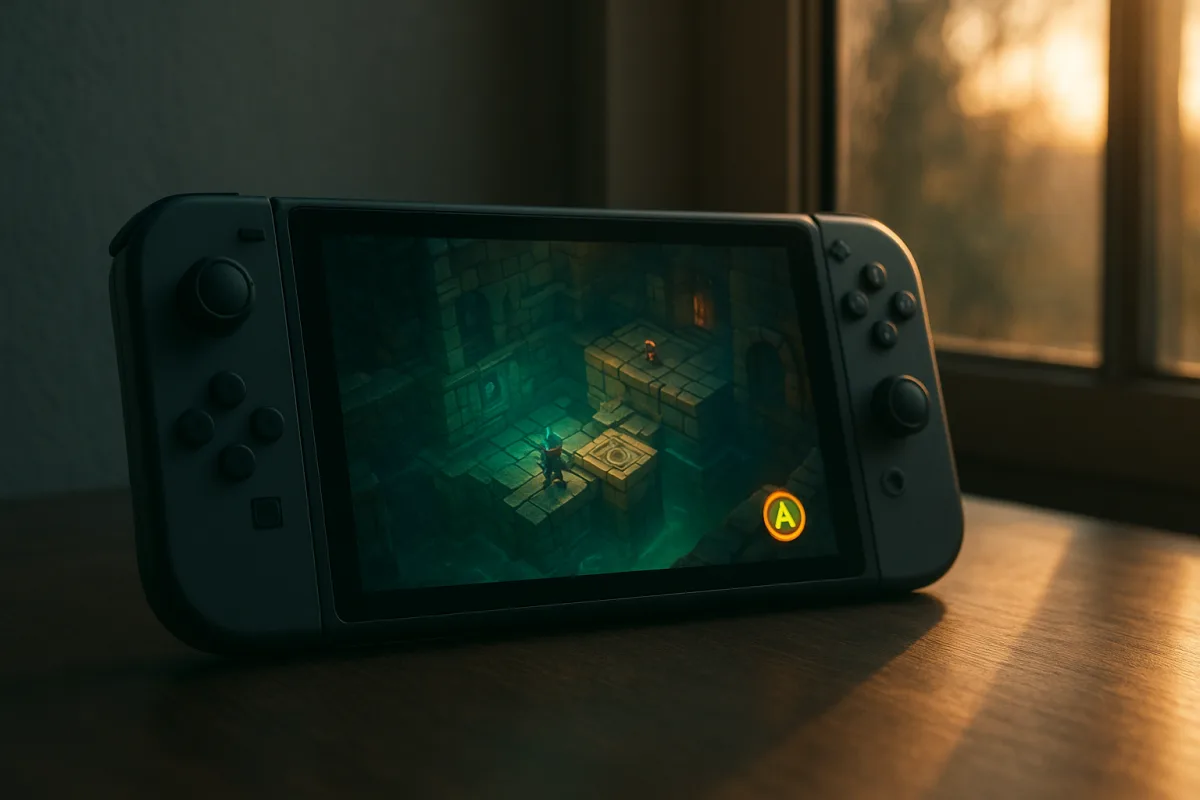
The jump button is the real remake feature
Nintendo has sold the Switch 2 version of The Legend of Zelda: Ocarina of Time as a faithful interpretation. That sounds reassuringly conservative, right up until you notice Link can now jump whenever the player presses a button.
That one input changes more than a movement animation. It changes what the level designers can ask of the player, what counts as a safe platform, how combat spaces are fenced off, and which old puzzles no longer teach useful skills.
In the Nintendo 64 original, Link mostly jumped automatically when he ran off a qualifying ledge. The player controlled his approach and speed, but not the leap itself. That was a limitation, yet it was also level-design glue.
The Switch 2 remake replaces that glue with a dedicated jump command, alongside freer camera control, sprinting, gyro aiming, and a modern quick-item menu. Preview reporting from Games.gg and AS describes the wider effort as a modernization of the control scheme rather than a straight visual restoration. [7][14]
The important bit is not that Link can jump. Plenty of games let their hero jump. It is that Ocarina of Time was built around a protagonist who could not casually hop onto scenery, skip railings, or turn every waist-high obstruction into a suggestion.
Nintendo now has to account for that new freedom everywhere. IGN’s Logan Plant found guard rails added around the giant falling block in the Forest Temple, specifically preventing Link from jumping onto it before the encounter operates as intended.
That is the patch-note version of this remake. The developers gave every player a new tool, then had to audit old spaces for routes, skips, cheese spots, and geometry that only worked because Link’s feet were previously less adventurous.
Why old Ocarina puzzles needed rewriting
The cleanest example comes early, during the search for the Kokiri Sword. In the Nintendo 64 game, the chest sat tucked into a corner beyond a rolling boulder, making the room a low-stakes lesson in managing the camera.
That lesson made sense in 1998. Ocarina of Time was teaching players how to exist in a fully 3D action-adventure world, including when to recenter the camera behind Link rather than trust an awkward viewpoint.
In IGN’s hands-on preview, the chest has moved to a raised central platform. The boulder remains, but reaching the reward now requires a deliberate jump. The room teaches the new action that the remake actually needs players to understand.
That is a better tutorial conversion than merely placing a “press jump” prompt on screen. The player sees a goal, identifies the height difference, jumps under pressure, and learns that the button is a real traversal tool rather than decorative baggage.
There is a cost, though. Returning players lose one of those tiny muscle-memory advantages that made the original flow. A familiar ledge is no longer an automatic transition. Miss the button, and you are swimming, falling, or looking foolish in front of Mido.
Eurogamer’s preview writer did exactly that during an early jump, landing in water rather than cleanly clearing a gap. It is not a balance-breaking change, but it is the kind of friction that tells veterans they are playing a re-authored game.
The community panic about “Nintendo ruining Ocarina” is overcooked. A jump button does not turn Hyrule into Breath of the Wild. There is no indication that the remake has rebuilt the adventure around free climbing, gliding, or physics sandbox solutions.
Still, it is not nothing. Nintendo has traded a very controlled movement language for a more expressive one. The new version will feel more intuitive to players raised on Breath of the Wild and Tears of the Kingdom, but less mechanically peculiar.
The hidden balance pass behind freer movement
A dedicated jump is effectively a universal mobility buff. It gives Link more agency in positioning, and positioning is combat power even when no damage numbers change. More routes mean more opportunities to avoid danger or reach a favorable angle.
The remake’s revised Forest Temple shows Nintendo trying to keep old combat constraints intact. IGN reported that the Stalfos arena’s central hole has become a shallow acid pool, preserving the original idea that enemies have access to terrain Link should avoid.
The old room was mechanically odd. Stalfos could hover over the hole while Link could not, which worked as video-game logic but looked increasingly arbitrary once the remake began emphasizing a more physically coherent world.
The acid solution is more legible. Skeleton enemies can cross it, while Link takes damage if he enters it. The player still has limited safe ground, the Stalfos still owns more of the arena, and the encounter keeps its intended pressure.
That is what a careful remake change looks like. Nintendo has not deleted a constraint because modern controls make it inconvenient. It has changed the presentation of the constraint so the fight survives the new movement kit.
The same pattern appears with Floormasters. IGN found that the descending hands are now foreshadowed by a spotlight that changes colour before the attack. This quietly buffs player reaction time without removing the enemy’s threat.
That is a readability adjustment, not a difficulty collapse. Players who recognize the signal can reposition before the grab, while players who ignore it still get punished. Modernization works best when it gives information, not immunity.
Skulltulas have also been reworked to expose their vulnerable underside after Link strikes them. Previously, they could simply turn around on their own timing. The new rule is clearer: create your opening, then use it.
Again, this sounds small, but it changes the player’s role. The original sometimes asks for patience. The remake asks for initiation. That is a more active combat loop, and it fits the revised controls better than waiting for an enemy’s animation cycle.
New routes, clearer hints, and the risk of over-explaining
Free jumping also creates a navigation problem. Old Ocarina often used awkward geometry as a gate, because the player could not simply vault every low object. With that assumption gone, puzzles need clearer intended routes and sturdier boundaries.
IGN saw the Forest Temple’s hookshot targets changed from natural scenery, such as a tree branch, to recognizable targets. A new elevator also removes repeated backtracking after a block-and-ladder sequence. That is less romantic, but probably less tedious.
The tension is obvious. Ocarina of Time’s original spaces could be cryptic because players were learning a new genre. In 2026, a remake cannot reasonably pretend that a camera tutorial or an invisible wall is still a revelation.
Nintendo seems to be replacing obscure discovery with visible cause and effect. Cracked ground signals a bombable secret. Colour-coded rooms help distinguish the red and blue Poe routes. Quest-log guidance exists for players who want a nudge.
That can reduce the number of “I had no idea that was interactable” moments. It can also reduce the accidental thrill of discovering that a suspicious wall, branch, or texture mattered after all. The balance will depend on how optional those aids remain.
Eurogamer’s preview found changed geography in Hyrule Field, new enemy placement, an abandoned camp, and fairy-written hint notes. Those additions suggest Nintendo is trying to make the overworld feel newly explorable without simply inflating its footprint.
That is the right instinct, provided the game does not over-label every secret. Ocarina’s Hyrule Field was never large by current standards. Its value was the sense that a road might lead somewhere strange, not the square mileage.
A note on Hall of Fallen Foes
The Hall of Fallen Foes is the most visible new collectible system. Nintendo has shown it as a museum-like gallery where defeated enemies become statues with placards describing the creatures and their place in Hyrule. [12]
On paper, it is a bestiary with physical presence. For completion-minded players, that means enemy encounters may carry a little more value than just clearing a room and collecting whatever rupees fell on the floor.
Some reports, including Polygon and Kotaku, describe boss rematches and personal-best times as part of the Hall. That would make it an expanded version of the Nintendo 3DS remake’s Boss Challenge mode, which tracked timed boss battles. [13]
But that feature should not be treated as confirmed until Nintendo details it. The independent research brief notes that official material has not established the Hall’s full functionality beyond enemy statues and lore, and a direct comparison remains premature. [12][13]
That distinction matters. A lore gallery is a pleasant completion extra. A boss-rematch system is replayable combat content, especially useful in a game where most bosses are encountered once during the main quest. They are not the same feature.
Preorder math, without pretending a foil cover is content
The Switch 2 remake’s US digital edition costs $59.99. The physical edition has a $69.99 MSRP, despite containing the full game on cartridge rather than using a game-key card. [1][2]
Amazon and Walmart have listed physical preorders at $59.88, effectively matching the digital price while retaining the cartridge. That is the obvious choice for US buyers who want a physical copy, assuming the listing remains available through purchase. [2][10]
The first physical print run includes textured foil cover art, while later copies use standard packaging. It is a collector bonus, not a gameplay advantage, so do not let fear of missing cardboard turn a $60 purchase into an emergency. [9]
Canadian buyers have a different offer: Nintendo Life reported that EB Games preorders placed by November 4 include a holographic, Nintendo 64-style slipcover. Availability and bonuses vary by retailer and territory, so check the local listing before assuming parity. [11]
Nintendo’s Zelda 40th Anniversary Switch 2 costs $519.99 and releases October 29, ahead of the game. It does not include Ocarina of Time, despite the branding, so its real entry price is $579.98 with the $59.99 digital game. [3]
That special-edition console suits someone who needs a Switch 2 and values the design. It does not suit an existing Switch 2 owner looking for the cheapest route into this remake, because it provides no game bundle saving.
Nintendo has not published detailed CPU, GPU, RAM, or storage specifications tied to this remake, and there is no confirmed unique Switch 2 feature driving its performance. Gematsu notes the technical specifications remain undisclosed. [4]
Preview coverage has observed 60 fps footage and substantial visual work, but that is not a license to invent resolution targets or hardware tricks. The game’s handheld clarity remains a fair question, especially after criticism that the denser art style may look cluttered on the 7.9-inch screen. [5][6]
The meaningful preorder decision is therefore refreshingly simple. Buy digital at $59.99 if convenience matters most, buy the $59.88 physical preorder if you want the cartridge and current discount, and buy the anniversary console only if you genuinely need the machine.
Frequently Asked Questions
What new features does the Ocarina of Time Switch 2 remake have?
The remake introduces a dedicated jump button, freer camera control, sprinting, gyro aiming, and a modern quick-item menu. It also features redesigned puzzles, clearer combat telegraphs, new shortcuts, expanded dialogue, and revised enemy encounters. These changes modernize the control scheme beyond a simple visual upgrade.
How does the jump button change gameplay in the Ocarina of Time Switch 2 remake?
The jump button replaces the original’s automatic ledge jumps, giving players direct control over when and where Link jumps. This change affects level design, requiring Nintendo to rebuild rooms to prevent unintended shortcuts or exploits. It also introduces new traversal challenges and alters the flow of familiar areas.
Are puzzles redesigned in the Ocarina of Time Switch 2 remake?
Yes, puzzles have been redesigned to incorporate the new jump mechanic and modernized controls. For example, the Kokiri Sword chest was moved to a raised platform that requires a deliberate jump, turning the puzzle into an active tutorial for the new movement system. Other puzzles have been adjusted to fit the updated gameplay.
What combat changes are in the Zelda Ocarina of Time Switch 2 remake?
Combat telegraphs have been made clearer, and enemy encounters have been revised to suit the modernized gameplay. The remake balances the new freedom of movement with redesigned spaces that control combat flow, such as added guard rails to prevent unintended jumps during fights.
When is the Ocarina of Time Switch 2 remake releasing?
The remake is scheduled to launch on November 5, 2026. Preorders are available with some retailers offering discounts and special cover art bonuses for early buyers.
How we researched this
This article was assembled from 8 published articles, 14 cited references.
Nothing here is based on hands-on testing. Where a figure or finding appears, it belongs to the source cited beside it, and the writing says so rather than implying otherwise. Every source is listed below so you can check it.
Sources
Zelda: Ocarina of Time Remake Returns With a Brand-New Hall of Fallen Foes — Polygon
The Legend of Zelda: Ocarina of Time Remake Preorders Are $10 Off at Amazon and Walmart — IGN
The Legend of Zelda: Ocarina of Time – Nintendo Switch 2 Exclusive - Nintendo Official Site
Pre-order The Legend of Zelda: Ocarina of Time remake: There's only one downside
The Legend of Zelda: Ocarina of Time remake launches November 5 - Gematsu
Ocarina of Time Remake Criticized For Visual Style; Gamers Say It Looks Like UE5 Fan Project
Ocarina of Time Remake: Switch 2 Handheld Art Analysis | held.games
Zelda: Ocarina of Time Remake Is Way More Than a Visual Upgrade
After 28 years, new Zelda: Ocarina of Time glitch completely changes 2 major boss fights
How to Preorder the Zelda: Ocarina of Time Remake (Switch 2 Prices)
Zelda: Ocarina Of Time Switch 2 Pre-Order Comes With Bonus N64-Style Slipcover | Nintendo Life
Hall of Fallen Foes Revealed For The Zelda: Ocarina of Time Remake | Nintendo Insider
Related Articles

Ocarina of Time Remake Coverage and Reactions for Switch 2
Get detailed coverage and fan reactions to the Ocarina of Time remake, including editions, gameplay changes, and release info for Nintendo Switch 2.
Diablo 5 Procedural Generation and Diablo 4 Updates
Learn about Diablo 5's procedural generation, caravan system, class updates, and Diablo 4's upcoming Season of Hell and Switch 2 release.
Tomb Raider Legacy of Atlantis Remake Preview and Criticism
Preview and critique of Tomb Raider Legacy of Atlantis remake, focusing on gameplay, scanner use, and PC specs.
Ace Combat 8 Wings of Theve Gameplay and Franchise Revival
Explore Ace Combat 8 Wings of Theve gameplay, new weather mechanics, system requirements, and how it revives the arcade flight combat franchise.