
Ocarina of Time Remake Controls and Gameplay Changes
Discover the new controls and gameplay changes in the Ocarina of Time remake for Switch 2, including manual jumping and camera improvements.
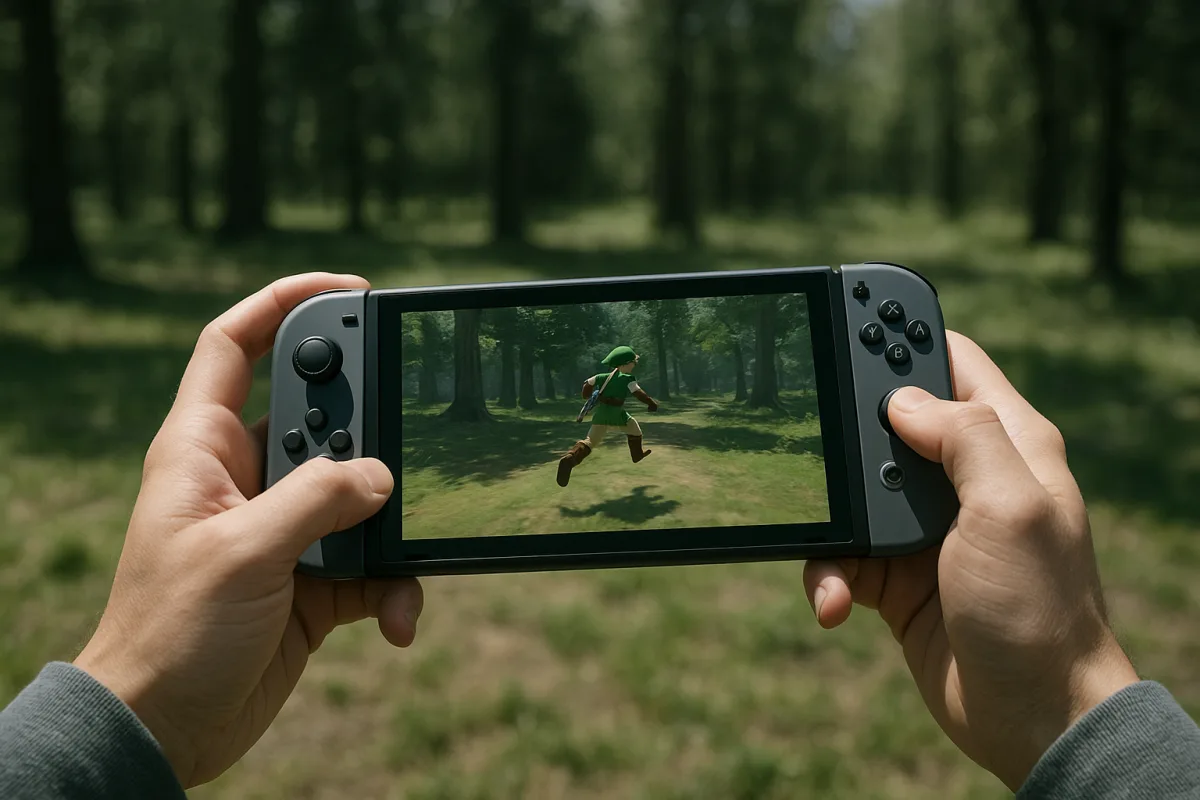
Confirm the platform before you plan a replay
You have one hardware decision before any nostalgia argument starts: this remake launches for Nintendo Switch 2 on November 5, 2026. Nintendo has not announced a PC release, older Switch version, or cross-platform version. [1][2]
That means there are no published PC system requirements, Steam Deck settings, ultrawide options, or mod support to wait for. If your plan was to revisit Hyrule through emulation-style tweaks and texture packs, this is a separate version with its own locked hardware target.
The reported target is native 1080p at a locked 60 frames per second, with HDR and variable refresh rate support in TV mode. NintendoReporters attributes those specifications to Digital Foundry’s pre-release technical reporting, but public post-launch testing does not yet exist. [8]
We would not buy a new display around those claims alone. If you already own a Switch 2 and a VRR-capable TV, the feature is a welcome insurance policy, but the meaningful upgrade here is 60 fps and a rebuilt presentation.
Pick the edition that fits your shelf space
The digital edition costs $59.99, while the physical release costs $69.99. Gematsu lists the November 5 release and digital price, while Nintendo Life identifies the physical edition’s textured foil cover art and limited availability. [1][2]
The $10 premium buys the cartridge and special cover treatment, not downloadable expansion, a season pass, or confirmed gameplay content. It also does not include a Switch 2 console, controller, delivery, sales tax, or retailer-specific preorder bonuses.
Buy digital if you want immediate access and do not care about packaging. Buy physical only if you collect Zelda releases or know you will value the foil case, because limited packaging is the entire stated upgrade.
For a game built around returning to the same save over years, cartridge ownership has its appeal. Still, we would take the cheaper digital version unless the box will genuinely stay in your collection, not sit under a stack of old controllers.
Set expectations for the team behind it
Nintendo Entertainment Planning & Development Production Group No. 3 leads the remake. This is Nintendo’s core Zelda group, with franchise producer Eiji Aonuma, director Hidemaro Fujibayashi, and developers HokWai Ng, Aya Shida, Hiroki Taguchi, and Masato Ohashi attached to the project. [6]
That confirmation rules out two popular fan theories. Grezzo, the Japanese studio behind the 2011 Nintendo 3DS remake and 2024’s Echoes of Wisdom, is not confirmed as lead developer, and neither is Xenoblade studio Monolith Soft. [6]
Do not read that as proof that no outside team contributed. Nintendo has not published the full credit roll, so support work remains unknown until release. What is confirmed is that the group responsible for most modern Zelda games owns the central design decisions. [6]
Aonuma’s stated goal was to let younger developers find their own answers while rebuilding the game, stepping in with guidance rather than dictating every decision. He has also framed the project as a way to generate new insights inside the team. [7]
That explains the remake’s posture. It is not an N64 game running at a higher resolution, but neither does it appear to be a sprawling Breath of the Wild-style replacement that deletes Ocarina’s compact dungeon-and-overworld structure.
Learn the new movement before judging the combat
Start by remapping your hands, not by trying to reproduce N64 muscle memory. Link can now jump manually, a significant change from the original game’s automatic ledge jumps, and the camera can rotate freely around him with the right stick. [3][9]
Manual jumping should make river stones, rooftops, edges, and environmental puzzles feel less like alignment checks. It also gives Nintendo room to place traversal challenges where the original could not, so do not assume every familiar gap works exactly the same way.
The free camera is the feature most likely to change your first hour. Ocarina of Time’s original Z-targeting remains fundamental to combat, but fixed perspectives and awkward camera corrections were a major part of the N64 game’s age.
We would use the modern camera aggressively in Hyrule Field and settlements, then lean on targeting in fights. If the remake preserves enemy spacing while giving you clearer sightlines, ranged options and shield timing should feel cleaner without flattening boss encounters.
Swimming has also been rebuilt around freer movement and a breath limit, instead of the original’s restrained surface strokes and brief dives. Iron Boots can be mapped to the D-pad, carrying forward a quality-of-life improvement from the 3DS version. [3]
That D-pad shortcut quietly buffs Water Temple pacing. The original’s repeated equipment-menu trips turned a puzzle about vertical routes and water levels into administrative work, especially if you needed to switch boots every few rooms.
Follow the world instead of chasing new warp points
Hyrule Field has new terrain, vegetation, waterways, ruins, and more interactive detail. Lon Lon Ranch is integrated into the surrounding elevation rather than sitting as an isolated walled plateau, giving the central overworld a more natural shape. [3][10]
Some players wanted that redesign to go further, toward a genuinely open-world Hyrule. That misses what this remake appears to protect: Ocarina’s field is a connective space, full of routes, day-night changes, enemies, and small interruptions, not a map meant to absorb 80 hours. [10]
Nintendo tested additional fast-travel points beyond the original ocarina songs, then removed them. Aonuma said the team found that constant shortcuts erased the moments where players stopped during travel and found something unexpected. [7]
Keep that in mind before treating every ride across Hyrule Field as wasted time. The original dungeon warps remain, including travel to the major temples and the Temple of Time, so the remake retains relief valves without making the overworld irrelevant. [7]
Use the new Threads of Time feature if you return after a break. It presents story progress and current goals as an evolving tapestry, intended to guide you without dumping a modern waypoint trail across every corner of the map. [3]
We would turn to Threads of Time only when you have genuinely lost the plot. Ocarina works because overheard advice, geography, songs, and dungeon rewards teach you where to go next. A permanent objective marker would make that chain feel like a checklist.
Decide how much voice acting you want in your Zelda
Major story scenes now have full voice acting for characters including Zelda, Saria, Ruto, Darunia, and Ganondorf. Link remains silent, preserving the player-shaped lead while giving the supporting cast a much larger vocal presence. [3][4]
Nintendo has not announced the complete voice cast or localization details. That includes uncertainty around how different language tracks will handle returning character voices, so be wary of confident social-media claims about actors or regional scripts before launch. [3][4]
This is the remake’s most divisive creative bet. Some early reactions praise the added character and cinematic weight, while others argue that hearing scenes performed changes the lonely, text-led atmosphere that made the N64 version feel dreamlike. [4][5]
We would play with voices on for a first run, because the remake was built around them. If the new performances start crowding out the scenes you remember, revisit the original afterward instead of expecting this edition to preserve every old emotional texture.
The musical side appears more cautious. The ocarina remains mechanically central, and Link’s new animation places his fingers on the notes he is actually playing. You can also skip repeated song playback once you know the tune’s effect. [3]
That skip option will matter more than it sounds. Songs such as the Prelude of Light and the temple warps are iconic, but watching the same activation sequence dozens of times adds no tactical choice once the novelty has worn off.
Search for the smaller remake details
Do not expect every improvement to announce itself in a trailer. Built-up areas now connect without door-loading interruptions, and Hyrule Castle Town has moving townsfolk, merchants, travelers, and more interaction between NPCs. [3]
Those changes alter the tone of the child-era city. The old Castle Town was technically a busy capital but functionally a handful of characters against a backdrop, while the remake can sell the place as a city before its later transformation.
The Lens of Truth has been reworked into a physical pair of goggles that Link puts on, complete with a visual transition. It is a cosmetic flourish, but it places the item inside the world instead of overlaying a flat effect on the screen. [3]
Watch for the remade field geography, ocarina finger positions, and the Lens animation during your first pass. Those are the kind of details that show the project’s priorities better than texture resolution, because they reveal where the team chose to reinterpret familiar rituals.
Google has also launched a time-travel-themed search Easter egg tied to the remake’s release campaign. It is marketing, not an in-game secret, so do not waste your first night hunting Hyrule for a reference that lives outside the game. [6]
Read the reception without joining the panic
The early community response is broadly positive about visual fidelity, smoother controls, and the busier world, but it is divided on the more realistic presentation and modernization. Some players welcome a Hyrule that feels physical, while others prefer the original’s stylized distance. [5][9][10]
TechRadar reports that one player came away feeling the original now seemed “more hollow” after experiencing the remake. That is praise for how much environmental texture and performance the new version adds, but it is also a warning about comparison fatigue. [5]
The counterargument is valid too. A more detailed Hyrule can accidentally turn a strange, theatrical fantasy into a standard prestige adventure if lighting, voices, and animation become too eager to explain its mood. That concern will not be settled by screenshots.
Give the meta a week after November 5 before accepting claims that a control change “ruins” a dungeon or that the remake has solved every old problem. No player or reviewer performance reports exist before launch, and no concrete development setbacks have been publicly documented. [1][8]
For a first-time player, this looks like the version we would choose because it removes camera and inventory friction without adding map clutter. For an N64 veteran, approach it as a reinterpretation with strong Zelda stewardship, not a museum-perfect replacement.
Frequently Asked Questions
What are the new control features in the Ocarina of Time remake?
The remake introduces manual jumping, free camera movement with the right stick, and D-pad shortcuts for equipment. These changes aim to remove original Nintendo 64 control friction and modernize gameplay without adding new warp points or shortcuts. The controls are designed to feel more fluid and responsive while preserving the game's core experience.
How does manual jumping affect gameplay in the Ocarina of Time remake?
Manual jumping gives players direct control over Link's jumps rather than relying on automatic actions. This change allows for more precise platforming and exploration, making traversal feel more intentional and skill-based. It is one of the updates that reduces the original game's control limitations.
What camera improvements were made in the Ocarina of Time remake?
The remake features a freely controllable right-stick camera, replacing the fixed or limited camera angles of the original. This improvement provides players with greater control over their view of the environment, enhancing navigation and combat awareness. The updated camera system contributes to a smoother and more modern gameplay experience.
How do the new controls change combat in the Ocarina of Time remake?
With manual jumping and free camera movement, combat becomes more dynamic and player-directed. The D-pad shortcuts allow quicker access to equipment, enabling faster reactions during battles. These control changes reduce the original game's input friction, making combat feel more fluid and responsive.
Should I relearn controls for the Ocarina of Time remake?
Yes, the remake’s controls differ notably from the original, including manual jumping and free camera movement. Players are encouraged to give the new control scheme a chance, as it removes several limitations from the Nintendo 64 version and aims to improve overall gameplay flow. Adjusting to these changes can enhance the experience without losing the game’s classic feel.
How we researched this
This article was assembled from 1 video source, 5 published articles, 10 cited references.
Nothing here is based on hands-on testing. Where a figure or finding appears, it belongs to the source cited beside it, and the writing says so rather than implying otherwise. Every source is listed below so you can check it.
Sources
The Legend of Zelda: Ocarina of Time Remake vs. Original - 15 BIGGEST Differences, GamingBolt
The Legend of Zelda: Ocarina of Time Remake Studio Officially Revealed, Polygon
Nintendo Reveals Development Team Behind The Legend of Zelda: Ocarina of Time Remake, IGN
No, Cyberpunk: Edgerunners II Didn’t Canonize A 2077 Ending, Kotaku
Zelda: Ocarina Of Time Remake Devs Tried Adding Even More Fast Travel Points, But That Sucked, Kotaku
The Legend of Zelda: Ocarina of Time remake launches November 5 - Gematsu
Legend of Zelda: Ocarina of Time (2026, Switch 2) | Nintendo Life
Ocarina of Time Remake: Voice Acting, N64 Music and Switch 2 Release
Ocarina of Time Remake on Switch 2 Confirmed: Developed b...
Watch The Legend of Zelda: Ocarina of Time Remake Insights on Youtube
Related Articles
Ocarina of Time Switch 2 Remake Features and Gameplay
Discover key features of the Ocarina of Time Switch 2 remake, including the jump button, puzzle redesigns, and updated combat mechanics.

Ocarina of Time Remake Coverage and Reactions for Switch 2
Get detailed coverage and fan reactions to the Ocarina of Time remake, including editions, gameplay changes, and release info for Nintendo Switch 2.
Phantom Blade Zero Gameplay Guide: Combat, Weapons, and Tips
Learn key Phantom Blade Zero gameplay tips, weapon upgrade strategies, and difficulty advice to master combat and quests.
Stranger Than Heaven PC Preview: Combat, Story, and Pricing
Get a detailed Stranger Than Heaven PC preview covering combat, story, release date, and where to buy the game at the best price.