
New Tactical and Sci-Fi Shooters to Watch in 2026
Explore new tactical and sci-fi shooters in 2026, including Fragmentary Order, VOID/BREAKER, and Silica with gameplay, features, and buying advice.
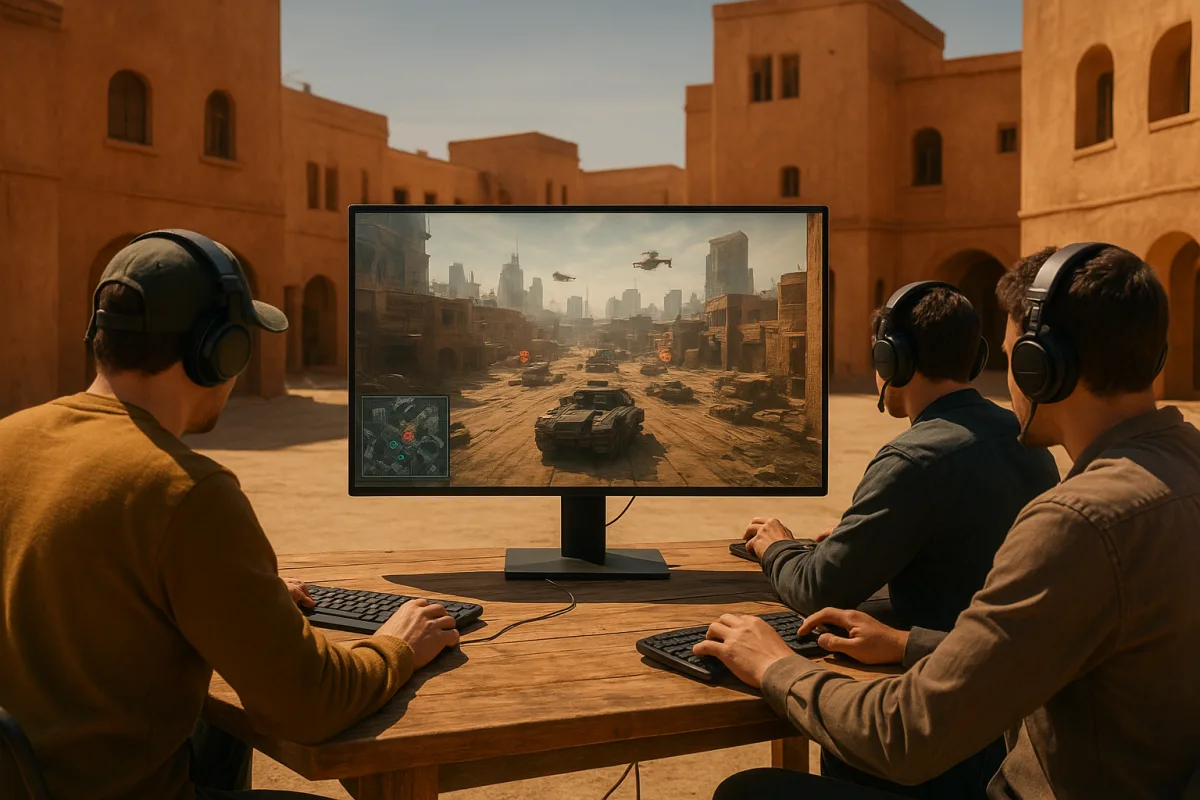
The quick list
Best overall: VOID/BREAKER, for solo players who want a finished sci-fi shooter with deep weapon builds and can tolerate roguelite repetition.
Best tactical sandbox: Fragmentary Order, for established squads chasing a sci-fi Escape from Tarkov-style extraction game before it is fully formed.
Best for strategy players: Silica, for players who want to command tanks and infantry from above or drop into the battle as a soldier.
Best value for your backlog time: Wait on Fragmentary Order, if $44.99 is hard to justify for a closed-alpha extraction shooter without public performance or balance data.
You are deciding between three very different kinds of sci-fi shooting. Fragmentary Order asks whether your squad can loot, scout, fight, and extract under pressure. VOID/BREAKER asks whether your build can survive another escalating roguelite run. Silica asks whether you would rather lead the war.
The common trailer vocabulary, armored soldiers, distant planets, drones, wrecked structures, hides the actual trade-offs. One game needs friends and patience. One needs a PC with some headroom. One makes you choose between strategic command and pulling the trigger yourself.
| Game | Status | Price reported here | Core layout | Player structure | Hardware or storage figures | Biggest trade-off |
|---|---|---|---|---|---|---|
| Fragmentary Order | Closed alpha | $44.99 early-access access | Large extraction maps across the solar system | Squads of up to four | Not published | Strong tactical promise, little public proof of balance or performance |
| VOID/BREAKER | Version 1.0 | No price supplied | Run-based combat arenas and six areas | Primarily solo first-person roguelite | 12GB storage, 8GB RAM minimum, 16GB recommended | Excellent buildcrafting, but later-run performance and difficulty problems |
| Silica | Version 1.0 | No price supplied | Planetary RTS maps with ground-level combat | Commander plus first-person players | Not published | Ambitious combined-arms design, less focused as a pure shooter |
Fragmentary Order: the extraction bet
Fragmentary Order is the closest match for players still chasing Escape from Tarkov’s tension but tired of its grounded military setting. Its setting is 2251, where players remotely operate clones called Repents across the solar system. [1]
The 14-minute gameplay debut shows two players searching containers, debating which loot is worth hauling out, and moving from scavenging to firefights and extraction. IGN’s reveal also emphasizes the abrupt rhythm extraction players know well: one unopened locker might matter, but lingering can get everyone killed.
The squad size is up to four players, and the revealed toolkit includes vehicles, aerial drones, sci-fi weapons, and broad maps. [1] LevelCapGaming highlighted an especially welcome detail, the option to swap a weapon’s shoulder position to work corners from either side.
That shoulder swap sounds minor until you picture an actual extraction fight. In a game where exposing even a sliver of your model around a rock or doorway can lose a kit, being able to alter your angle without crossing open space could become standard squad discipline.
The footage also shows scanning, electronic-signature warnings, armor use, tanks, snipers, revives or recovery attempts, and a final dash toward extraction. It looks like Tarkov’s familiar loot-and-leave loop expanded into a cleaner science-fiction battlefield, with more obvious vehicle and drone roles.
What it does not establish is the part that decides whether extraction shooters live or die: how frequently encounters happen, how persistent progression works, how gear loss is handled, or whether weaker players can recover after several bad runs. Trailer firefights are always well-paced. Actual matchmaking is less charitable.
Fragmentary Order is in closed alpha, with early access listed at $44.99 on its official site. [1] That price covers game access at its current stage, not a finished feature set, and the developer has not published enough public testing data to judge optimization, weapon balance, map flow, or long-term economy.
Dynamic weather has also been mentioned around the reveal, but no detailed public explanation says how weather changes sightlines, vehicle handling, audio, or extraction routes. Do not buy it expecting the systemic environmental pressure seen in better-documented games such as GTA 6. [2]
That caution is not community panic. It is the normal burden for a live extraction shooter asking for money before its core meta exists. We would not pay $44.99 for Fragmentary Order as a solo gamble. With three reliable friends who actively want a new squad game, it becomes easier to justify.
VOID/BREAKER: the buildcrafting shooter
VOID/BREAKER is already the far more legible purchase. It is a first-person roguelite in which you play test subject 1473, repeating hostile AI-run simulations while gradually unlocking weapons, movement tools, upgrades, and narrative context.
GamingBolt compares its ingredients to Returnal-style bullet volume, first-person traversal, and roguelite progression. The comparison gets the genre right, but the key point is perspective: you are dodging dense projectile patterns without the wider view a third-person camera gives you.
Its loop is familiar. Enter a combat space, clear enemies, choose rewards, assemble a stronger build, and push onward. That can sound boilerplate, but VOID/BREAKER has enough moving parts to make a good run feel engineered instead of randomly handed to you.
Weapons use grid-based module inventories, and modules can alter ammunition, damage, fire rate, projectile effects, debris damage, and thrown-object behavior. Repeaters can stack modules for upgraded effects, sometimes at the cost of locking out two other slots. That is the sort of trade you can build around.
The environment is equally central. You can grab and throw explosives, car doors, and office furniture with a tether, stagger enemies, and collapse structures on them. The catch is that destruction also removes your own cover and turns a carefully stocked arena into rubble.
That creates a cleaner choice than it first appears. A destruction-heavy build can solve a dangerous room fast, but it may leave you exposed while survivors keep firing. A weapon build that staggers enemies for ammo and health can extend a run, but needs closer, more controlled kills.
Steam’s official PC requirements are modest on paper: a GTX 970 or R9 290, 8GB of RAM, and 12GB of storage at minimum. Recommended hardware rises to an RTX 2070 or RX 5700 XT and 16GB of RAM, with Windows 11 and DirectX 12. [4]
GamingBolt’s review suggests those recommended specifications are the number to respect. It reported smooth early play at 120 fps using DLAA and high settings, then major slowdown and crashes from Area 4 onward as destruction, effects, enemies, and projectile volume piled up.
The review also calls out a progression-blocking Area 4 shortcut bug, environmental collision issues, and later zones that turn tactical use of explosives into grenade spam against clusters of tougher enemies. Those are not minor polish problems in a roguelite, where losing a run costs time and momentum.
Player reception is still clearly favorable. SteamCozy reports 93 percent positive Steam reviews from more than 2,000 reviews, while StadionGaming and Skip The Critics identify repetitive runs, uneven difficulty, and the first boss as the recurring complaints. [4][5][6]
So we would not write VOID/BREAKER off because one reviewer hit technical trouble. We would play it on hardware at or above the recommended tier, avoid high-risk modifiers until the build system clicks, and expect the first boss to punish a build that has not found its damage plan.
Silica: the command-and-control wildcard
Silica occupies a different lane from both of them. It combines real-time strategy with first-person combat, allowing one player to command units while others fight as soldiers, drive vehicles, or control alien creatures on the ground.
Its 1.0 update ends more than three years in early access with a Centauri story campaign, voice briefings, and a planetary map that tracks the broader war. It also adds improved unit formations, a jet bike, campaign saves, and Steam Workshop scenario support.
Multiplayer now includes one-versus-one matchmaking with map bans. That means Silica is no longer relying entirely on the promise of its hybrid concept, though you should still buy it for the blend, not because it will give you Tarkov’s extraction anxiety or VOID/BREAKER’s rapid build loops.
The layout produces a distinct kind of teamwork. In Fragmentary Order, squad communication is about immediate survival, angles, ammunition, and extraction. In Silica, the commander may be deciding where a whole front collapses while first-person players win or lose the small fights inside it.
That is exciting if you enjoy Battlefield-scale combined arms but want more player agency than a standard shooter gives you. It is a poor fit if you only want crisp competitive gunplay, because the appeal depends on accepting the occasional chaos of humans and RTS systems colliding.
Who each option suits
Fragmentary Order suits a four-player group that already enjoys extraction games and accepts alpha uncertainty as the price of getting in early. Its $44.99 access price covers the current early build, while its final economy, balance, performance, and long-term structure remain unclear. [1]
VOID/BREAKER suits a solo player who likes making broken weapon combinations, adjusting module grids, and learning boss patterns through repetition. Its 12GB install footprint is small, but the later game makes the recommended RTX 2070 or RX 5700 XT class hardware the safer target. [4]
Silica suits the player who has always wanted the squad leader’s map and the rifleman’s view in the same game. Choose it when the command layer is the draw, not as a substitute for a tightly tuned extraction shooter or a pure bullet-hell roguelite.
We would pick VOID/BREAKER first if you want something playable now and your PC clears its recommended specification. We would bookmark Fragmentary Order, watch how its alpha develops, and only jump in early if your regular squad is ready to make the game’s uncertainty part of the experience.
Frequently Asked Questions
What are the best new tactical shooters releasing in 2026?
The top tactical shooters vary by playstyle. Fragmentary Order suits squads wanting a sci-fi extraction shooter with vehicles and drones but is still in closed alpha. VOID/BREAKER offers a finished solo roguelite shooter with deep weapon builds and fast runs. Silica combines RTS command with first-person combat and is fully released. Each targets different player preferences.
How do Fragmentary Order, VOID/BREAKER, and Silica compare?
Fragmentary Order focuses on squad-based extraction with tactical looting and vehicles, but is unfinished and priced for early access. VOID/BREAKER is a solo roguelite shooter emphasizing buildcrafting and fast arena runs, though later levels challenge performance and difficulty. Silica blends RTS command and first-person combat, with a full campaign and multiplayer, offering a unique hybrid experience.
Which upcoming sci-fi shooters offer squad-based gameplay?
Fragmentary Order supports squads of up to four players working together in large extraction maps. Silica also involves multiple players, with one commanding as an RTS leader and others fighting in first person. VOID/BREAKER, by contrast, is primarily a solo experience.
What are the hardware requirements for VOID/BREAKER?
VOID/BREAKER requires at least Windows 10, an Intel i5-4590 or AMD FX 8350 CPU, 8GB RAM, and a GTX 970 or R9 290 GPU, with 12GB of storage. Recommended specs include Windows 11, Intel i5 8400 or Ryzen 5 2600, 16GB RAM, and an RTX 2070 or RX 5700 XT GPU.
Is Fragmentary Order worth buying in early access?
Fragmentary Order is still in closed alpha and priced at $44.99 for early access, which grants entry to an unfinished game without public data on balance or performance. It may be worth it for established squads eager for a new tactical extraction shooter, but solo players or those hesitant about early access should consider waiting.
How we researched this
This article was assembled from 3 video sources across 3 channels, 6 cited references.
Nothing here is based on hands-on testing. Where a figure or finding appears, it belongs to the source cited beside it, and the writing says so rather than implying otherwise. Every source is listed below so you can check it.
Sources
VOID/BREAKER 1.0 Review - Does This Shooter Surpass Returnal And Saros?, GamingBolt
Escape From Tarkov Killer... Made By Tarkov?, LevelCapGaming
Fragmentary Order Gameplay Debut Shows 14 Minutes of Tactical Sci Fi Action | Technetbook
GTA 6's weather will rock your boat, damage your plane, and send Vice City denizens seeking shelter
'Pragmata' (PC, Xbox) Review - "A game that separates itself from humanity"
VOID/BREAKER Review: A One-Man Shooter That Breaks Everything - stadiongaming.eu
Void/Breaker (2025) Review: Player Score 74/100 | Skip The Critics
Watch New and Upcoming Tactical Shooters and Sci-Fi Games on Youtube
Also from the sources
Related Articles
The Witcher 3 Remastered vs Warhammer 40,000 Dawn of War 4
Compare The Witcher 3 Remastered and Warhammer 40,000 Dawn of War 4 for PC: release dates, gameplay, PC specs, and which RPG or RTS to choose.
Blizzard Upcoming Games 2026
Discover Blizzard's upcoming games in 2026 including Diablo 5, StarCraft open-world shooter, and Overwatch's new hero Doctrine with release dates and
New and Upcoming PC Game Reviews and Previews 2026
Read detailed new and upcoming PC game reviews and previews for 2026, including Valheim 1.0, Aliens Fireteam Elite 2, NHL 27, and more.
Indie Games Highlights and Industry Events in 2026
Explore key indie games, demos, and industry events in 2026 with detailed highlights and release info for PC gamers.