
New and Upcoming PC Game Reviews and Previews 2026
Read detailed new and upcoming PC game reviews and previews for 2026, including Valheim 1.0, Aliens Fireteam Elite 2, NHL 27, and more.
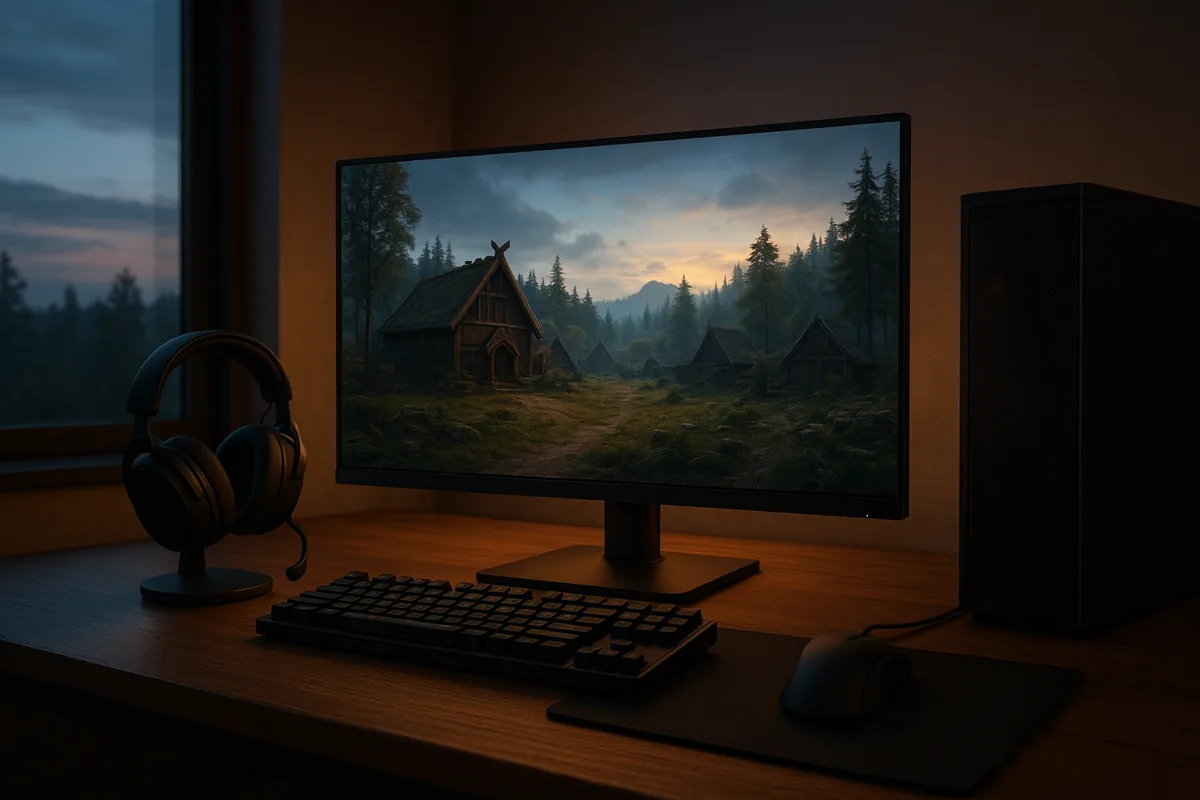
The quick list
- Best overall: Valheim 1.0, for co-op groups willing to build, sail, die badly, and rebuild with purpose.
- Best co-op shooter: Aliens: Fireteam Elite 2, for four friends who want a 30-hour xenomorph campaign rather than an endlessly supported live-service game.
- Best for annual-sports holdouts: NHL 27, for hockey players returning after two or more skipped editions.
- Best for small sessions: Hot Wheels: Infinite Rush, for players who want 15-to-30-minute arcade races, stunts, and collectible hunting.
- Best upcoming survival-horror prospect: God Save Birmingham, for players who prefer weighty, low-tech zombie survival over gun-heavy apocalypse games.
- Best upcoming sandbox prospect: Zeverland, for co-op groups that want to turn household junk and vehicles into increasingly ridiculous survival tools.
The actual decision here is less about which game has the loudest launch week, and more about what sort of friction you want. Valheim asks for patience. Fireteam Elite 2 asks for friends. NHL 27 asks whether you really need another annual roster cycle. Hot Wheels wants you to stop worrying about apexes and drive through a water park wall.
The two previews, God Save Birmingham and Zeverland, are harder calls because they are still promises. Both are zombie survival games, but they are aiming at opposite ends of the genre's workbench. One makes a pitchfork feel like a serious survival tool. The other lets you weld a screaming novelty object to it.
Comparison table
| Game | Status and price | Core format | Group size | Time and layout | Main trade-off |
|---|---|---|---|---|---|
| Valheim 1.0 | Released, $29.99 | Survival crafting and exploration | Solo or co-op | Procedural world, biome-based progression | Excellent building, deliberately slow gathering |
| Aliens: Fireteam Elite 2 | Released, $49.99 | Class-based co-op shooter | Four players | Six campaign acts, revisited areas, horde mode | Better squad flexibility, limited mission innovation |
| NHL 27 | Released, price not provided in supplied sources | Ice hockey simulation | Solo, local and online modes | Full annual sports package | Better on-ice AI, mostly familiar surrounding modes |
| Hot Wheels: Infinite Rush | Released, price not provided in supplied sources | Open-world arcade racer | Solo, limited local multiplayer | Four compact islands, early estimates of 15 to 20 hours | Great momentum, shallow upgrades and awkward creation tools |
| God Save Birmingham | Upcoming, price unannounced | Medieval zombie survival horror | Solo at launch build, co-op planned | Open world, village-scale scavenging | Strong atmosphere, still visibly in development |
| Zeverland | Early Access planned for Q1, price unannounced | PvE co-op survival sandbox | Solo, private and public servers planned | Large interactive world with vehicles | Big systemic ambition, final scope remains uncertain |
Valheim 1.0 is still the long-game recommendation
Irongate’s Valheim has finally reached 1.0 after more than five years in Early Access, adding the Deep North as its final biome and an actual end point to the boss progression. Gameranx describes the central loop accurately: enter a harsher biome, secure new materials, improve gear, beat its boss, then prepare for the next frontier.
At $29.99, Valheim is no longer the startling $19.99 bargain it was in Early Access, but it is not priced above its peers either. Switchblade Gaming’s 2026 survival-crafting comparison places the category from $14.99 for Don’t Starve Together to $39.99 for Grounded, with Palworld, V Rising, and Subnautica also sitting at $29.99. [1]
That price buys a game whose best system remains structural building. You need roofs over workbenches, supports under upper floors, and enough thought to stop your longhouse becoming expensive firewood. The physics are not a decorative flourish. They turn base design into a low-stakes engineering puzzle.
The balance change that matters most is not a flashy weapon nerf, but Valheim’s longstanding food model. Hunger does not drain health like a traditional survival tax. Instead, food grants timed health and stamina boosts, which means the game quietly rewards preparation before expeditions without demanding constant snack management.
That design has consequences for builds. Three stamina-oriented meals make movement, blocking, bows, and repeated swings safer. Health-heavy food gives melee players more room to survive a mistake. Magic remains powerful late, but GamingBolt found 1.0’s tuning made melee a viable answer to major encounters rather than a self-imposed handicap.
There is still some old-school inconvenience here. Solo players gather every log, haul every ore load, and establish multiple forward bases themselves. Gameranx also reported residual micro-stuttering while entering new areas, even after the update’s optimization work. A group does not eliminate the grind, but it divides the labor enough that the pacing makes more sense.
PC requirements are modest on paper. Valheim’s official recommended specification is a Core i5 or Ryzen 5 at 3.0 GHz, a GTX 1060 or Radeon RX 580, 16GB of RAM, and 6.5GB of SSD space. NKB Gaming suggests an RTX 2060 or RX 5700 XT for 1440p targets, though those are independent recommendations rather than official performance guarantees. [3]
The catch for returning players is map generation. Both Gameranx and GamingBolt recommend a new world because unexplored terrain is where new biome generation belongs. Loading a beloved old seed and expecting the Deep North to slot neatly into explored territory is the sort of patch-note assumption that creates a weekend of confusion.
Aliens: Fireteam Elite 2 improves the squad, not the formula
Aliens: Fireteam Elite 2 has made one important practical change: squads now support four players instead of three. IGN’s reviewer specifically frames that as a quality-of-life fix for regular co-op groups, since nobody has to sit out when four friends are available.
The new specialist class is the more interesting systems change. Traditional classes retain exclusive modifiers and progression rewards, but specialist lets players mix class features and weapon preferences. That softly buffs experimentation, particularly for players who want a machinist-style turret kit without giving up the marauder’s smart gun.
The game also makes faction-specific loadouts matter. Fire is effective against xenomorphs, electrical tools suit synthetics better, and cryo ammunition works broadly. That is a real build consideration rather than menu busywork. A smart gun clears swarms efficiently, while a rail gun better answers sturdier robotic enemies.
At $49.99, though, this is a tougher recommendation than Valheim. IGN found a roughly 30-hour campaign, six acts, revisit-worthy locations, challenge cards, and a three-map horde mode. That is a respectable amount of co-op shooting, but it does not automatically equal longevity.
The independent research brief flags recurring criticism of repetitive missions, technical trouble, connection problems, and limited innovation for the price. Tom’s Guide similarly characterizes it as more of the first game, albeit a tempting proposition for Alien fans. [2] No credible retention figures are available yet, so claims that it will become your group’s next forever game are just launch-week optimism.
NHL 27 changes the flow, not the package
NHL 27’s largest gameplay adjustment is deceptively small. GamingBolt found that the left-trigger pivot now carries a speed penalty and leaves skaters more exposed to poke checks. That should curb the habit of endlessly pivoting into safety, especially for players who treat lateral movement as a universal escape button.
The broader systems pitch is 32 team-specific playbooks informed by NHL Edge data. Colorado’s carry-focused transitions and Edmonton’s preference for dumping, shooting, and pressure are meant to create teams with recognizable tactical personalities. According to GamingBolt’s testing, those differences are noticeable enough to affect passing lanes, support positioning, forechecking, and zone entry choices.
That is a modest meta shift rather than an overhaul. Players who force the same carry-and-shoot pattern with every team will find some clubs less cooperative. A cycling-heavy style may suit Montreal better than a side built around more urgent, direct transitions. It gives roster choice more tactical weight, which is welcome.
The sceptical bit is that the evidence is still early. The research brief found no detailed competitive or esports analysis of the revised skating model, so nobody can responsibly declare a new dominant strategy yet. Give the player base a few weeks before treating early complaints as either proof of broken skating or proof that “skill is dead.”
Away from the rink, the annual-series problem remains. All 32 arenas have been rebuilt and presentation has improved, but World of Chel is unchanged, franchise mode is mostly familiar aside from playbook integration, and Be a Pro receives only a partial refresh. That makes NHL 27 better for returning players than for NHL 26 loyalists.
Hot Wheels: Infinite Rush has momentum, then loses some in the menus
GamingBolt’s review makes Hot Wheels: Infinite Rush sound strongest when it stops pretending to be a precision racer. Its brake-triggered drifting, self-righting cars, reset button, destructible scenery, loops, ramps, and four difficulty settings all support a design where bouncing off a barrier is a recovery, not a ruined lap.
The four vehicle classes create a clear hierarchy. Speeders and drifters naturally fit the drift-and-boost loop. Versatiles sit between them. Titans hit harder and have stronger boosts, but their weight makes sustained drifting awkward, which means the nominal bruiser build works against the game’s most important handling mechanic.
Very Hard appears to be the right setting for experienced arcade-racing players. GamingBolt found Easy forgiving enough for children, Hard still manageable, and Very Hard transformative because minor errors finally carry consequences. That is not a balance failure. It is a sensible way to make one handling model serve very different audiences.
The world is divided into four compact islands rather than one enormous map: Wheels Wood, Tentacle Bay, Gearville, and a Japan-themed location. Early community estimates put campaign completion around 15 to 20 hours, but the game released only days ago, so that figure should be treated as preliminary rather than settled fact.
Its weak point is progression depth. Perks offer modest boosts to acceleration, handling, and recharge, but GamingBolt found them too slight and too slow to unlock to create meaningful specialist builds. The livery editor and track builder are potentially creative tools trapped behind cumbersome interfaces. Also, local multiplayer lacks free-roam, which feels like a strange omission in a toy-box racer.
The two upcoming zombie games are chasing different survival fantasies
IGN’s PAX West preview of God Save Birmingham suggests Ocean Drive Studios is finding the point of its medieval zombie apocalypse. The newest build starts with a survivor escaping an infirmary, gathering clothes and supplies, then moving through a town where hunger, thirst, exhaustion, anxiety, and sleep matter alongside the undead.
Its strongest hook is physical problem-solving. Pitchforks trade raw stopping power for reach and precision. Hatchets offer a wider, close-range attack arc. Ladders and crates can become barricades, routes to safety, or improvised weapons. That is a more grounded survival fantasy than simply crafting a better sword every 20 minutes.
Zeverland, described by IGN, is aiming for the opposite tone. Developer Game Design Director Cecilia Pan says the game has more than 6,000 interactive objects, with materials that burn, conduct electricity, carry weight, and can be combined into weapons. Its post-apocalyptic cute art style does not make the systems lightweight.
The major design change is social. Zeverland was initially planned as an MMO with player sabotage, but feedback after its June playtest pushed it toward PvE co-op, private servers, and optional public worlds. Players can still play solo, but the intended stories involve shared bridges, ziplines, mobile bases, and helping a stranded driver with fuel.
Its infection system is worth watching. A bitten player can become a zombie while retaining abilities for up to 15 minutes, attempting to find a cure before losing control. That could make failure a co-op problem rather than a simple death screen, but it is still an Early Access promise, not a tested endgame loop.
Who each option suits
Valheim 1.0 suits patient builders, exploration-focused duos, and larger co-op groups who enjoy logistics as much as combat. It does not suit players looking for a brisk solo campaign or modern survival-game conveniences.
Aliens: Fireteam Elite 2 suits a reliable group of four and players who value weapon roles, target priority, and xenomorph atmosphere. At $49.99, it is harder to recommend to solo players or groups without a regular schedule.
NHL 27 suits hockey fans returning after a few years who want teams to behave more distinctly on the ice. NHL 26 owners should regard its playbooks and skating changes as interesting, not automatically purchase-worthy.
Hot Wheels: Infinite Rush suits families, arcade-racing fans, and players who like brief sessions with persistent open-world progress. It is less suitable for players who want deep tuning, serious simulation handling, or polished creation tools.
God Save Birmingham suits survival-horror players interested in scarcity, weighty physical interactions, and medieval atmosphere. It should remain a watchlist pick until its release date, pricing, performance, and co-op implementation are confirmed.
Zeverland suits sandbox-minded co-op groups that prefer experimentation to strict quest structures. Its movable objects, custom vehicles, and player-made solutions are compelling on paper, but it is still early enough that caution is more useful than hype.
Frequently Asked Questions
What are the best new PC games released in 2026?
The top PC games of 2026 include Valheim 1.0 for co-op survival crafting, Aliens: Fireteam Elite 2 as the best co-op shooter for four-player squads, NHL 27 for hockey fans returning after skipping editions, and Hot Wheels: Infinite Rush for short arcade racing sessions. Upcoming titles to watch are God Save Birmingham and Zeverland, both promising new survival experiences but still unconfirmed in final form.
How does Valheim 1.0 compare to earlier versions?
Valheim 1.0 marks the official release after over five years in Early Access, adding the Deep North biome and a final boss progression endpoint. It maintains its strong building systems and deliberate pacing, with a refined food model that rewards preparation over constant management. While solo play remains slow due to resource gathering, co-op groups benefit from divided labor, making the game more balanced and engaging.
What co-op shooters are recommended for PC in 2026?
Aliens: Fireteam Elite 2 is the recommended co-op shooter for PC in 2026, best suited for groups of four players. It offers a specialist class and larger team size for better squad flexibility but suffers from repetitive mission design and connection issues. Players should have a regular squad to fully enjoy its roughly 30-hour campaign.
Which upcoming survival games should I watch for on PC?
Two notable upcoming survival games are God Save Birmingham, a medieval zombie survival horror focusing on low-tech weaponry and atmosphere, and Zeverland, a co-op sandbox survival game with ambitious vehicle and tool crafting systems. Both remain in development with unconfirmed pricing and content scope, so they are best kept on a wishlist for now.
Is NHL 27 worth buying for hockey fans returning after skipping editions?
Yes, NHL 27 is considered a sensible full-price purchase for players who have skipped two or more recent editions. It features improved on-ice AI and introduces team-specific playbooks reflecting real NHL strategies. However, owners of NHL 26 might prefer to wait for a sale unless these refreshed modes are particularly important to them.
How we researched this
This article was assembled from 5 video sources across 3 channels, 2 published articles, 3 cited references.
Nothing here is based on hands-on testing. Where a figure or finding appears, it belongs to the source cited beside it, and the writing says so rather than implying otherwise. Every source is listed below so you can check it.
Sources
Valheim 1.0 - Before You Buy — gameranx
Hot Wheels: Infinite Rush Review - The Final Verdict — GamingBolt
Valheim 1.0 Review - The Final Verdict — GamingBolt
NHL 27 Review - The Final Verdict — GamingBolt
God Save Birmingham New Preview: This Medieval Zombie Apocalypse Is Steadily Finding Its Vision — IGN
Zeverland Game Designer Discusses Its Unique Take on the Zombie Apocalypse — IGN
Best Survival Crafting Games 2026: Top Picks for Every Playstyle - Switchblade Gaming
Aliens: Fireteam Elite 2 is basically more of the first game, but this 'Alien' nerd can't resist
Requisitos del Sistema Valheim Version 1.0 (2026) | Guía de Montaje
Watch New and Upcoming Games Reviews and Previews on Youtube
Also from the sources
Related Articles
Gamescom 2026 Game Previews: New RPGs and Unique Titles
Explore detailed Gamescom 2026 game previews covering new RPGs, unique gameplay, and PC requirements revealed at the event.
NBA 2K27 Review and 2026 PC Sports Game Releases
Read our NBA 2K27 review plus insights on EA Sports FC 27 and NHL 27 PC releases, covering gameplay, performance, and value for 2026 sports games.
Gamescom 2026 Indie and Strategy Games Highlights
Explore key indie and strategy game highlights from Gamescom 2026, including gameplay, release info, and PC hardware insights.
Nintendo Switch 2 Game Announcements and Updates
Discover the latest Nintendo Switch 2 game announcements, release dates, and updates including Metroid Ravenous, Monster Hunter Wilds, and more.