
Physint Development Funding Challenges and Publisher Impact
Explore Physint's development funding challenges and how publisher changes affect Kojima Productions' milestone-based game progress.
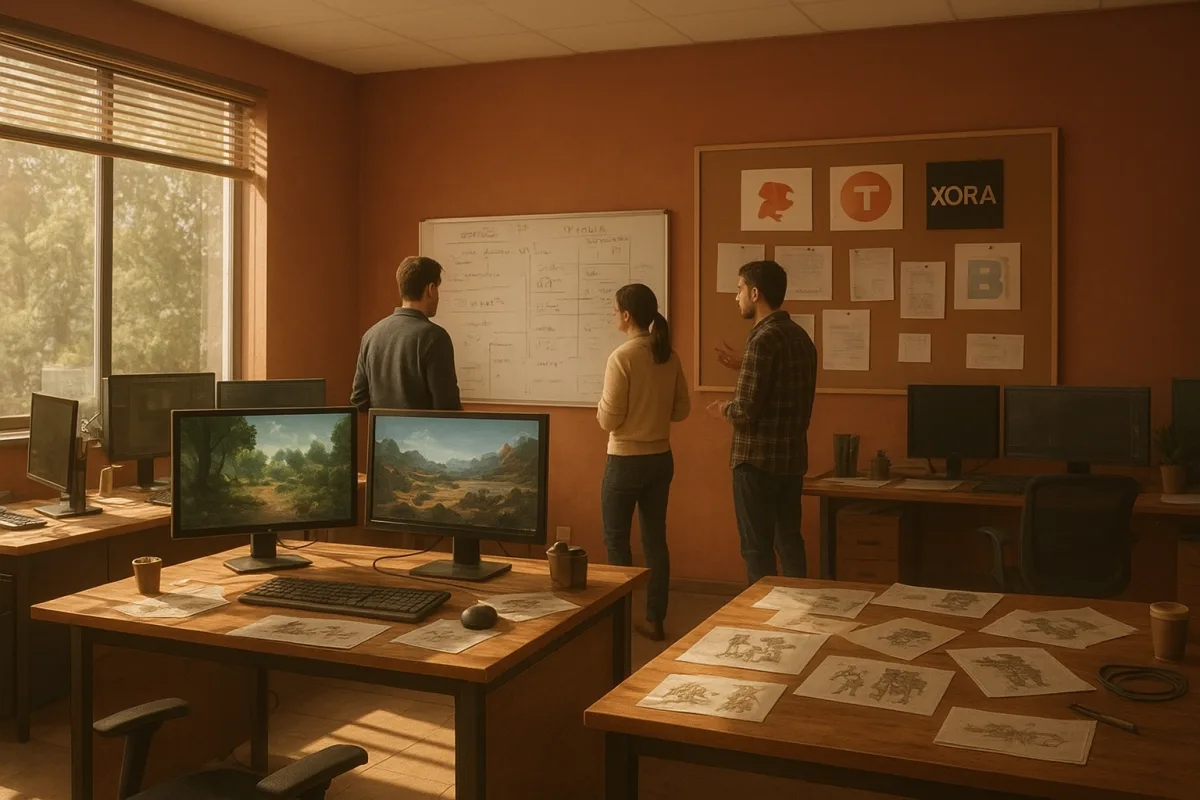
Physint’s real problem was the funding slot
Physint is Hideo Kojima’s action-espionage project, initially announced in January 2024 as a PlayStation-backed game and framed as a return to the broad territory of Metal Gear Solid. By September 2026, it had moved to Xbox Game Studios publishing. [10][13]
The headline version is clean enough: Sony left, Xbox arrived, development continues. The production version is messier, because a publisher is not merely the party that uploads a trailer, prints a box, and tells everyone the game is “coming when it’s ready.”
For an independent studio, a publishing agreement is effectively a live service buff applied to the company itself. It supplies cash, but it also supplies infrastructure, approvals, technical expertise, promotion, testing capacity, and a route through platform certification.
That is the single system worth understanding here: project funding is generally tied to milestones, not a sack of money handed over on day one. When a publisher exits midway through the match, the danger is not only losing future revenue. It is losing the means to keep the team assembled.
How a milestone-funded game actually stays alive
Kojima Productions is independent, rather than a division owned by Sony or Microsoft. That matters because it signs project contracts to support its operations, rather than drawing on a parent company’s internal budget, as Hideo Kojima explained to IGN.
In practical terms, a publisher and studio agree on a development plan. The plan divides work into stages: early concept work, prototypes, pre-production, a playable vertical slice, full production, alpha, beta, certification, and launch preparation.
Each stage has deliverables. A concept phase might require a design document, art direction, a story outline, technology tests, a staffing forecast, and cost projections. A later milestone may require a combat prototype, completed environments, performance-capture work, or stability targets.
The publisher reviews that work before releasing the next payment. This is not necessarily a punitive system. It is how the publisher checks that its money is still buying the game it approved, at a cost and schedule it can accept.
Think of it less like buying a finished game and more like financing a raid team through a long progression tier. The publisher is paying not only for the final boss kill, but for every wipe, re-spec, tool upgrade, server bill, and replacement controller along the way.
That makes timing critical. A studio hires specialists based on expected future milestones. Animation staff, engine programmers, cinematic artists, sound teams, producers, writers, QA contractors, localisation partners, and external vendors all cost money before the game earns a cent.
Kojima said the studio had expanded around its two active projects, Physint and the Xbox-backed horror game OD, and employed roughly 200 people. His immediate concern after Sony’s withdrawal was whether the studio could retain people assigned to Physint. [8]
That is not melodrama manufactured for a launch trailer. A project cancellation can create a sudden mismatch between payroll and incoming milestone payments. Even a profitable studio can face pressure if its cost base was built for two funded productions and one funder leaves.
Why a publisher switch is not an instant reset
Sony’s reported reasons for leaving Physint were missed development deadlines and budget concerns. Gematsu’s report on Bloomberg’s information says those were the stated issues, but the key missing numbers remain the actual budget, schedule, and amount Sony had already committed. [1]
That missing data matters. “Over budget” sounds like a simple red flag, but it can mean several very different things: a project’s cost rose, its scope expanded, it needed longer to reach a milestone, or the publisher’s own tolerance for risk changed.
The community’s usual read is that a publisher switch proves one side was incompetent. That is too neat. The more likely reality is a contract and risk calculation, where the publisher concludes that the expected cost, timing, exclusivity value, or sales potential no longer fits.
Kojima Productions has pushed back hard on reports framing the studio as financially troubled. It says it is in a healthy, profitable state, that Physint continues under Xbox, and that its relationship with PlayStation remains strong. [8][14]
Both statements can coexist. A studio may have been genuinely exposed when a deal ended, while still being profitable overall and avoiding layoffs once a replacement publisher was secured. “There was a serious risk” and “the studio is fine now” are not contradictory patches.
The important distinction is between confirmed events and claimed causes. Sony withdrew in June 2026. Xbox took over publishing in September. Those are established. The exact financial thresholds, dates missed, and sales expectations behind Sony’s decision have not been publicly released. [1][13]
So the sensible position is neither “Sony murdered Physint” nor “nothing happened.” Sony’s withdrawal created a serious production problem. Xbox’s deal appears to have prevented that problem becoming a shutdown, but players do not know what changed inside the budget or schedule.
What Xbox actually bought into
Kojima told IGN that his pitch to Xbox was broader than “fund this one game.” He described Physint as a new intellectual property with potential across games, film, television, animation, comics, and music.
That is the strategic wrinkle. Xbox did not merely inherit an unfinished stealth-action game. It signed on to an IP proposal whose value depends on more than the first release’s unit sales, although the first game still has to land.
Xbox’s public announcement describes the arrangement as an expanded partnership with Kojima Productions to publish Physint. [13] It does not disclose a budget, target release window, engine choice, Game Pass terms, platform exclusivity period, or a confirmed PC storefront.
That absence is worth underlining for PC players. Xbox publishing many games on PC does not mean Physint has officially been confirmed for Steam, the Microsoft Store, PC Game Pass, or every console platform. The final platform plan remains unannounced. [10][13]
It is also not safe to assume that Sony’s earlier involvement guarantees a PlayStation release. A game can retain technology, assets, contractual obligations, or relationships from an earlier arrangement without retaining the original release plan.
The common panic that a publisher switch automatically means years of delay is also too broad. Kojima told IGN that the project remained in an exploratory stage, with a relatively small core team continuing concept work, systems experiments, casting, and actor scanning.
That stage matters because it is cheaper to redirect than late production. If the game has not locked its engine, full production pipeline, motion-capture schedule, combat systems, and content plan, a publisher change can be disruptive without requiring a total rebuild.
Kojima told IGN that the team had not settled on an engine and was still testing technology, including enemy AI. That implies Physint had not reached the point where hundreds of developers were producing final content on a fixed pipeline.
In patch-note terms, this is a pre-season balance pass rather than a mid-tournament emergency hotfix. The knock-on effects can still be huge, especially for scope and release timing, but the game is not necessarily being rebuilt from a late-stage build.
The quiet change is who controls the support stack
A major publisher does more than pay invoices. It may provide developer relations with platform holders, test labs, accessibility expertise, localisation, security review, retail coordination, global marketing, trailer production, customer support planning, and data from prior releases.
For a game as technically ambitious as Physint is being positioned, the support stack may matter as much as the cheque. Kojima specifically pointed to Xbox’s technical support and existing relationship through OD when explaining why the studio chose Microsoft.
That can influence the game’s shape. A new technical partner may affect the tools the team uses, online features it considers, cloud experimentation, performance targets, compatibility work, or which external vendors it selects. None of that proves a particular feature is coming.
It does mean the publisher switch is likely to have production consequences beyond the box art. Players should expect the game’s public messaging to evolve once Xbox and Kojima Productions settle the practical details that are currently still vague.
Xbox is hardly a risk-free saviour in the wider 2026 industry context. Ars Technica reported that Microsoft’s Xbox business had cut 3,200 employees across five studios in July 2026. [3]
Across the industry, Nation Press counted at least 3,700 verified gaming job cuts in 2026, while GamesBeat cited a projection of up to 14,259 by year’s end. [4][6] That explains Kojima’s anxiety, but it does not prove imminent trouble at his studio.
The PC market has its own pressure points. Tom’s Hardware reported forecasts of a potential 9% PC-market decline in 2026, driven partly by RAM pricing and AI-related component shortages. [7] Publishers are therefore assessing large projects in a colder market than the one that greenlit many of them.
What to watch next, without inventing a disaster
The next meaningful Physint update is not a cinematic teaser. It is confirmation of platforms, release structure, and whether Xbox treats the game as a conventional premium launch, a Game Pass release, a timed exclusive, or something more unusual.
A confirmed engine would also tell us more than another mood-piece trailer. Engine choice influences recruitment, asset tools, rendering pipelines, platform performance work, and how easily a team can reuse technology developed during an earlier publishing relationship.
Watch for changes in the project’s scope language as well. “Action espionage” is a genre label. Claims about films, anime, and a broad multimedia IP are a business strategy. Those are related, but they are not the same promise.
The straightforward reading is that Physint survived a serious publisher rupture because Kojima Productions found a replacement before the studio had to dismantle the project. The less straightforward part, its actual cost, scope, schedule, and platform plan, is still hidden behind closed contracts.
For now, Sony’s departure is a confirmed production disruption, not proof that Physint was doomed. Xbox’s arrival is a real rescue of the funding slot, not proof that the game is suddenly close, cheaper, or automatically available everywhere PC players want it.
Frequently Asked Questions
How does milestone funding affect Physint's development?
Milestone funding means that the publisher releases payments only after the studio delivers specific work stages or deliverables. This system allows the publisher to verify progress and control costs but requires the studio to maintain a steady pace and meet deadlines to secure ongoing funding. For Physint, this funding model is critical to keep the development team employed and the project moving forward.
What challenges did Kojima Productions face after Sony left Physint?
After Sony withdrew, Kojima Productions faced uncertainty about retaining the staff assigned to Physint, as losing a publisher mid-project can create a sudden mismatch between payroll and incoming milestone payments. The studio had expanded its workforce around two funded projects, so Sony’s exit threatened the financial balance needed to support the team working on Physint.
Why is publisher funding critical for Physint's progress?
Publisher funding provides not only cash but also infrastructure, technical expertise, marketing, quality assurance, and platform certification support. Without this backing, Kojima Productions would struggle to maintain the necessary resources and personnel to develop Physint, as the studio relies on milestone-based payments to finance ongoing work.
How does a publisher switch impact Physint's production timeline?
Switching publishers is not an instant reset; it can disrupt the development schedule because new agreements must be negotiated, and funding flows may be temporarily paused. This can delay milestones and create uncertainty about budget, scope, and deadlines, all of which affect the overall production timeline for Physint.
What does milestone-based funding mean for Physint's staffing?
Milestone-based funding requires Kojima Productions to hire and retain specialists in anticipation of future payments tied to project stages. If funding is interrupted or delayed, the studio risks losing key staff assigned to Physint, as payroll depends on the steady release of milestone payments from the publisher.
How we researched this
This article was assembled from 7 published articles, 14 cited references.
Nothing here is based on hands-on testing. Where a figure or finding appears, it belongs to the source cited beside it, and the writing says so rather than implying otherwise. Every source is listed below so you can check it.
Sources
Disney Plus Just Proved You Won't Be Able to Escape Ads On Any Tier — Polygon
Wit Studio President George Wada Is Ready to Bring One Piece to a New Generation — Polygon
Playstation abandons PHYSINT due to financial reasons - Analyst - Aroged
The incredible shrinking Xbox: Five studios, 3,200 employees let go - Ars Technica
Gaming industry layoffs hit 3,700 globally in 2026, US leads cuts | Nation Press
MindsEye developer Build a Rocket Boy may finally be closing
Game industry layoffs projected to hit 14,259 in 2026 | Amir Satvat - GamesBeat
Kojima Productions Denies Financial Trouble After Losing Sony Deal | The Company Wire
Physint: Everything you need to know about Hideo Kojima's new action espionage game
Sony Cancels Physint Development, Xbox Picks Up Project | Push Square
Physint gets new publisher Xbox Game Studios after Sony drops the project - Niche Gamer
XBOX and KOJIMA PRODUCTIONS Expand Partnership to Publish PHYSINT - XBOX Wire
Related Articles
Physint Publisher Switch
Explore why PlayStation dropped Physint and how Xbox's publishing affects Hideo Kojima's game's development and milestones.
Gaming Industry Development Trends and Insights for 2026
Explore gaming industry development trends, risk management, licensing, and digital distribution shaping game production in 2026.
Gamescom 2026 Theft Impact on Indie Developers and Security
Explore how Gamescom 2026 thefts affected indie developers and the event's security measures to protect exhibitor equipment.
Wardogs Launch Impact: Sales, Players, and Server Challenges
Explore the Wardogs launch impact with sales, player peaks, and server issues shaping this multiplayer shooter’s early success.