
Fire Emblem Fortune's Weave Tips and Recruitment Guide
Get comprehensive Fire Emblem Fortune's Weave tips on modes, recruitment, farming Wonder Leaves, and weekly routines for better gameplay.
Pick a mode and protagonist before the game starts spending your time
Fortune’s Weave gives you enough systems to make an easy opening feel deceptively harmless. GameSpot’s early-game guidance recommends Hard difficulty because the first encounters remain manageable, but the campaign gets more demanding once enemy formations and specialist units arrive.
Casual mode is the sensible default for a first campaign. Classic mode removes defeated units from combat permanently, which is fine for a replay where you understand enemy skills and map triggers, but punitive while you are still learning Fortune’s Weave’s recruitment and class rules.
If Hard ends up feeling like routine cleanup, do not assume you are stuck with it. GameSpot notes that Descend Again, accessed from the title screen, lets you replay the prologue and change difficulty, although you need your latest save to be in the Obelisk Chamber.
That reset is not instant housekeeping. Even when skipping scenes, the prologue reportedly takes about 30 minutes, so change settings after a chapter or two of evidence, not because one early map went smoothly.
The four major story routes are broadly comparable in difficulty, according to GameSpot, but their overworld tools differ. Lita earns rewards through dancing, Queen Theodora recruits battalions called Gambits, and Dietrich can summon beasts with his sword.
That makes protagonist choice a question of preferred resource flow rather than a tier list. Start with two routes that interest you and alternate between them during free time, rather than grinding one character until the city systems begin to blur together.
Use the Pale Raven’s Perch to enter the Obelisk Chamber and switch stories. You can only do this during free time, so finish active story obligations first rather than expecting to jump away midway through a major event.
Get your weekly Dacian routine in place
The early trap is treating Dacian as a menu town. It is not. Training, temple service, gifts, meals, recruitment, repairs, class changes, shops, quests, and side activities all compete for limited calendar time.
Prioritize Arena training every week. GameSpot says each specialized course costs 300 gold and allows two units to improve particular skills, while Saturday provides a 50 percent discount if money is tight.
The useful habit is training even when nobody immediately needs that skill. Class requirements and recruitment conditions can arrive before you have time to build the missing weapon rank, so cheap preparation beats a last-minute week of awkward catch-up.
Temple service deserves the same calendar attention. You can perform it once per week to unlock global battle abilities, and GameSpot advises checking the calendar because attending on a god’s designated day grants an additional bonus.
Those abilities are not cosmetic flavour. Avoidance and Might boosts can change whether a fragile mage survives baiting an enemy phase or whether a physical unit secures a kill without spending a Combat Art.
Use the first half of each week for exploration, side quests, and dungeons, then reserve later days for training and relationships. That follows GameSpot’s recommended rhythm and reduces the common mistake of discovering a Saturday discount after spending your gold on Monday.
Check the calendar manually rather than relying on notifications. The game may flag birthdays, but GameSpot notes that it does not always call out events, including optional arena matches and other activities that can consume a day.
Recruit before you start making narrow class bets
Giving somebody a gift does not immediately put them in your army. It opens recruitment tracking, reveals the stated requirements, and turns that character into a guest who can join activities without yet fighting beside you.
GameSpot’s recruitment advice is practical: give gifts early to everyone you may want, then use meals and further gifts to raise Bond. Fill the roster rather than preserving empty slots for an imagined perfect late-game lineup.
Recruitment is multi-factor rather than simple affinity grinding. RPG Site’s recruitment guide identifies support levels, Renown thresholds, Paralogues, specific items, and occasional dialogue choices as relevant requirements across the cast. [4]
Renown is where many first runs quietly stall. Story progress helps, but each protagonist has route-specific optional work, such as Theodora sending supplies home or Dietrich hunting bounties, and GameSpot recommends prioritising those quests for faster Renown gains.
Do those quests when they appear, even if the immediate reward looks modest. A blocked recruit or locked route is worse than an extra skirmish, particularly because the game’s current release window means community documentation is still incomplete. [4][5]
The new Weave Bond system also carries relationship tracking across multiple protagonists, according to available research. Exact thresholds for every interaction remain unclear, so do not assume a high support rank on one route automatically solves another character’s recruitment chain.
Explore efficiently, then farm Wonder Leaves without wasting a weekend
On the regional map, buy maps from markets when available, because they reveal nearby points of interest. Unlock carriages whenever you see them, since they create fast-travel points and prevent long return trips for a missed quest or recruit.
Some routes are gated by Renown, but GameSpot notes that you can sometimes plot around them. Before spending days grinding a threshold, inspect the map for an alternate road, cave, town, or carriage that still advances your route.
Campsites at Feast Points are your overworld recovery infrastructure. They consume meat and other food to restore health and spell uses, so do not enter a string of caves assuming the city’s healer is one menu away.
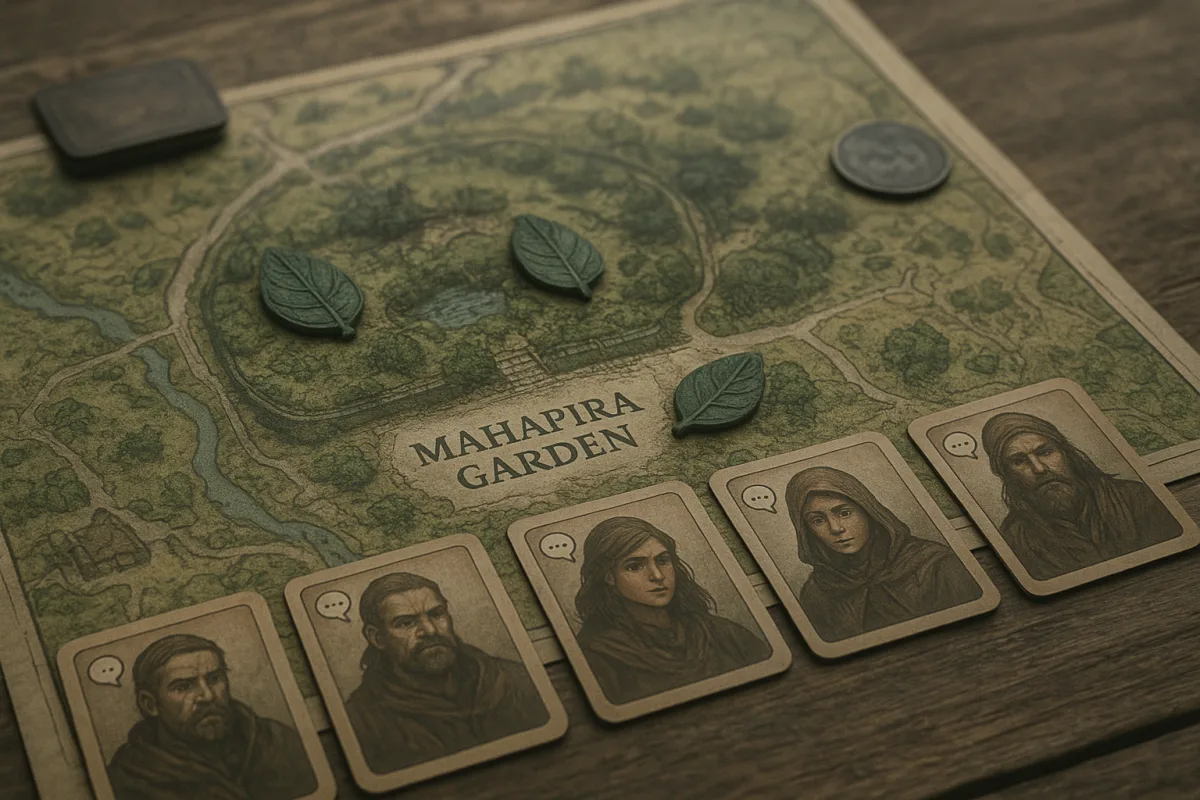
Wonder Leaves are more specific. Toldrop identifies Mahapira Garden, a node in the southernmost Ogmios region, as the currently known location, while Maxbit Games likewise points players there rather than listing a broad collection route. [3][8]
Use Search repeatedly at Mahapira Garden and budget for a poor yield. The available research describes the spawn as low-rate, and no confirmed shop source, enemy drop, secondary node, or reliable alternative acquisition method has surfaced. [3]
That means the correct response is not to chase rumours across the entire map. Clear Mahapira Garden whenever you are already operating in southern Ogmios, then move on after a reasonable number of Searches instead of sacrificing major calendar activities.
Map progress does not carry between protagonists, according to GameSpot. Re-unlock useful carriages and re-check visible nodes on each route, because assuming one hero’s exploration benefits another is an efficient way to lose an afternoon.
Unlock classes carefully, especially Swordmaster
Class promotion is where Fortune’s Weave asks for planning rather than enthusiasm. Research currently confirms that Swordmaster promotion requires the Sword Crest of House Cai, so a unit’s sword rank alone does not guarantee access.
More importantly, advanced-class promotion resets the unit’s level to 1 and causes temporary stat drops. [4] Promote before a major mission only if the new class tools outweigh that immediate dip, not because the menu finally says “available.”
This kills the familiar habit of promoting every eligible unit as soon as possible. A level-reset Swordmaster may eventually outperform the base class, but dropping a dependable frontline unit’s short-term durability before a difficult boss map is self-inflicted pain.
Keep a balanced weapon roster while those promotions settle. GameSpot specifically calls archers and mages especially valuable because flyers and heavy armour become irritatingly durable without effective arrows and offensive magic.
The weapon system is more granular than old triangle shorthand. Current weapon documentation lists a 15 percent critical-hit bonus from weapon-triangle advantage, and critical hits deal three times normal damage. [1]
Treat that critical bonus as upside, not as a plan. The predictable parts of combat are still Attack Power multiplied by the skill multiplier, minus enemy defence, which is why armour-breaking spells and guaranteed-damage tools are more dependable. [1]
Swords reward follow-up attacks, spears punish cavalry, axes have a five-damage minimum, bows answer flying units, and gauntlets improve dodging against non-gauntlet attacks, according to GameSpot. Bring answers, rather than five versions of the same high-Strength unit.
Spells have limited uses, so use them to solve a real durability or armour problem. Camping restores spell charges, but wasting your best offensive magic on disposable targets can leave a fortified enemy alive when it actually matters.
Spend durability, HP, and forge materials with a purpose
Combat Arts are powerful because their additional effects can convert a near-miss into a kill, but they cost weapon durability. A weapon at zero durability still permits basic attacks, GameSpot says, though its Might and accuracy suffer.
Do not hoard Combat Arts forever, but avoid using them to finish enemies a normal attack already kills. Save durability for armour, bosses, dangerous cavalry, and turns where removing one target protects the rest of the squad.
HP-cost skills have a similar problem. The Fortune’s Weave Wiki’s skill guide documents health-payment abilities, so check the listed cost before treating them as free damage. [2] A kill is not efficient if it leaves the attacker inside lethal enemy range.
Forge choices are less explosive than some community posts imply. Weapon upgrades cap at +5 Might, without rerolls, according to the weapon guide. [1] That makes forging a steady breakpoint tool, not a slot-machine route to an absurd weapon.
The Brave Sword is worth reserving for units that can safely initiate, since it doubles attacks per turn. [1] It quietly benefits builds that already convert follow-ups into kills, while being less impressive on a fragile attacker who cannot survive retaliation.
Blessed Weapons offer +2 to a stat, but can drain HP when the wielder’s Crest does not match. [1] Do not hand one to a non-matching unit merely because the stat bonus makes their sheet look better.
Play the maps, not the panic around the launch meta
Before moving, press L to show enemy threat ranges, as GameSpot recommends. Purple tiles indicate danger, and hovering individual enemies lets you inspect their specific reach rather than treating the entire highlighted zone as identical.
Terrain remains a bigger stat swing than players sometimes admit. Forests improve avoidance, water restricts movement, and flying units cross difficult ground and gaps, making them useful for positioning even when a bow-heavy enemy force makes direct combat unsafe.
Use dungeons to level lagging units, not to endlessly overlevel your favourites. GameSpot says enemy encounters are limited, but selecting trainees and defeating every enemy can produce substantial experience, including through the plus-button battle-skip option when safe.
Finally, there is no verified multiplayer unit-composition meta or settled weapon-balance consensus at launch. [5] A few days of confident posts do not equal a meta, and current coverage is focused on single-player systems rather than competitive play.
Understand what support and “romance” actually lead to
Raise support because it delivers character scenes and can matter to recruitment, but do not approach Fortune’s Weave like Three Houses with a late-game partner spreadsheet. Polygon reports C, B, and A support conversations, including openly affectionate character writing.
That is narrative flirting, not a player-directed romance system. Polygon specifically says the game does not offer the familiar selectable romantic ending structure, even where characters clearly show affection during story scenes.
After the final battle, Eshmel can be teleported to a character with support level five, unlocking that character’s S-Rank support scene. Polygon says these scenes can be replayed at the Shrine of Causality in the Obelisk Chamber.
The paired ending is not automatically romantic. Polygon’s example with Leda describes a warm future-facing conversation, while the ending summary identifies the pair as together but not romantically involved. Choose based on the relationship you want to see resolved, not a presumed marriage flag.
Frequently Asked Questions
What is the best difficulty and mode to start Fire Emblem Fortune's Weave?
Starting on Hard difficulty with Casual mode is recommended for a balanced experience where combat matters but defeated units are not lost permanently. If Hard feels too easy or difficult, you can use the Descend Again option from the Obelisk Chamber to replay the prologue and change difficulty, though this process takes about 30 minutes and requires a save at the Obelisk Chamber.
How do I recruit all characters in Fire Emblem Fortune's Weave?
Recruitment involves multiple factors including raising Bond through gifts and meals, meeting Renown thresholds, completing Paralogues and quests, obtaining specific items, and making certain dialogue choices. It is best to give gifts early to all potential recruits and fill your roster broadly before committing to advanced classes, as some recruits require support levels and story progress.
Where can I farm Wonder Leaves in Fire Emblem Fortune's Weave?
Wonder Leaves can only be farmed at the Mahapira Garden node in the southern Ogmios region by repeatedly using the Search command. The drop rate is low, and no other confirmed sources or alternative farming locations are currently known.
What are the best strategies for managing Dacian weekly activities?
Prioritize Arena training each week, especially on Saturdays when training costs are discounted by 50%. Temple service should be done weekly, ideally on a god’s designated day for extra bonuses that improve global battle abilities. Use the first half of the week for exploration and side quests, and reserve later days for training and building relationships to optimize your calendar time.
How we researched this
This article was assembled from 1 video source, 4 published articles, 8 cited references.
Nothing here is based on hands-on testing. Where a figure or finding appears, it belongs to the source cited beside it, and the writing says so rather than implying otherwise. Every source is listed below so you can check it.
Sources
Fire Emblem Fortunes Weave - 13 Tips We Wish We Knew Before Playing — GameSpot
Resident Evil: The Kotaku Review — Kotaku
9 Years Ago, One Dating Sim Taught Me to Never Trust Dating Sims — Polygon
Fire Emblem: Fortune's Weave HP cost skill list and picks | Fire Emblem: Fortune's Weave Wiki
Where to Find Wonder Leaves in Fire Emblem Fortune's Weave | Toldrop
Fire Emblem: Fortune's Weave - Everything you need to know about the strategy game's Switch 2 debut
200 hours in, Fire Emblem: Fortune's Weave is my favorite Nintendo Switch 2 game ever - here's why
Where to find wonder leaves in Fire Emblem Fortune's Weave - Maxbit Games
Watch Fire Emblem: Fortune's Weave Comprehensive Tips and Guides on Youtube
Related Articles

Diablo 5 Procedural Generation and Diablo 4 Updates
Learn about Diablo 5's procedural generation, caravan system, class updates, and Diablo 4's upcoming Season of Hell and Switch 2 release.

Marvel's Wolverine Gameplay, Guides, and Reception Overview
Explore Marvel's Wolverine gameplay tips, PS5 settings, collectible guides, and critical reception in this comprehensive overview.

Wardogs Tactical FPS Gameplay Guide: Maps, Economy & Combat
Explore Wardogs tactical FPS gameplay, including maps, economy, combat, and base building strategies for PC players.

GTA 6 Multiplayer and Soundtrack
Get the latest on GTA 6 multiplayer delay and detailed info on the official soundtrack's physical editions and pricing.