
WoW Forever New Content and Player Experience Explained
Explore WoW Forever new content and player experience, including dungeons, contested tags, and social gameplay in the 2026 beta.
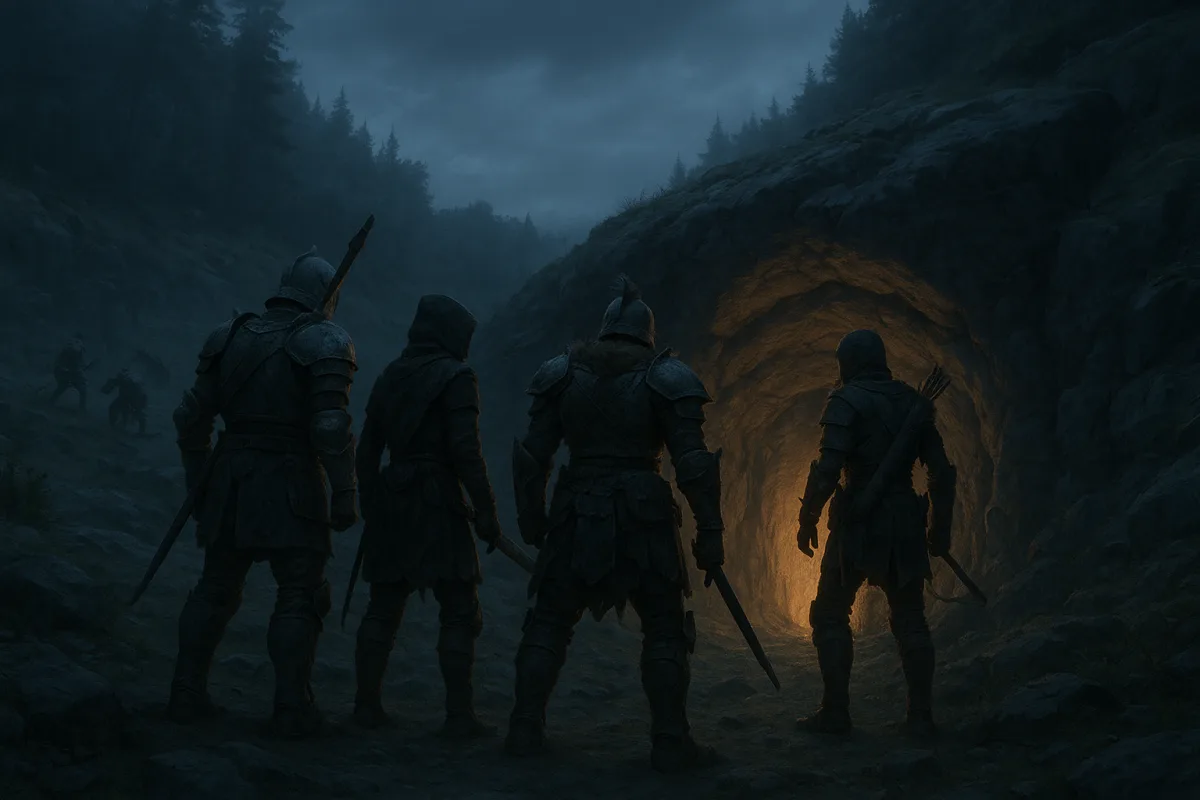
WoW: Forever is shifting Classic toward social friction with better toys attached
WoW: Forever is not trying to turn old Azeroth into a smooth, modern levelling conveyor belt. The beta’s clearest direction is more deliberate: keep the old competition for mobs and quest objects, then give players more reasons to form groups, revisit dungeons and show off strange character-specific rewards.
That trend is visible across systems that normally live in separate design meetings. Blizzard is holding onto traditional enemy tagging, low-level dungeons now carry unusually tailored loot, and collectible form changes give otherwise disposable sets a social afterlife.
The beta runs from 17 September to 21 October 2026, ahead of the 4 November launch. That matters because the loudest balance claims currently come from a level-capped, highly concentrated test population, not a settled level-60 game. [8][9]
Sodapoppin’s opening-hours streams show the practical effect. Players are checking starter-zone scenery, experimenting with professions, comparing early spell damage and racing for tags, all while dealing with slow respawns and layers moving groups apart.
PC Gamer reported the same tag scramble from a less streamer-centred angle: beta players were competing to hit enemies first, then inviting strangers so everybody could receive quest credit. Blizzard senior game designer Josh Greenfield says shared tagging is not planned.
Greenfield’s stated argument is that this friction supports WoW: Forever’s social pillar. That sounds like classic Blizzard philosophy, but it has a concrete gameplay result: the optimal response to a crowded kill quest is social initiative, not waiting politely.
That distinction matters. A wolf that respawns too slowly is not inherently memorable content. A crowded wolf field can become memorable when players create temporary parties, trade information, or decide the other faction is making their evening worse.
The line Blizzard is holding, and where it could break
The publisher framing is that competition creates interaction. That is partly true, and PC Gamer’s account of players grouping around contested kills is evidence that the system can create spontaneous cooperation rather than pure hostility.
But the same report notes players queuing for quest objects with multi-minute respawns. That is not a difficult tactical problem, nor a meaningful social one. It is simply a test of whether a player has enough uninterrupted time.
Sodapoppin’s early druid levelling reflects both sides. He found a more interesting starter experience, including profession choices baked into the early flow, but also ran into slow respawns, tagging pressure and layers that could separate him from people attempting to group.
The useful lesson for a project designer is not to copy old MMO inconvenience wholesale. Preserve friction only where players have agency: grouping, trading, choosing a route, coordinating pulls, or deciding whether to contest an area.
If a system instead creates an unavoidable queue, separates friends across layers, or makes a working player log out and back in repeatedly, it is not building community. It is outsourcing encounter design to the login server.
Blizzard has room to improve spawn rates, object availability and layer behaviour without abandoning exclusive tags. Greenfield has suggested there are other ways to reduce frustration, but the beta does not yet demonstrate what those fixes will be.
New dungeons are remaking the early-game shopping list
The more immediately successful part of Forever’s new-content push is dungeon itemisation. The game is placing new low-level instances in capital cities and using them to make level-appropriate loot feel designed for actual specs rather than randomly assigned stat sticks.
Sodapoppin’s group entered the Ruins of Lordaeron, a new low-level dungeon inside Undercity, and found seven bosses, disease pressure that required cleansing, and Alliance-accessible quests despite the location. It looks more mechanically involved than a basic starter instance.
His group also found the dungeon’s experience return underwhelming, which may be intentional. If dungeon runs gave top experience, strong gear and rapid quest completion simultaneously, they would become the whole levelling game before players reached contested zones.
That concern is not imaginary. In another stream, Sodapoppin worried that an expanding circuit of low-level dungeons could become summon-assisted dungeon spam, with groups bouncing between capitals, cashing every quest, and skipping much of the outdoor world.
The counterargument is that a dungeon needs loot worth seeking if its experience is deliberately mediocre. His group saw a level-13 healing scepter with +33 healing, a level-17 mace with +24 damage and healing, and weapons whose damage profiles were more role-specific.
That is a genuine departure from old Classic’s familiar issue where a nominal caster weapon could still be best used by a warrior because its raw weapon DPS won the calculation. Better stat targeting is a quiet quality-of-life buff to class identity.
Warcraft Forever’s item guide describes the wider intent as horizontal progression: level 60 remains the cap, while gear value is increasingly carried by statistics and bonuses rather than a perpetual item-level escalator. It cites Lionheart Helm’s +18 Strength, +2% hit and +2% critical strike as an example. [5]
The same guide lists Edgemaster’s Handguards with reduced dodge and parry chance alongside +1 weapon damage. Those are not universal upgrades, they are pieces that can become build-defining where their specific mechanics matter. [5]
That structure gives item hunters something stronger than “higher number good.” It also makes balance riskier, because a low-level proc, an unusually efficient spell-power weapon, or a set bonus can change a bracket before the community has even agreed what it does.
The snake form is small content with large social value
The Wailing Caverns Fang set is the cleanest example of Forever understanding what players actually remember. Completing its five-piece bonus changes a feral druid’s Cat Form into a viper-like snake, complete with a flattened stealth animation and hissing sound effects.
Sodapoppin farmed the set on stream and found its bonus also grants melee attacks a chance to apply Dream Venom, a one-second stun. His testing showed back-to-back activations, suggesting no obvious internal cooldown, although exact proc odds remain unverified.
That will annoy level-bracket PvPers more than it transforms endgame balance. The set is likely short-lived while levelling, and the streamer himself noted that a player could outgear it around level 25 if they continue running the new dungeon content.
Still, its value is not measured only in combat efficiency. A druid who sees Wailing Caverns’ serpent-themed enemies has always had a reasonable roleplaying question: why can they be snakes while I remain a cat? Forever finally supplies an answer.
PC Gamer has separately reported datamined low-level set bonuses with unusually interesting effects, including a Postmaster-set spell reflect. Datamining is useful for spotting design direction, but it is not final tuning, especially before launch. [6]
The important project lesson is that cosmetic identity and mechanical reward do not need separate content tracks. A temporary levelling set can make a dungeon feel worth revisiting if it tells a class-specific story players can see in Stormwind or Orgrimmar.
There is one unglamorous caveat. A Blizzard forum report confirms that multiple players can currently skin the same dungeon mob, unlike normal open-world skinning rules. [10] That is a bug, not evidence that gathering has been redesigned.
No comparable evidence currently establishes mining or herbalism duplication inside dungeons. It would be a mistake to repeat chat speculation as a gathering-system feature just because skinning happens to be misbehaving in the beta.
Balance is moving, but the Paladin panic is ahead of the evidence
The current mood is that Paladins are too strong and Druids are either underpowered or secretly one patch from becoming unbearable. Both reactions are understandable, and neither is settled enough to guide a launch character choice.
Sodapoppin’s druid experience shows why the argument is messy. Early Wrath damage felt poor after base spell damage adjustments, but his testing also found changed spell-scaling behaviour, Moonfire damage-over-time criticals, form-friendly consumable use and stronger Thorns interactions.
Those tools can make a class feel weak in a straightforward one-target starter-zone duel, then unusually valuable in a crowded pull or a chaotic PvP scrum. That is not necessarily bad balance, it is a question of where the strength is loaded.
The Druid change references published by ForeverTome and WoW Classic Forever identify broad class and talent changes, but some details remain incomplete. The exact effect of Nature’s Grasp and the precise Lacerate bleed behaviour should be treated as unverified until tooltips or official clarification settle them. [3][4]
Paladin documentation likewise confirms baseline ability and talent shifts, including the rework’s expanded class tools, but the beta still lacks the population and encounter data needed to call a long-term winner. [1][2]
Sodapoppin’s practical worry is more useful than a tier list: when one class looks dramatically easier in a capped beta, it can cause an immediate reroll wave. That can distort PvP, dungeon recruitment and forum opinion before balance changes even arrive.
The meta will move fast at launch if a clearly overtuned levelling build survives. It will move more slowly at 60, where players need professions, dungeon access, coordinated groups and gear to prove that a powerful interaction survives real opposition.
For now, claims about Paladin or Druid population are just claims. The beta has no reliable public class-distribution dataset, and no defensible analysis can yet show how compositions will settle in dungeons or mass PvP.
Massive PvP is the community’s real endgame preview
The best evidence that WoW: Forever can generate communal momentum comes from the large Ashenvale conflict shown in Sodapoppin’s PvP stream. Players were calling reinforcements, organising mage squads, arguing over flanks and claiming victory before the fight was fully understood.
That is recognisably Classic World PvP: messy objectives, partial information, rival personalities and a lot of revisionist history five minutes after a wipe. The notable technical change is that players reported their abilities still firing despite major frame-rate drops.
However, the same battle exposes the weakness of reading these wars as clean competitive tests. Layer capacity split Alliance players from the main Horde force, reinvites did not reliably reunite groups, and each side had a different idea of where the actual battle occurred.
Layering is doing two contradictory jobs. It lets Blizzard support huge populations without the disconnections players remember from earlier Classic events, but it can turn a faction war into several smaller wars whose outcomes cannot be compared.
That does not make the fights fake. It means the community story is shaping up around logistics as much as skill: who fills a layer, who gets reinvited, who has voice coordination, and who can persuade people that a “small skirmish” counted.
Identity systems are pulling players into the same shared space
Forever’s new first-name and surname system is another small feature producing outsized social effects. Eurogamer reported that race-aligned random names support roleplay, while the two-part format is also generating the inevitable flood of crude jokes and reportable names.
Blizzard has reportedly warned that its existing naming policy applies during the beta, including possible loss of beta access for players reported over especially offensive names. That moderation workload is the predictable cost of giving players more expressive identity tools.
The pattern across names, snake forms, contested tags, low-level sets and open-world battles is consistent. WoW: Forever is investing in things other players notice, rather than features that only improve an individual character sheet.
Its economic rules reinforce that direction. Blizzard has confirmed a ban on GDKP runs, arguing that Forever’s economy needs close attention, while add-on access will also be restricted compared with older versions of the game. [7]
Those choices may reduce some optimisation tools, but they will not stop optimisation. They will redirect it toward social networks, guild organisation, route planning and whatever information players can still share outside the client.
For anyone building their own multiplayer project, that is the trend worth watching. Give players reasons to need one another, then make sure the resulting interactions create stories, rather than merely turning a ten-minute quest into a ten-minute queue.
Frequently Asked Questions
How does WoW Forever encourage social grouping?
WoW Forever retains traditional contested enemy tagging without shared kill credit, which creates competition for mobs and quest objects. This design encourages players to form groups, trade information, and cooperate temporarily to overcome tagging pressure and slow respawns, making social initiative the optimal response to crowded quest areas. The system aims to foster meaningful player interaction rather than frictionless solo play.
What new dungeons and loot are in WoW Forever?
New low-level dungeons, such as the Ruins of Lordaeron in Undercity, feature multiple bosses and mechanics like disease pressure requiring cleansing. These dungeons provide level-appropriate, role-specific loot designed to reinforce class identity rather than just random stat sticks. Early dungeon gear includes items with targeted stats and set bonuses, supporting a horizontal progression model where gear value depends on statistics and bonuses rather than pure item level escalation.
How does contested enemy tagging affect gameplay in WoW Forever?
Contested enemy tagging means that only the player who lands the first hit on an enemy gets credit for the kill, with no shared tagging planned. This system creates competition and social friction, encouraging players to race for tags and form groups to secure quest credit. While it can cause slow respawns and layering issues, it also promotes spontaneous cooperation and social interaction rather than passive waiting.
What are the key player experience changes in WoW Forever beta?
The beta maintains slow respawn rates and contested tags, which increase competition and social friction. Layering can separate players attempting to group, and some class tuning (notably Paladin and Druid) remains visibly unfinished. Dungeon experience gains are intentionally modest to prevent dungeon runs from dominating levelling, while dungeon loot is more mechanically involved and role-specific, enhancing class identity and social reasons to revisit dungeons.
How does WoW Forever balance low-level gear and class identity?
Low-level gear in WoW Forever is designed with role-specific stats and set bonuses rather than generic stat sticks, supporting class identity early on. Items like the Lionheart Helm provide specific attribute and bonus combinations, while others like Edgemaster’s Handguards offer trade-offs that can define builds. This approach favors horizontal progression, where gear value depends on tailored statistics and bonuses instead of a simple item-level power increase.
How we researched this
This article was assembled from 5 video sources, 2 published articles, 10 cited references.
Nothing here is based on hands-on testing. Where a figure or finding appears, it belongs to the source cited beside it, and the writing says so rather than implying otherwise. Every source is listed below so you can check it.
Sources
I Finally Played WoW Forever for the First Time! — Sodapoppin
My Honest Thoughts After Playing WoW Forever — Sodapoppin
I Joined WoW Forever's Biggest World PvP Battle — Sodapoppin
I Unlocked WoW Forever's New Snake Form! — Sodapoppin
WoW Forever's New Ruins of Lordaeron Dungeon Is INSANE! — Sodapoppin
World of Warcraft: Forever players are being naughty with the new naming system — Eurogamer
All Changes to Paladins in WoW Forever - WoW Forever - Warcraft Tavern
WoW Forever Paladin rework: abilities, talents and the taunt — Realm First!
Druid overview - WoW Forever changes and talents - ForeverTome
Items & gear in WoW: Forever — stats, sets, world epics · Warcraft Forever
WoW Forever dataminers have dug up set bonuses, which are interesting even on low-level gear
WoW Forever: release date, beta, roadmap, Skyborne and editions · WoW Forever
Skinning mobs in dungeons bug - WoW: Forever Beta Discussion - World of Warcraft Forums
Watch WoW Forever New Content and Player Experience on Youtube
Also from the sources
Related Articles

Wardogs Early Success and Gameplay Insights on PC
Explore Wardogs early success, launch player stats, gameplay mechanics, and PC system requirements in this detailed Early Access overview.

Wardogs Gameplay, Popularity, and Crunch Controversy
Explore Wardogs gameplay, its rise in popularity, helicopter mechanics, and the developer crunch controversy in this detailed PC gaming overview.
Metro 2039 Gameplay and Developer Insights on Survival
Explore Metro 2039 gameplay and developer insights focusing on crafting, stealth, and survival mechanics shaping the player experience.
Wardogs Tactical FPS Gameplay Guide: Maps, Economy & Combat
Explore Wardogs tactical FPS gameplay, including maps, economy, combat, and base building strategies for PC players.