
Diablo 5 Procedural Generation and Diablo 4 Updates
Learn about Diablo 5's procedural generation, caravan system, class updates, and Diablo 4's upcoming Season of Hell and Switch 2 release.
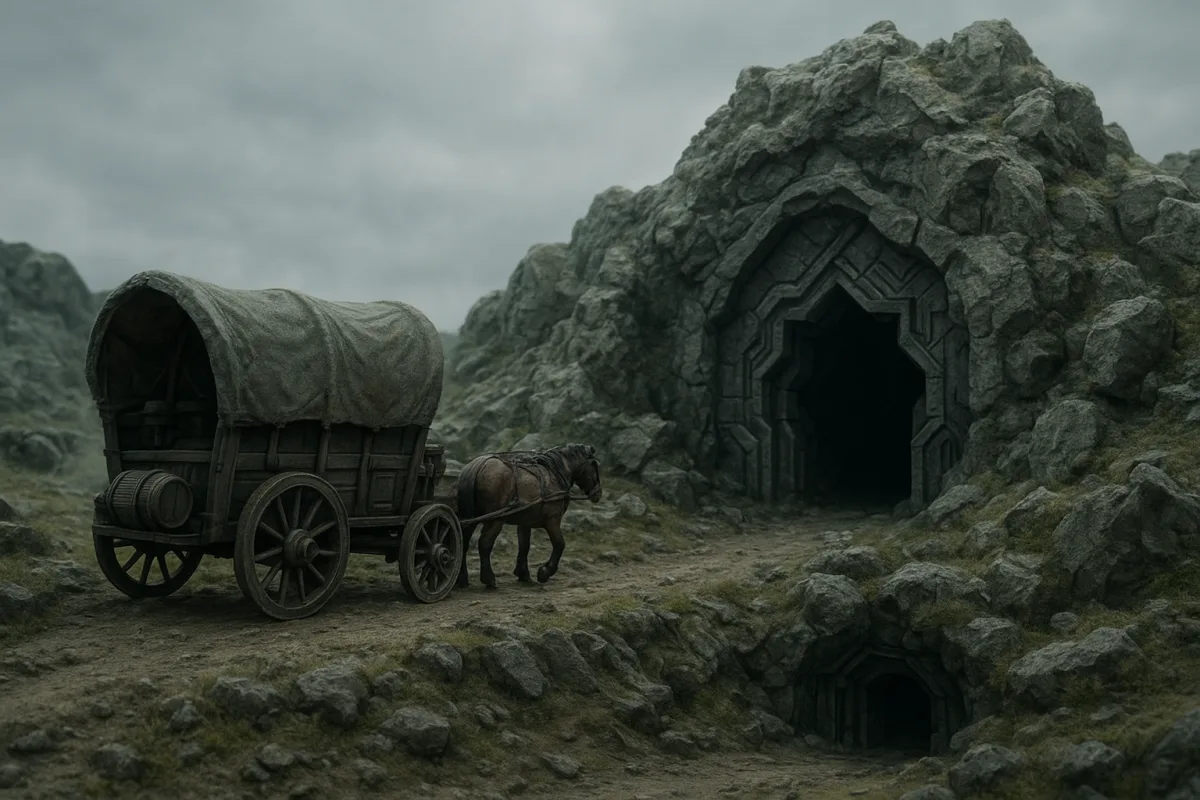
Diablo 5’s procedural world is a promise, not a feature list yet
Procedural generation is Diablo 5’s real gamble
The loudest Diablo news from BlizzCon 2026 was not the Netflix animation announcement, the returning Amazon class in Diablo 4, or even the reveal of Diablo 5. It was Blizzard changing what a Diablo campaign appears to be built around.
According to Polygon’s BlizzCon reporting, Diablo 5 will send players out from a growing caravan into procedurally generated overworld spaces and dungeons. That sounds familiar to anyone who has spent years opening Greater Rifts or rerolling Path of Exile maps.
But procedural generation is one of those phrases publishers use as shorthand for “more game.” It does not automatically mean more meaningful game. The interesting question is what Blizzard chooses to randomise, and what it refuses to randomise.
At the most basic level, procedural generation means a game assembles a playable area from rules instead of hand-building every room, route, enemy pack, and reward chest. Designers still make the pieces. The system decides how and where to arrange them.
A typical action RPG dungeon is not generated from pure chaos. It begins with a seed, essentially a number that tells the game which legal version of a map to create. The seed can determine room order, exits, side paths, events, objectives, and enemy compositions.
That distinction matters because a random layout can still be boring. If every variation has the same corridor length, the same backtracking, and the same objective, players learn the pattern within a weekend and start treating it as an irritating tax.
The caravan is likely Diablo 5’s anti-randomness system
Game director Joe Shely’s Diablo 5 presentation, shown by GameSpot, described a Sanctuary already conquered by Diablo. Polygon reports that this has led Blizzard away from the traditional safe town packed with interchangeable quest-givers.
Instead, Diablo 5 players travel with a caravan that grows during the campaign. Polygon says it includes a single blacksmith who offers quests and develops as a character, and even a Treasure Goblin companion. That is a structural choice, not merely a cute hub detail.
The caravan gives Blizzard a fixed point in an otherwise shifting game. If the wilderness beyond it rearranges itself, players need stable services, recurring characters, storage, crafting, quest resolution, and a reliable place to judge how their character has progressed.
Think of it as the difference between a roguelike run and a live-service ARPG season. A roguelike can wipe the board because that wipe is the point. Diablo has to preserve character investment across dozens or hundreds of hours.
The likely loop is straightforward, even if Blizzard has not supplied exact details. You prepare at the caravan, enter a generated region, clear objectives or chase loot, return with materials and upgrades, then push into a harder or stranger generated region.
What decides whether that loop works is not the random map itself. It is the relationship between route length, monster density, objective placement, reward quality, and travel time. Players will optimise whichever part produces the best experience or loot per minute.
That is how a procedural system quietly creates a meta. If dense elite packs appear most often in one dungeon family, players farm that family. If a caravan upgrade makes a particular activity more profitable, the rest of the world becomes scenic background.
Randomness needs rules, not just room tiles
A well-made procedural dungeon uses constraints. Designers can require a path from entrance to objective, cap dead ends, reserve space for bosses, prevent incompatible events spawning together, and set a minimum number of rewards before the map generates.
Those constraints are the difference between replayable variation and procedural soup. Players do not need every dungeon to be unrecognisable. They need enough uncertainty that routing, positioning, and build choices remain active decisions rather than memorised chores.
The classic failure mode is a system that randomises geography but not play. A dungeon can have thirty possible floorplans and still feel identical if every room asks a Whirlwind Barbarian, Frozen Orb Sorcerer, or minion Necromancer to do exactly the same thing.
Conversely, a small library of room shapes can stay fresh if the game changes encounter goals. Defend a caravan scout, hunt a marked target, survive escalating waves, choose between two risk-reward routes, or clear a cursed elite pack before it buffs a boss.
None of those specific activities have been confirmed for Diablo 5. Blizzard has only said the world and dungeons outside the caravan will be procedural. The precise seed system, map modifiers, party rules, endgame structure, and reward tables remain unannounced.
That is worth underlining because Diablo communities are very efficient at balancing imaginary numbers. There is no basis yet for declaring that procedural generation will “save” Diablo 5 or that it will turn the sequel into an endless treadmill.
The Plague Knight needs procedural pressure to matter
Polygon’s Diablo 5 class report confirmed the new Plague Knight, a heavily armoured character who spreads diseases among enemies and consumes those diseases to empower itself. Blizzard also confirmed returning Monk and Demon Hunter classes, plus more launch classes than any earlier Diablo game.
The Plague Knight’s key idea is a two-stage resource loop. First, the player applies disease. Then, rather than merely waiting for damage over time to tick, they consume or exploit that disease to gain a benefit.
That can be a satisfying build pattern, but its strength will depend on encounter structure. It needs enough living targets, enough time for disease to spread, and enough elite enemies worth setting up. Tiny scattered packs would make it feel terrible.
Dense procedural rooms could quietly favour it. Large groups allow disease effects to propagate and give the player more material to consume. A build that needs a short setup window becomes much stronger when every room reliably supplies ten or twenty enemies.
Bosses create the opposite test. If disease consumption requires several infected enemies, a single-target boss encounter may force the Plague Knight into a different setup, perhaps creating disease itself, extending it, or converting it into direct damage.
That is why “walking death,” Blizzard’s pitch for the class, is not balance information. It tells us the fantasy. It does not tell us cooldowns, damage coefficients, disease caps, scaling rules, whether effects stack, or how the class behaves in a four-player party.
The meta usually needs a few weeks to settle after players get access to all of that. First comes the obvious levelling build, then the efficient farm build, then the boss-killer variant once dedicated players identify which multipliers actually stack.
Diablo 4 gets the short-term content, Diablo 5 gets the long runway
While Diablo 5 remains a spring 2029 release, IGN reports that Diablo 4 is receiving Season of Hell’s Legacy on September 15. Polygon describes it as a 30th-anniversary season that brings back enemies, places, and items from earlier Diablo games.
That is a much more immediate proposition than Diablo 5’s procedural ambitions. Diablo 4’s new season should give players an actual patch cycle to inspect, with real drop rates, real tuning, and the usual first-week question: which nostalgic mechanic survives contact with endgame farming?
Diablo 4 is also arriving on Nintendo Switch 2 as Diablo 4: Age of Hatred Collection. Polygon says the package includes the base game, Vessel of Hatred, and Lord of Hatred, while launch pricing is $69.99 in the United States, £62.99 in the United Kingdom, and €69.99 in Europe. [1]
The port is advertised as optimised for 60 frames per second, but Blizzard has not published detailed Switch 2 technical requirements or performance analysis. [1] The physical release using a download code instead of a cartridge is also worth knowing before buying it as a gift. [2]
Cross-play matters more than resolution here. An ARPG port lives or dies on whether it can share an active player pool with PC and other consoles, especially once a season’s opening rush fades and specialised group activities need bodies.
A 2029 release date is a target, not proof of certainty
PC Gamer’s BlizzCon coverage notes that Diablo 5’s developers repeatedly stressed that its systems remain work in progress. That is the correct framing for a game announced roughly three years ahead of its planned spring 2029 launch. [6]
Blizzard has called the sequel necessary because changing Diablo 4’s fundamentals inside an established game is difficult. That is plausible. It is also a claim the studio now needs to substantiate with systems, not trailers.
Procedural generation is one of those fundamentals. It affects pacing, loot routes, co-op coordination, build value, campaign replayability, and the point at which a player gets bored. It is not a modular feature that can be evaluated in isolation.
The wider industry has strong incentives to pursue procedural tools. Gaming07’s 2026 industry report argues that AI-assisted procedural development can reduce development costs by 40 to 60 percent, though those broad estimates do not tell us how Blizzard is building Diablo 5. [3]
More importantly, Blizzard’s recent union agreement requires discussion and bargaining around AI use with covered developers, according to the independent research brief. That does not predict a delay, but it does mean “AI will make it faster” is not a free pass around production realities.
Finally, the Diablo animated series announced with Netflix is real, but it is only an announcement. Eurogamer and Kotaku both reported that no studio, release date, plot, or production scope has been disclosed. The safe expectation is no expectation yet.
For now, Diablo 5’s caravan-and-procedural-world idea is the one to watch. If Blizzard can make randomness create meaningful decisions rather than longer walks to the next objective, it may genuinely change how a Diablo game feels to replay.
Frequently Asked Questions
What is Diablo 5's procedural generation system?
Diablo 5 uses procedural generation to create varied routes, dungeon layouts, and encounter combinations by assembling playable areas from designer-made pieces according to a seed number. This system ensures some variation but does not guarantee infinite uniqueness or replayability. The game applies constraints to maintain meaningful gameplay, such as ensuring paths to objectives and balancing enemy placements.
How does the caravan system work in Diablo 5?
Players travel with a persistent caravan that grows during the campaign and acts as a stable hub for services like quest-giving, crafting, and storage. The caravan anchors player progression and provides a fixed point in a world where overworld spaces and dungeons are procedurally generated and change with each expedition.
When is Diablo 5 expected to release?
Diablo 5 is targeted for release in spring 2029. This marks a shorter development cycle compared to previous Diablo entries, with Blizzard having several years to refine the new procedural world structure before launch.
What new classes are confirmed for Diablo 5?
Blizzard has confirmed the new Plague Knight class, which uses a disease-and-consume gameplay loop, alongside returning classes such as the Monk and Demon Hunter. The Plague Knight is heavily armored and focuses on spreading diseases to enemies and consuming them for power, introducing a distinct role fantasy.
What updates are coming to Diablo 4 in 2026?
Diablo 4 will receive the Season of Hell’s Legacy update and a release on Nintendo Switch 2 on September 15, 2026. The Switch 2 version includes the base game and two expansions in the $69.99 Age of Hatred Collection, with the physical edition delivered via download code rather than cartridge.
How we researched this
This article was assembled from 3 video sources across 3 channels, 8 published articles, 9 cited references.
Nothing here is based on hands-on testing. Where a figure or finding appears, it belongs to the source cited beside it, and the writing says so rather than implying otherwise. Every source is listed below so you can check it.
Sources
New StarCraft Gameplay Details & a Promised Release Date — IGN
25 Greatest Survival Horror Games — gamewise
Diablo 5 Shows Off Its Brand New Plague Knight Class — Polygon
Diablo 5 is coming spring 2029, and a Netflix show is in development — Eurogamer
Diablo 5 Announced — IGN
Overwatch's New Hero Doctrine: Full Ability Kit and Perks Revealed at BlizzCon — Polygon
Diablo 4 Is Officially Bringing Back a Fan-Favorite Class, Blizzard Confirms — Polygon
Diablo 4 Age of Hatred Collection Confirmed for Nintendo Switch 2 Release - Memesita
Gaming Industry Report 2026: Market Trends, Studio Tech & Engine Innovations — Gaming07
Blizzard Announces New Animated 'Diablo' Series Coming to Netflix
Watch Diablo 4 and Diablo 5 Updates on Youtube
Also from the sources
Related Articles
Nintendo Switch 2 Game Announcements and Updates
Discover the latest Nintendo Switch 2 game announcements, release dates, and updates including Metroid Ravenous, Monster Hunter Wilds, and more.
Exodus Sci-Fi RPG Preview
Explore the Exodus sci-fi RPG preview, its unique time dilation feature, gameplay, and release details compared to Mass Effect.
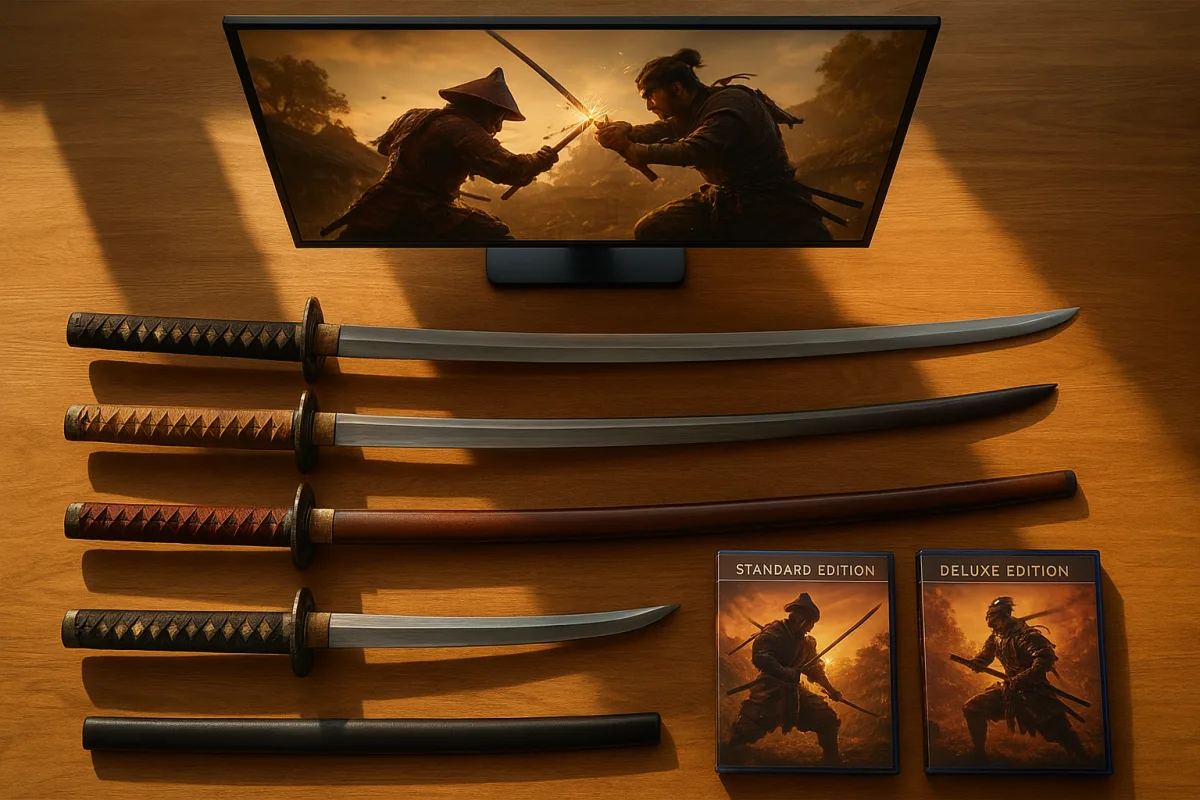
Onimusha Way of the Sword Review and Edition Comparison
Read our Onimusha Way of the Sword review with edition comparisons, PC requirements, and gameplay insights to help you decide before launch.

GTA 6 Extended Gameplay Features and Relationship System
Explore GTA 6 extended gameplay features, including the relationship system, map size, and performance insights for PC and consoles.