
Xbox layoffs and next-gen console pricing update 2026
Explore Xbox layoffs, Project Helix pricing rumors, and upcoming service changes affecting gamers and developers in 2026.
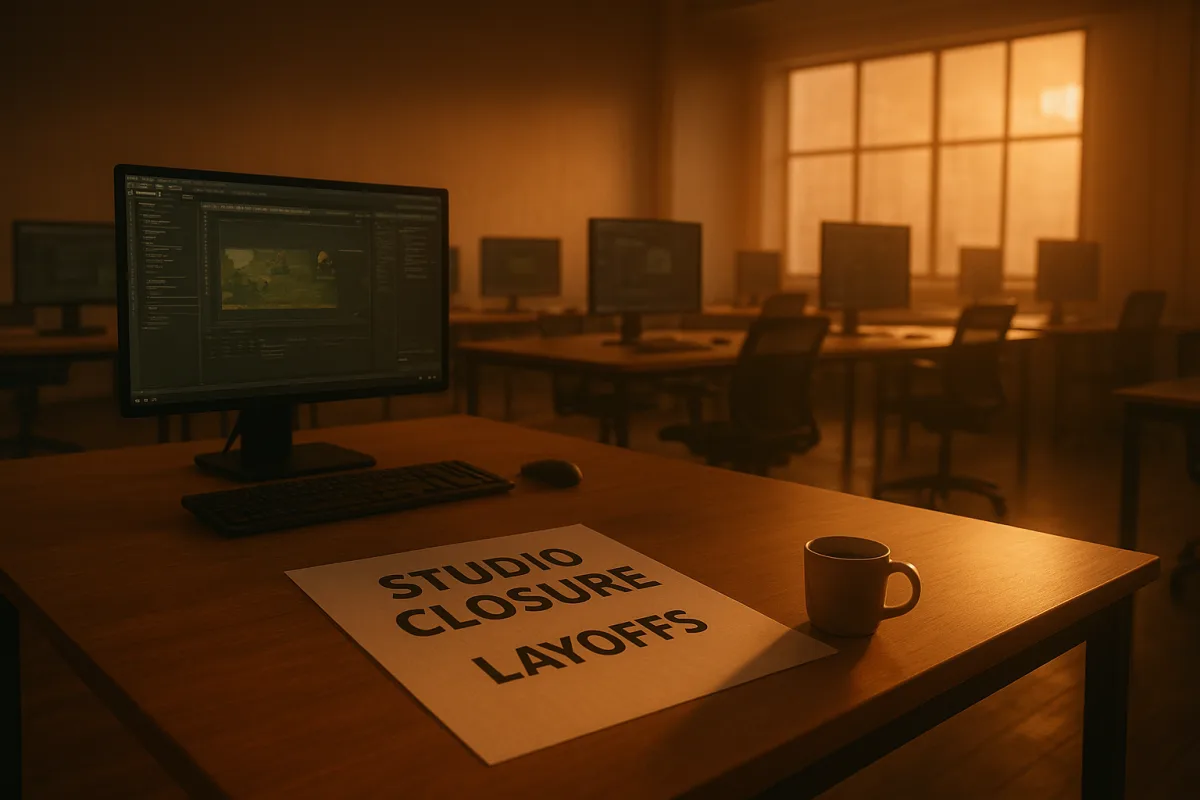
Xbox is no longer trimming around the edges
The shift is plain: Xbox is moving from expansion-by-acquisition to consolidation, cost cutting, and tighter control over what reaches the finish line. This is not community doomposting from one rough announcement cycle.
Several independent reports point in the same direction. They describe layoffs, studio sales, internal reshuffles, cancelled work, uncertainty at remaining teams, and a console strategy whose potential price makes the old mass-market model look increasingly awkward. [1][4][8]
Microsoft’s July 2026 restructuring cut roughly 3,200 Xbox jobs, about a fifth of the division’s workforce, according to PC Gamer’s reporting. It also severed Xbox’s relationship with four studios in one sweep. [4]
Compulsion Games and Double Fine regained independence, while Ninja Theory and Undead Labs were sold to undisclosed buyers. That distinction matters because “Xbox studio closure” and “Xbox no longer owns this studio” produce different immediate outcomes, but both remove capacity from Microsoft’s internal pipeline. [4]
The publisher framing is a reset toward health and profitability. The practical version is less abstract: fewer people hold the historical knowledge of tools, engine branches, franchise decisions, outsourcing contacts, and the odd technical workaround keeping an old project alive.
That loss does not appear neatly in a quarterly report. It shows up when a team takes an extra month to reproduce a build problem, when a feature becomes too risky to preserve, or when pre-production restarts because nobody remaining owns the original call.
The reported cancellations of ambitious Halo 2 and Halo 3 remakes are a useful example. Even if a cancelled remake sounds like an easy thing to dismiss from the outside, it represents experienced teams and support capacity no longer feeding future Xbox releases. [4]
id Software is another warning sign. More than half of the Doom developer’s team, 136 people, were reportedly laid off, despite the studio publicly saying it remained committed to continued development. [4]
That is the classic corporate patch-note wording: the feature remains enabled, but its cooldown and resource cost have changed. A studio can still exist, still make games, and still be substantially less able to make another project at previous scale.
The Gears situation shows where the cuts land
The Coalition, Microsoft’s Canadian Gears of War studio, is the more immediate test case. Reporting around Gears of War: E-Day described staff fears that post-launch layoffs could affect eligibility for performance bonuses tied to review scores. [8][10]
That is a particularly bad morale debuff because it hits at the end of production, when teams are already exhausted and least able to control the factors determining a Metacritic result. It also makes future retention harder.
The independent research brief says the Gears of War: E-Day story director was among those laid off in September, shortly after the game went gold. Studio head Mike Crump reportedly urged employees to focus on delivery rather than layoff uncertainty.
The game was reportedly built largely from scratch, which could shorten subsequent development cycles if the foundations are sound. But that upside depends on retaining people who understand those foundations, precisely what broad layoffs make difficult.
This is why the meta may not visibly change overnight for players. Games already near launch can still ship, and trailers can keep appearing on schedule. The actual lag is usually eighteen months to several years.
First comes a thinner slate, then more conservative greenlights, then a run of projects that look technically polished but feel suspiciously familiar. That is what happens when organisations reduce risk while trying to recover margins.
For a small PC team, the lesson is not that Xbox publishing has become impossible. It is that a first-party deal, Game Pass placement, or platform funding agreement should be treated as upside, not the load-bearing beam.
Build a version that can sell conventionally. Keep ownership of PC store data, community channels, and release messaging. If platform negotiations stall or a portfolio category gets cut, a project needs another route to market.
Project Helix has a price problem, not a price
The other major signal is Project Helix, Xbox’s reported next-generation console. Ars Technica reported that internal Microsoft projections put a possible 2028 retail price between $1,200 and $1,800. [1]
That figure is not confirmed. Microsoft has not announced Project Helix, its launch date, its specifications, its final business model, or its price, so treating $1,800 as a settled retail tag is premature.
Still, the report matters because it describes internal planning rather than a random forum estimate. The suggested range is tied to component pressure, particularly memory, alongside the cost of a custom AMD system-on-chip. [1]
The exact number may move. Microsoft could subsidise hardware, change specifications, spread the strategy across handhelds and PC-like devices, or delay the system. There is no official evidence that it has chosen any of those options.
But the floor in that projection changes the discussion. A $1,200 console is not simply an expensive console. It is a different purchasing category, competing with gaming PCs, premium handhelds, televisions, and every other upgrade a household postponed.
For context, Sony’s PlayStation 5 launched at $499, while the PlayStation 5 Pro reached $899. Reporting on PlayStation 6 component costs has similarly raised the possibility of a machine above $1,000. [6][7][9]
Former PlayStation executive Shawn Layden has publicly questioned whether consumers will pay more than $1,000 for incremental gains. That is an opinion, not a sales forecast, but it matches the basic adoption problem. [6]
Expensive hardware does not kill a platform automatically. It does change the opening audience, from broad early adopters to enthusiasts with large libraries, higher disposable income, or a specific reason to upgrade.
That creates a quiet balance change for developers. Games optimised around expensive new hardware may look spectacular in marketing, yet the addressable audience can be smaller exactly when budgets, expectations, and platform-holder scrutiny are largest.
For a PC project, do not assume Helix-level features will be the baseline in 2028. Scalable settings, sensible CPU targets, readable UI on smaller screens, and good controller support are safer investments than betting everything on maximum settings.
The likely winners are games that scale down without looking broken. The losers are projects whose pitch depends on hardware effects that only a tiny early-adopter audience can enable, while everyone else gets a compromised version.
Game Pass rumours are getting ahead of the patch notes
Game Pass is the area where the evidence is notably thinner than the conversation. Rumours have suggested an à la carte redesign, advertising-supported tiers, and changes to day-one releases, but none is confirmed for late 2026 or early 2027.
Microsoft has publicly denied rumours that it will remove day-one releases or add ad-supported Game Pass tiers. That does not guarantee the service will remain unchanged forever, but it does rule out presenting those ideas as announced policy.
This needs saying because subscription rumours spread like a bad damage-number screenshot. One speculative claim becomes a Discord certainty, then a business plan, then somebody decides not to buy a game because it will “obviously” arrive on Game Pass.
There is one smaller signal worth separating from a service overhaul. An Xbox Games Supply Strategist job listing suggests Microsoft still sees a role for physical game media, but it does not reveal a new Game Pass structure.
Likewise, reports that Xbox emailed inactive console owners about trading in Xbox Series X and Xbox Series S hardware at Best Buy are suggestive, not definitive. Windows Central characterised the message as evidence of stock pressure and a push toward newer access points. [2]
The reported offer mentioned up to $375 for an Xbox Series X and up to $200 for an Xbox Series S. Those are trade-in ceilings, not sale prices, and they should not be read as confirmation that Microsoft is exiting consoles. [2]
The more grounded interpretation is that Xbox wants users inside its ecosystem whether they play on console, PC, cloud streaming, or future devices. That strategy has been visible for years, but the restructuring makes it less optional.
For developers, that makes platform flexibility more valuable than subscription prediction. A game should have a strong store page, a conventional price, a demo or clear onboarding path where appropriate, and a post-launch plan that works without a catalogue cheque.
Plan for a narrower, more selective Xbox
Xbox has not announced a shutdown, a Game Pass retreat, or a final Project Helix price. Claims that it has done any of those are running ahead of the evidence.
What is established is still substantial: thousands of job cuts, four studios removed from the internal network, disrupted projects, nervous remaining teams, and a reported next-generation hardware plan that may be unusually expensive. [1][4][5]
That means the old assumption, that Microsoft’s size guarantees endless first-party capacity and broad strategic tolerance, is no longer safe. The company can still spend heavily, but it is clearly demanding a more direct return.
If you are planning a PC game, make the build legible without any Xbox-specific promise. Design for multiple storefronts, preserve porting options, avoid depending on a single funding conversation, and keep your team’s burn rate survivable.
The meta is not “Xbox is finished,” and it is not “nothing has changed until Microsoft confirms every rumour.” It is a slower, harsher balance pass: fewer internal bets, more scrutiny, and less room for projects that need years to prove themselves.
Frequently Asked Questions
What are the recent Xbox layoffs and their impact?
In July 2026, Xbox cut about 3,200 jobs, roughly 20% of its workforce, and divested four studios, including Compulsion Games and Double Fine becoming independent, and Ninja Theory and Undead Labs being sold. These changes have reduced Xbox’s internal capacity, delayed projects, and caused morale issues. For example, ambitious Halo remakes were canceled, and id Software laid off over half its team despite ongoing development commitments.
How will Xbox's next-gen console pricing affect gamers?
The reported $1,200 to $1,800 price range for the 2028 Project Helix console is based on internal Microsoft projections leaked to the press, not an official announcement. This high price is linked to component shortages and a custom AMD chip, raising concerns about affordability and market adoption, especially compared to previous consoles priced under $1,000. However, no confirmed retail price or subsidy plans have been disclosed.
Is Project Helix confirmed to cost over $1,000?
No. The $1,200 to $1,800 figure comes from leaked internal projections, not from Microsoft’s official statements. There is no confirmed retail price or launch commitment for Project Helix as of now.
What changes are coming to Xbox Game Pass and services?
There are no confirmed changes to Xbox Game Pass or other services scheduled for late 2026 or early 2027. Microsoft has denied rumors about removing day-one releases or adding ad-supported tiers. Any claims about service restructuring remain speculative without official announcements.
How should PC developers approach Xbox publishing now?
Xbox’s current direction favors PC builds that can succeed outside exclusive subscription deals. Developers should focus on clear positioning on platforms like Steam, scalable project scope, and platform-agnostic launch plans rather than tailoring projects for a hypothetical Project Helix audience or subscription model changes.
How we researched this
This article was assembled from 7 published articles, 10 cited references.
Nothing here is based on hands-on testing. Where a figure or finding appears, it belongs to the source cited beside it, and the writing says so rather than implying otherwise. Every source is listed below so you can check it.
Sources
Xbox's Official Shakeup Continues Through 2027 with New Rounds of Layoffs — Polygon
Xbox reportedly planning three more rounds of layoffs, with the first wave coming as early as this month — Eurogamer
Marvel Rivals’ New Mode Lets You Reenact Avengers: Endgame’s Final Battle With 50 Players — Kotaku
Xbox Manager Tries To Legitimize AI In Wild Rant, Deletes His Account Instead — Kotaku
Nikki From Obsession Coming To Fortnite Is The Endgame Of People Not Getting It — Kotaku
Cyberpunk’s Trading Card Game Is Getting An Edgerunners Set, And We Have An Exclusive Card Reveal — Kotaku
Xbox Reportedly Emailing Users To ‘Trade In Your Console To Best Buy’ — Kotaku
Microsoft reportedly projects $1,200 to $1,800 price for 2028 Project Helix - Ars Technica
Xbox is struggling for stock so bad that it's asking ex-users to trade-in
Xbox Project Helix Reportedly Targeting 2028 Launch at Up to $1,800 - Gadget Review
Xbox Studio Layoffs Leave Workers Stunned and Fearful | GAMES.GG
Fans might not "pull out $1,000" for PS6 and Project Helix, says ex-PlayStation boss
PlayStation 6 may cost over $1,000 as leaker predicts huge component costs
Related Articles
Xbox Halo restructuring: studio changes and industry impact
Explore Xbox Halo restructuring, studio layoffs, and Activision's new role in Halo's future development and industry impact.
Nintendo Switch 2 Game Bundles and Pricing Guide 2026
Explore Nintendo Switch 2 game bundles, pricing updates, and which offers like Mario Kart World provide the best value in 2026.
Steam Concurrent User Record and Market Trends in October
Explore Steam's October 2026 concurrent user record and what it means for PC gaming trends and developers.
Steam Next Fest 2026 AI Controversies in Indie Games
Explore Steam Next Fest 2026 AI controversies, demo risks, and Steam's AI disclosure rules affecting indie game developers.