
Kingdom Come Deliverance Developer Cyberattack: What We Know
Warhorse Studios confirms cyberattack. Learn what it means for Kingdom Come Deliverance players and upcoming projects.
The quick list
- Best overall: Wait for verified Warhorse updates, for players deciding whether the attack changes their plans for Kingdom Come: Deliverance 2 or future Warhorse games.
- Best value: Keep playing, with normal account security, for existing PC players who want to avoid turning an unconfirmed data breach into an unnecessary account-security mess.
- Best for cautious buyers: Hold off on pre-orders or expensive editions, for anyone who only wants to spend once Warhorse confirms its development schedule remains intact.
- Best for leak-watchers: Avoid alleged internal files and “roadmaps”, for players who want news without helping spread stolen material or mistaking old builds for final plans.
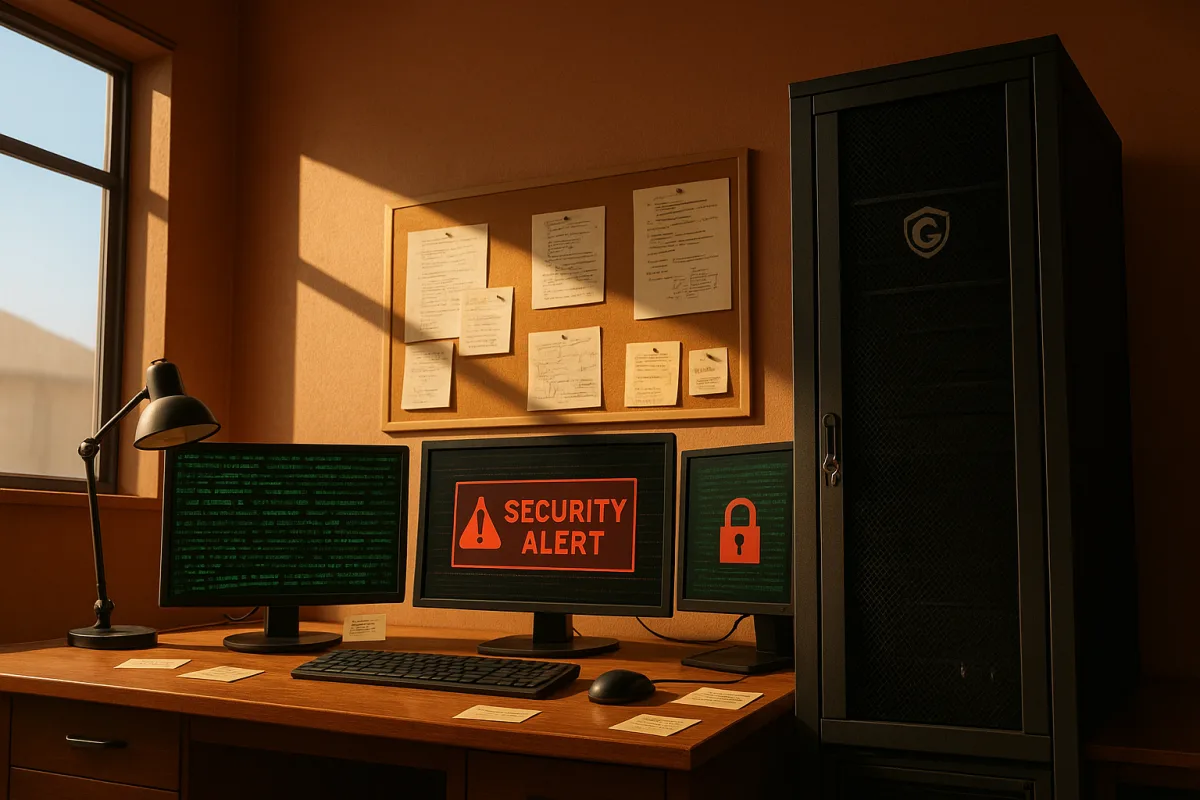
The immediate question is not whether Warhorse Studios has suffered a cyberattack. It has. The practical question is whether that changes what you should do with Kingdom Come: Deliverance, its sequel, or the studio’s reported Lord of the Rings project.
Right now, the answer is mostly no, with one important caveat: the attack is still being investigated. Warhorse has acknowledged unauthorized access to company systems and data, but has not said what data was accessed, copied, altered, or exposed. [1][2]
That makes this less like a balance patch with full values in the notes and more like seeing a hotfix deploy without knowing which server flag it changed. There is enough information to take sensible precautions, not enough to declare that player accounts are compromised or that a game has slipped.
| Option | Price | What it covers | Main trade-off | Best for |
|---|---|---|---|---|
| Wait for official Warhorse updates | $0 | Confirmed breach details, potential schedule changes, official advice | You will not get instant answers | Most Kingdom Come players |
| Keep playing with normal account security | $0 | Your own Steam, console, and email account hygiene | Does not reveal what happened inside Warhorse | Players already in-game |
| Delay a purchase or pre-order | $0 now | Avoids spending before project status is clearer | You may miss time-limited retailer bonuses, if any appear | Cautious buyers |
| Avoid leak accounts and alleged internal files | $0 | Spoiler control and reducing misinformation | Less gossip, fewer fake “roadmaps” | Players following the Lord of the Rings project |
What Warhorse has actually confirmed
Warhorse Studios publicly confirmed that it was targeted by a cyberattack involving unauthorized access to company systems and company data. The studio said it is working with cybersecurity experts and relevant authorities while it investigates the incident. [2][4]
Warhorse chief executive Martin Frývaldský described it as a “serious incident” and said the immediate priorities are securing systems, establishing the extent of the breach, and protecting employees, partners, and the community. [2][9]
That wording deserves to be read carefully. “Access to company data” confirms an intrusion reached beyond a blocked login attempt. It does not identify the data set, prove exfiltration, or establish that customer information was included. [1][10]
The reporting from Techtroduce and GoRanked both stresses the missing detail: Warhorse has not publicly specified what types of company data or employee information were involved, and there is no confirmation that player information was affected. [1][3]
That means there is currently no basis for telling every Kingdom Come player to change a Warhorse password, because there is no confirmed Warhorse consumer-account breach to respond to. Kingdom Come is primarily sold and authenticated through platform holders, not a disclosed Warhorse account system.
The best overall option: wait for verified updates
For most players, waiting for Warhorse’s next official statement is the best call. It is not exciting, but it is the option that matches the available information instead of filling the gaps with assumptions.
Push Square’s reporting notes that the timing, intrusion method, and full impact remain undisclosed. Warhorse has said it will communicate further information when it can do so responsibly, which is cautious language, but appropriate for an active incident investigation. [2]
That matters because early breach reporting often gets mangled into a neat but unsupported story. “The attackers got company data” becomes “all employee data leaked,” then becomes “your Steam account is exposed,” despite those being three completely different claims.
The gaming community is especially susceptible to this because stolen development material has a visible afterlife. A compromised source-code repository, build server, art archive, or internal planning deck can produce screenshots that look definitive while being months or years out of date.
That is why a breach can affect a project without changing its release date. Internal disruption, staff stress, security remediation, legal work, and access lockdowns are real costs, but none automatically equal a delayed patch or cancelled expansion.
No public evidence currently shows that the cyberattack has delayed Kingdom Come: Deliverance 2, changed its post-launch plans, or affected the reported Lord of the Rings RPG under development at Warhorse. [5][6][7]
The best value option: keep playing, secure your own accounts
If you are already playing Kingdom Come on PC, there is no reported reason to uninstall it, avoid its launcher, or assume your save files are unsafe. No source in the available reporting identifies a compromise of game clients, patches, Steam accounts, or console networks. [3][10]
The useful $0 move is basic account hygiene. Turn on multi-factor authentication for the email account connected to Steam, then for Steam itself, and repeat that process for any console storefront where you buy games.
This is not a claim that Warhorse caused a player-security problem. It is simply the security equivalent of keeping drivers updated: low drama, occasionally inconvenient, and much better done before someone tries a recycled password against your library.
Industry guidance cited in the research brief identifies multi-factor authentication, regular patching, secure coding, staff training, incident response planning, and protection for source code and build files as sensible controls for studios. Some security research estimates multi-factor authentication can block 99% of automated credential attacks. [10]
There is no confirmation that Warhorse had every one of those measures in place before the incident, or that it is adopting a particular new system now. Do not mistake recommended practice for a disclosed Warhorse remediation plan.
Players should also be wary of fake support messages. Cyberattacks create excellent phishing bait because attackers know people will expect password-reset emails, compensation offers, beta access, or supposed “security verification” links after bad news.
Use the Steam client or your browser’s saved official bookmark rather than clicking a message that claims to be from Warhorse, Valve, or a retailer. A fake breach-alert email does not need access to Warhorse systems to steal a login.
The cautious-buyer option: delay spending, not panic-selling
For anyone deciding whether to buy Kingdom Come: Deliverance 2, DLC, or a future Warhorse release, waiting is reasonable. It is not because the game’s availability is known to be at risk, but because a buyer does not need to pay today for information the developer has not yet provided.
There is no disclosed price change, refund policy change, or store delisting connected to the incident. Likewise, no outlet in the supplied reporting has established financial losses, a reputational hit with a measurable value, or a schedule revision at Warhorse or parent company Fellowship Entertainment. [8]
That is the key trade-off. Buying now gets you the game now, while waiting gets you more certainty. Neither choice needs a dramatic explanation until the studio provides concrete news about development, services, or affected customer data.
A cyberattack can expose unannounced projects, concept art, staffing information, builds, and internal documents. Previous game-industry incidents have shown that possibility, but comparison is not evidence that Warhorse has suffered the same outcome. [2]
The reported Lord of the Rings RPG is particularly vulnerable to rumor inflation because it is an unannounced project with very little official detail. GameSpot’s reporting identifies Warhorse as attached to a new Lord of the Rings RPG, but that does not authenticate every alleged logo, roadmap, or asset that appears online. [7]
The leak-watchers option: do not confuse stolen material with a roadmap
There is always a temptation to treat a breach as an accidental marketing event. Players want the map, the quest list, the release window, and the stuff a publisher would normally spend six months teasing one blurry frame at a time.
But leaked material is rarely clean enough to support those conclusions. A build can be cut content, placeholder art can survive for years, and a dated schedule can be superseded before anyone outside the studio sees it.
The trade-off is straightforward. Following alleged leaks may satisfy curiosity, but it also increases spoiler exposure and can amplify misinformation about employees, project status, and games that may never ship in that form.
Warhorse’s public position is that it will share verified information when it responsibly can. Until that changes, the most reliable signal is an official studio statement, not a screenshot with a filename cropped off and a caption claiming “confirmed.” [2][9]
What this could mean for patches and upcoming games
Players who read patch notes for fun know that game production is a chain, not a single progress bar. A breach can affect source control, build pipelines, QA access, vendor communications, payroll records, legal obligations, or employee wellbeing.
The visible consequence may be a delayed patch, but it may also be no player-facing disruption at all. Security teams can isolate systems and restore access in ways that are painful internally yet leave a public build schedule intact.
There is no public information identifying Warhorse’s affected hardware, software, build tools, patch-management process, or response costs. Any claim that the attack has compromised a specific Kingdom Come update pipeline is speculation. [9][10]
For now, expect official updates to be careful and probably sparse. Incident investigations take time because a studio has to determine not only how an attacker entered, but what systems they could reach and whether any data left the environment.
That caution is not proof of a cover-up, nor is it proof that everything is fine. It is the normal uncomfortable middle state of a serious cyber incident, where the confirmed facts are bad enough without inventing the rest.
Who each option suits
Wait for verified Warhorse updates suits nearly everyone. It is the best overall route if you want accurate information about Kingdom Come: Deliverance 2, possible service effects, or the status of the reported Lord of the Rings RPG.
Keep playing with normal account security suits current players. No public reporting establishes a player-data breach, but multi-factor authentication and unique passwords protect your PC gaming accounts regardless of what the investigation eventually finds. [1][3]
Delay a purchase or pre-order suits players who dislike uncertainty more than they dislike waiting. There is no confirmed delay or cancellation, but there is also no need to interpret an unresolved incident as a reason to spend immediately. [5][6]
Avoid alleged leaks and unofficial roadmaps suits anyone who wants to preserve spoilers and avoid bad information. The attack may eventually produce more claims than facts, and the useful distinction is whether Warhorse has verified the claim, not whether it has spread widely.
Frequently Asked Questions
What happened in the Kingdom Come Deliverance developer cyberattack?
Warhorse Studios confirmed that it was targeted by a cyberattack involving unauthorized access to company systems and data. The studio described it as a serious incident and is working with cybersecurity experts and authorities to investigate the breach. The exact scope and details of the data accessed or exfiltrated have not been disclosed.
Was player data compromised in the Warhorse Studios cyberattack?
Warhorse Studios has not confirmed that any player data, customer accounts, game saves, or platform credentials were accessed or compromised. The investigation is ongoing, and no specific information about the types of data affected has been released.
How is Warhorse Studios responding to the cyberattack?
Warhorse Studios is prioritizing securing its systems, determining the extent of the breach, and protecting employees, partners, and the community. The studio is cooperating with cybersecurity experts and relevant authorities while continuing its investigation.
Will the cyberattack delay Kingdom Come Deliverance 2?
There have been no announcements of delays, cancellations, or changes to the development or release plans for Kingdom Come: Deliverance 2 or Warhorse’s Lord of the Rings RPG. Claims of confirmed delays should be treated as unverified until Warhorse provides official information.
What precautions should Kingdom Come players take after the Warhorse cyberattack?
Players are advised to maintain normal account security practices, such as using multi-factor authentication on Steam, PlayStation Network, Xbox, and email accounts. It is recommended to wait for official updates from Warhorse and avoid resetting passwords or reacting to unverified social media reports.
How we researched this
This article was assembled from 5 published articles, 10 cited references.
Nothing here is based on hands-on testing. Where a figure or finding appears, it belongs to the source cited beside it, and the writing says so rather than implying otherwise. Every source is listed below so you can check it.
Sources
Warhorse Studios hit by an undetailed cybersecurity incident — Game Developer
"This is a serious incident": Kingdom Come: Deliverance 2 devs Warhorse hit by cyberattack targeting their systems and data — Rock Paper Shotgun
Get GTA 6 Ultimate Edition on PS5 for Just $85 Using This Trick – Today Only — IGN
Warhorse Studios Confirms Cyberattack and Company Data Breach - Techtroduce
Kingdom Come Developer Warhorse Studios Suffers Cyberattack, Full Impact Unknown | Push Square
Warhorse Studios Confirms Cyberattack; Kingdom Come Data Unknown
Kingdom Come: Deliverance Developer Warhorse Studios Hit by Cyberattack - GameRiv
New Lord Of The Rings RPG - Here's Everything We Know About The "Deeply Immersive" Game - GameSpot
Embracer-owned Warhorse Studios hit by cyberattack | MarketScreener
Warhorse Studios Cyberattack: What Is Confirmed and What Isn’t
Related Articles
Gamescom 2026 Theft Impact on Indie Developers and Security
Explore how Gamescom 2026 thefts affected indie developers and the event's security measures to protect exhibitor equipment.

BioWare Closure and Mass Effect 5 Cancellation Explained
Learn why BioWare shut down and Mass Effect 5 was canceled, including details on the leaked trailer and EA's restructuring impact.
Xbox Halo restructuring: studio changes and industry impact
Explore Xbox Halo restructuring, studio layoffs, and Activision's new role in Halo's future development and industry impact.
Nvidia DLSS 5 Leak and Modder Reactions Explained
Explore the Nvidia DLSS 5 leak, modder experiments, and early performance and visual impacts on games like Control and Skyrim.