
Gamescom 2026 Theft Impact on Indie Developers and Security
Explore how Gamescom 2026 thefts affected indie developers and the event's security measures to protect exhibitor equipment.
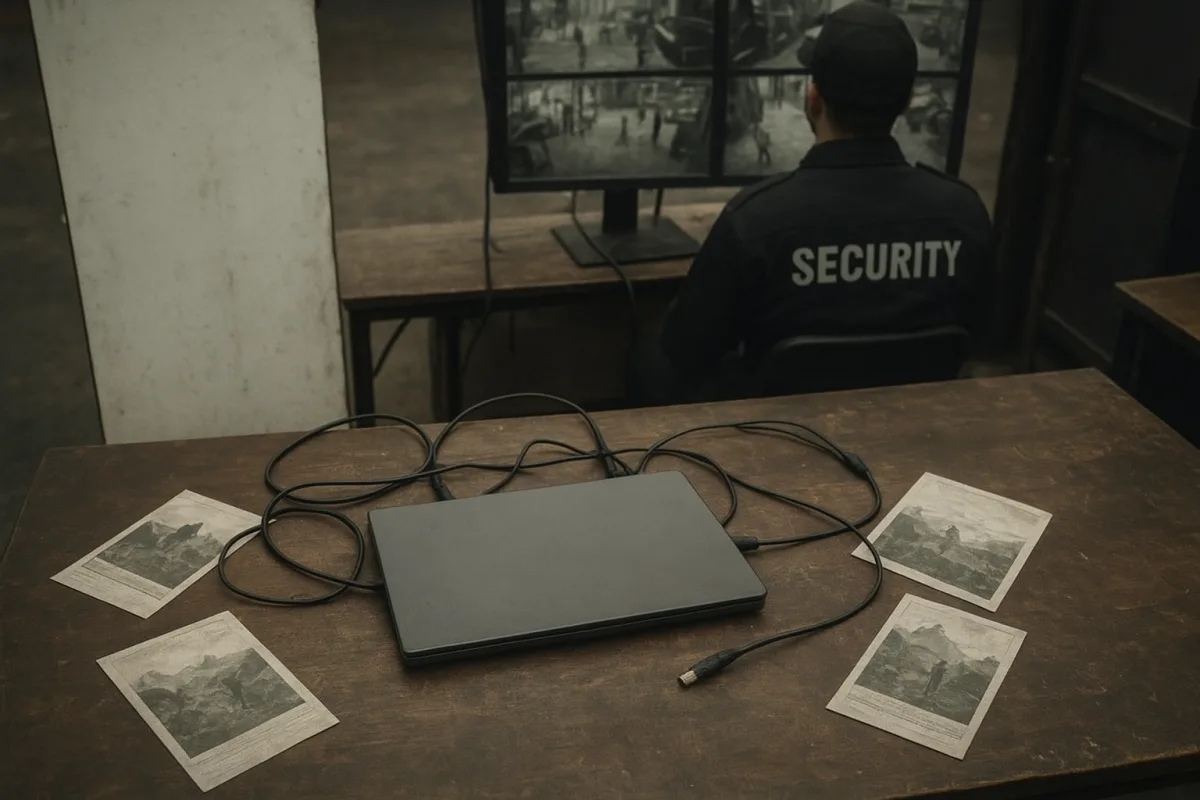
The important number is not the number of laptops stolen
The easy headline is “laptops stolen at Gamescom.” The more useful number is the number of show days a developer loses after a laptop disappears.
That is the actual damage model for a small exhibitor. A laptop at a business-area booth is not merely an expensive object. It is the machine running the demo, holding presentation files, storing work credentials, and connecting a developer to scheduled meetings.
For a publisher with a staffed booth, a lost machine is still painful, but there may be a spare unit, a separate build server, IT staff, and another employee who can keep appointments moving. A solo developer generally has none of that redundancy.
Ryan Laley, the solo developer making asymmetric horror game Mimic, told IGN that theft of his Alienware 16X Aurora gaming laptop cost him at least a full day of appointments. His show effectively stopped while Gamescom still had days remaining. [1]
That is why “just replace the laptop” is only half a solution. Community support can make someone financially whole eventually. It cannot replay a cancelled appointment with a publisher, platform holder, press contact, contractor, or potential collaborator.
Gamescom is built around scarcity. There are only so many business meetings in a week, only so many people in Cologne at the same time, and only so much attention an unreleased game can command. Miss a slot, and there is no clean rollback.
Players understand this from live-service patches. If a bug disables one champion for six hours, the raw uptime loss sounds small. But if it happens during a tournament bracket, it changes the whole event. Timing is the multiplier.
What an exhibitor laptop actually does
A convention demo machine often performs four jobs at once. It runs the build, stores local files, presents the game to visitors, and serves as the developer’s normal work computer outside public hours.
The build is the obvious part. A developer needs a stable version of the game configured for controllers, display resolution, offline play, and repeated use by strangers who will absolutely find the one menu path nobody checked.
That does not mean the stolen device necessarily held the only copy of a game. Serious teams use source control, cloud backups, or external drives. But access to a safe build is different from having the setup needed to show it now.
There is also the account problem. Steam accounts, store dashboards, email, build-distribution tools, analytics services, pitch decks, and private communication channels can all be reachable from a work laptop unless the team has planned for rapid remote revocation.
iam8bit, the publisher and merchandise company, reported two laptops stolen from its Hall 5.2 business-area booth. Those machines were being used to demonstrate Petal Runner and Escape Academy 2, and iam8bit warned that unfinished builds could be at risk of leaking. [2]
That phrase, “unfinished build,” matters. A pre-release game build is not just a commercial asset in the abstract. It can contain unannounced content, debug tools, internal notes, assets lacking final licences, and systems players will misread without context.
A leak does not automatically destroy a project. Community panic tends to overstate that. But for an indie team, a rough version spreading online can consume weeks of communication work at exactly the point the studio should be finishing the game.
The same is true of a missed demo. A small team does not have a giant trailer budget to reset public perception. The playable booth build is often the pitch, and it needs a working machine beneath it.
Why “24/7 security” was not the same as secured equipment
The sharpest point in the Gamescom 2026 story is the gap between what exhibitors thought “security” meant and what organisers later described as the standard arrangement.
Laley initially said that the business area was presented as having 24/7 security and restricted overnight access. He and other developers arrived on August 28 to find equipment missing after the preceding night. [1]
Gamescom’s later public statement acknowledged the theft reports and said police investigations were underway. It also said uniformed guards provide general security across the venue, while individual stand security can be booked separately. [3]
Those are two very different systems. General venue security means guards patrol, monitor entry, respond to incidents, and protect the event at a broad level. It does not necessarily mean every booth has a dedicated guard, locked enclosure, or controlled inventory chain.
Individual stand security, by contrast, generally means a person or service assigned to a particular location for an agreed period. The exhibitor is buying a tighter response radius, not a magic anti-theft buff.
Think of it like matchmaking moderation versus a private server admin. The platform may police the overall environment, but someone watching one specific lobby is a more focused, more expensive layer of control.
Gamescom’s statement further advised exhibitors to insure equipment against theft and said this responsibility appeared in participation terms and technical guidelines. [3] That is a defensible contractual position, but it does not resolve the exhibitors’ practical expectation.
The problem is not that trade-show insurance exists. Of course it does. The problem is that a venue marketed or understood as a controlled business environment sets a reasonable expectation that removing equipment overnight should be difficult.
Reports of multiple victims make this look less like one attendee leaving a laptop exposed at a crowded public station. The affected exhibitors reported overnight thefts in event areas where equipment had been left for the next day. [2]
Tessera Studios, the developer behind game-show-themed project The Zibbo Show, also said its Gamescom cabinet had been forced open and that two laptops and a Steam Deck were taken. [6] That detail changes the threat model.
A forced cabinet is not a visitor casually walking away with unattended gear. It suggests that the physical security of stands, locks, access control, patrol patterns, or some combination of those layers failed to prevent or interrupt removal.
The missing cost: nobody has published the price of the recommended fix
Gamescom’s response directs exhibitors toward individual stand security, but public 2026 materials do not disclose a standard price for that service. The official stand-construction information does not provide a simple exhibitor security tariff. [5]
That absence matters because “book extra security” sounds simple only when the cost is known. A major publisher can add a line item. A solo developer might be choosing between a dedicated guard, another monitor, travel, accommodation, or the booth itself.
There is also no public evidence of a single security package that guarantees a booth will be watched continuously, covers every kind of equipment, or transfers financial liability to Gamescom if theft occurs. [3]
So exhibitors cannot treat paid security as an obvious universal answer. They need to ask what hours are covered, whether the guard remains at the stand, what incident logging exists, who can access the hall, and whether cabinets meet a required specification.
This is boring logistics, but it is the difference between a useful safeguard and a checkbox. A guard walking one route across a hall is valuable. A guard stationed by one booth is more valuable. Neither replaces insurance or secure device setup.
Criticism of Gamescom’s public response has focused on this responsibility shift: organisers acknowledged the incidents while putting the practical burden of extra security and insurance back on studios. [4] That criticism is fair, even if organisers are not automatically liable.
One report from Aroged went further, claiming studios were discouraged from going to police to avoid reputational damage to the event. That allegation is serious, but it should be treated as a reported claim rather than established fact absent corroborating public evidence. [10]
What is established is simpler: Gamescom said cases had been reported to police, investigations were underway, and the incidents were individual cases. [3] The public record does not yet provide a detailed account of how the thefts occurred.
Insurance is a replacement mechanism, not a recovery system
For an indie developer, insurance is the other system people keep mentioning without unpacking. It does not stop theft. It shifts some of the financial loss from the studio to an insurer, subject to a policy’s limits and exclusions.
The relevant category is often equipment cover, sometimes sold as inland marine insurance. Despite the name, it covers movable business property, including equipment that travels between offices, hotels, airports, and convention halls.
A normal policy has four practical variables: insured value, deductible, territory, and exclusions. The insured value is the maximum claimed amount. The deductible is the portion the studio pays before the insurer contributes.
Territory matters at Gamescom because the event is in Cologne, Germany. A British, American, or Canadian developer cannot assume a domestic equipment policy automatically covers international commercial travel and convention exhibiting.
The exclusion list is where things get nasty. Policies can require equipment to be attended, stored in a locked area, secured to a fixed point, or not left in a vehicle overnight. A claim turns on the precise wording and the circumstances.
The research brief identifies several examples of available cover, but they are not interchangeable recommendations. Ramble advertises laptop-inclusive music-gear policies from $175 annually with a $100 deductible, while Athos lists short-term equipment premiums from $250 and annual cover from $495. [4]
Those figures show why “get insurance” is not free advice. A policy can be cheaper than replacing a high-spec demo laptop, but the premium, deductible, excess, international conditions, and claim administration all become part of the exhibition budget.
ACT Insurance advertises event liability cover from $49 per event, but liability insurance is not automatically theft cover for a developer’s own equipment. [4] This is a common trap: the words “event insurance” sound broader than the actual protection.
A studio needs to ask one unglamorous question before paying: does this policy specifically cover our laptops, at this event, during overnight storage, for their replacement value, and while carried internationally? If not, it may solve nothing.
Community support fixed the immediate HP bar, not the match
The strongest part of the response came from other developers and players. CD Projekt Red publicly offered hardware help, while developer Joe Henson, known online as Indie Game Joe, donated money to replace Laley’s stolen hardware. [7]
That is real assistance, not empty social media sympathy. Laley said the support changed a day that began with him feeling sick and defeated, and he later encouraged people to support Mimic on Steam rather than treat the incident as his alone. [1]
Still, the community response should not become a flattering story that lets the event infrastructure off the hook. Crowdfunding, donated hardware, wishlists, and kind messages are emergency recovery tools, not a security plan.
They also do not distribute evenly. Laley had an established audience through his Unreal Engine teaching work, and his video reached major studios. Another first-time exhibitor might lose the same gear without going viral.
The workable lesson for small teams is not “never leave gear at a show.” Sometimes that is operationally unavoidable. It is to build redundancy around the machine, because the machine is a bottleneck.
Keep an encrypted backup of the demo build separate from the booth. Use full-disk encryption and strong account security. Enable remote device tracking and wiping where possible. Maintain a list of serial numbers, insured values, and account-revocation steps.
Most importantly, separate the game’s ability to be shown from one physical laptop. A spare machine, encrypted external drive, cloud-access plan, and written setup guide may feel excessive until the one night they become the difference between a disruption and a cancelled show.
Gamescom’s theft incidents did not expose a new vulnerability in game development. They exposed an old one: small studios run critical public launches on fragile, portable hardware, then discover that “general security” is not the same thing as protection.
Frequently Asked Questions
How did thefts at Gamescom 2026 affect indie developers?
The thefts had a severe impact on indie developers, especially solo exhibitors like Ryan Laley, who lost a demo laptop critical for meetings and showcasing their game. Losing such equipment not only meant financial loss but also missed appointments with publishers and press, effectively ending their participation early and limiting their ability to promote their projects during the show.
What security measures were in place at Gamescom 2026?
Gamescom provided general venue security with uniformed guards patrolling the area, but dedicated booth security was not included and had to be arranged and paid for separately by exhibitors. There was no publicly available price list for these additional security services, and despite the presence of Koelnmesse security, multiple thefts still occurred.
Can stolen equipment at Gamescom 2026 be insured?
Yes, exhibitors can insure their equipment through various providers offering tailored policies for gaming hardware and convention coverage. However, insurance typically covers replacement costs and does not compensate for lost business opportunities or missed meetings caused by theft.
What are the consequences of losing a demo laptop at Gamescom?
Losing a demo laptop can cause a developer to lose access to playable builds, presentation files, and scheduled meetings, which are crucial for showcasing their game and networking. For small or solo developers without backup equipment, this can effectively end their ability to exhibit for the remainder of the event and harm their project's visibility and progress.
How does Gamescom handle theft reports from exhibitors?
Gamescom acknowledges theft incidents and states that police investigations are underway. The organizers emphasize that general venue security is provided, but exhibitors are responsible for their own booth security and insurance. There is no public compensation scheme from Gamescom for affected exhibitors.
How we researched this
This article was assembled from 2 published articles, 11 cited references.
Nothing here is based on hands-on testing. Where a figure or finding appears, it belongs to the source cited beside it, and the writing says so rather than implying otherwise. Every source is listed below so you can check it.
Sources
Indie Dev Releases Tearful Message After Multiple Laptops Are Stolen At Gamescom [Updated] — Kotaku
Gamescom 2026: indie dev's Mimic demo booth stripped overnight - Notebookcheck News
Gamescom 2026 Exhibitors Report Stolen Laptops and Equipment as Police Investigate
Gamescom Team Addresses Theft Reports From Show Floor — Games Newswire
Gamescom responds after laptops and hardware got stolen from exhibitors
Gamescom 2026 developers report theft of equipment from floor booths | Shacknews
Gaming community rallies behind indie dev after equipment stolen at Gamescom - Dexerto
Indie Devs Hit by Laptop Thefts at Gamescom, CDPR Steps In to Help - GameRiot
Gamescom 2026 Developers Targeted by Laptop Theft as CD Projekt Red Offers Help
Related Articles
Gamescom 2026 Indie and Strategy Games Highlights
Explore key indie and strategy game highlights from Gamescom 2026, including gameplay, release info, and PC hardware insights.
AI Modding Controversies
Explore AI modding controversies, including authorship disputes, legal risks, and community responses in PC gaming modding scenes.
Physint Development Funding Challenges and Publisher Impact
Explore Physint's development funding challenges and how publisher changes affect Kojima Productions' milestone-based game progress.
Gamescom 2026 Game Previews: New RPGs and Unique Titles
Explore detailed Gamescom 2026 game previews covering new RPGs, unique gameplay, and PC requirements revealed at the event.