
Castlevania Belmont's Curse Gameplay and Community Tips
Explore Castlevania Belmont's Curse gameplay, weapon strategies, PC control fixes, and community insights for better play.
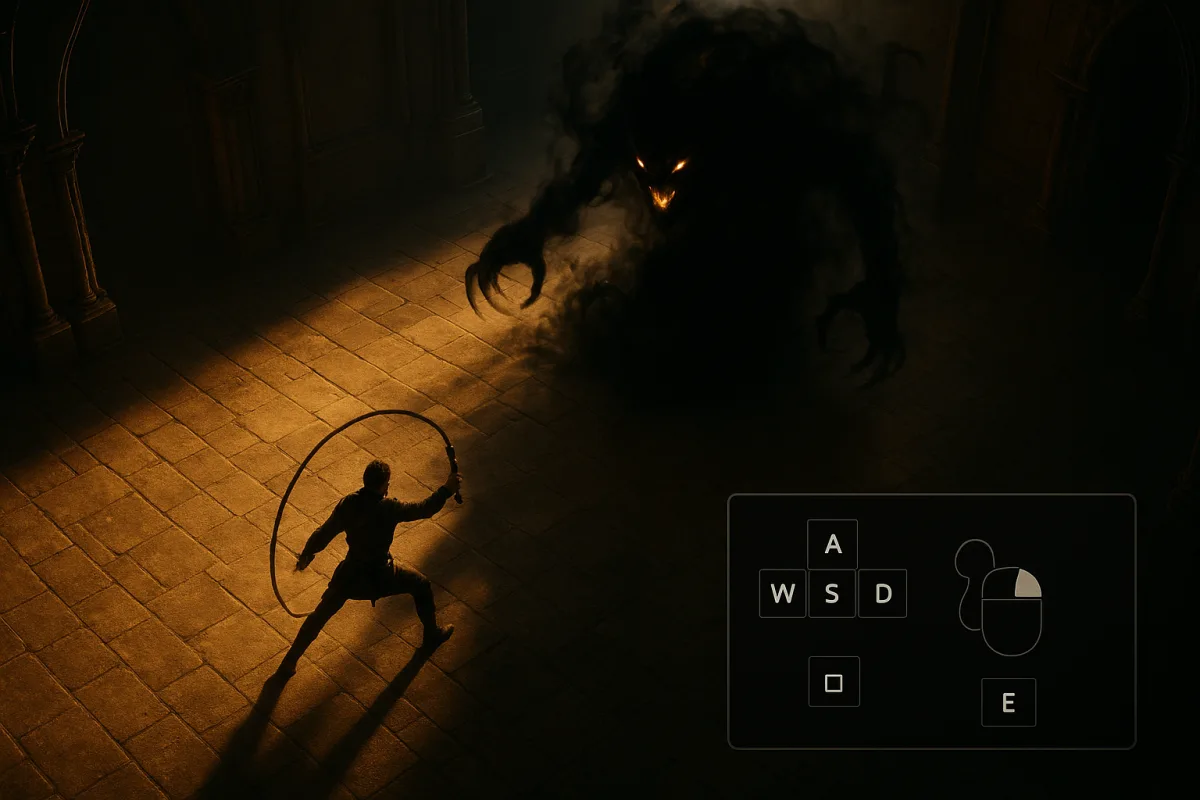
First problem: Paris teaches the controls badly
Castlevania: Belmont’s Curse opens in cursed Paris, not Dracula’s castle, and that choice has clearly confused some returning players. gameranx describes the first several hours as an extended tutorial, with a fairly linear route and a lot of skeletons before the castle appears.
That slow start matters because Belmont’s Curse asks for more mechanical discipline than its opening fights initially communicate. You are expected to dodge, air dash, grapple, parry with Holy Light, use arcana, and manage a weapon moveset before the enemy roster becomes interesting.
Do not build your entire loadout around the first skeleton knight that annoys you. The earlier sections are better used as a movement lab: practise sliding under attacks, grappling to anchors, and cancelling your instinct to mash through a crowded screen.
The combat’s early friction is not entirely player error. PC Gamer and iTechGuides both reported awkward controls, limited dodge invincibility, poor skill mapping, and a whip wind-up that can make actions feel less immediate than the game’s Dead Cells-derived pace suggests. [4][5]
That distinction matters. “Learn the timing” is sensible advice, but only after checking whether your input setup is making the timing worse. If attacks or dodges feel inconsistent, revisit keyboard bindings, controller detection, refresh-rate settings, and cutscene performance before assuming your reaction time is the problem. [4][5]
High-refresh displays and inconsistent cutscene frame rates have been among the reported PC complaints, alongside occasional phasing bugs. [4][5] There is no documented official balance response to those issues as of October 18, 2026, so avoid treating community workarounds as confirmed fixes.
Pick a weapon for the room, not the tooltip
The most useful lesson from the weapon system is that Belmont’s Curse is not asking for permanent loyalty to one family. The community weapon guide identifies seven broad families: Swords, Whips, Great Swords, Daggers, Spears, Axes, and Firearms. [1]
Exact damage multipliers, stagger values, and frame data are not publicly documented, despite the very confident numbers often attached to weapon discussions. [1] If somebody claims an axe is precisely a certain percentage better than a sword, ask for testing methodology before remaking your build around it.
Swords are the least committal starting choice: medium weight, medium stagger, and balanced melee reach. [1] Use one while you are still learning enemy spacing, because it does not demand the perfect range discipline of a whip or the all-in commitment of daggers.
Whips are light, low-stagger weapons built around reach. [1] They suit players who want to tag enemies before those enemies enter their own attack range, particularly in messy hallways or against hovering threats. The catch is reported wind-up awkwardness, so do not stand point-blank and expect a panic button. [4]
Great Swords are heavy, very high-stagger options for hard hits and large targets. [1] Bring one when a room keeps collapsing into a pile-up, or when you can predict a boss opening. The build it quietly punishes is the impatient dodge-and-mash setup, because every missed swing is a longer commitment.
Daggers are very light, low-stagger, rapid rushdown weapons. [1] They are for players who can reliably enter, unload, and leave before retaliation. They are not automatically “the boss weapon” if your dodge timing is unstable, because a fast weapon does not repair a missed escape.
Spears offer medium weight and stagger with mid-range pokes. [1] This is the practical answer to enemies that punish close-range strings but do not need a full whip’s spacing. Spears suit cautious progression, particularly while you are still learning enemy approach patterns and vertical positioning.
Axes are heavy, high-stagger, slow, and devastating. [1] Use them against enemies that give you obvious openings or can be interrupted. They will feel awful in frantic rooms if you are trying to play them like daggers, but that is a build mismatch rather than evidence that axes are undertuned.
Firearms provide light, low-stagger ranged pressure. [1] They suit players who need to influence an enemy’s approach without committing immediately. Do not mistake that safety for a universal answer, though. Low stagger means firearms may not stop the threat that is already in your face.
IGN’s weapon guide uses more specific labels, including longswords, sword-and-board sets, lances, cestus, great swords, dual swords, and whips. Its practical advice is still useful: dual-blade-style weapons reward timed strings rather than mashing, while a long-reach weapon reduces exposure against airborne opponents.
The likely meta movement is straightforward. Players who initially force one comfortable weapon through every encounter will gradually carry two answers: a safe range tool for exploration and an aggressive punish tool for bosses. That is not a secret overpowered build, it is what free weapon switching is designed to encourage.
When the castle opens, investigate before fighting Dracula
After the three Paris segments, gameranx says the demon castle expands the game into optional bosses, hidden paths, secrets, and even a bad ending for players who pursue Dracula without the right preparation. This is where the game stops being a simple forward push.
The important practical change is to read the environment. Boss cards are connected to notes and environmental clues, and some encounters require working out how to draw a boss out rather than merely finding a door. gameranx’s description makes this sound closer to a deliberate investigation loop than ordinary map cleanup.
When a route appears blocked, do not spend twenty minutes trying to force a platforming sequence with the wrong movement tool. Check nearby notes, suspicious rooms, and incomplete boss-card clues first. Holy Light can remove certain barriers, while the arcane whip reaches anchors used in traversal.
Spend your upgrades with purpose. gameranx identifies books for defence or damage, four-piece heart-container upgrades for health or mana, and relics with passive effects. That makes a partial container less exciting than it looks, but completing a fourth is a meaningful breakpoint.
There is no published numeric model proving whether offence, defence, or mana is universally best. [1][3] So build around the failure that keeps ending your run: durability when you die with resources unused, damage when openings are too short, and mana when arcana is carrying your plan.
Mammon: stop chasing him and make every opening count
Mammon the Miser is the point where “I can probably out-DPS it” stops working. IGN’s boss guide calls him one of the harder encounters, and the fight’s real threat is mobility: he rapidly changes position, attacks from the air, and becomes much faster in phase two.
IGN recommends twin blades for their repeated-hit grappling attack and invincibility frames, plus Carmilla’s Blood Spikes for lingering damage. That named weapon recommendation comes from IGN’s testing, not publicly verified frame data, and the availability or pricing of the specific Almas and Hot Claire set is not independently documented.
The more durable lesson is the Blood Spikes plan. IGN says the bleed lasts roughly eight seconds and recommends the third unlock, which slows Mammon and reduces his damage by 25% while he bleeds. Apply it in a genuine opening, then spend the damage-over-time window surviving instead of forcing a second cast.
IGN’s suggested relic package is Witch’s Knot for full-heal potions, Raven’s Feather for 25% more aerial damage, and Twilight Gem for 30% extra damage for three seconds after casting a spell. Those bonuses are specific to IGN’s guide, so treat them as a targeted Mammon setup rather than assumed universal best-in-slot gear.
In phase one, watch the pattern instead of reacting to every animation. Mammon fires four sets of lasers, performs four floor slams, ricochets around the room, or turns gaseous. Duck under low horizontal lasers, use grapples for repositioning, and cast Blood Spikes after the slam sequence or ricochet finish.
The gaseous form is the trap. IGN recommends leading Mammon through a figure-eight route: grapple up a wall, wall-jump, then air dash away. It lasts about nine seconds in phase one and about six in phase two, so survival is cheaper than trying to squeeze in melee damage.
Phase two speeds up lasers and extends the ricochet sequence, with falling rocks added to the chaos. IGN recommends using Holy Light to parry those rocks and avoiding extended whip-style attacks after slams, because Mammon follows them with quick laser blasts. That is the moment to reset, not flex.
The community is drawing hot dads, debating music, and arguing about feel
The fan response is not one clean consensus. Steam’s community hub, the dedicated unofficial wiki, the Castlevania Fandom page, and discussion threads in r/Castlevania and r/Metroidvania are active places for guides, build talk, bug reports, and fan work. [3][8][9]
There is no reliable count of fan-art uploads or discussion posts, so claims that the game has generated “more fan art than” another Castlevania should be filed under vibes, not data. What is documented is that the developers welcomed the thirsty artwork rather than acting surprised by it.
IGN reported that lead designer Bérenger Dupré and marketing director Sandro Bordier said the team deliberately designed characters, especially Trevor Belmont, to be attractive. Their joking proposal for a “Hot Dads Edition” is publisher-friendly banter, but it also explains why fan art arrived immediately.
The soundtrack is producing a more useful disagreement. ASADI’s music blends contemporary and classic Castlevania influences, and the Midnight Edition includes a 71-track soundtrack with new material and reworked classics. [7][10] That edition costs $39.99, compared with $29.99 for the standard game. [8]
Kotaku praised tracks including “Bone March,” “Iron Clock,” and Talos’s “Stone Tyrant,” but criticised Belmont’s Curse’s subdued “Bloody Tears” arrangement for lacking the franchise’s usual attack. That complaint has company: community response to the theme is mixed, and a reconstructed version circulating on YouTube suggests fans are still picking it apart. [7][10]
That is about the right scale of reaction. The game’s quieter, downtempo music is not proof that Evil Empire misunderstood Castlevania, but neither is every criticism nostalgia poisoning. If you want a modernised soundtrack that supports exploration, it may land. If “Bloody Tears” needs to kick down a wall, it may not.
Frequently Asked Questions
What are the best weapons to use in Castlevania Belmont's Curse?
The best weapons depend on the situation rather than a permanent choice. Start with Swords or Spears to learn Rose’s movement, then switch to Whips for safe ranged attacks, Great Swords for crowd control, and Daggers for bosses with long punish windows. Each weapon family has distinct roles: Swords are balanced, Whips offer reach but have a wind-up delay, Great Swords stagger heavily, and Daggers are fast for rushdown tactics.
How to fix control issues in Castlevania Belmont's Curse on PC?
If controls feel sluggish or dodges unreliable, first check your keyboard or controller bindings, display refresh rate, and cutscene performance. These issues are reported problems rather than player error. Adjusting input settings and ensuring your hardware runs the game smoothly can improve responsiveness before rebuilding your character or blaming your timing.
What gameplay mechanics should I focus on in Castlevania Belmont's Curse?
Focus on mastering movement and combat mechanics such as dodging, air dashing, grappling, parrying with Holy Light, and managing your weapon moveset. Use the early Paris sections as a movement lab to practice sliding under attacks and grappling rather than rushing through enemies. Combat requires discipline beyond simple button mashing, especially once the game transitions to the castle.
Why does Castlevania Belmont's Curse feel sluggish on PC?
The sluggish feel is linked to reported control issues including awkward skill mapping, limited dodge invincibility frames, and the whip’s long wind-up animation. Additionally, high-refresh-rate displays and inconsistent cutscene frame rates can cause input lag or perception of sluggishness. These are recognized technical problems rather than intentional design choices.
How does the community recommend playing Castlevania Belmont's Curse?
The community advises adapting your weapon choice to each room’s demands rather than sticking to one weapon family. They recommend using the early game to practice movement and timing, and to be aware that the castle sections introduce more complex combat and exploration. Players also suggest checking technical settings if controls feel off, as some issues are due to PC-specific bugs or hardware configurations.
How we researched this
This article was assembled from 3 video sources across 2 channels, 2 published articles, 10 cited references.
Nothing here is based on hands-on testing. Where a figure or finding appears, it belongs to the source cited beside it, and the writing says so rather than implying otherwise. Every source is listed below so you can check it.
Sources
Castlevania Belmont's Curse - Best Weapons Types (And How to Use Them) — IGN
Castlevania: Belmont's Curse - How to Defeat Mammon (The Miser) — IGN
Castlevania‘s Most Iconic Song Should Chain Whip Me To Death, Not Put Me In A Thousand Year Sleep — Kotaku
Castlevania: Belmont's Curse review: a classic platformer given fresh new blood
I want to love the new Castlevania, but it just feels a little off
Análisis de Castlevania: Belmont's Curse, lágrimas de sangre
Watch Castlevania: Belmont's Curse Gameplay and Community on Youtube
Also from the sources
Related Articles
Phantom Blade Zero PC Gameplay and Performance Guide
Explore Phantom Blade Zero PC gameplay, system requirements, and optimization tips to ensure smooth performance and master combat mechanics.
Control Resonant Gameplay and Graphics Review Deep Dive
Explore Control Resonant gameplay, Gravity Shift mechanics, graphics settings, and edition comparisons for an optimized PC gaming experience.

Marvel's Wolverine Gameplay, Guides, and Reception Overview
Explore Marvel's Wolverine gameplay tips, PS5 settings, collectible guides, and critical reception in this comprehensive overview.
The Blood of Dawnwalker Gameplay Mechanics and Time Limit
Explore The Blood of Dawnwalker gameplay mechanics, including its unique 30-day time limit and PC performance insights.