
Pokémon Ruby and Sapphire Switch Port Speculation Explained
Explore the latest Pokémon Ruby and Sapphire Switch port speculation and what the HD footage really means for fans.
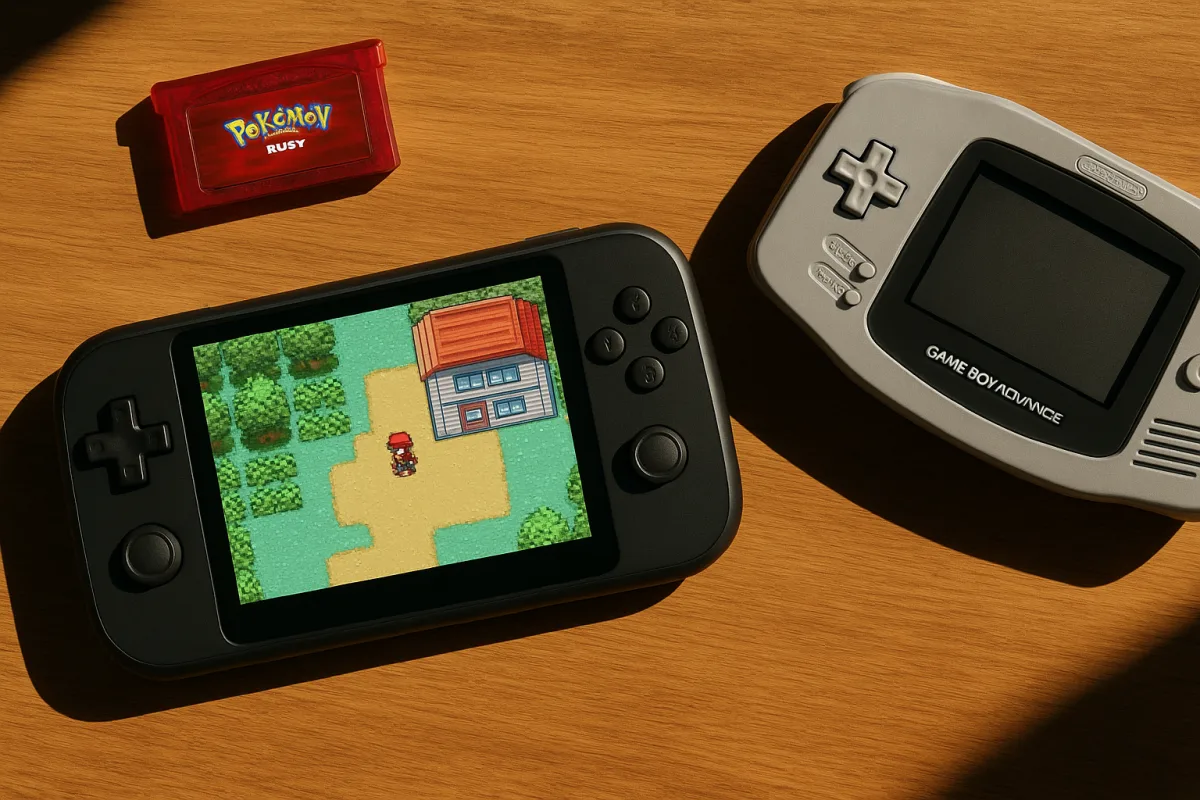
The suspiciously clean clip, and what it actually proves
An official Japanese Pokémon social account posted a 30-second clip of Mr. Briney chasing his Wingull, Peeko, on September 21. The footage looked substantially cleaner and more colourful than fans expect from a Game Boy Advance capture. [1]
That has kicked the usual Pokémon rumour machine into fifth gear. The immediate theory is that Pokémon Ruby, Pokémon Sapphire, and perhaps Pokémon Emerald are being prepared as Switch and Switch 2 ports.
That theory is plausible. It is not confirmed. Nintendo and The Pokémon Company have announced neither a release date, platform list, price, feature set, nor even the existence of these ports as of September 22. [1] [3]
The useful question is not whether the clip “looks HD.” It plainly looks better than a badly filtered handheld recording. The useful question is what an HD upload can establish about the software behind it.
The answer is less dramatic than social media would prefer. It can show that someone had access to a good-looking presentation of Ruby and Sapphire. It cannot, by itself, distinguish a commercial port from internal tooling.
240 by 160: the number behind the speculation
The original Game Boy Advance display resolution was 240 by 160 pixels. That is 38,400 pixels total, a tiny image by modern display standards, but it is the complete canvas on which the original Hoenn games were designed. [7]
For comparison, the important detail is not that the games were “low resolution.” Every original sprite, tile, menu border, battle background, and map was authored to read at that exact size.
A clean capture does not need new art to look radically better than old web footage. It only needs the original image to be captured directly, scaled consistently, and encoded without being mangled by decades of reposts.
That is why the clip has caused debate without settling anything. Fans are seeing sharp pixels, vivid colour, and a stable image, then jumping straight to “remaster.” Those are separate steps in the rendering pipeline.
What scaling does to a Game Boy Advance game
A 240 by 160 image has a 3:2 aspect ratio. Modern televisions and handheld screens are usually wider, so a port has three basic options: preserve the image with borders, stretch it, or crop it.
Stretching is usually the worst choice. It changes the intended shape of sprites and tiles, making circles oval and character proportions subtly wrong. Even players who cannot name the issue tend to feel that something looks off.
Integer scaling is the cleaner option. Each original pixel becomes a tidy block of identical screen pixels, retaining hard edges rather than inventing blended colours between them.
At three times scale, the Game Boy Advance image becomes 720 by 480 pixels. At four times scale, it becomes 960 by 640. Neither option fills a standard widescreen frame without unused space around it.
That empty space is not a technical failure. It is the cost of showing a 3:2 game correctly on a wider screen. A publisher can cover it with a border, background art, interface panels, or plain black.
If the official clip preserved sharp pixel edges and the game’s original proportions, that would be consistent with a competent emulator or port. It would not establish that Game Freak rebuilt the graphics for modern hardware.
There is a big difference between “the pixels are displayed cleanly” and “the game has new pixels.” Rumour posts often flatten those two outcomes into one, because “HD remaster” travels further than “proper capture settings.”
Colour is another easy place to overread the evidence
The Game Boy Advance used 15-bit RGB colour. In practical terms, that means five bits each for red, green, and blue, for a theoretical palette of 32,768 colour combinations. [7]
That sounds limited now, but it does not mean Pokémon Ruby and Sapphire were washed out by design. The artwork used a deliberately bright palette, especially in Hoenn’s water, grass, sky, and battle effects.
What players remember from the original hardware is also affected by the original Game Boy Advance screen. Early models were front-lit or unlit, and their displays did not present colour like a current OLED or LCD panel.
A direct digital capture can therefore look much more saturated than childhood memory while still using the original palette data. Add platform compression and social-media processing, and colour becomes extremely weak evidence of a remake.
The official clip may indeed show enhanced rendering. Nintendo Life describes it as high-definition footage that reignited the port rumours, but no official technical specifications identify its resolution, filters, colour treatment, or platform. [1]
That absence matters. Until a product listing specifies output resolution or shows comparison material, claims about 4K assets, rebuilt sprites, smoother animation, or Switch 2 enhancements are just fan-made patch notes.
Why the 30-second length caught attention
The clip’s 30-second runtime also attracted scrutiny because it resembles the familiar short-form capture format associated with Nintendo hardware. Nintendo Life notes that the length and image quality helped fuel the theory. [1]
But “resembles” is doing all the work there. A social-media team can upload a 30-second edit from almost any source. A precise duration says more about marketing workflow than it does about retail plans.
This is where the community’s confidence meter tends to break. One clue can be interesting. Two clues can make a pattern worth watching. Neither one transforms an unannounced game into a confirmed release.
The sensible read is that the clip raises the probability of a project existing somewhere inside The Pokémon Company’s pipeline. It does not tell us whether that project is shipping, cancelled, regional, or merely an internal test.
The emulator datamine is stronger, but still not a reveal
The more substantial evidence is the datamine associated with the Switch releases of Pokémon FireRed and Pokémon LeafGreen. Dataminer LuigiBlood reportedly found references suggesting the official emulator could support Ruby, Sapphire, and Emerald ROMs. [4]
That is a better lead than colour grading. Code references are at least connected to the practical machinery needed to run the games. Still, compatible software is not equivalent to a confirmed catalogue plan.
Emulators are commonly designed with reusable support in mind. If FireRed and LeafGreen share architecture with other Game Boy Advance Pokémon games, supporting additional ROMs can be sensible engineering whether or not every supported title ships.
Think of it like a balance value left in a game’s files. It can reveal developer intent, abandoned content, or future-proofing. It does not guarantee that players will ever encounter that value in a live build.
The inclusion of Pokémon Emerald in the reported emulator references is why the rumour is usually framed as a three-game release. It does not prove that Emerald will be bundled, sold separately, or released at all. [4]
That distinction matters because Emerald is not simply Ruby and Sapphire with a different box legendary. It is an expanded third version, and its inclusion would create questions about pricing, save handling, trading, and version selection.
None of those details has leaked credibly. There are no official feature lists, developer comments, store pages, technical documents, or patch notes laying out what a Switch version would actually contain. [3]
Release-date chatter is not a launch window
The late-September or early-October timing traces back to an unverified claim by insider Shpeshal Nick. Dexerto reported the stated window, while stressing that it had not been officially confirmed. [2]
That is the kind of rumour worth filing, not preloading for. Pokémon has form for surprise releases, including the February 2026 Switch arrival of FireRed and LeafGreen, so an absent announcement does not disprove a port. [1]
It also does not validate every calendar prediction circulating online. Fans often mistake a company’s ability to shadow-drop software for evidence that a specific alleged shadow drop is real. Those are very different propositions.
The FireRed and LeafGreen releases reportedly reached high positions on regional Switch eShop charts shortly after launch. However, Nintendo and The Pokémon Company have not disclosed sales figures, so claims about their commercial success need restraint. [1]
“High chart placement” is useful evidence that demand exists. It is not a sales total, and it does not prove that a Ruby, Sapphire, and Emerald package has been approved with the same price or release model.
A possible $20 per-game price has also circulated because it would mirror the FireRed and LeafGreen releases. That number is rumour, not a listing, and it tells us nothing reliable about bundles or upgrade options. [5]
What to watch for next
The next meaningful signal will not be another frame-by-frame colour comparison. It will be a Nintendo eShop page, an official Pokémon announcement, ratings-board listing, downloadable metadata, or direct confirmation from Nintendo or The Pokémon Company.
Until then, the HD clip is good evidence that official Pokémon marketing has access to a clean, modern presentation of Generation 3 footage. It is not evidence that a Switch version has a particular resolution or feature set.
If ports arrive, the interesting details will be mundane ones. Are they straight emulation releases? Do they preserve link trading? Is Pokémon Emerald included? Are there save-state tools, display options, or online functions?
Those are the settings that determine whether a port is a tidy preservation job or a genuinely useful modern release. For now, fans have a suspiciously crisp 30 seconds, a promising datamine, and no patch notes.
Frequently Asked Questions
What does the recent HD footage mean for Pokémon Ruby and Sapphire Switch ports?
The HD footage posted on September 21 shows a cleaner and more colorful presentation than typical Game Boy Advance captures, but it does not confirm the existence of Switch or Switch 2 ports. It indicates access to a polished capture of the original games but cannot distinguish between an official port and internal tooling.
Is the Pokémon Ruby and Sapphire HD clip proof of a Switch port?
No, the clip alone is not proof of a Switch port. While it looks better than old footage, this can result from direct capture, scaling, and encoding without new graphics or a remaster.
How does Game Boy Advance resolution affect Pokémon Ruby and Sapphire Switch rumors?
The original games run at 240 by 160 pixels, a low resolution by modern standards. Clean captures can look sharp when scaled properly, but this does not mean the games have been graphically rebuilt for Switch; it may simply be a well-scaled original image.
Are there official announcements about Pokémon Ruby and Sapphire Switch ports?
As of September 22, 2026, Nintendo and The Pokémon Company have made no official announcements regarding Ruby and Sapphire ports on Switch or Switch 2. All current information is speculative or based on indirect evidence.
What technical evidence supports or refutes Pokémon Ruby and Sapphire remasters on Switch?
Datamining of FireRed and LeafGreen Switch emulator code shows references to Ruby, Sapphire, and Emerald, suggesting internal preparation but not a released product. No official technical details or comparisons between original and potential remastered graphics exist.
How we researched this
This article was assembled from 1 video source, 4 published articles, 7 cited references.
Nothing here is based on hands-on testing. Where a figure or finding appears, it belongs to the source cited beside it, and the writing says so rather than implying otherwise. Every source is listed below so you can check it.
Sources
Zelda Ocarina of Time - All 36 Heart Piece Locations IN ORDER — IGN
Fans Hope The Pokémon Company Just Teased the Rumored Ruby, Sapphire, and Emerald Switch Ports — Polygon
Pokémon Ruby & Sapphire HD Footage Reignites Rumours About Switch Ports | Nintendo Life
Pokemon Ruby, Sapphire & Emerald ports rumored for 2026 release - Dexerto
Leak: Pokémon Ruby, Sapphire & Emerald Ports Reportedly Coming to Switch This Fall — PokéDigest
Watch Pokémon Ruby and Sapphire Nintendo Switch Port Speculation on Youtube
Related Articles
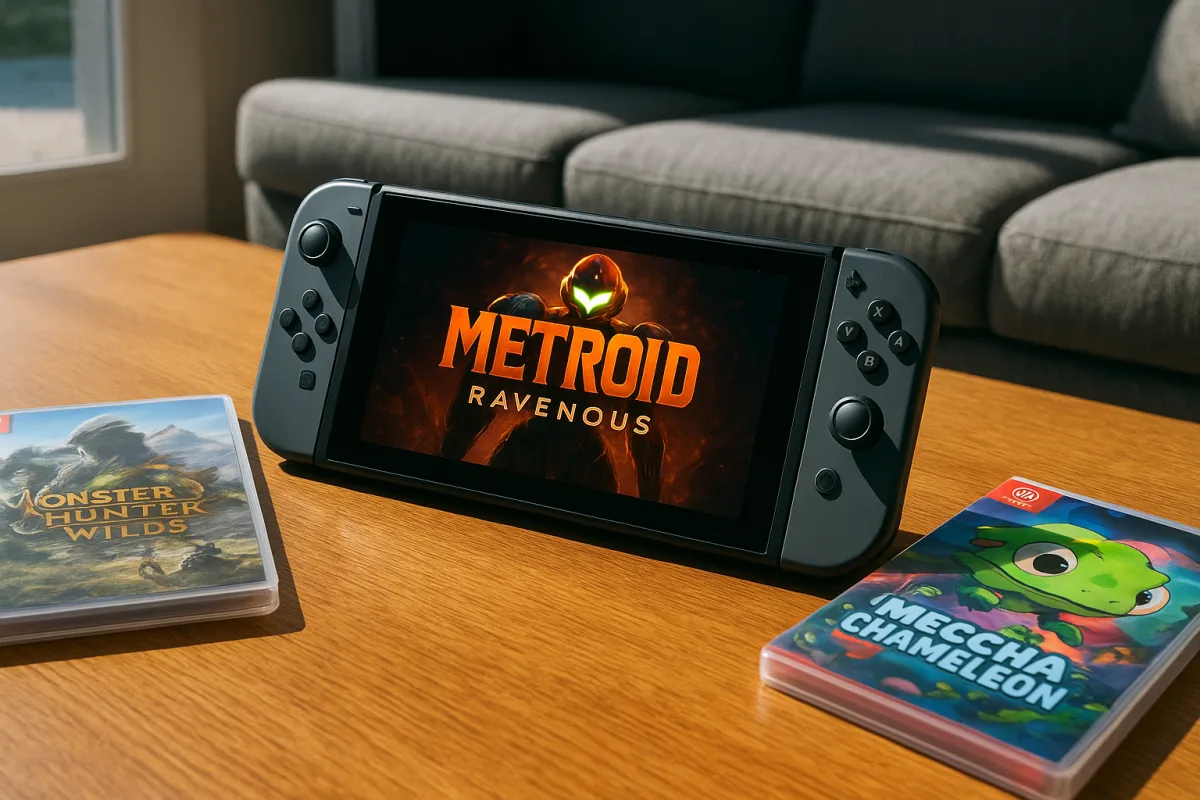
Nintendo Switch 2 Game Announcements and Updates
Discover the latest Nintendo Switch 2 game announcements, release dates, and updates including Metroid Ravenous, Monster Hunter Wilds, and more.
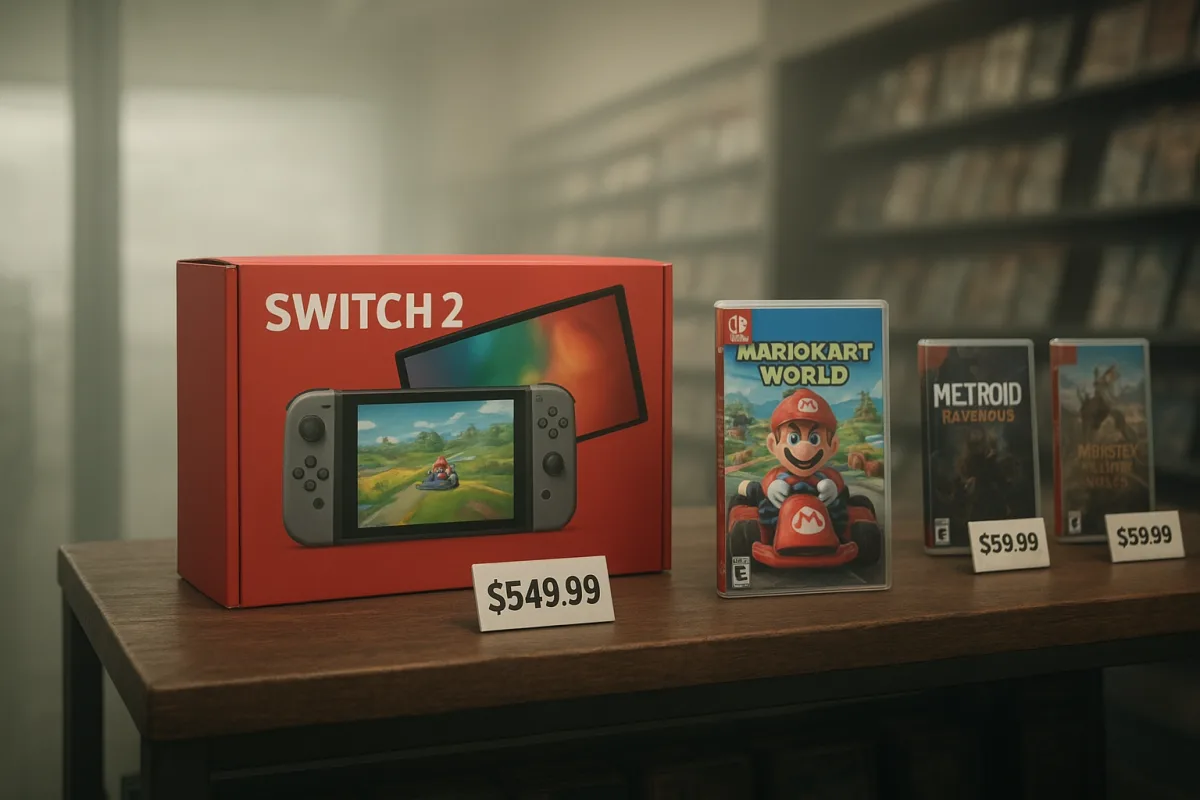
Nintendo Switch 2 Game Bundles and Pricing Guide 2026
Explore Nintendo Switch 2 game bundles, pricing updates, and which offers like Mario Kart World provide the best value in 2026.
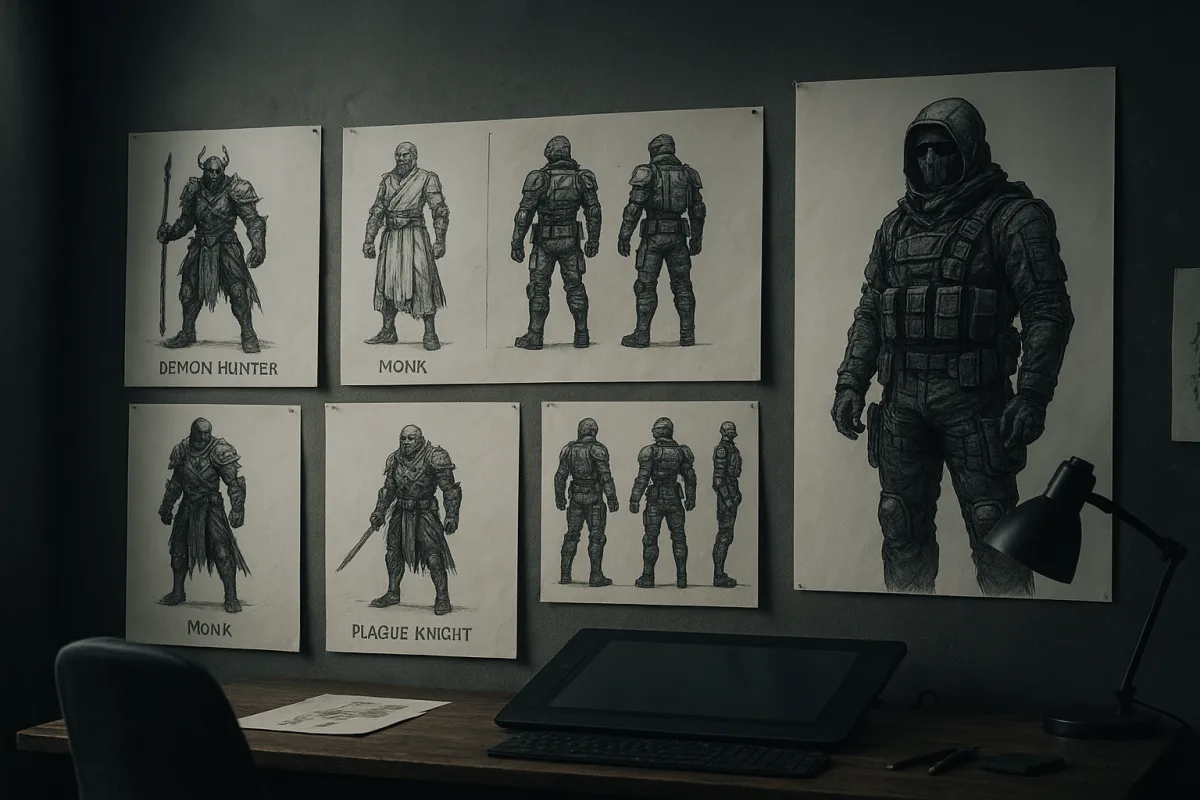
Blizzard Upcoming Games 2026
Discover Blizzard's upcoming games in 2026 including Diablo 5, StarCraft open-world shooter, and Overwatch's new hero Doctrine with release dates and
Physint Publisher Switch
Explore why PlayStation dropped Physint and how Xbox's publishing affects Hideo Kojima's game's development and milestones.