
Star Wars Zero Company Strategy and Gameplay Guide
Explore Star Wars Zero Company strategy, gameplay tips, and squad tactics to survive missions and master the injury system.
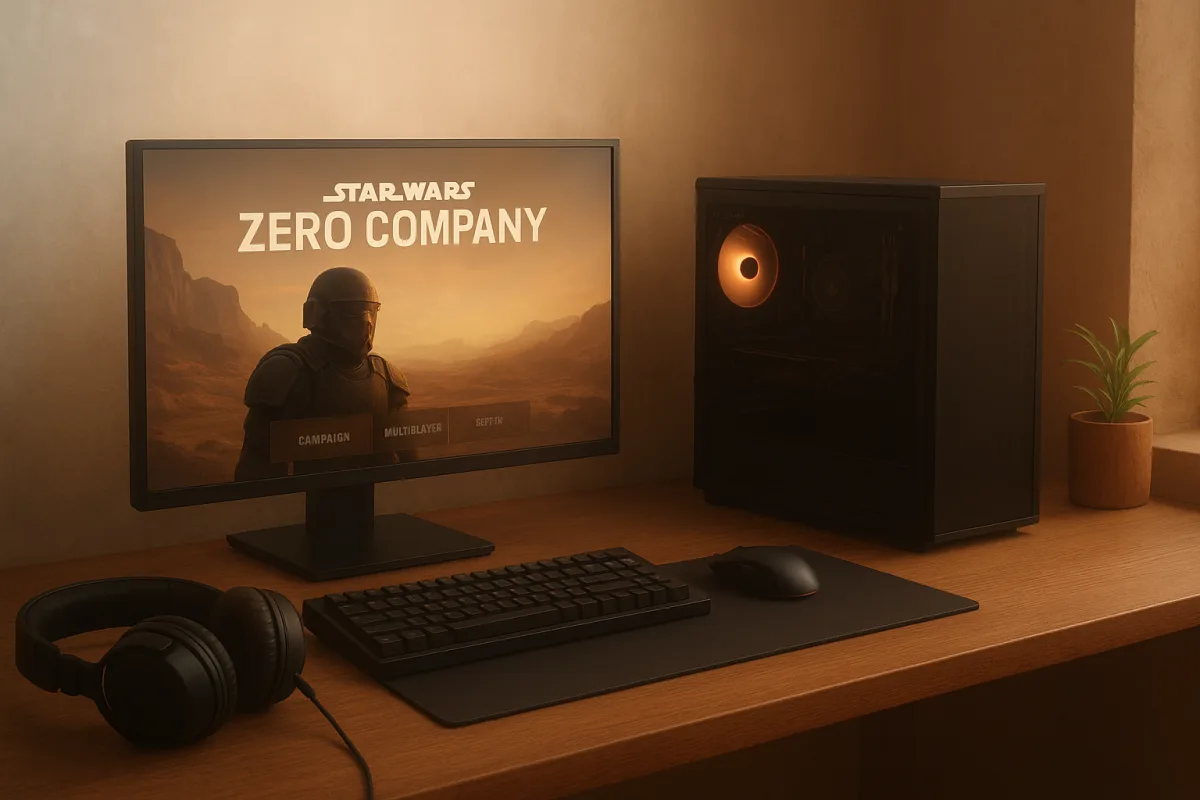
First problem: deciding whether this is actually for you
Star Wars Zero Company is a turn-based tactics game first, not an action game wearing Clone Wars paint. Bit Reactor’s squad missions are built around cover, elevation, flanking, overwatch, explosives, and the familiar indignity of an apparently point-blank shot failing anyway.
The broad comparison is XCOM, but the useful distinction is that Zero Company gives operators three action points rather than the traditional two. Eurogamer highlights directed Overwatch cones and Advantage Points as its key changes, which means positioning has more texture than simply crawling from full cover to full cover.
That extra action point quietly changes how aggressive builds work. A melee specialist can move, shoulder-charge, and still set up an ally. A sniper can reach high ground, take a shot, then establish overwatch rather than choosing only one. Gameranx found elevation and overwatch particularly effective in dense maps.
The Star Wars layer is not just a skin swap, at least according to the early reviews. Skill Up points to Mandalorian jump packs, droid shields, Force pushes, and battlefield gadgets as mechanics that create options an XCOM soldier simply would not have.
This is useful for players who want intimate, turn-by-turn skirmishes rather than army-scale warfare. Eurogamer’s early impression calls the game closer to arranging a small collection of action figures than playing Battlefront: individual operators matter because the battles stay relatively contained.
Do not come expecting a sprawling player-authored role-playing campaign, though. PC Gamer reports that Bit Reactor describes the story as linear from beginning to end, with no branching story paths or romance system. [5] Your squad losses change who remains and which tools you possess, not the destination.
Second problem: surviving the first mission without misunderstanding Injury
The game’s most important rule is not “do not let anyone hit zero health.” It is “do not repeatedly allow the same operator to hit zero health.” An operator who is downed takes an Injury and can be revived by an ally. [1][3]
The third Injury is the breakpoint. After accumulating three Injuries, that operator dies permanently. [1][3] That makes the first down manageable, the second alarming, and the third something you should plan around several turns before it happens.
This is a more forgiving structure than instant-death permadeath, but do not mistake forgiveness for safety. The first two revives are effectively warning labels attached to a character. Once someone has already been downed twice, the next mission is not a normal deployment decision.
Send that operator only where their contribution is genuinely decisive. Do not bring a two-Injury sniper to a routine optional job because their damage is convenient. Use a healthy substitute, even if their stats are worse, and accept the shorter-term inefficiency.
Hawks, the player-created leader of Zero Company, is the exception. The protagonist is immune to permanent death, preserving the campaign’s main narrative continuity. [2] That does not make Hawks disposable, however, because a downed leader still costs tempo, positioning, and resources.
The real trap is treating Hawks’ immunity as a license to lead every breach. Let the durable protagonist absorb risk when extraction is close or an objective demands it, but avoid building a squad plan that needs Hawks to repeatedly collapse before everyone else escapes.
Third problem: protecting the operator you cannot replace
Tel-Rea Vokoss is not merely another companion with a lightsaber. The Jedi Padawan is the game’s sole Jedi operator, and her permanent death removes a unique set of Force abilities with no replacement character waiting in the recruitment pool. [3]
GamingBolt’s preview correctly identifies the uncomfortable bit: an authored character with backstory and companion content can still be lost after their essential introductions. The story has contingency dialogue for surviving squad members, but the tactical hole remains yours to fill.
Use Tel-Rea as a control piece, not a cinematic finishing move. Force pushes can remove enemies from ledges or push them into allied overwatch, while deflection creates a way to contest enemy fire. Gameranx’s impressions suggest these abilities reward careful lines of engagement more than reckless charges.
In practical terms, start Tel-Rea behind the squad’s first line, not ahead of it. Let a sniper establish sightlines and let a support operator conceal or buff allies. Commit the Jedi when a push creates a guaranteed environmental kill, breaks an enemy formation, or saves a threatened teammate.
If Tel-Rea has one or two Injuries, stop using her to solve ordinary fights. A Jedi is tempting because the class can turn messy turns around, but that is exactly how a valuable specialist becomes the centrepiece of a bad rescue attempt.
Fourth problem: building a squad that is more than five individual loadouts
Zero Company’s bond system rewards repeatedly fielding compatible operators together. Gameranx reports that bonds unlock small stat increases, including examples such as 1% melee or critical-chance boosts, with stronger rewards at milestones.
Those numbers sound modest because they are. A 1% increase does not suddenly create a critical-hit build, and community panic over a tiny passive would be misplaced. The important part is that bond milestones compound with squad roles and backup attacks over a full campaign.
Designate pairs with a reliable shared job. Put a high-ground sniper with a frontline operator who can expose targets. Pair a gadget-focused astromech with a character likely to take contested positions. The goal is not role-play chemistry, it is creating repeatable turns where both characters have line of sight.
Gameranx also describes a backup command: one operator can support another for a turn, adding damage if both can see the target. That quietly buffs squads built around overlapping firing lanes and weakens lone-wolf jump-pack or melee builds that outrun the team.
Do not spread your favourite five across every mission just to level everyone evenly. That slows bond development and makes your tactics less predictable. Build two or three functioning pairs, then rotate them according to Injury status, mission geometry, and which companion needs protection.
Fifth problem: running out of credits before your squad is ready
Early reviews agree that credits are tight. Gameranx calls the economy limited enough to feel nearly unreasonable at times, particularly because the black market sells weapon attachments, passive bonuses, grenades, and throwable healing items.
That pressure kills the “buy one of everything” build. Prioritise equipment that prevents a down rather than equipment that merely makes a winning turn flashier. A healing item, concealment tool, or dependable crowd-control option has more campaign value than a marginal critical bonus.
The Den’s upgrades are similarly not a simple upgrade-order puzzle. Gameranx notes that facilities can improve healing capacity, recruitment, black-market access, and weapon effectiveness. The correct first spend depends on what has actually threatened your campaign.
If Injuries are stacking, improve the Medbay before buying more attack power. The Cycles Guide from Zero Company Builds says healing consumes a cycle, limiting how frequently you can deploy injured characters. [4] Faster or broader recovery protects the roster that your early upgrades otherwise leave exposed.
If your healthy bench is thin, recruitment is the next practical investment. Random recruits do not carry the authored companion stories, as Gameranx notes, but they are still crucial insurance. A statistically plain replacement is better than deploying a favourite companion one Injury away from deletion.
Sixth problem: choosing missions when you cannot do everything
The galaxy map offers main missions, optional missions, operations, influence progression, and companion-focused jobs. Gameranx’s review copy suggested that optional content and missions vary between playthroughs, but the campaign still expects you to complete side work to stay strong enough for its main path.
Do the optional missions that solve a specific immediate weakness. If you lack weapon parts, target influence rewards that grant them. If your roster needs recovery time, use lower-risk operations and management cycles rather than forcing an injured core team into another major encounter.
Operations are not just background text. Gameranx says their choices can affect later battles, including sabotaging enemies before they appear. Choose effects that reduce future enemy strength when your squad is wounded, under-equipped, or missing a key role.
Companion missions deserve priority when their operator is healthy. Skill Up praises their multi-stage structure and mission-specific narrative beats, while Gameranx notes that they offer gameplay bonuses. This is not busywork, but it becomes poor value if completing one risks an already battered specialist.
The meta will not settle in a weekend because this is not a competitive game with one solved ladder build. It moves at campaign speed. Players will gradually identify strong bond pairings, item combinations, and mission orders, but permadeath makes copy-pasting a “best squad” less reliable than usual.
Seventh problem: deciding whether to buy now or wait for fixes
Star Wars Zero Company launched on August 27, 2026. The PC Standard Edition costs $49.99, while the Console Standard Edition costs $59.99. PC Deluxe Edition costs $59.99, and Console Deluxe Edition costs $69.99. [6][7]
The PC Standard Edition suits players who want the tactics campaign at the lowest listed PC price. The Console Standard Edition suits console players who do not need the Deluxe bundle. The two Deluxe Editions suit buyers who specifically want their included edition extras, not players hoping for additional campaign branches.
There is no evidence that the base price is an outlier for a new strategy release, but there is also no direct 2026 Star Wars strategy rival that makes a neat apples-to-apples comparison. Chimera Squad’s $19.99 2020 launch price is too old to prove much beyond how much the market changed.
The stronger reason to wait is technical risk. TechTimes and Windows Central report crashes, minor AI issues, and technical problems, with TechTimes specifically warning that crashes can erase permadeath progress. [9][10] In a game built around accepting losses, losing progress to a crash is not dramatic consequence, it is software failure.
Gameranx also reported camera problems in its pre-release build, including missed reinforcement spawns and cameras catching on scenery. Those issues may be less severe after launch, but do not let “there was a day-zero patch” become proof that everything is fixed.
As of August 28, SteamDB showed no official post-launch patch notes or updates. [13] Bit Reactor and Respawn Entertainment may address issues, but no public schedule or fix list supports a promise. If you are especially attached to ironman-style stakes, waiting for confirmed stability is the sensible call.
Finally, set expectations for replaying. TechRadar reports a 30-to-40-hour completion range depending on difficulty and genre experience, with no New Game Plus planned. [11] That makes a careful first campaign more valuable than rushing toward a hypothetical post-game loop that does not exist.
Frequently Asked Questions
How does the injury system work in Star Wars Zero Company?
Operators accumulate Injuries each time they are downed, and after three Injuries, the operator dies permanently. Operators can be revived during missions, but repeated downing increases risk. Healing Injuries at the Medbay consumes a campaign cycle, limiting how often you can deploy your squad. The protagonist, Hawks, is immune to permanent death but still suffers the tactical drawbacks of being downed.
What are the best strategies for surviving missions in Star Wars Zero Company?
Avoid repeatedly downing the same operator, as three Injuries cause permanent death. Use healthy substitutes for operators with multiple Injuries to preserve your squad. Take advantage of the extra action point per turn to combine movement, attacks, and overwatch effectively. Positioning to use cover, elevation, flanking, and directed Overwatch cones can greatly improve survivability.
How should I protect the Jedi Padawan Tel-Rea Vokoss in Zero Company?
Tel-Rea Vokoss is the sole Jedi Padawan and cannot be replaced in her Force-specific role. After she has been downed once, avoid exposing her to low-value risks or routine missions. Reserve her for situations where her unique abilities are genuinely decisive to prevent permanent loss.
What makes Star Wars Zero Company different from XCOM?
Zero Company offers three action points per operator instead of two, allowing more complex turn sequences like moving, attacking, and setting overwatch in one turn. It includes Star Wars-specific mechanics such as Mandalorian jump packs, droid shields, and Force pushes, which add tactical options not found in XCOM. The game focuses on small-scale skirmishes with individual operator importance rather than large army battles.
What squad compositions work best in Star Wars Zero Company?
The article does not provide specific recommendations on squad compositions. However, it emphasizes using operators whose contributions are genuinely decisive, especially when managing Injuries. Balancing specialists like melee operators and snipers to take advantage of the three-action-point system and positioning mechanics is implied to be effective.
How we researched this
This article was assembled from 3 video sources across 3 channels, 2 published articles, 14 cited references.
Nothing here is based on hands-on testing. Where a figure or finding appears, it belongs to the source cited beside it, and the writing says so rather than implying otherwise. Every source is listed below so you can check it.
Sources
I strongly recommend: Star Wars Zero Company (Review) — Skill Up
Star Wars Zero Company - Before You Buy — gameranx
Star Wars Zero Company Is Doing Something Most Star Wars Games Would Never Dare — GamingBolt
Here's How You Can Already Save $5 on Your GTA 6 Preorder — IGN
Star Wars Zero Company: Turn-Based Tactics Overview - Star Wars Zero Company Wiki
STAR WARS Zero Company Release Date, Editions & Platforms | Zero Company Wiki
Star Wars: Zero Company Reviews Summary - Star Wars Zero Company Video Game at ModdingWay.com
Star Wars Zero Company Reviews Call It Best in Franchise; Crashes Can Erase Permadeath Progress
Watch Star Wars Zero Company Strategy Gameplay and Reviews on Youtube
Also from the sources
Related Articles
Phantom Blade Zero PC Gameplay and Performance Guide
Explore Phantom Blade Zero PC gameplay, system requirements, and optimization tips to ensure smooth performance and master combat mechanics.

Star Wars Galactic Racer review
Read our Star Wars Galactic Racer review covering campaign, editions, PC performance, and top sci-fi racing alternatives for 2026.

Control Resonant Gameplay and Graphics Review Deep Dive
Explore Control Resonant gameplay, Gravity Shift mechanics, graphics settings, and edition comparisons for an optimized PC gaming experience.
Valor Mortis system requirements and review
Get detailed Valor Mortis system requirements and an in-depth review covering gameplay, combat, and hardware needs for PC players.