
Phantom Blade Zero Gameplay Comparison and Weapon Guide
Explore Phantom Blade Zero gameplay, weapon strategies, boss fights, and how it compares to Onimusha: Way of the Sword.
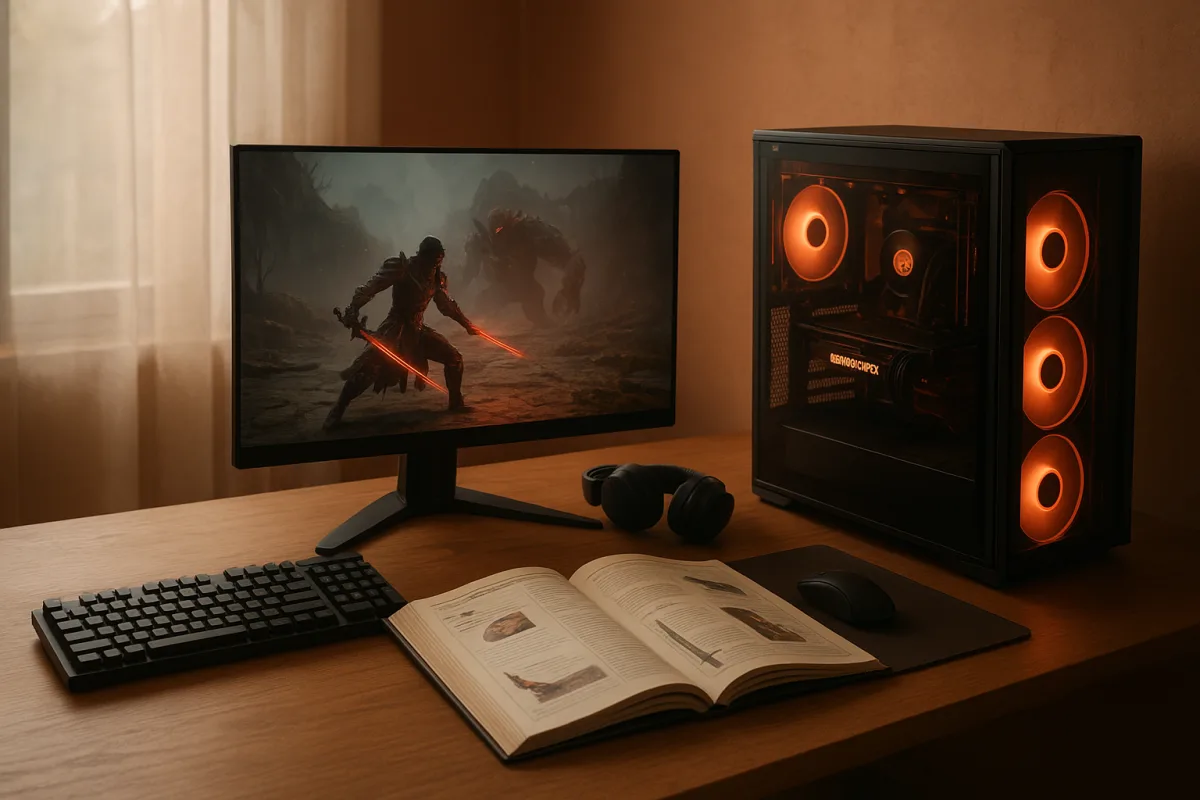
The choice in front of you
You are deciding between two games that both sell fantasy swordplay, brutal duels, and timing-heavy defense. Phantom Blade Zero gives you a bigger box of tools. Onimusha: Way of the Sword aims for the sharper, more concentrated blade.
They are close in broad appeal, especially if you want a demanding action game built around Japanese and Chinese martial-arts cinema energy. They diverge once you begin choosing weapons, managing meters, and deciding whether a loss means poor execution or an undercooked loadout.
Phantom Blade Zero costs $59.99 for the Standard Edition. Its $69.99 Digital Deluxe Edition adds two outfits, a digital art book, and soundtrack, but no announced story expansion or season pass is included in either edition. [8][11]
Phantom Blade Zero’s combat is built around the switch
Phantom Blade Zero does not ask you to settle permanently on one sword. Its early game gives you several weapon archetypes, then pushes you toward switching between them as enemy defenses, spacing, and your Shaqi meter change.
The core loop is readable once you stop treating every weapon as a damage stick. You pressure an enemy’s guard, create a guard break, swap to the weapon with the best punish, then return to a defensive or meter-building tool.
IGN’s early-weapons guide identifies the Sanguine set as the cleanest starting point. Sanguine Twin Blades favor rapid hits, Sanguine Reach gives you safer range, and the standard Sanguine weapon offers broader utility with a strong Shaqi combo.
That set also has a progression hook beyond its direct moveset. IGN says raising the weapons to level 10 unlocks Phantom Executions for weapons of the same archetype, spending at least 90% Shaqi on a high-damage special attack.
That is the build decision Phantom Blade Zero keeps presenting. You may not love a weapon’s basic attacks, yet still want to upgrade it because its archetype unlock supports another weapon you prefer. The system rewards planning, although it can make early upgrade choices feel expensive.
Developer comments reported by iTechGuides say Phantom Blade Zero’s uneven balance across its 30 weapons is intentional, designed to encourage different combat styles. [10] That tracks with the early arsenal, where weapons clearly serve different jobs instead of converging on identical damage rotations.
The early weapons worth building around
Jagged Steel is the straightforward recommendation if you want one-handed speed and damage over time. You earn it after defeating the Chapter 1 boss of the same name, and its attacks build bleed until blood loss delivers a burst of damage.
IGN recommends getting Jagged Steel to level five for Bloodblade. Used on a guard-broken opponent, it accelerates bleed buildup and improves its damage and buildup for a short period, turning every successful stagger into a potential health-bar swing.
It has a real matchup limitation. Hua is technically a living puppet, so IGN says Jagged Steel’s bleed effect does not apply to her. Taking it into that fight is fine if it is your highest-level one-handed weapon, but not because you expect its signature effect.
Sanguine Reach is the safer partner for mobile opponents and groups. Its reach gives you space to hit without overcommitting, a major advantage in a game where getting greedy during a boss combo can drain your own Shaqi and surrender the tempo.
Wooden Sanguine goes in the opposite direction. IGN calls it a low-damage sword, but it improves Shaqi depletion through parries. You use it to force guard breaks, then change to a heavier damage weapon for the opening.
That build kills the pure damage-first approach, at least against foes that can be reliably guard-broken. If you only attack with the heaviest sword available, you lose a tool that makes those heavy punish windows happen in the first place.
The Scarlet Wraith Blade is the premium early two-handed reward. Its wide swings hit groups, help break shields, and its Shaqi combo plants red spider lilies that slow enemies, drain their Shaqi, and eventually explode.
It comes from Hua, Deadly Betrothed, an optional boss in Weeping Creek Valley near the Shattered Tower. The weapon stays relevant because its Hidden Thorns upgrades improve the lilies’ damage and Shaqi drain, according to IGN.
White Serpent and Crimson Viper suit the player who wants aggression with a little multitasking. White Serpent is the long blade, Crimson Viper is the short sword, and their alternating regular and Shaqi attacks can chain continuously.
Crimson Viper Orbit makes the short sword spin around the player while they keep attacking with White Serpent. It costs Shaqi, but it gives the build sustained area damage and lets you maintain pressure while the orbit does its work.
Your Phantom Edges round out the loadout. Flying Daggers build poison and eventually add mobility options, while Iron Gauntlets deliver a fast three-punch shield-breaking combo and build Fist Focus to raise main-weapon damage, IGN reports.
Hua is a boss check, not an early brick wall
Hua’s arena gives you the clearest demonstration of Phantom Blade Zero’s priorities. She teleports, strings sword attacks together, scatters hazardous flowers, uses a damaging grab, and punishes players who try to trade blows through everything.
IGN recommends level-three weapons and a level-three Phantom Edge Dread Axe before trying the fight, but there is no public aggregate data on the average upgrade level players have when they defeat Hua. [1] Treat that level as a route suggestion, not a community benchmark.
The recommended loadout is Sanguine Reach plus either Sanguine or Jagged Steel, depending on level. Hunter’s Insight increases damage and Shattered depletion against attacking enemies, Battle Wraps add direct damage, and Token of Pursuit boosts damage against guard-broken targets.
That setup tells you exactly what the fight wants: parry Hua’s normal sword strings to drain her Shaqi, guard-break her, then cash in with Long Blade Chain Slash or a charged Dread Axe hit. Blocking alone preserves less momentum.
The Reflex Device is the alternative accessory if your timing is failing. It increases parry windows, and that is probably the better choice until you can consistently identify Hua’s attacks. A theoretical damage bonus does little while you are missing defensive reads.
Watch Hua’s visual cues, not only her blade. A black aura signals a heavy guard-break attack that needs a dodge. A red flash means a grab is coming, and it has priority because the damage is severe.
Her overhead slash can show a blue flash, creating a perfect-dodge counter window. That counter drains substantial Shaqi and can accelerate the fight, but do not force it. Parrying her repeatable sword strings is the stable plan.
The flower mechanics stop the arena from becoming a simple duel. Red lilies on the floor drain both health and Shaqi, while red projectile flowers form around the arena and converge on your previous position. Move away quickly, then re-center.
Hua is worth returning to if she is flattening you immediately. Her Scarlet Wraith Blade changes what your build can do in crowds and during guard-break sequences, while the Twin Flesh Lilies advance the Flesh Lily quest line.
Phantom Blade Zero versus Onimusha: Way of the Sword
Onimusha: Way of the Sword is the better pick if you want a highly directed, punishing revival of Capcom’s long-running series. Windows Central characterizes it as gorgeous, punishing, and deeply satisfying. [3]
Phantom Blade Zero is the better pick if you want combat expression through equipment. Its weapons are not minor variations on one blade, they create distinct plans around bleed, guard breaks, range, poison, shield breaking, and sustained orbit damage.
Neither game has enough published side-by-side mechanical analysis to declare one upgrade system objectively deeper. Phantom Blade Zero’s Phantom Executions and Onimusha’s progression should be compared as different approaches to action-game growth, not as directly matched numerical systems. [2][3]
| Criteria | Phantom Blade Zero | Onimusha: Way of the Sword |
|---|---|---|
| Combat focus | Weapon swapping, Shaqi management, guard breaks, Phantom Edges, and specialized punish windows. | A focused, punishing sword-action experience built around the revived Onimusha formula. [3] |
| Weapon choice | Broad early specialization: rapid twin blades, long reach, bleed, heavy two-handed control, poison, and shield-breaking gauntlets. | The available material supports intricate combat and progression, but not a direct weapon-by-weapon comparison with Phantom Blade Zero. [3] |
| Boss preparation | Loadout changes can materially alter a fight, as Hua’s anti-bleed status and parry-heavy design demonstrate. | Punishing boss action is central to its identity, though published material here does not establish equivalent pre-fight build routing. [3] |
| Progression | Weapon upgrades can unlock archetype-wide Phantom Execution access, encouraging upgrades beyond your current favorite weapon. [2] | Features weapon and combat progression, but no authoritative source establishes a matching Phantom Execution-style system. [3] |
| Failure state | You can lose from missed defensive timing, poor positioning, or bringing a build that does not exploit the encounter. | Best suited to players who want a more direct, punishing combat test. [3] |
| PC considerations | 145 GB SSD install, 300 GB free space recommended during installation, with 1080p 30 FPS and upscaling targeted at minimum specifications. [4][[5]](https://phantombladezero-wiki.info/pc-requirements "Phantom Blade Zero PC requirements | Wiki") |
| Where it falls down | Its systems can ask you to manage upgrades and weapon roles before the game has fully explained why a low-damage tool deserves materials. | It offers less evidence of Phantom Blade Zero’s loadout experimentation and weapon-role variety. |
PC settings before you start
Phantom Blade Zero’s official minimum target is 1080p at 30 FPS with upscaling, using an Intel Core i7-8700K or Ryzen 5 3600, GTX 1660 6GB or RX 5500 XT 8GB, and 16 GB RAM. [5]
For a 1440p 60 FPS target with upscaling, the recommended specification rises to an Intel Core i5-10600K or Ryzen 5 5600X, RTX 3060 Ti 8GB or RX 6700 XT 12GB, with the same 16 GB RAM requirement. [5]
Install it on an SSD and leave 300 GB free before preload or installation, despite the game itself requiring 145 GB. GameRadar reported the developer’s 300 GB recommendation, which is a painful ask on a 1 TB drive. [4]
PC Gamer reports that patch 1.0302256, released November 4, 2026, mitigates the game’s heavy initial shader-compilation load. [1] If you use Nvidia hardware, the published guidance favors driver 617.42 due to instability reports with 621.01. [6][7]
Who each option suits
Choose Phantom Blade Zero if you read move properties, enjoy testing gear combinations, and want a boss loss to send you back into menus with a specific plan. We would pick it for players who want combat systems that keep opening up after the first successful build.
It especially suits you if the Hua route sounds appealing: learn parries, adjust accessories, use Sanguine Reach to control distance, then claim a two-handed sword that changes your approach to crowds and guard breaks. The downside is management overhead.
Choose Onimusha: Way of the Sword if you want an intense, polished sword-action campaign whose appeal is the immediate pressure of its combat. It is the cleaner recommendation for players who want to master a core fighting style without tracking a rotating arsenal.
They are close for fans of hard action games, but we would choose Phantom Blade Zero for the player who wants to make build decisions matter. Choose Onimusha when you want the tighter, more singular combat challenge that Windows Central describes as punishing and satisfying. [3]
Frequently Asked Questions
How does Phantom Blade Zero's combat system work?
Phantom Blade Zero’s combat centers on switching between multiple weapon archetypes to manage enemy guard and Shaqi meter. Players pressure an enemy’s guard to create a guard break, then swap to the weapon best suited to punish the opening before returning to defensive or meter-building tools. This system rewards planning and adapting weapon roles rather than relying on a single damage source.
What are the best weapons to use early in Phantom Blade Zero?
Starting with the Sanguine weapon set is recommended, as it offers rapid hits, safer range, and broad utility with strong Shaqi combos. Jagged Steel is a solid one-handed weapon for speed and bleed buildup, while Sanguine Reach provides safer spacing against mobile foes. The Scarlet Wraith Blade, obtained from the optional boss Hua, offers two-handed crowd control with area damage and Shaqi draining lilies.
How does Phantom Blade Zero compare to Onimusha: Way of the Sword?
Phantom Blade Zero provides a broader toolkit with weapon swapping, guard-break cycling, and boss preparation shaping each fight. Onimusha: Way of the Sword delivers a more focused and punishing sword-action experience centered on a single weapon style. Both appeal to fans of timing-heavy sword combat but differ in complexity and combat planning.
What PC hardware is needed to run Phantom Blade Zero smoothly?
Phantom Blade Zero runs acceptably on midrange PC hardware with upscaling. Minimum specs include an Intel Core i7-8700K or AMD Ryzen 5 3600 CPU, NVIDIA GTX 1660 6GB or AMD RX 5500 XT 8GB GPU, 16 GB RAM, and Windows 10/11 64-bit. Players should reserve at least 300 GB of free SSD space during installation despite the game’s 145 GB size. Recommended specs target 1440p 60 FPS with an Intel Core i5-10600K or AMD Ryzen 5 5600X CPU and NVIDIA RTX 3060 Ti or AMD RX 6700 XT GPU.
What strategies help defeat Hua, Deadly Betrothed in Phantom Blade Zero?
Hua’s fight rewards precise parry timing and positioning to avoid her teleporting sword combos and hazardous flowers. Using level-three weapons and a level-three Phantom Edge Dread Axe is advised before attempting her. The Scarlet Wraith Blade, which drops from Hua, is a valuable two-handed weapon for crowd control and Shaqi draining, making it worth pursuing if you enjoy that playstyle.
How we researched this
This article was assembled from 4 video sources across 2 channels, 11 cited references.
Nothing here is based on hands-on testing. Where a figure or finding appears, it belongs to the source cited beside it, and the writing says so rather than implying otherwise. Every source is listed below so you can check it.
Sources
Phantom Blade Zero - How to Beat Hua, Deadly Betrothed (Boss Guide), IGN
Phantom Blade Zero - How to Beat Hua, Deadly Betrothed (Boss Guide), IGN
AI Slop is TAKING OVER Steam - Level With Me Ep. 159, LevelCapGaming
Phantom Blade Zero Weapons and Progression: Upgrades and Reforging, Phantom Blade Zero Wiki
Phantom Blade Zero dev tells players to "reserve at least 300GB of free disk space" for PC pre-load
Phantom Blade Zero PC Performance & Best Settings Guide, Phantom Blade Zero Guide
Watch Phantom Blade Zero Gameplay and Comparison on Youtube
Also from the sources
Related Articles
Phantom Blade Zero Popularity and Gameplay Guide
Explore Phantom Blade Zero's popularity, edition choices, and expert gameplay tips to master combat and side quests.
Phantom Blade Zero Critical Acclaim and Review Overview
Explore Phantom Blade Zero critical acclaim, pre-launch reviews, edition comparisons, and PC requirements before its October 2026 release.
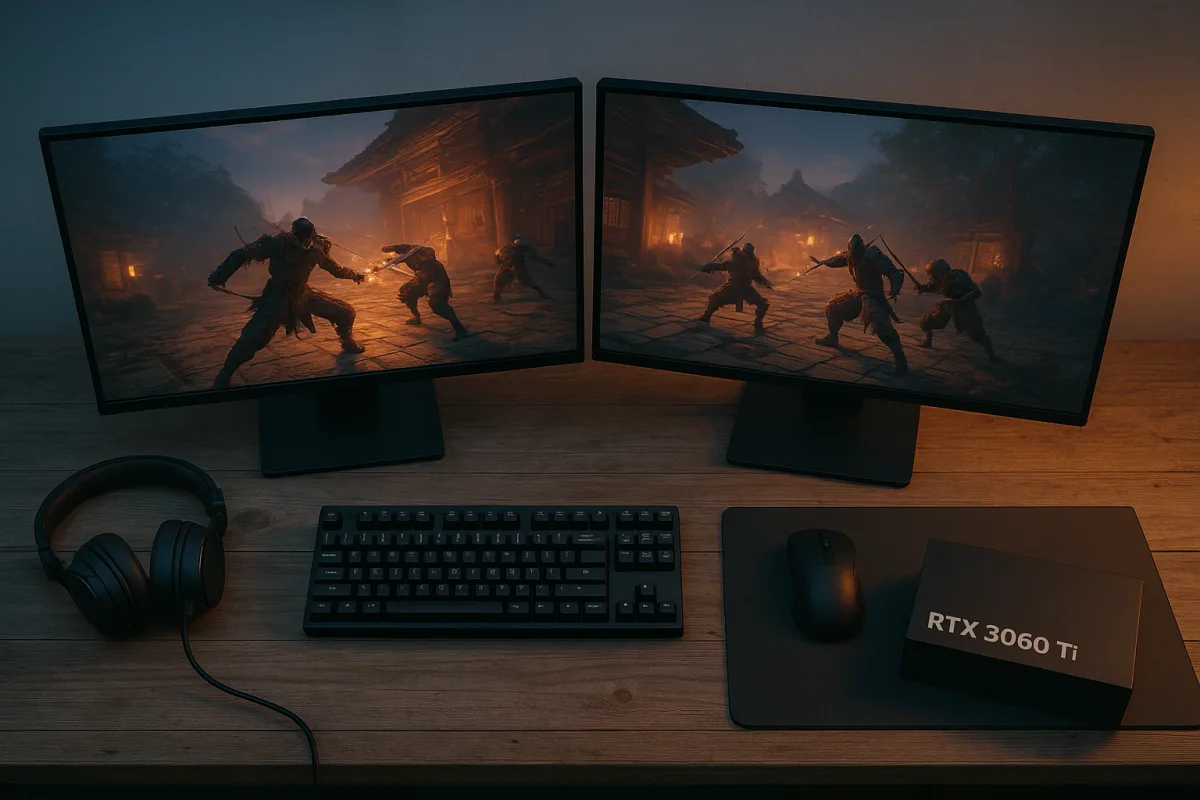
Phantom Blade Zero PC Gameplay and Performance Guide
Explore Phantom Blade Zero PC gameplay, system requirements, and optimization tips to ensure smooth performance and master combat mechanics.
Phantom Blade Zero Gameplay Guide: Combat, Weapons, and Tips
Learn key Phantom Blade Zero gameplay tips, weapon upgrade strategies, and difficulty advice to master combat and quests.