
Nvidia CEO Jensen Huang Resignation and Industry Impact
Explore Nvidia CEO Jensen Huang's resignation and its impact on Nvidia's gaming GPUs, leadership, and PC gaming industry outlook.
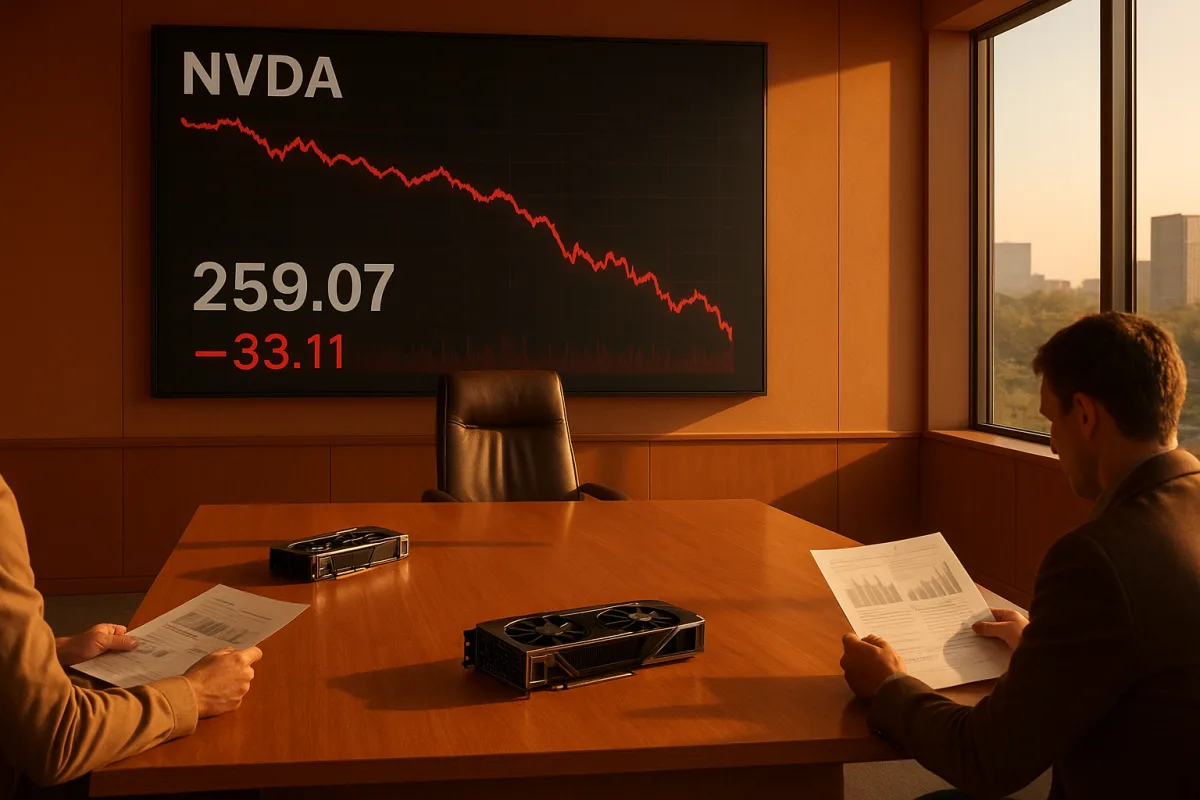
November 12 changed Nvidia’s public face
On November 12, 2026, Nvidia founder Jensen Huang resigned as president, chief executive officer, and board member, effective immediately. The departure followed allegations concerning affairs, one involving Alice Huang, a Chinese national connected to Singapore-based cloud company Megaspeed. [3]
Nvidia appointed executive vice president and CFO Colette Kress as interim CEO while its board considers internal and external candidates. Kress has been Nvidia’s finance chief since 2013 and previously held finance roles at Cisco and Microsoft. [3]
The company’s announcement promises that operations, customer commitments, and its technology roadmap will continue without interruption. That is the corporate version of a status update, not a patch note with dates, products, and known issues. [2]
No public statement identifies changes to GeForce GPU launches, driver development, Nintendo hardware support, game-studio arrangements, or AI hardware allocation. Nvidia technology powers the Nintendo Switch and Switch 2, while Game Developer reports Nvidia holds roughly 95 percent of the consumer GPU market. [1]
That market position explains the anxiety. A CEO exit at a company this central to PC graphics would normally be boardroom news, but this case reaches into export restrictions, alleged chip diversion, and the supply chain behind Nvidia’s AI business.
The mechanism to watch: chip diversion
The core system here is not Jensen Huang’s personal conduct. It is the route a high-demand Nvidia chip takes from Nvidia to an approved buyer, through servers or cloud infrastructure, and potentially into a market restricted by United States export controls.
Megaspeed sits at the center of the allegations because it reportedly bought more than $4.8 billion in Nvidia chips and servers. U.S. intelligence agencies suspect the company of helping divert restricted Nvidia hardware to China. [3]
The reported allegation is that approximately $2 billion in AI chips was smuggled into China through that network. The FBI and U.S. intelligence agencies are investigating, while President Donald Trump has publicly confirmed FBI involvement. [2]
Alice Huang, who has no family relation to Jensen Huang, was a former Megaspeed executive. Reports describe her as a suspected Chinese intelligence asset, while a Chinese Embassy spokesperson in Washington called the allegations baseless smears. [3]
That leaves several unresolved layers. Investigators must determine whether restricted hardware changed hands, whether Nvidia’s customer checks missed warning signs, whether company information was compromised, and whether any executives knew enough to create legal exposure.
Those questions affect Nvidia differently from a bad quarter or an underwhelming graphics card launch. A weak GPU launch can be answered with a price cut, a driver update, or a faster successor. Export-control scrutiny can involve investigations, blocked sales, customer reviews, and government restrictions.
Nvidia’s gaming business is part of the same corporation, but no published report ties this investigation to a specific GeForce product line. There is no confirmation that RTX supply, driver releases, game bundles, or PC graphics-card pricing have changed because of Huang’s resignation.
That caveat should temper both the publisher-style reassurance and the community panic. You should not read “operations continue” as proof that every future shipment will be untouched, but you also should not read an FBI investigation as a confirmed RTX shortage.
The risk is indirect. If a major customer channel is investigated or restricted, Nvidia may face tougher reviews of large chip sales and overseas relationships, particularly in its AI data-center business, where Game Developer estimates it supplies roughly 75 percent of GPUs. [1]
For gaming players, that matters because Nvidia’s AI push has already made its hardware unusually important across the industry. Polygon reported that demand and scarcity around Nvidia products had contributed to higher console and peripheral prices, though it did not tie a specific retail increase to this scandal. [3]
Why the market-cap number looks apocalyptic
Nvidia shares closed at $173.73 on November 11 and fell to roughly $159 in after-hours trading following reports that Huang could be forced out. That is an 8.6 percent drop in hours, not an 8.6 percent reduction in Nvidia’s factories or chip inventory. [4]
Market capitalization is the company’s share price multiplied by its outstanding shares. When the share price falls, that calculation falls with it, even if the company has not spent that amount of cash or destroyed that amount of hardware.
Nvidia’s market value peaked around $5.78 trillion on October 6, then dropped by approximately $1.4 trillion over two weeks as the scandal developed. Axios reported the broader selloff rattled technology stocks beyond Nvidia itself. [1]
Different reports use different clocks. Fortune put Nvidia’s loss at $450 billion since Huang’s November 8 affair admission, while other coverage cited possible future losses based on analysts’ stock-drop scenarios. [6]
Those figures are not competing bills that Nvidia must pay. They describe changing investor expectations, from the narrower period after Huang’s admission to the wider fall from Nvidia’s October valuation peak.
The number still matters because Nvidia’s value has become tied closely to confidence in its leadership, AI growth, and ability to sell advanced hardware within American trade rules. A company trading at a premium is vulnerable when the story supporting that premium cracks.
For your next graphics-card purchase, though, stock-market losses do not map cleanly onto MSRP. Nvidia has not announced a price change, retailer prices have not been attributed to the resignation, and no specific gaming GPU shortage has been confirmed.
We would not rush out to buy a card because of this news. We would still buy based on the card’s street price, its performance in the games you play, the VRAM it offers, and whether competing hardware moves the value needle.
Kress inherits a company built around Huang
Huang co-founded Nvidia in 1993 and remained the company’s defining public figure for 33 years. His leather-jacket keynote persona became part of Nvidia’s identity in a way most corporate CEOs never manage. [2]
Kress enters from the finance side, not as a newly imported turnaround executive. Nvidia’s board says she understands its customers, operations, financial position, and technology roadmap, and says it has full confidence in her and the leadership team. [2]
That familiarity may help prevent an immediate management freeze. It does not answer the longer-term question of who makes the calls on Nvidia’s next major strategic bets, relationships with governments, and the balance between gaming and data-center investment.
The board also faces governance criticism. Mint characterized the affair allegations, the investigation, and Nvidia’s succession uncertainty as exposing a governance vacuum at a company whose founder had become unusually central to its direction. [8]
Nvidia reportedly said early in the controversy that it had found no evidence that company secrets were compromised. That statement came before the investigations were complete, making it an awkward assurance to lean on while the FBI inquiry remains active. [3]
Another allegation concerns a relationship with a subordinate Nvidia executive, reportedly a violation of the company’s code of conduct. The board met to consider Huang’s removal before he resigned, according to Eurogamer’s account of Nvidia’s announcement. [2]
Kress has not published a plan specifically for gaming GPUs, developer support, or AI-chip distribution during the leadership transition. Until she does, claims that she will protect GeForce, shift production, or overhaul Nvidia’s gaming priorities are guesses wearing business-casual clothes.
What this means for games, not investor theater
Games are increasingly caught inside the same AI conversation, but the details matter. CD Projekt Red used Respeecher’s generative-AI voice treatment, with actor Jacek Rozenek’s consent, to restore the earlier tone of Geralt’s Polish voice in The Witcher 3 expansion Songs of the Past. [6]
That work shows why accelerated computing and AI are not distant corporate categories for game players. It does not establish any connection between CD Projekt Red’s voice work and Nvidia’s investigation, and none has been published.
Players have also seen what an actual service disruption looks like. FromSoftware took Dark Souls 2 and Dark Souls 3 multiplayer offline for nearly two weeks over an unspecified server issue before restoring online features. [8]
Nvidia has announced no equivalent interruption. There is no notice that GeForce drivers are paused, that game optimization programs are suspended, or that Switch production has been affected. Treat those absent notices as absent, not secretly implied.
The industry has long understood how hardware leverage can shape games. Former EA founder Trip Hawkins told Polygon that EA reverse-engineered the Sega Genesis, using that leverage to negotiate better terms with Sega for Madden-era releases. [5]
Nvidia’s position is larger and more regulated, but the principle is familiar: control over a critical layer of hardware gives a company enormous influence, while failures at that layer spread well beyond one executive’s office. The outcome now rests with investigators, Nvidia’s board, regulators, and customers.
For now, the best player response is boring, which is usually the right response. Watch for Nvidia’s next product announcements, Kress’s first concrete roadmap statements, and any official finding on Megaspeed, then judge the hardware in front of you by price and performance.
Frequently Asked Questions
Why did Nvidia CEO Jensen Huang resign?
Jensen Huang resigned following revelations of an extramarital affair with Alice Huang, a Chinese national linked to Singapore-based Megaspeed, which U.S. intelligence suspects of smuggling Nvidia chips to China. The resignation came amid an FBI investigation into alleged espionage and export-control violations connected to these events.
Who is Nvidia's interim CEO after Jensen Huang?
Nvidia appointed Colette Kress, the company’s executive vice president and chief financial officer since 2013, as interim CEO. She previously held finance roles at Cisco and Microsoft and will lead Nvidia while the board searches for a permanent replacement.
How does Jensen Huang's resignation affect Nvidia's gaming GPUs?
There have been no announcements of changes to Nvidia’s GeForce products, gaming GPU roadmap, or related partnerships. Operations and technology development are expected to continue without interruption, so no confirmed impact on gaming GPUs has been reported.
Will Nvidia GPU prices or availability change after Huang's resignation?
No direct confirmation links Huang’s resignation to changes in GPU pricing or availability. However, ongoing investigations and export-control scrutiny could indirectly affect supply chains or sales channels, but so far, no specific price hikes or shortages have been confirmed.
What is the impact of Nvidia CEO resignation on PC gaming hardware?
The resignation itself has not caused confirmed disruptions in PC gaming hardware. The main concern is the broader investigation into chip diversion and export controls, which could lead to regulatory restrictions affecting Nvidia’s supply and partnerships, but no immediate hardware impact has been reported.
How we researched this
This article was assembled from 8 published articles, 11 cited references.
Nothing here is based on hands-on testing. Where a figure or finding appears, it belongs to the source cited beside it, and the writing says so rather than implying otherwise. Every source is listed below so you can check it.
Sources
Nvidia CEO Jensen Huang resigns after potentially damaging marital affairs, Game Developer
After days of controversy, Nvidia CEO Jensen Huang has resigned, Eurogamer
Nvidia CEO Jensen Huang Resigns Amid Alleged Spying Scandal, Polygon
After days of controversy, Nvidia CEO Jensen Huang has resigned, Eurogamer
Sega Almost Had a Legit Madden Competitor, Until EA 'Sabotaged' It, Polygon
What we know - and what we don't - as Nvidia investigates an alleged spy plot involving its CEO
US intelligence believes Jensen Huang had affair with Chinese spy in honeypot operation
The Spy Scandal That Lays Bare Nvidia’s Governance Vacuum | Mint
Related Articles
Steam Concurrent User Record and Market Trends in October
Explore Steam's October 2026 concurrent user record and what it means for PC gaming trends and developers.
Xbox layoffs and next-gen console pricing update 2026
Explore Xbox layoffs, Project Helix pricing rumors, and upcoming service changes affecting gamers and developers in 2026.

AI Cloning in Game Development
Explore how AI cloning concerns affect game development and playtests, and what studios do to protect their work before launch.
The Witcher 3 Remastered vs Warhammer 40,000 Dawn of War 4
Compare The Witcher 3 Remastered and Warhammer 40,000 Dawn of War 4 for PC: release dates, gameplay, PC specs, and which RPG or RTS to choose.