
Minecraft Dungeons 2 Review
Read our Minecraft Dungeons 2 review covering improvements, gameplay, co-op, and PC launch issues to help you decide if it’s worth buying.
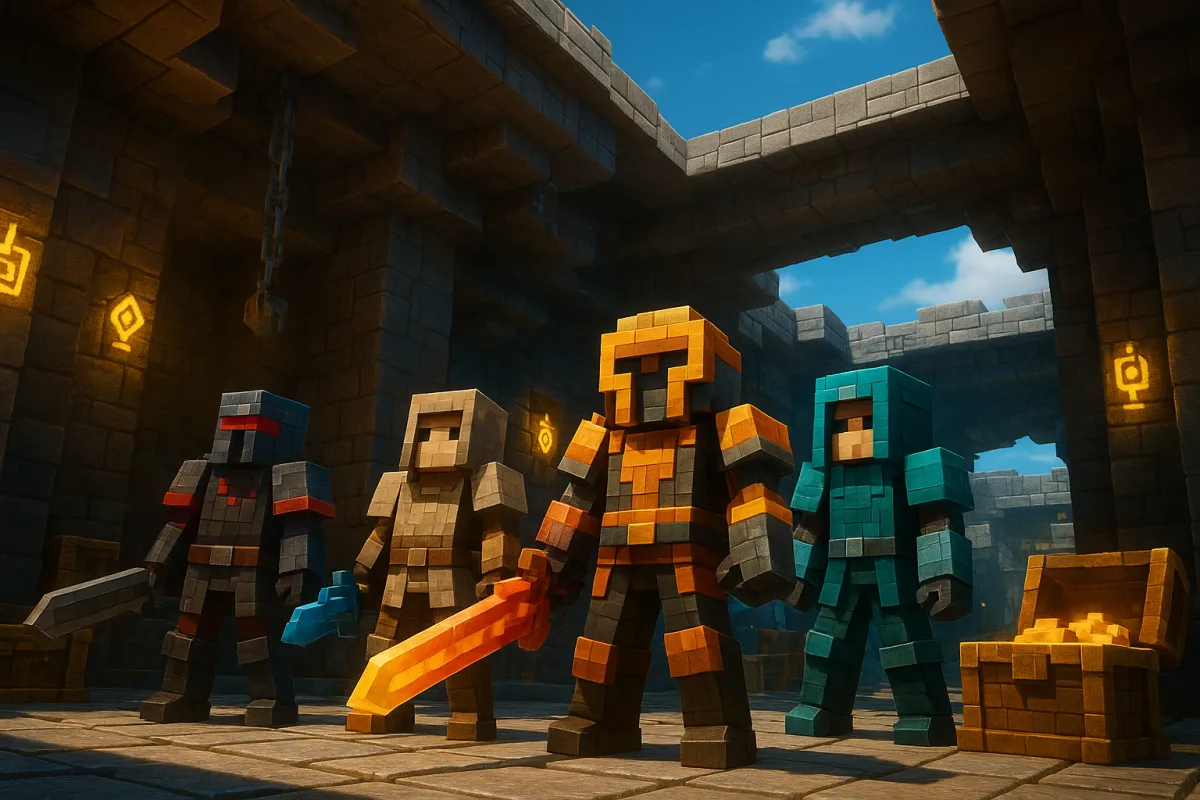
The decision: buy Minecraft Dungeons II, or stick with the original?
This is not really a fight between two entirely different action RPGs. Minecraft Dungeons II is a sequel that understands several of the original game’s weaknesses, then fixes enough of them to make the first game feel like an early draft.
The choice is straightforward. Buy Minecraft Dungeons II if you want a low-pressure co-op loot game with more room to make a build your own. Stick with the original Minecraft Dungeons if you prefer its quick, mission-based structure, already own it, or want to avoid a rough PC launch.
The sequel released on September 29, 2026, so anyone claiming its endgame will sustain players for months is guessing. There are no post-launch patches or expansions yet, and no announced timetable for technical fixes. [1][6][7]
Minecraft Dungeons II Standard Edition is $29.99, while the $49.99 Deluxe Edition includes additional content. It is also included with Xbox Game Pass at launch. [1][2] That makes the subscription route the sensible way to sample it, particularly given current PC reports.
The original Minecraft Dungeons has no new purchase price supplied in the research, and pricing varies by storefront and edition. For an existing owner, though, it is effectively the cheaper option because its cost is already sunk.
Head-to-head: Minecraft Dungeons II versus Minecraft Dungeons
| Criterion | Minecraft Dungeons II | Original Minecraft Dungeons | Better option |
|---|---|---|---|
| Entry price and access | $29.99 Standard, $49.99 Deluxe, or Xbox Game Pass. [[1]](https://dungeons2db.com/guide/release-time-price-editions/?utm_source=openai "Dungeons II Release Time, Price and Editions | Dungeons2DB")[[2]](https://afkjournal.com/news/minecraft-dungeons-ii-release-date-reviews-game-pass?utm_source=openai "Minecraft Dungeons II Release Date, Reviews and Game Pass | AFK Journal") |
| World structure | Interconnected Overworld, side quests, dungeons and vertical exploration. [4][15] | Separate mission-select levels with a more direct arcade rhythm. | Sequel |
| Character building | Four armor slots, three active artifacts, passive talismans and enchantments. [3][4] | Simpler gear setup with less room for build identity. | Sequel |
| Combat and movement | Jumping and jump attacks add mobility, platforming and crowd-control options. | Basic dodge, melee and ranged combat without jumping. | Sequel |
| Loot progression | More build potential, but progression is still RNG-heavy and key enchantment options arrive too slowly. | More immediately legible, but far thinner long-term. | Close, sequel has the higher ceiling |
| Co-op role variety | Better potential for elemental, soul, ranged and support-adjacent setups. | Players converge on similar toolkits and combat roles. | Sequel |
| Campaign and story | More connected to Minecraft’s wider world, but still simple and lightly characterised. | Barebones Arch-Illager chase. | Sequel |
| Endgame | Soul Storm activities, repeat bosses, dungeons and loot hunts, though the loop is currently limited. | Replayable missions and difficulty progression, later expanded by DLC. | Close |
| PC technical state | Launch reports include crashes, black screens, Unreal Engine errors, controller problems, blur and flickering. [9][10][11] | Mature, known quantity compared with the sequel’s launch state. | Original |
| Best fit | New or returning players who want co-op progression and exploration. | Players who want short sessions and lower friction. | Depends on player |
1. Price and access: the sequel is easier to try than to recommend outright
Minecraft Dungeons II has the clearer entry proposition. The Standard Edition costs $29.99, the Deluxe Edition costs $49.99, and Game Pass includes the game from launch. [1][2] For a family co-op game, that subscription option matters more than the Deluxe upsell.
The Deluxe edition only makes sense for a player already certain they want the added content. Since the game is one day old at the research cutoff, there is no evidence yet that its future content cadence will justify paying extra early.
The original Minecraft Dungeons wins this category for players who already own it. It remains a perfectly functional lightweight dungeon crawler, and the sequel’s improvements are not so radical that they invalidate the older game overnight.
For a new buyer paying cash, Minecraft Dungeons II is the better deal on paper. For a cautious PC player, Game Pass is the sensible hedge, not because the game is bad, but because launch stability is a real variable.
2. World design: Minecraft Dungeons II finally gives the journey some shape
The biggest mechanical improvement is the move from isolated missions to an interconnected Overworld. Minecraft Dungeons II links grassy plains, forests, snowy areas, dungeons and the new Sift dimension into a contiguous structure. [4][15]
That change addresses an old problem. The original often felt like a sequence of themed combat corridors selected from a map. It was efficient, but it rarely felt like Minecraft, a game built around wandering off and finding something odd.
The sequel’s jump button is not merely a long-overdue quality-of-life toggle. It changes routing. Players can reach hidden ledges, cross gaps, solve small platforming puzzles and use jump attacks to hit nearby groups, according to GameSpot’s review.
IGN also identifies jumping as a welcome upgrade, though it correctly notes that it does not turn the combat into something fundamentally different. The basic loop remains killing groups, grabbing loot and moving to the next encounter.
GamingBolt is harsher, and there is truth in that criticism. It found that the Overworld can feel underpopulated once the novelty fades, with chests, convoys, world bosses and familiar side objectives doing much of the heavy lifting.
So the sequel wins, comfortably, but not cleanly. It is more pleasant to traverse than the original’s mission board, yet the map does not contain enough dynamic activity to support the grander framing Xbox Wire gives it. [15]
3. Builds and loot: more choice, but not always more control
Minecraft Dungeons II makes the correct call by expanding equipment from one armor piece to helmet, chest plate, leggings and boots. It also adds passive talismans, while retaining three active artifact slots. [3][4]
This is the sequel’s most important improvement for players who read item tooltips instead of skipping them. A poison setup, soul-focused setup or ranged build can now be shaped across several gear slots instead of being mostly dictated by one lucky armor drop.
GameSpot’s reviewer found that lightning, poison and soul builds changed their approach to combat. That is the right direction, because the original’s party members often used the same dodge, weapons and broad tactics, just with different item names.
There is still no traditional skill tree. That keeps the series approachable, but it also means your build is heavily dependent on drops, talismans and enchantment access rather than deliberate level-by-level planning. [3][4]
The one-enchantment-per-item system is upgradable twice, and ranged weapons use individual ammo supplies that recharge. [3] That adds a modest resource decision for ranged players, but it is not the same thing as deep ARPG theorycrafting.
GameSpot’s account of scarce enchantment books is especially useful here. It suggests the good stuff arrives after the campaign, when a poison chain or a tuned soul build can finally click. That is backwards pacing for a game full of dense mob packs.
IGN’s counterpoint is fair too. More slots and enchantments do not automatically prevent an early build from being dictated by the weapons that happen to drop. If you want to be a nimble rogue but find oversized swords, the game can still decide you are the melee player.
This category goes to Minecraft Dungeons II, but with a warning. The sequel quietly buffs experimentation and co-op differentiation, yet it still kills the fantasy of a planned build during much of the campaign. Expect the meta to take weeks, not hours, to settle because players are still discovering combinations and wrestling with scarce tools.
4. Combat and co-op: a better sandbox, not a more advanced brawler
Both games are deliberately simple. Minecraft Dungeons is Diablo-lite in the literal sense: accessible menus, readable loot and an easy rhythm of melee attacks, rolls, ranged shots and artifacts. That remains its strength for mixed-skill groups.
Minecraft Dungeons II adds jump attacks, more equipment interactions and a stronger reason to coordinate party builds. A lightning player clearing lanes while a poison build spreads damage is more distinct than four players all swinging through the same crowd.
The sequel does not add the defensive depth some players may expect. IGN notes the lack of shields or a blocking system, and every player broadly shares the same basic movement and dodge fundamentals. That limits how specialised co-op roles can become.
GamingBolt also reports inconsistent aiming on elevation, occasional failed rolls and an inability to move while shooting. Those are not tiny complaints in a game where ranged spacing and dodge timing are much of the mechanical expression.
Minecraft Dungeons II wins because it has more moving parts, but neither game should be bought as a substitute for Diablo IV, Path of Exile 2 or a demanding action game. The sequel makes the casual loop more interesting. It does not make it less casual.
5. Story and Minecraft identity: the Sift does more work than the villains
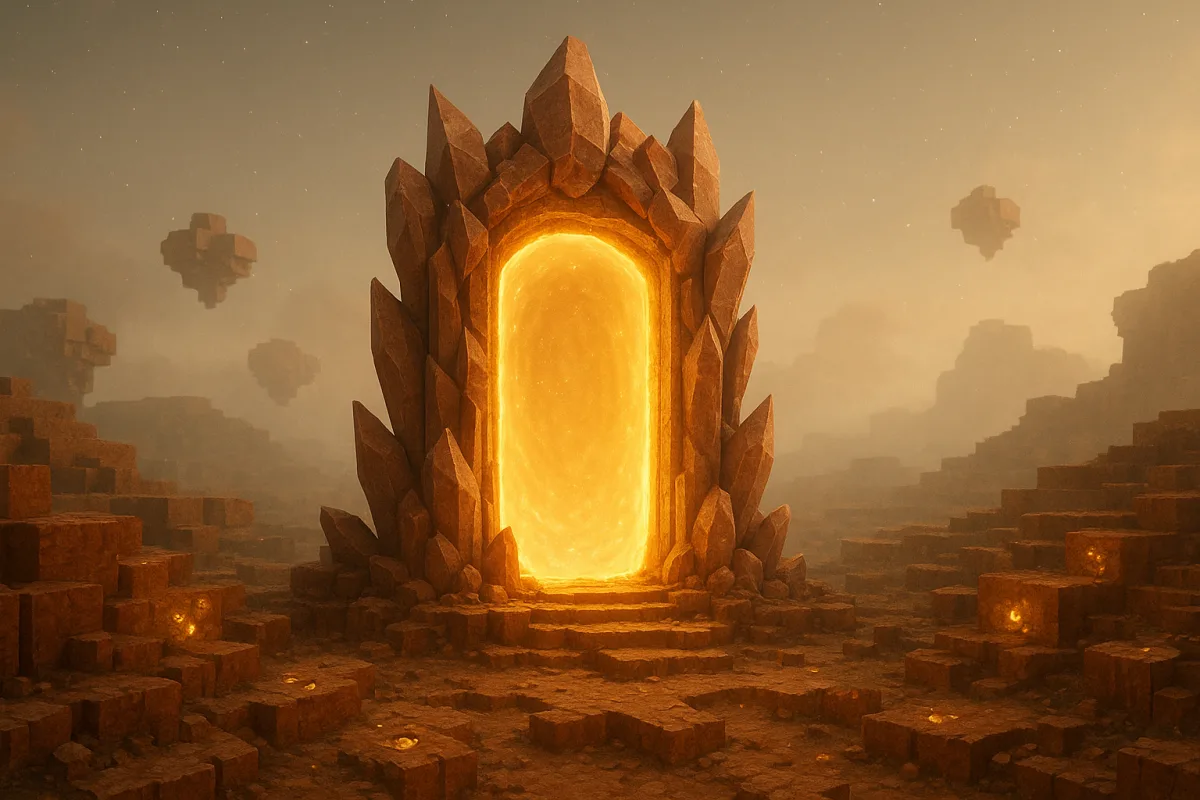
The Sift is Minecraft Dungeons II’s most successful new idea. It is a soul-powered dimension with blue, pink and purple environments, strange friendly creatures, hostile variants and a more serene tone than the series usually reaches.
The dimension also has a confirmed future beyond this spin-off. The Sift is planned for Minecraft’s main editions in 2027, making the sequel feel more deliberately connected to the wider franchise than the original did. [13][15]
GameSpot treats that connection as a major strength, and it is easy to see why. Players curious about Minecraft lore have a reason to inspect the space beyond pure loot value, rather than treating it as another biome palette.
IGN sees the same limitation from the other side. The Sift is visually distinct, but the game mostly asks players to sprint through it killing things. A dimension designed with this much atmosphere naturally makes players wish it were explorable in vanilla Minecraft.
Neither game has a strong story. Minecraft Dungeons II’s Illager High Council is more elaborate than the original’s Arch-Illager setup, but GamingBolt’s complaint lands: narration and familiar errands are not enough to create memorable villains.
The sequel wins on setting rather than narrative. It uses Minecraft imagery more purposefully, but still treats much of that world as decoration around a conventional loot loop.
6. Endgame and technical condition: this is where the original remains defensible
Minecraft Dungeons II offers Soul Storm activities, repeatable boss encounters, side quests, dungeons and higher-tier loot pursuits after the campaign. GameSpot considers that a meaningful expansion of the original’s post-story loop.
IGN is less convinced, describing Soul Storms as more enemies for better gear without enough demanding content that truly requires the improved gear. Both readings can be true: there is more to do, but not necessarily more reason to do it.
At launch, the bigger issue is technical. Steam reviews are Mixed, with 48 percent positive out of 1,074 reviews, while reports cite crashes, black screens, Unreal Engine errors and Xbox or DualSense controller issues on PC. [9][12][14]
Steam Deck and Linux users should be especially cautious. Launch reporting says the game lacks compatibility there and can present a black screen, while other PC reports mention low native rendering resolution, blur and flickering. [10][11]
Critics have been more positive, with a 76 Metacritic average from 26 reviews as of September 30, 2026. [5] That critic and user split is not proof that either side is wrong. It means polished review environments and ordinary PC configurations are currently producing notably different experiences.
No official post-launch patch notes exist yet. [6][7] Do not assume a fix is already live, and do not assume every launch fault will persist. At this point, waiting is a practical recommendation, not an overreaction.
Who each option suits
Minecraft Dungeons II suits players who want an approachable co-op ARPG with more exploration, better build expression and a stronger Minecraft connection than the original. It is the clear pick for Game Pass subscribers, parties willing to tolerate launch bugs, and players happy to hunt talismans and synergies.
Original Minecraft Dungeons suits existing owners, younger or more casual groups, and players who value quick mission sessions over wandering a larger map. It also suits PC players who would rather wait for evidence that Minecraft Dungeons II’s crashes, controller issues and visual problems have been patched.
The honest answer for new buyers is close only because of technical condition. As a game design decision, Minecraft Dungeons II is better. As a purchase decision on PC during launch week, the original is still the safer choice if Game Pass is not available and you cannot tolerate restarts or troubleshooting.
Frequently Asked Questions
What are the main improvements in Minecraft Dungeons 2 compared to the original?
Minecraft Dungeons 2 features a more connected, contiguous Overworld with side quests and vertical exploration enabled by a new jump mechanic. It introduces four armor slots, three active artifacts, passive talismans, and a more complex loot and build system that allows for greater character customization. Combat is enhanced with jump attacks and combos, and the co-op gameplay supports more varied roles.
Is Minecraft Dungeons 2 worth buying for PC players?
If you want a deeper build system and a larger, more immersive world, Minecraft Dungeons 2 is a meaningful upgrade over the original. However, PC players should be cautious due to launch-day technical issues like crashes, black screens, controller problems, and graphical glitches. It may be better to wait for patches or try it via Xbox Game Pass rather than purchasing outright at launch.
How does Minecraft Dungeons 2 handle co-op gameplay?
The sequel offers improved co-op potential by enabling players to adopt more distinct roles, such as elemental, soul, ranged, and support-adjacent setups. This variety contrasts with the original, where players tended to converge on similar combat roles. The game supports low-pressure cooperative loot play in a shared, interconnected world.
What technical issues affect Minecraft Dungeons 2 on PC?
At launch, PC players have reported crashes, black screens, Unreal Engine errors, and controller compatibility problems with Xbox and DualSense controllers. The game also suffers from low native resolution rendering, causing blur and flickering. There is no Steam Deck or Linux support at launch, resulting in black screens on those platforms. No official patches have been released yet.
What are the differences in world structure between Minecraft Dungeons and Minecraft Dungeons 2?
Minecraft Dungeons 2 replaces the original’s discrete mission-select levels with an interconnected Overworld featuring diverse biomes, side quests, dungeons, and vertical exploration. This design creates a more immersive and continuous adventure compared to the original’s more arcade-like, separate mission structure.
How we researched this
This article was assembled from 3 video sources across 3 channels, 15 cited references.
Nothing here is based on hands-on testing. Where a figure or finding appears, it belongs to the source cited beside it, and the writing says so rather than implying otherwise. Every source is listed below so you can check it.
Sources
Minecraft Dungeons 2 Is More Ambitious, More Interesting, And More Flawed - Review — GameSpot
Minecraft Dungeons 2 Review - The Final Verdict — GamingBolt
Minecraft Dungeons II Release Date, Reviews and Game Pass | AFK Journal
Minecraft Dungeons 2 review round-up: Here's what critics are saying
Minecraft Dungeons II Review: Built Better Than Before - Game Informer
Minecraft Dungeons 2: How to Fix Blur and Flickering on Windows and Linux - KosGames
Minecraft sells over 425 million copies and gets its first new dimension in 14 years
How Minecraft Dungeons II's Interconnected World Makes Every Journey an Adventure - XBOX Wire
Watch Minecraft Dungeons 2 Review and Improvements on Youtube
Also from the sources
Related Articles
Halloween The Game Review: Editions, Gameplay, and PC Specs
Read our Halloween The Game review covering editions, gameplay impressions, PC specs, and early access issues before buying.
Silent Hill Townfall Review
Read our Silent Hill Townfall review covering gameplay, editions, Scottish setting, and PC performance insights for this first-person horror game.
The Blood of Dawnwalker Gameplay Mechanics and Time Limit
Explore The Blood of Dawnwalker gameplay mechanics, including its unique 30-day time limit and PC performance insights.
Minecraft The Sift Dimension: First New World in 14+ Years
Discover Minecraft's The Sift dimension, its 2027 release, features, and relation to Minecraft Dungeons II in Java and Bedrock editions.