
GTA 6 Player Behavior and Community Reactions Explained
Explore GTA 6 player behavior, community reactions, and how the launch affected gaming habits and NPC interactions in the new open world.
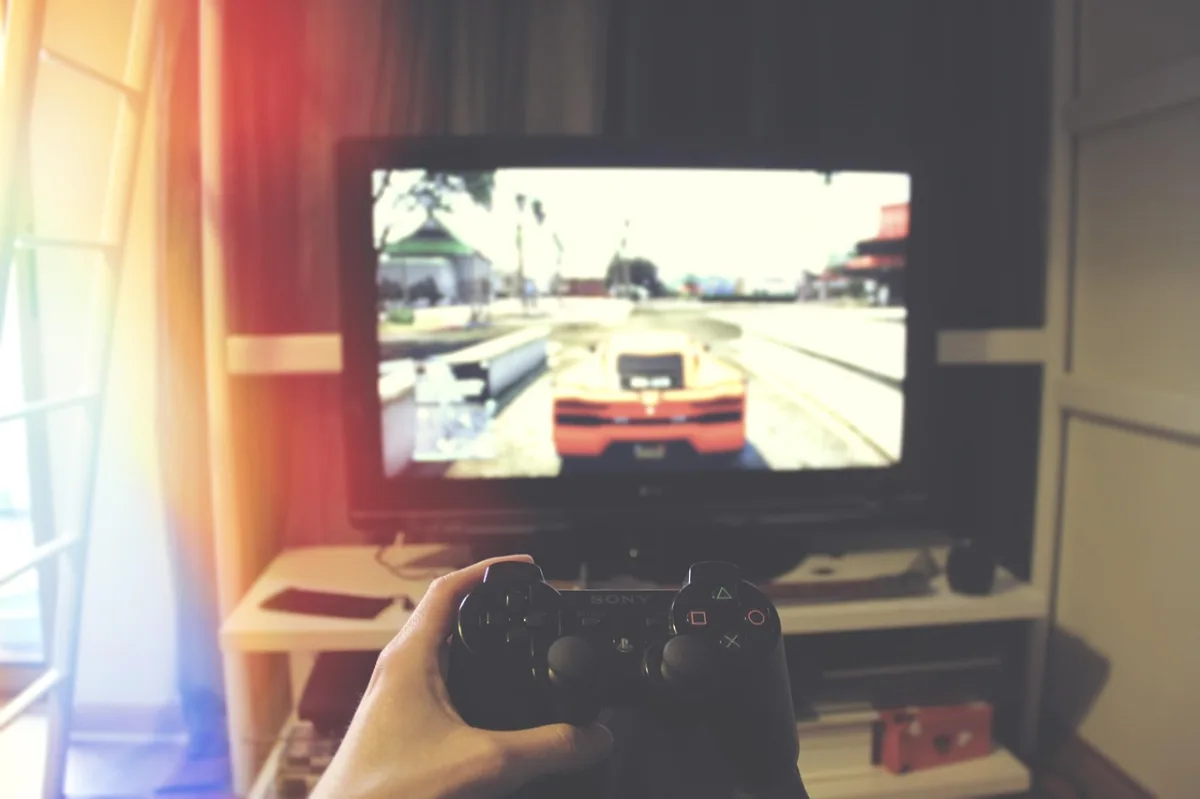
Photo: Pexels via Pixabay
November 20 turned the usual multiplayer schedule upside down
Take-Two reported 32.5 million pre-release GTA 6 sales before launch, then Rockstar said the game generated $3.79 billion in worldwide first-day retail sales on November 20, 2026.[1] That is a huge audience arriving at once, with every streaming clip becoming free discovery for the game.
Sensor Tower estimated 24.6 million digital copies sold on launch day, worth $2.36 billion in digital revenue.[2] Those figures measure different slices of the launch, so they do not neatly combine, but both describe a release large enough to disrupt the normal rotation.
GamesRadar reported Call of Duty daily active users falling 42%, from 7.5 million to 4.4 million, after GTA 6 arrived.[3] Fortnite users on PlayStation and Xbox reportedly fell 28%, from 17.8 million to 12.8 million, before recovering partway across the launch weekend.[3]
That is a meaningful short-term hit to the games that normally absorb every spare evening. It is thin evidence for permanent migration, though: no publisher has released a comparable GTA 6 retention curve or a platform-wide account-level explanation for those declines.
The immediate pattern looks less like players deleting Fortnite or Call of Duty and more like a rare single-player event taking over the group chat. GTA 6 has become the thing players want to see unspoiled, compare notes on, and learn systems for together.
That creates a familiar live-service problem. Your daily quests, seasonal battle pass, and limited-time mode can be perfectly functional, but they lose against the new game when friends are busy discovering its map for the first time.
Chapter 1 has become a roleplaying filter
GTA 6 begins in the Leonida Keys with errands, small criminal work, domestic tasks, and deliberate character setup. Reports place Vice City roughly close to a dozen hours into the game for players following the early structure, far later than some expected from a Grand Theft Auto opening.[8][9]
Former Rockstar technical director Obbe Vermeij called the early complaints legitimate, describing a beginning that can feel closer to a “girlfriend simulator” before the broader sandbox opens.[9] That is blunt, but it identifies the real friction: players arrived expecting instant mayhem.
GamingBolt’s comparison with GTA 5 gets at why the reaction is sharp. GTA 5 moves quickly from a bank robbery into car theft, racing, and shootouts, while GTA 6 spends much longer making you live around Jason and Lucia’s criminal work.
Some players hate that pacing because their sessions are short. If you have 45 minutes after work, a grocery run, house repair, or carefully animated interaction can feel like a progress bar built out of chores.
Another group has made those slow systems the game. ThePawn02 reported players spending dozens of hours roleplaying Chapter 1, fishing, eating, managing routines, and generally treating the Keys as a place to inhabit before treating it as a launchpad.[4]
Streamer Lirik’s extended sessions show the same behavior from a less formal angle. He experimented with fishing, weight gain, gym-related progression, clothes, car details, social encounters, and small environmental inputs that would have been background flavor in older GTA games.
The split is not really between people who “get” the game and people who do not. It is between players who want GTA’s old rapid escalation and those willing to spend time finding out what Rockstar buried in the quieter parts.
We would push the critical path until the game grants you a reliable slice of open-world freedom, then take Chapter 1 at its own pace. The slower material works best when you can leave it, not when it feels like an extended tutorial you must clear.
NPCs are now content, obstacles, and accidental side quests
The NPC reaction layer is doing a lot of work for GTA 6’s community conversation. Players are not only posting spectacular crashes or police chases, they are sharing strange conversations, interruptions, animal encounters, shop interactions, and the little failures caused by treating people like set dressing.
Rockstar veteran Phil Hooker reportedly spent two hours diverted by chained NPC events instead of advancing missions.[10] That is precisely the kind of anecdote designers love and players sometimes resent, depending on whether they were looking for a story or a checklist.
The difference is agency. An NPC derailment feels great when it creates a player-authored anecdote, and awful when it blocks the thing you opened the game to do. GTA 6 appears to generate both reactions, often from the same simulation systems.
Its criminal profile system is part of that equation. PC Gamer reports that the system tracks how you behave and affects the way people and systems respond, meaning petty actions can carry social consequences beyond a temporary wanted level.[6]
That nudges players away from GTA 5’s disposable-chaos rhythm. You can still cause trouble, but the game wants you to consider witnesses, police response, repeated behavior, and whether an easy score creates problems that outlast the cash pickup.
The community has responded by treating the simulation as a rule set to probe. Eurogamer highlighted players using beer crates, bottles, roadkill, and lizards as quiet non-lethal projectiles during robberies, often avoiding the louder escalation of a gunfight.
A beer crate effectively gives you multiple throwable objects in one pickup, which makes it a goofy but efficient robbery tool. Destiny Guide also documents non-lethal takedowns, disarming, and adrenaline systems that support a more controlled approach to combat.[5]
That is the early meta forming in miniature. The first week is about discovering that an immersive system exists, the next is about turning it into a repeatable route, and then players start optimizing the fun out of it.
Lirik had already noticed this transition around police escapes. Initial chases feel tense because players are learning sight lines and search behavior, but efficient methods soon emerge, including escaping on foot after breaking visual contact.
Rockstar has some insulation against that flattening effect. Its senior design director said locations that show as completed can still be hit repeatedly through different approaches, which gives heists and criminal spaces a chance to retain value after their first clear.[7]
For your own game, this is the feature to steal, not the hundreds of animations. Give players several valid approaches, then make the systems react enough that repeating a location produces a different story instead of a shorter commute.
“Realism” is popular until it gets between the player and the fun
The early complaints are not mainly about visual fidelity. Players are arguing over deliberate animations, stricter police behavior, refueling and routine systems, and a more resistant world that asks them to slow down before they can get back to nonsense.[11]
That reaction makes sense after GTA 5 and GTA Online trained players to expect immediate vehicles, weapons, money, and chaos. GTA 6 is asking for patience from an audience that has spent more than a decade learning the opposite muscle memory.
The strongest version of Rockstar’s approach is a system that makes crime feel risky before rewarding skill. Quiet robberies, disarms, witness management, and police evasion can all become a better game than walking into every convenience store with an assault rifle.
The weaker version is realism as friction for its own sake. Mandatory button prompts, lengthy contextual animations, or consequences that arrive without clear feedback turn an impressive simulation into a game that feels like it is scolding you for playing it.
This is why the non-lethal robbery clips matter beyond their joke value. They show players trying to meet the game where it is, finding tools that respect its rules while also restoring the quick, mischievous improvisation people associate with GTA.
We would not build a project around “maximum realism” as a pitch. Build around readable consequences, then let routine activities create bonuses, relationships, access, or comedy for the people who want them.
Technical problems are competing with the immersion pitch
GTA 6’s simulation is ambitious, but launch-week clips have also documented crashes, freezes, flickering, mission failures, clothing pop-in, floating objects, and NPC pathing problems. Several reports list progression-blocking issues that can force a replay or reload.[12][13]
The first-person camera glitch is especially nasty because it can interfere with animations and progression, with affected players needing to reload an earlier save to escape it.[18] That is a bug with real time cost, not a funny physics clip.
Rockstar has issued patches aimed at crashes, autosave problems, and mission bugs, but bug trackers continue to catalog issues across the launch build.[12][16] If your save state or mission scripting breaks, all that carefully built social simulation stops being believable very quickly.
Performance is another sore point. GTA 6 targets 30 fps on consoles, and reporting around the Xbox Series X frame-rate bypass glitch found an unstable average around 36 fps with frequent drops, hardly a hidden performance mode worth chasing.[15]
The friction is especially visible because the game asks players to admire small details. A slow walk through a bar, a fishing minigame, or a tense foot escape gains value from animation and atmosphere, so stutter and input complaints cut directly against the design.
PC players are currently watching this from outside. GTA 6 is officially available on PlayStation 5 and Xbox Series X|S, with no announced PC release date, PC version, or system requirements.[17]
Do not read recent RTX 5060 desktop deals around $964 or RTX 5070 systems around $1,700 as GTA 6 buying advice. Those are broader Black Friday gaming-PC prices, and Rockstar has not published anything that ties a future PC port to either specification.
The other games are facing a temporary attention tax
Kotaku’s look inside GTA Online lobbies after launch found smaller sessions than usual, repeat matchmaking into the same rooms, and a noticeable absence of many high-level regulars. Some were plainly in Vice City, while others were still waiting for payday.[7]
Price is a real limiter here. Players in Kotaku’s GTA Online sessions repeatedly described $80 as too expensive, with several saying they wanted GTA 6 but planned to wait, keep playing GTA Online, or finally start GTA 5’s multiplayer mode instead.[7]
That delay is useful context for the player-base panic around Call of Duty and Fortnite. A giant launch can drain active users this week, then keep pulling in a second wave as players save money, avoid spoilers, or wait for patches.
It also means GTA Online remains a meaningful holding area instead of a dead predecessor. Some players prefer its social chaos, some dislike GTA 6’s deliberate opening, and some simply cannot justify an $80 single-player game immediately.
For competitors, the response should be retention work, not a desperate imitation of GTA’s tone. A well-timed event, generous catch-up progression, and a reason for a friend group to return can hold players until the launch-week fascination becomes routine.
For open-world developers, GTA 6’s first weeks offer a cleaner lesson. Build enough density that players can roleplay, optimize, break rules, and tell stories, but reveal the larger playground before slower systems start feeling like a waiting room.
Frequently Asked Questions
How has GTA 6 launch affected player behavior?
The launch of GTA 6 drew a large audience quickly, causing a significant short-term drop in daily active users for other popular games like Call of Duty and Fortnite. However, this shift appears to be temporary, with players overlapping their playtime rather than permanently quitting those games. The launch created a shared event where players want to explore the new game together and discuss its features.
Why are GTA 6 players split on the game's pacing?
Players are divided because GTA 6’s Chapter 1 is deliberately slow, focusing on daily life and character setup for nearly a dozen hours before the full criminal sandbox opens. Some players dislike this pacing as it feels like chores and limits quick action, especially during short play sessions. Others embrace the slower pace, spending dozens of hours roleplaying and engaging with the world’s routines.
What role do NPCs play in GTA 6 player experiences?
NPCs in GTA 6 contribute to immersion by enabling complex interactions and realistic behaviors, which encourage experimentation and storytelling. However, some players find NPCs disruptive due to bugs, unexpected behaviors, and performance issues like frame rate instability. These factors can interrupt gameplay flow and cause frustration despite adding depth to the world.
How did GTA 6 impact player numbers in other games?
Following GTA 6’s launch, Call of Duty experienced a 42% drop in daily players, and Fortnite saw a 28% decline on PlayStation and Xbox platforms, though Fortnite partially recovered over the launch weekend. These declines reflect players temporarily shifting attention rather than permanently leaving those games, as no long-term retention data suggests a permanent migration.
What are common community reactions to GTA 6's Chapter 1?
Community reactions to Chapter 1 are mixed, with some players appreciating the slower, life-simulation style that allows roleplaying and immersion in the Leonida Keys. Others criticize it for feeling too slow and restrictive, comparing it to a "girlfriend simulator" rather than the expected fast-paced criminal gameplay. This split highlights differing player expectations about pacing and freedom early in the game.
How we researched this
This article was assembled from 3 video sources across 2 channels, 4 published articles, 18 cited references.
Nothing here is based on hands-on testing. Where a figure or finding appears, it belongs to the source cited beside it, and the writing says so rather than implying otherwise. Every source is listed below so you can check it.
Sources
GTA 6 - Why Do Some GAMERS Feel Something Is OFF With It?, GamingBolt
GTA 6 players are discovering, who needs a gun when it's easier to rob a store with a crate of beer?, Eurogamer
This GTA 6 Moment Is A Trolling Master Class From Rockstar, Polygon
The Plan Was For Mass Effect: Universe To Tell You What Happened To All Your Favorite Characters, Kotaku
'Grand Theft Auto VI' sets record with $3.79B in first-day retail sales, Rockstar Games reports
GTA 6 passes $2.36 billion in estimated launch-day sales - Notebookcheck News
GTA 6 "hit Call of Duty HARD," analyst reports, with a 42% drop in daily players
GTA 6 Gunplay Guide: Non-Lethal Takedowns, Disarming, and Adrenaline, Destiny Guide
Two Hours, Zero Missions: How GTA 6’s NPCs Derailed a Rockstar Veteran - GTA.media
GTA 6 Bugs Tracker: All Known Glitches, Errors, Crashes and Available Fixes
https://www.cnlgaming.com/en/blogs/gta-6-day-one-technical-bugs-glitches
Watch GTA 6 Player Behavior and Community Reactions on Youtube
Also from the sources
Related Articles
Wardogs Launch Impact: Sales, Players, and Server Challenges
Explore the Wardogs launch impact with sales, player peaks, and server issues shaping this multiplayer shooter’s early success.

Wardogs Early Success and Gameplay Insights on PC
Explore Wardogs early success, launch player stats, gameplay mechanics, and PC system requirements in this detailed Early Access overview.
GTA 6 Launch Impact and Reception: Sales, Reviews, and More
Explore GTA 6 launch impact and reception, including sales records, critic reviews, PC release status, and streaming's role in marketing.
World of Warcraft Forever: Community and Tournaments
Explore World of Warcraft Forever's community, beta challenges, tournaments, and Blizzard's management of its evolving MMO platform.