
AI Impact on Game Development and Storefront Approval Delays
Explore AI's impact on game development, storefront delays, and how Steam and itch.io handle AI-generated game content and disclosures.
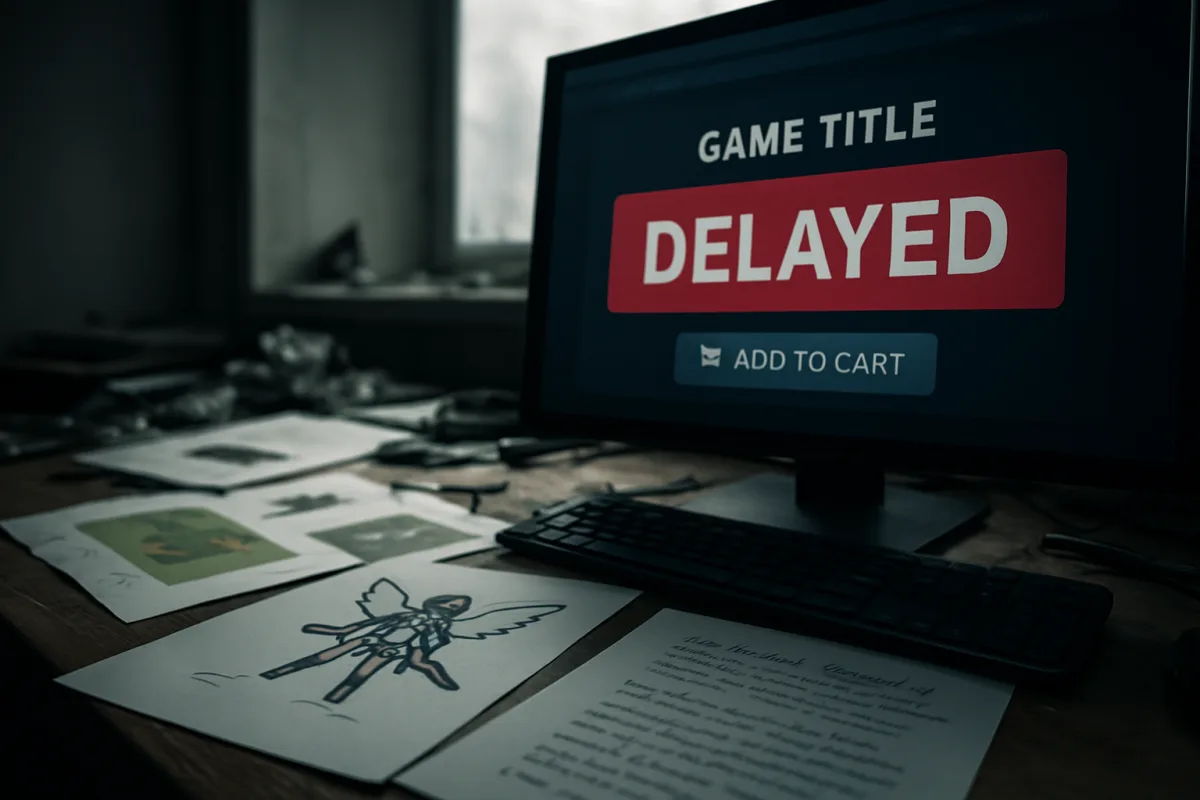
AI Content Is Flooding Storefronts, and Small PC Games Are Paying the Queue Tax
Steam’s queue has become part of the production schedule
On October 12, Studio Daimon submitted Food Devils, its turn-based fantasy tactics game, to Steam for release approval. More than 20 days later, the team still lacked approval and had to delay its planned launch, Rock Paper Shotgun reported.
Valve tells developers that Steam build review typically takes three to five business days, with up to seven if feedback needs resolving. Reports in late 2026 put some waits at as many as 12 business days as Steam handles a significant rise in submissions. [12]
Food Devils’ developers blamed an overwhelmed queue and suspected the new volume of AI-made games was part of it. That specific cause has not been publicly confirmed by Valve, but the submission spike and AI disclosure numbers are moving together.
SteamDB recorded nearly 4,000 Steam releases in October 2026, up from a little over 2,000 during October 2025. A crowded release calendar already makes wishlists, visibility, and launch-week reviews hard to win, before approval delays enter the equation.
For a tiny team, an uncertain approval date wrecks more than a social-media post. It can strand trailer spending, streamer outreach, discount plans, and contractor schedules, while players who wishlisted for a stated date see a game quietly vanish from the calendar.
Your release candidate now needs a buffer. We would submit a stable build at least two weeks before any public date, avoid booking paid promotion until approval lands, and prepare a clear delay post before the silence starts looking like abandonment.
The volume is real, even if “AI slop” is not a metric
An analysis by Reddit user u/ploz counted AI disclosures on roughly 63,600 Steam games published since January 2024. It found 49.9% of games released in October 2026 disclosed AI-generated content, up from 1.7% in January 2024. [1] [2]
Those disclosures do not all describe the same thing. Steam’s labels can cover generated art, text, audio, code, marketing assets, or runtime generation, so a game using placeholder dialogue is being counted beside a game built around generated illustrations.
Still, the scale is difficult to wave away. Pcgame.com’s broader 2026 data set found AI disclosures on 40.1% of new Steam releases, with AI-generated artwork accounting for 63% of disclosed uses. [3]
The distribution tells you where the flood is concentrated. Games with fewer than 10 reviews disclosed AI use 47% of the time, while games with at least 1,000 reviews did so 14% of the time. [3]
That does not mean every small developer is cutting corners, or every popular game is cleanly hand-authored. It means the people most likely to lack a marketing budget are competing in the noisiest end of a much larger catalog.
This is also why community panic often misses the build-level reality. A generated icon or temporary NPC line does not automatically change a game’s combat feel, but thousands of low-effort uploads can still make a hand-built game harder to find.
Steam is disclosing the problem, not banning it
Valve required Steam developers to disclose AI use from January 2024, but it has not introduced an explicit late-2026 policy banning AI-generated content. Valve has acknowledged low-effort AI games and cloning as problems, while rejecting a gatekeeper role over which tools developers may use. [4]
That leaves Steam with a moderation problem instead of a clean technical rule. The store still needs to check whether a submitted game matches its page, functions, avoids malware, and does not obviously trespass on somebody else’s work.
Valve’s stance is understandable up to a point. A tool ban would catch legitimate accessibility workflows, prototyping, and licensed systems alongside asset flips, while a disclosure form costs little to implement and gives buyers some context.
But disclosure is a label, not a filter. If you are a player trying to avoid generated work, Steam still makes you inspect individual store pages, whereas itch.io has moved toward giving you an actual discovery control.
The queue delay evidence is thinner than the release-count evidence: AI submissions plausibly add volume and review complexity, but Valve has not published a breakdown showing exactly how much of the delay comes from AI-generated games.
Itch.io has chosen filtering over passive disclosure
Between August and November 2026, itch.io reportedly deleted multiple terabytes of AI-generated material while daily new game pages rose from about 3,000 to more than 6,000. The surge was driven largely by first-time uploaders. [5]
That is a storefront operations problem at a different scale. itch.io carries experimental games, visual novels, game-jam uploads, tabletop projects, comics, books, soundtracks, and tools, many of which can be published faster than anyone can meaningfully evaluate them.
The platform expanded its AI disclosure rules beyond video games to those other categories. Creators who do not correctly disclose AI use risk being removed from discovery features, which hits search visibility rather than merely adding an informational tag. [6]
Itch.io also added a No AI search filter. For players, that means a direct way to search for work without AI-generated content, and for developers, it makes accurate labeling part of being found by the audience most likely to value human-made assets. [6]
No public case has established that Steam or itch.io rejected a game solely because it used AI or looked low quality. itch.io’s reported deletions show a tougher approach to volume, but its public policy is still built around disclosure and discovery controls.
That makes itch.io the clearer fit if your game’s pitch includes craft, illustration, or a small creator’s voice. A free, 25-minute project like Matajuegos’ documentary game Atuel can live on both Steam and itch.io, but discovery conditions now differ sharply.
Rock Paper Shotgun described Atuel as a free game about Argentina’s Atuel River, with a pay-what-you-want option on itch.io. That kind of concise, authored work needs its store page to reach curious players, not disappear beside thousands of automated uploads.
AI can cut production cost, then hand the bill to QA
The case for generative tools is not imaginary. Small studios report using them most heavily for large environments and open-world content, while estimates place development-cost reductions for open-world teams at 40% to 60%. [8] [9]
One reported comparison says a three-person team can produce a volume of content resembling what a 15-person team could have managed in 2020. [8] That is a capacity claim, not a claim that the result has equivalent art direction, tuning, or reliability.
The bill returns during cleanup. Aplusgamesstudio.com reports that AI-assisted art pipelines still need manual polish and quality assurance, particularly when assets must share a visual language, meet technical specifications, and survive close player inspection. [9]
Games expose inconsistency fast. A prop that looks wrong in a trailer may be survivable, but a mismatched animation, unreadable enemy silhouette, or generated line that contradicts quest logic turns into a bug players encounter repeatedly.
Look at what established games actually sell in their updates. Silica’s 1.0 release added unit formations, more precise orders, AI targeting improvements, vehicle movement work, matchmaking, and expanded Workshop tools, all systems that require testing beyond asset generation.
Likewise, Helldivers 2’s announced Noxious Terminids add poison, movement slowdowns, blurred vision, web projectiles, exploding weak points, and cave combat. Those mechanics need damage tuning, collision checks, readability passes, and live balance work, not just faster content output.
Frostpunk 2’s December 14 Surge DLC also hinges on faction conflict around electricity and new resource systems. The feature list is a reminder that players judge the interactions between systems, not the speed at which a studio filled a content spreadsheet.
The reputation penalty is already part of the calculation
Player skepticism has an observable cost. A Windows Central-cited study found Steam games disclosing AI use averaged four reviews, compared with seven for games without those disclosures, alongside lower user scores. [10]
Reviews are not sales, and the study cannot isolate whether AI use caused the lower reception or whether lower-budget games were already more likely to use it. You should still treat the stigma as a launch-risk variable, not a comment-section fantasy.
If you use AI for internal concepting or rough references, decide early whether anything generated will survive into the shipped build. If it will, build your store-page disclosure and your explanation before your audience finds the label for you.
We would not lead a project’s marketing with “made using AI.” Lead with the game’s hook, then answer disclosure plainly: which materials involved AI, what was edited by people, and what rights you have secured.
Do not use a model to recreate another game’s characters, level layouts, art style, or code structure. Anthropic has added Claude Code restrictions aimed at preventing game cloning, though users also report some generic reverse-engineering tasks being blocked. [7] [11]
That policy is an industry reaction to intellectual-property risk, not a substitute for clearance. A model accepting a prompt does not grant you rights to ship its output, and a model refusing one does not tell you that every adjacent request is safe.
Plan for a smaller, better-finished game
A creator starting now has a choice between using AI to expand scope and using it to protect scope. We would pick the second route, keeping the game short enough that every combat encounter, line, environment, and menu gets human review.
Maintain an asset ledger from day one. Record the tool, prompt category, input material, license, artist edits, and final destination for every AI-assisted asset, because disclosure, takedown disputes, and storefront questions become much easier with a paper trail.
Keep your launch page specific. Screenshots should show real gameplay, trailers should represent the build you submitted, and your tags should describe the actual game, whether it is an RTS-FPS hybrid like Silica or a short environmental documentary like Atuel.
The stores are unlikely to become quiet again soon. Steam is trying to manage a larger queue without banning development tools, while itch.io is deleting bulk uploads and giving players filters, so your advantage is a finished game that can survive scrutiny.
Frequently Asked Questions
How is AI affecting game approval times on Steam?
Steam’s game approval times have increased from the usual three to five business days to as many as 12 days. This delay coincides with a significant rise in submissions, nearly doubling the number of new releases in October 2026 compared to the previous year. While Valve has not confirmed AI-generated games as the direct cause, the surge in AI disclosures aligns with the longer review queues.
What are the challenges of AI-generated content on game storefronts?
The main challenges include an overwhelming volume of submissions, many of which use AI-generated assets, making moderation and quality control more difficult. This flood of AI content can crowd the storefront, making it harder for hand-built games to gain visibility. Additionally, disclosure labels do not filter content effectively, leaving players to manually identify AI-generated games.
How do Steam and itch.io handle AI-generated games?
Steam requires developers to disclose any AI-generated content but does not ban such games or filter them out from discovery. Valve focuses on moderation to ensure games meet basic quality and policy standards but avoids restricting developer tools. In contrast, itch.io actively deletes large amounts of AI-generated material and offers a "No AI" filter, allowing players to exclude AI-generated games from search results.
What disclosure requirements exist for AI content in games?
Since January 2024, Steam mandates developers disclose all generative AI assets used in their games, including art, text, audio, and code. Developers must keep records of the origins and rights of these AI assets. itch.io has expanded disclosure rules to cover multiple content types and enforces compliance by limiting discovery for non-disclosing projects.
How we researched this
This article was assembled from 7 published articles, 12 cited references.
Nothing here is based on hands-on testing. Where a figure or finding appears, it belongs to the source cited beside it, and the writing says so rather than implying otherwise. Every source is listed below so you can check it.
Sources
For GTA 6, Xbox Put an Xbox Series X in an Alligator, Polygon
"Steam's review queue is clogged up by AI slop": Salacious Fire Emblem-ish Food Devils gets a delay because its devs think Valve is inundated with genAI games, Rock Paper Shotgun
Silica, an FPS and RTS hybrid that mixes a smidge of Dune and Helldivers together, has left early access and entered 1.0, Rock Paper Shotgun
Play as water and rain on wildfires in Atuel, a short, free game about the power and vulnerability of nature, Rock Paper Shotgun
Frostpunk 2's The Surge DLC keeps the wintery apocalypse and adds in faction-clash-inducing electricity and sets a seasonally appropriate December release date, Rock Paper Shotgun
Venom-toothed Noxious Terminids are soon to infest Helldivers 2, and it's your noble job to sterilise the galaxy for Super Earth, Rock Paper Shotgun
Mobile Suit Gundam Battle Operation 3 has been announced, marking another attempt at a free-to-play team game after Gundam Evolution's unfortunate fate, Rock Paper Shotgun
Report: Nearly half of October's new Steam games disclosed AI, community count finds · AIGamer
AI on Steam in 2026: 40.1% of new games disclose AI content (statistics)
Itch.io Deletes 'Terabytes' Of AI Slop In Attempt To Counter Surge In Game Uploads - TCGMeta
Itch.io Expands AI Disclosure Filters to Search Results, Gaming.net
Indie Games in the AI Era: How Small Studios Use AI to Compete with AAA | iBuidl.org
Amid Steam's battle with AI clones, Claude stops users from "recreating" games using its tech
Related Articles

AI Cloning in Game Development
Explore how AI cloning concerns affect game development and playtests, and what studios do to protect their work before launch.
Steam Next Fest 2026 AI Controversies in Indie Games
Explore Steam Next Fest 2026 AI controversies, demo risks, and Steam's AI disclosure rules affecting indie game developers.
AI Modding Controversies
Explore AI modding controversies, including authorship disputes, legal risks, and community responses in PC gaming modding scenes.
Xbox Halo restructuring: studio changes and industry impact
Explore Xbox Halo restructuring, studio layoffs, and Activision's new role in Halo's future development and industry impact.