
GTA 6 Getaway Car System: Fuel, Escape, and Police Chases
Explore GTA 6's getaway car system, including fuel gauges, vehicle health, and police chases that reshape robbery escapes.
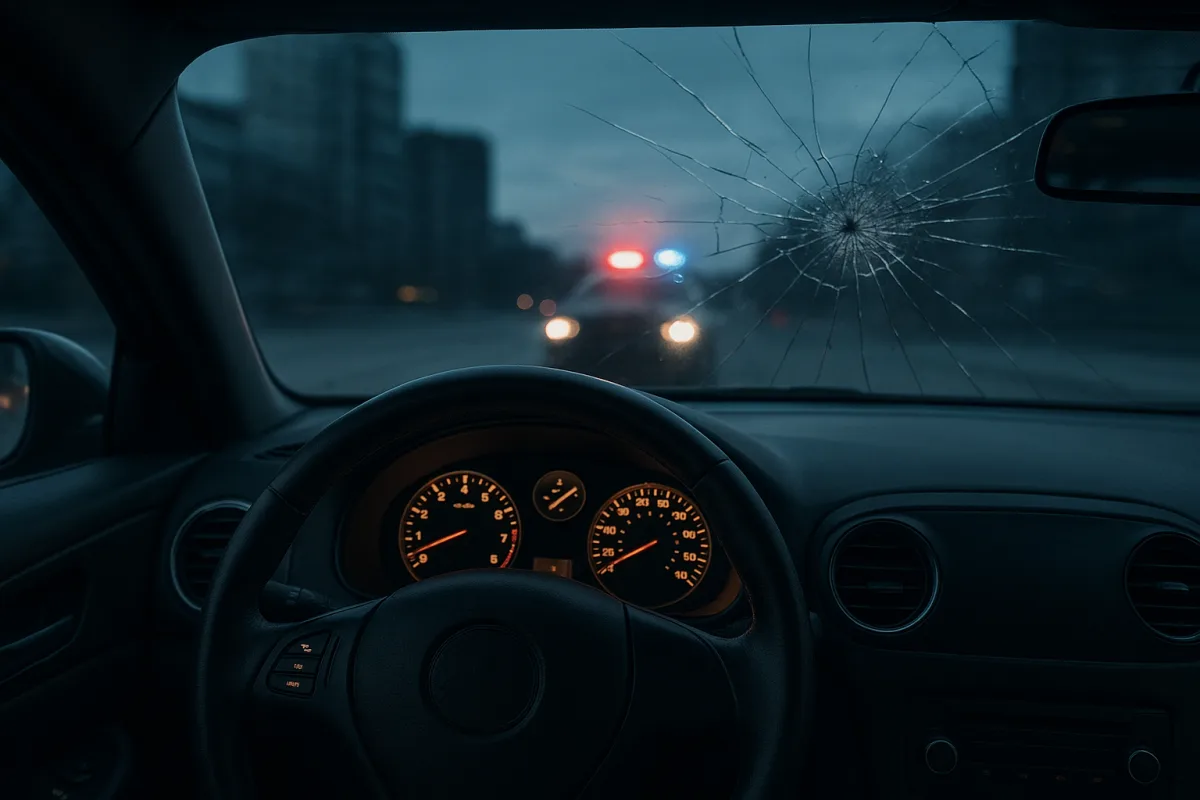
The fuel gauge is really a getaway-car system
November 19, 2026 is GTA 6’s announced release date for PS5 and Xbox Series X|S, according to Rockstar’s announcement reported by Gematsu. The Standard Edition costs $79.99 and the Ultimate Edition costs $99.99, with both sold digitally. [1]
The interesting new number is not that price. It is the fuel gauge, a tiny dashboard feature that changes the logic of stealing cars, choosing routes, and surviving a police pursuit.
Edge’s GTA 6 feature, summarized by Rock Paper Shotgun, reports that cars have fuel gauges and engine-health readouts. Rockstar’s stated intent is lenient: vehicles can cover vast distances before fuel becomes low, and refueling is quick.
That means GTA 6 is not apparently asking players to calculate miles per gallon before driving across Leonida. It is asking them to notice whether the random sedan grabbed during a robbery can actually finish the escape.
Why this changes the familiar GTA escape
Older GTA games trained players to treat vehicles as disposable ammunition. A car burns, flips, gets boxed in, or attracts too much attention, so you pull someone from the driver’s seat and continue moving.
Fuel creates a delayed cost for that habit. A vehicle can look perfect in the moment, with clean bodywork and enough speed to outrun local patrol cars, but its fuel tank may already be nearly empty.
Rock Paper Shotgun’s reading of Edge is that variable fuel amounts add uncertainty to crime sprees. A vehicle taken from an NPC might not carry enough gas to survive the long chase that begins after the robbery.
That uncertainty matters most because GTA 6’s police system is presented as more persistent than the old model of officers materializing near the player. Reported pre-release details describe delayed police arrival and tracking through appearance, clothing, vehicles, CCTV, and companions. [3][4]
A player who abandons a recognizable car can reduce one trail of evidence. But if the replacement vehicle is running on fumes, the escape may end with a stalled engine and the police catching up anyway.
The three costs of choosing the wrong car
Fuel is only one of three overlapping costs. Edge also reports engine-health readouts, meaning a battered vehicle may be mechanically compromised even when it still has enough gas to reach the next county.
The second cost is equipment. Rock Paper Shotgun reports that weapons not currently carried by the character are stored in the car’s trunk, replacing the old GTA logic of protagonists carrying an impossible arsenal in their pockets.
That makes a personal car more than transportation. It becomes a mobile loadout, holding weapons needed when a quiet robbery turns into a loud escape, or when a long pursuit forces Jason and Lucia into a last stand.
The third cost is visibility. A personal vehicle can be prepared, fueled, repaired, and stocked, but police may recognize it. A stolen car may be anonymous, yet unknown fuel and unknown condition make it a gamble.
This is why the system could make preparation meaningful without becoming simulation busywork. Before a job, players may need a reliable vehicle nearby, enough fuel for the planned route, and a trunk containing options for failure.
What decides whether a chase works
The outcome of a GTA 6 escape appears to depend on information management. Police reportedly use line of sight, vehicle changes, disguises, and separating companions as potential ways to disrupt the search. [3][4]
Fuel affects every one of those moves. Breaking line of sight only helps if the new route is drivable. Switching cars only helps if the replacement can travel far enough. Splitting companions only helps if both routes remain viable.
GamingBolt imagines a six-star manhunt spreading across Leonida, with helicopters, waterways, storms, and police escalation. Its video labels those scenarios as personal hopes built from officially revealed material, not confirmation that every proposed system exists.
That distinction is especially important around swamps and boats. Leonida’s wetland imagery makes fanboat escapes easy to picture, but Rockstar has not confirmed that police boats, waterborne pursuit rules, or deeper concealment systems work as GamingBolt imagines.
A hurricane-assisted robbery is also a good GTA fantasy, not a published mechanic. Weather may affect visibility or driving, but Rockstar has not announced that storms lower police detection, alter heist success rates, or create exploitable flooding.
Fuel’s likely place in the robbery loop
The cleanest reading is that GTA 6 wants a robbery to have a before, during, and after. The before involves choosing a car. The during involves keeping the plan quiet or adapting when it collapses.
The after is where fuel becomes relevant. A player who parked a filled, maintained, stocked vehicle nearby has created an exit plan. A player who improvises must accept the risk of a damaged or nearly empty replacement.
Rock Paper Shotgun questions whether the system sits awkwardly between arcade action and full driving simulation. That skepticism is fair, because GTA has historically favored momentum over maintenance, even when its worlds parody real consumer culture.
Still, Rockstar’s apparent compromise has a clear mechanical purpose. Refueling rarely enough to avoid tedium means the gauge becomes a pressure multiplier during crimes, where the consequences of a bad vehicle decision are already high.
The cited reports say refueling is deliberately fast and vehicles travel long distances. That makes gas stations less likely to become mandatory pit stops, and more likely to become contingency points after a messy job. [3][4]
Screenshots show atmosphere, not complete systems
GameSpot counted 99 official GTA 6 screenshots, excluding Ultimate Edition and pre-order images, and organized them by Rockstar’s file names. That catalog is useful for reading Leonida’s texture, but it cannot confirm every gameplay interaction shown.
The Ambrosia screenshots point toward an industrial region of refineries, distilleries, factories, mudding trucks, and the Final Chapter motorcycle club. GameSpot also spotted a gas-station sign with prices reaching about $2.10 per gallon.
That sign is environmental satire, not proof of a full fuel economy. Rockstar may use gas prices for visual comedy, while the actual refueling system could be a simple button prompt with no itemized cost disclosed.
GameSpot’s closer looks also emphasize details such as mud buildup, windshield soap, reflected interiors, chipped fingernails, and changing outfits. Those details support the impression of a denser world, but detail is not automatically systemic depth.
A dirty truck suggests surface accumulation. It does not establish that mud changes tire grip, that clothes need washing, or that every NPC follows a persistent wardrobe schedule. Screenshots are excellent at selling possibilities.
The same caution applies to characters. GameSpot identifies nightclub and recording-studio operator Boobie Ike, small-time operator Brian Heder, his wife Lori, and conspiracy-minded Cal Hampton, who appears around activities including mini golf and pool.
Those images indicate a game packed with places and personalities. They do not establish who gives repeatable jobs, which businesses can be robbed, or whether a named character’s car can be permanently acquired and customized.
GTA’s visual language survives because it is modular
The GTA 6 cover has generated its own kind of community scrutiny, though former Rockstar artist Stephen Bliss has offered a useful correction to claims that he made it. Bliss said he had no involvement.
Bliss worked at Rockstar from 2001 through 2016 and helped establish the series’ promotional identity. He told IGN that GTA 6 retains the box-grid layout and a helicopter in the upper-left corner, a composition he developed.
He called those features references, not authorship. Bliss also credited Anthony Macbain, Rockstar’s former Director of Illustration, and former visualization director Steven Olds, explaining that GTA’s recognizable artwork came from a team rather than one artist.
That helps explain the cover’s strange durability. The grid is a flexible delivery system for a location, a vehicle, an armed threat, a glamorous stranger, and a joke, all before Rockstar reveals how those pieces connect.
Bliss told IGN that the white GTA 3 cover followed the September 11 attacks and took two nights to reorganize into a grid, despite the paintings themselves taking six months. The format could remove images without losing identity.
GTA 6’s brighter Vice City palette fits that inherited language, but it does not mean the game is a return to Vice City’s exact tone. The screenshots pair neon nightlife with industrial Ambrosia, wetlands, cheap gas, and grimy roadside life.
Myths thrive where systems are unclear
IGN’s history of GTA myths shows why fuel, police AI, and screenshot details immediately become rumor fuel. GTA players have spent decades turning rendering limits, glitches, cut content, and vague scenery into hidden-monster theories.
Grand Theft Auto 3’s clipped-wing Dodo became a famous example. IGN reports that players linked its poor flight capability to post-September 11 cuts, while a purported design document instead described a technical compromise for the PS2 streaming pipeline.
San Andreas expanded the available wilderness and therefore the available imagination. IGN notes that ghost cars, falling planes, odd NPC behavior, draw-distance fog, and blurry recordings helped build the enduring Bigfoot myth.
Rockstar co-founder Terry Donovan said there was no Bigfoot in San Andreas, according to IGN. Modders later made the rumor harder to kill by adding Bigfoot to the PC version and passing altered screenshots around as sightings.
The pattern remains recognizable in GTA 6 discussion. A gas gauge becomes proof of a hardcore survival sim, a cover-art helicopter becomes proof of a specific mission, and an unannounced PC build gains invented specifications overnight.
No PC version has been announced, and no official PC system requirements exist. Reports claiming a possible Q1 2027 PC release remain unconfirmed, so projected CPU, GPU, RAM, or SSD requirements are guesses, not buying advice. [2][4]
The same goes for file-size rumors, claims of a $100 Standard Edition, a physical collector’s edition with a disc, Disney World appearing on the map, or a confirmed online-mode launch plan. Rockstar has not published those details. [1][3]
For now, GTA 6’s fuel system offers a better kind of speculation: not whether every gas station is interactive, but how often a prepared escape car saves a job that an impulsive carjacking would otherwise lose.
Frequently Asked Questions
How does the fuel gauge affect getaway cars in GTA 6?
The fuel gauge introduces a new layer of strategy by requiring players to consider whether a stolen or personal vehicle has enough fuel to complete an escape. Vehicles can travel long distances before running low, but a car with little fuel may stall during a police pursuit, making fuel a critical factor in planning getaways.
What role does vehicle condition play in GTA 6 escapes?
Vehicle condition affects the likelihood of a successful escape because damaged cars may have compromised engines even if they still have fuel. Players must weigh the risks of using a battered vehicle that might fail mechanically during a chase versus a well-maintained personal car.
How do police track players during chases in GTA 6?
Police use realistic tracking methods including line of sight, vehicle recognition, clothing, CCTV footage, and the presence of companions. This system encourages players to break visual contact, switch vehicles, use disguises, or separate from companions to evade capture.
What are the costs of choosing the wrong car in GTA 6?
Choosing the wrong car can result in running out of fuel, mechanical failure from poor engine health, or increased visibility to police if the vehicle is known or recognizable. Additionally, stolen cars lack stored weapons, limiting a player's available arsenal during an escape.
How does GTA 6 change the traditional vehicle escape gameplay?
GTA 6 shifts away from treating vehicles as disposable by adding fuel management and engine health, making vehicle choice and preparation more meaningful. Players must plan escapes with a reliable, fueled, and stocked vehicle rather than relying on opportunistic car thefts that may fail due to fuel or condition issues.
How we researched this
This article was assembled from 3 video sources across 3 channels, 3 published articles, 4 cited references.
Nothing here is based on hands-on testing. Where a figure or finding appears, it belongs to the source cited beside it, and the writing says so rather than implying otherwise. Every source is listed below so you can check it.
Sources
Grand Theft Auto 6 - 10 Crazy Ways I Want to Push Its Open World, GamingBolt
Don't worry, GTA 6's cars can drive for ages before their fuel tanks need refilling, leaving me wondering why this motor management's been added at all, Rock Paper Shotgun
Original GTA Artist Says He's 'Flattered' to See His Influence Continue in GTA 6 Cover Art, IGN
Grand Theft Auto Artist Stephen Bliss Explains How He Defined the Series' Iconic Visual Style, IGN
Grand Theft Auto VI pricing, ‘Ultimate Edition’, and pre-order bonuses announced - Gematsu
Watch Grand Theft Auto 6 Analysis and Community Buzz on Youtube
Also from the sources
Related Articles

GTA 6 Extended Gameplay Features and Relationship System
Explore GTA 6 extended gameplay features, including the relationship system, map size, and performance insights for PC and consoles.
Ace Combat 8 Wings of Theve Gameplay and Franchise Revival
Explore Ace Combat 8 Wings of Theve gameplay, new weather mechanics, system requirements, and how it revives the arcade flight combat franchise.
GTA 6 Leaks and Rockstar's Response Explained
Explore the latest GTA 6 leaks, what they reveal, and how Rockstar Games is responding to the ongoing leak campaign.
Valor Mortis system requirements and review
Get detailed Valor Mortis system requirements and an in-depth review covering gameplay, combat, and hardware needs for PC players.