
Sony PlayStation Firmware Updates and Legal News 2026
Get the latest on Sony PlayStation firmware updates and the UK legal case affecting the PlayStation Store in 2026.
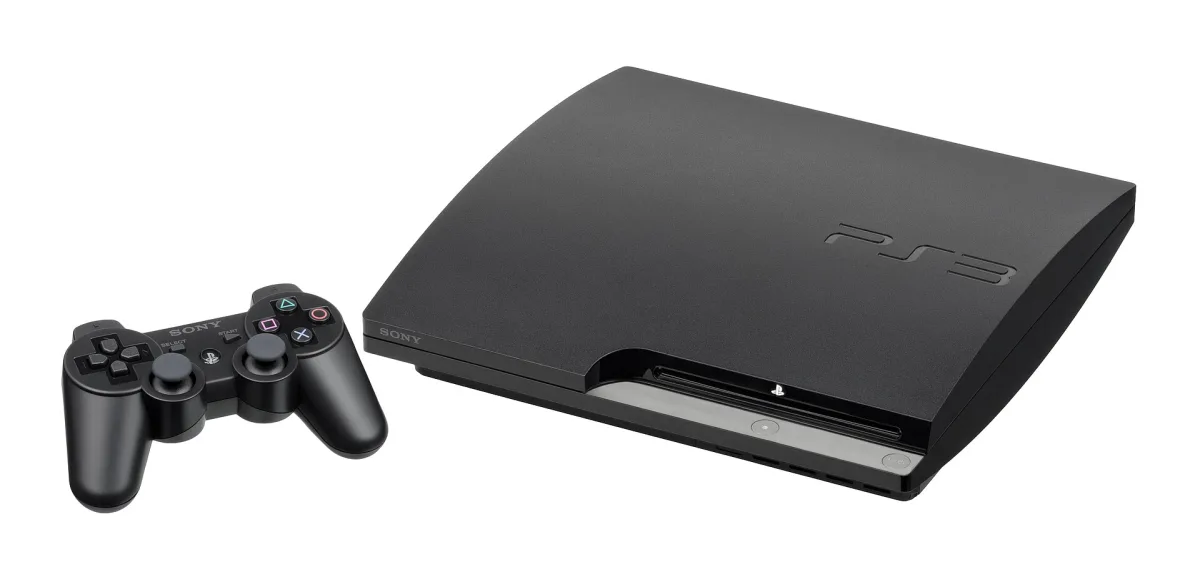
Photo: Evan-Amos, Public domain, via Wikimedia Commons
November 17 brought a court dismissal and a 1.267GB security patch
On November 17, 2026, the UK Competition Appeal Tribunal dismissed the £2 billion PlayStation Store collective action against Sony. The same day, Sony released PS5 system software 26.07-14.23.00, a 1.267GB update containing only “security fixes.” [1] [9]
Neither event came with much detail from Sony. One was a legal win against a large consumer claim, the other a security release timed two days before Grand Theft Auto VI’s November 19 launch.
The pairing is revealing even if it was not coordinated. Sony is defending its closed PlayStation ecosystem from two directions: courtroom arguments that its store economics are anti-competitive, and console exploits that threaten its control of software distribution.
For players, the immediate result is mundane. Your PS5 downloads another firmware update, your existing games continue to work, and no widespread performance, compatibility, or downtime problems have been reported from the recent security-focused releases.
For studios, the result is less mundane. The platform holder is signaling that control over the console, the store, and major-release security remains central to how PlayStation intends to operate through a period of tougher digital-market scrutiny.
Sony beat the £2 billion UK storefront claim, without paying a settlement
The claim began in 2022 on behalf of roughly nine million UK PlayStation owners. Consumer advocate Alex Neill’s PlayStation You Owe Us campaign argued Sony abused a dominant position by restricting digital PlayStation game sales to its own store. [9]
The complaint targeted the familiar platform commission. Sony takes a 30 percent cut from digital game and add-on sales through PlayStation Store, and the claim argued that buyers paid inflated prices because competing stores could not sell console download codes.
The £2 billion figure, roughly $2.6 billion, was a claimed damages target, not money Sony had already set aside for customers. The tribunal dismissed the action on November 17, and consumers received no compensation. [9]
That correction is important because the reported price tag has shifted repeatedly. Kotaku noted earlier reports ranging from $5.9 billion in 2022 to $7.9 billion in 2023, before the £2 billion figure became the headline figure in 2026.
The tribunal found the claim had failed to establish an infringement of competition law. Sony’s defense pointed to competition from Xbox, Nintendo, PC gaming, and physical PlayStation game sales, alongside security concerns around opening console distribution to third-party storefronts. [9]
This is a win for Sony, but it is not a court declaration that every 30 percent console commission is automatically fair. It means this particular UK claim did not meet the legal and economic threshold required to prove unlawful conduct.
The ruling also does not erase pressure on digital storefronts. Valve is still facing a UK collective action seeking £656 million, reported as about $900 million, over allegations of market rigging and excessive Steam commissions. [6]
Sony also settled a separate US case in April 2026 for $7.85 million over digital-store language such as “buy” and “own.” That case is distinct from the dismissed UK commission claim, and it was not a £2 billion consumer payout.
The legal win protects the current PlayStation Store model, for now
Sony’s preferred outcome is clear: one account system, one payment pipeline, one controlled patch channel, and one store that receives a percentage of every digital transaction. The tribunal decision leaves that system intact in the UK.
That matters more as physical media becomes less central to PlayStation’s business. A disc still gives you a retail purchase option, but a downloaded game, cosmetic bundle, expansion, or virtual currency pack generally remains inside Sony’s transaction rules.
For a PC player watching from outside the console wall, this is the part to remember. Steam’s cut, Epic’s lower-cut strategy, Microsoft’s PC store, and direct-launcher experiments create some competition, but console storefronts remain much more tightly controlled.
Sony has a credible technical argument for maintaining control over executable downloads, account systems, and anti-cheat pathways. It also has a commercial interest in preserving its commission, and those two arguments should not be confused.
The current evidence is thin on whether Sony plans any voluntary PlayStation Store opening. The tribunal decision removes one immediate UK threat, but Sony has not announced third-party storefront support, alternative payment systems, or a reduced standard commission.
If you are shipping on PlayStation, we would plan around the existing model. Price your downloadable content with Sony’s revenue share in mind, assume storefront promotion is a negotiated platform opportunity, and avoid a business plan that needs outside PlayStation key sellers.
Firmware 14.23 arrived at a very specific moment
PS5 firmware 26.07-14.23.00 landed November 17 with one official description: security fixes to system software. Sony did not identify the vulnerabilities, name the affected components, or explain which exploits were addressed. [1]
That lack of detail is standard for security patches, but the timing attracted attention. Grand Theft Auto VI is due on November 19, and a current-firmware compromise before the year’s largest console release would be a serious problem for Sony and Rockstar.
The update followed a brisk sequence. Firmware 14.22 arrived about two weeks before 14.23, after firmware 14.20 had released 11 days before that, according to IGN’s reporting on the late-November patch cycle.
The version numbers matter if you follow homebrew. A late-September jailbreak supported PS5 systems on firmware 7.00 through 13.60, including unupdated PS5 Pro consoles, putting a large pool of machines within reach of modified software. [4]
Sony’s October 15 firmware 14.10 blocked modified consoles from accessing PlayStation Network, cutting off a key advantage of a jailbroken machine. Notebookcheck reported that the release targeted the paths used by the Relapse jailbreak, which worked through version 13.60. [3]
That does not make older jailbroken PS5s disappear. It splits the audience instead: an owner can stay on older firmware for homebrew experiments, or update for current online services, game updates, and software that expects the latest system version.
That split is particularly harsh for a game built around an active online ecosystem. A console held back on old firmware may run some old software, but it becomes a poor place to play patches, multiplayer modes, downloadable content, or new launches.
A prominent hacker’s claim to have dumped a game binary on firmware 14.22 helped fuel speculation that Sony rushed 14.23 out in response. The available reporting does not establish a full 14.22 jailbreak or prove Sony patched that specific claim. [1]
GTA VI is the obvious target, but not a confirmed reason
The GTA VI connection is plausible because Rockstar’s release is unusually valuable. A current PlayStation exploit could invite piracy attempts, unauthorized PC conversion efforts, cheats, leaked assets, or account-security problems around a game expected to dominate attention.
Plausible is not confirmed. Sony has not said that firmware 14.23 was made for GTA VI, has not named a GTA-related vulnerability, and has not confirmed that 14.23 is required to play Rockstar’s game.
The stronger evidence is the broader pattern. Sony has moved from updates spaced around general stability and feature work toward fast, quiet security releases when exploit development is publicly accelerating.
Tom’s Hardware reported that a hacker received a $50,000 bug bounty from Sony for reporting an exploit associated with a PS5 Linux path instead of keeping it private for the homebrew scene. [8]
That bounty is a useful marker of Sony’s priorities. The company would rather buy exploit knowledge, patch it, and protect a current platform than let a valuable vulnerability circulate until a public jailbreak turns it into a mass problem.
Jailbreak developers have also been tempering expectations. GamesRadar reported that one PS5 jailbreak developer advised players to “just buy” GTA VI, saying prospects for dumping a game on current 14.xx firmware were poor. [5]
We would not treat one developer’s assessment as a permanent forecast. It does show that Sony’s update-and-network-access strategy is working well enough to raise the effort required for current-console piracy.
What the patch cycle changes for players
If GTA VI is in your launch-week plans, install 14.23 and leave automatic updates enabled. The patch has no announced features, but current system software is the low-friction path for preloads, updates, online checks, and support.
If you own a PS5 kept on legacy firmware for homebrew, make the tradeoff consciously. Updating may close the exploit route you wanted, while staying back can remove access to network services and newer game requirements.
There is no evidence that the recent security patches have damaged ordinary PS5 performance or broad game compatibility. Sony’s lack of vulnerability detail is frustrating, but the user-facing record of the October and November updates is stable so far.
Do not expect firmware notes to tell you whether a given exploit is gone. Security updates are intentionally vague, and exploit developers often need time to test a patch before they can say whether an old route still works.
For everyone else, this is background maintenance. The risk is not that a 1.267GB update ruins your library, it is that delaying it creates an avoidable problem when the game you bought suddenly needs a newer system build.
What developers should take from Sony’s two-front defense
A PlayStation release now lives inside a controlled commercial system and a controlled security system. Your price, downloadable-content plan, patch approval process, multiplayer architecture, and launch timing all depend on rules Sony can change quickly.
Build your certification and day-one patch schedule with buffer. A last-minute firmware release can alter test conditions, require fresh compatibility checks, or change the version most players are running during the narrow window when your launch needs to hold together.
For an online game, avoid assuming old firmware users will remain reachable. Sony’s 14.10 response showed that blocking modified consoles from PlayStation Network is an available tool, and future security actions can narrow that audience further. [3]
For a single-player game, current security is still relevant. Large releases are attractive targets for leaks and unauthorized distribution, while a compromised platform can create support headaches that land on your team even when Sony owns the underlying console issue.
The storefront ruling gives Sony breathing room, not a blank check. UK law is still evolving around digital market behavior, and the continuing Valve case shows that collective challenges to platform fees remain part of the market landscape. [6]
We would build for the PlayStation Store that exists, not the more open one some players hope arrives. Budget for the platform cut, keep PC and console road maps flexible, and make your launch resilient to rapid system updates.
Sony has won room to keep its walls high. The November evidence suggests it intends to use that room, with courtroom defenses for the store and firmware patches for the console, especially when a release is too large to leave exposed.
Frequently Asked Questions
What did the November 17, 2026 PS5 firmware update fix?
The November 17, 2026 PS5 firmware update 26.07-14.23.00 included only unspecified security fixes. Sony did not provide details about the vulnerabilities addressed, but the update arrived two days before the launch of Grand Theft Auto VI, suggesting a possible security-related timing. No widespread user issues were reported following the update.
What was the outcome of the £2 billion UK PlayStation Store legal case?
The £2 billion UK PlayStation Store collective action against Sony was dismissed by the Competition Appeal Tribunal on November 17, 2026. The tribunal found that the claim failed to prove an infringement of competition law, and no compensation was awarded to consumers. This ruling did not result in any financial settlement or payout from Sony.
How do Sony's firmware updates affect PS5 jailbreaks?
Sony’s recent firmware updates, especially version 14.10 released in October 2026, have effectively blocked modified PS5 consoles from accessing the PlayStation Network. These updates close exploits used by jailbreaks, making piracy and unauthorized software less practical on current PS5 software versions. This strategy has reduced the feasibility of running pirated games on the console.
What impact does the UK legal ruling have on PlayStation Store commissions?
The UK ruling preserves Sony’s current PlayStation Store model, including its 30 percent commission on digital game and add-on sales. The tribunal’s decision does not declare all console commissions automatically fair but confirms that this particular claim did not meet the legal threshold to prove anti-competitive conduct. However, challenges to digital storefront commissions are expected to continue in other jurisdictions.
Why is PlayStation's firmware update timing important for game launches?
PlayStation’s firmware updates are timed as part of platform security measures and launch dependencies. For example, the November 17, 2026 security patch was released two days before Grand Theft Auto VI’s launch, indicating that certification, patch timing, and platform security are integral to game release readiness rather than afterthoughts. This approach helps maintain control over software distribution and security during major game launches.
How we researched this
This article was assembled from 5 published articles, 9 cited references.
Nothing here is based on hands-on testing. Where a figure or finding appears, it belongs to the source cited beside it, and the writing says so rather than implying otherwise. Every source is listed below so you can check it.
Sources
I'm not saying Sleeping Dogs is the world's best life of crime sim, but no other game has replicated the importance of pork buns to whole manhood as deftly, Rock Paper Shotgun
Sony Defeats $2.6 Billion Class-Action Lawsuit Over Claimed PlayStation Store Monopoly, Kotaku
PS5 Gets Another System Update Just Ahead of GTA VI - PlayStation LifeStyle
Sony releases new PS5 firmware as hackers set their sights on GTA VI
Sony blocks PS5 console jailbreak from PSN, requiring firmware update 14.10 - Notebookcheck News
PS5 Jailbreaks Are Escalating at an Unprecedented Pace, and Sony Must Be Sweating | Push Square
PS5 jailbreak dev says "just buy" GTA 6, because "things aren't looking good" for a game dump
Hacker awarded $50k bounty for reporting bug to Sony that allowed PS5 Linux exploit
Related Articles
Nintendo Switch 2 November Game Releases and Updates 2026
Discover Nintendo Switch 2 November 2026 game releases, updates, and upgrades including Ocarina of Time remake and Pikmin 4 Switch 2 Edition.

Firaxis layoffs 2026
Learn about Firaxis layoffs in 2026, studio changes, and how they affect Civilization VII and the upcoming XCOM game development.
Gaming Industry Leadership Changes and Legal Issues Explained
Explore recent gaming industry leadership changes, EA restructuring, Paradox CEO transition, and Rockstar's GTA 6 legal case impact.
Modern Warfare 4 Beta Updates: Key Changes Explained
Explore the latest Modern Warfare 4 beta updates, including gameplay changes, shader pre-loading, and balance adjustments.