
Monster Hunter Wilds Switch 2 Performance and Ascendance
Explore Monster Hunter Wilds Switch 2 performance details and Ascendance expansion release info for PC, PS5, and Xbox Series X|S in 2027.
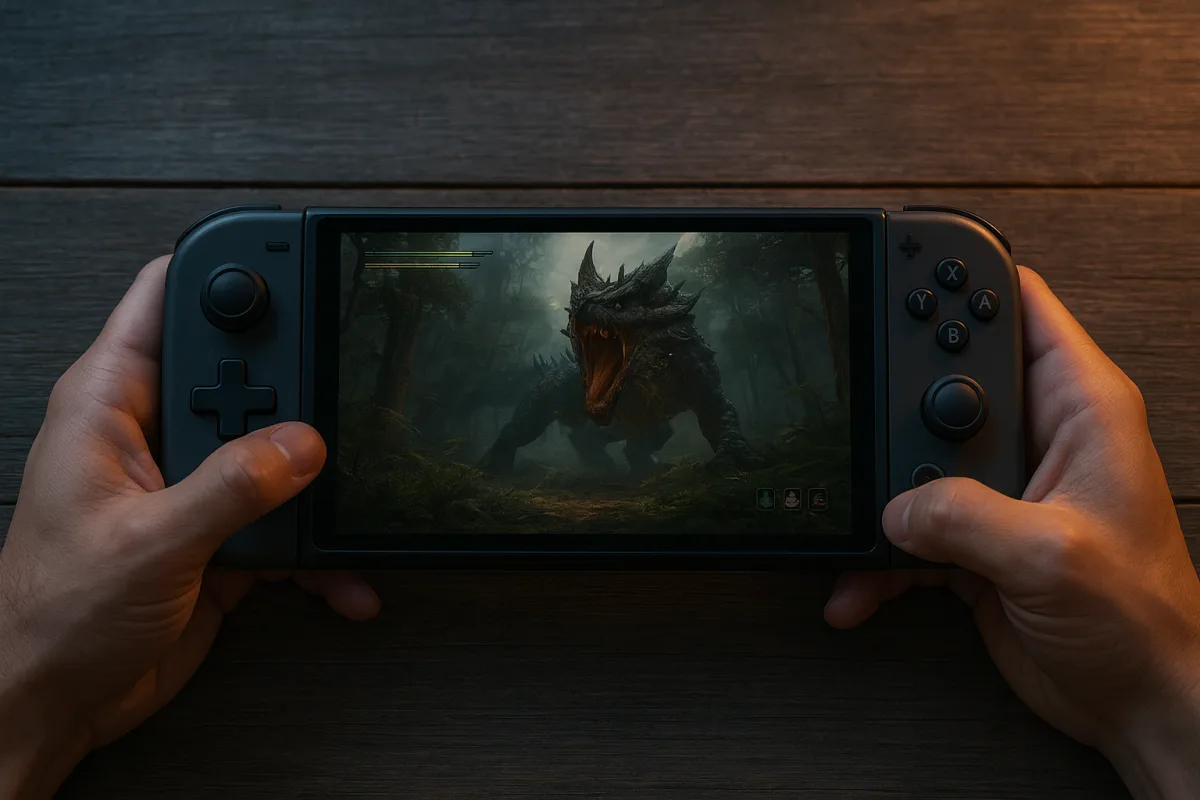
Monster Hunter Wilds Ascendance and Switch 2: what is confirmed, what is not, and which mode makes sense
The quick list
- Best overall: Monster Hunter Wilds on PC, PS5, or Xbox Series X|S, for players who want confirmed Ascendance access in 2027.
- Best docked image: Switch 2 Quality Mode, for players prioritising the stated 1260p output over any promised performance gain.
- Best docked clarity: Switch 2 Frame Rate Mode, for TV players who would rather use 1080p output, even though it still targets 30fps.
- Best for portable hunting: Switch 2 Handheld Mode, for players willing to accept 864p output for the most reassuring early hands-on impressions.
Monster Hunter Wilds players are really making two separate purchasing decisions here. The first is whether Ascendance looks like the expansion that finally gives the game a sharper endgame bite. The second is whether Switch 2 is a sensible place to play the base game.
Those answers overlap less than Capcom’s marketing would prefer. Ascendance is confirmed for 2027 on PC, PlayStation 5, and Xbox Series X|S, but its price, editions, exact launch date, and Switch 2 availability remain unknown. [3] The Switch 2 port is real, but it is currently a base-game proposition.
That matters because it stops this from being a simple “buy Wilds on Switch 2, get Ascendance later” recommendation. It may happen, but there is no official confirmation to spend against. The sensible read is that portable Wilds looks promising, while the expansion remains a PC and current-gen-console plan.
The comparison table
| Option | Price | Resolution and frame-rate target | What is confirmed | Main trade-off | Best for |
|---|---|---|---|---|---|
| Monster Hunter Wilds: Ascendance on PC, PS5, Xbox Series X | S | Unknown | No platform performance targets announced | Teostra, Boost Bracer system, equipment and weapon-swap refinements, 2027 launch [3] | No price, no specific date, no platform comparisons |
| Switch 2 Docked Quality Mode | Included with the unpriced Switch 2 version | 1260p output, 30fps target [[2]](https://www.rpgsite.net/news/21431-monster-hunter-wilds-switch-2-resolution-frame-rate-revealed-docked-handheld-capcom?utm_source=openai "Monster Hunter Wilds will target 30fps on Switch 2 with two visual modes docked and one handheld | RPG Site") | Base Monster Hunter Wilds only | Higher stated output resolution, but no higher frame-rate target |
| Switch 2 Docked Frame Rate Mode | Included with the unpriced Switch 2 version | 1080p output, 30fps target [[2]](https://www.rpgsite.net/news/21431-monster-hunter-wilds-switch-2-resolution-frame-rate-revealed-docked-handheld-capcom?utm_source=openai "Monster Hunter Wilds will target 30fps on Switch 2 with two visual modes docked and one handheld | RPG Site") | Base Monster Hunter Wilds only | The name suggests smoother play, but Capcom still states 30fps |
| Switch 2 Handheld Mode | Included with the unpriced Switch 2 version | 864p output, 30fps target [[2]](https://www.rpgsite.net/news/21431-monster-hunter-wilds-switch-2-resolution-frame-rate-revealed-docked-handheld-capcom?utm_source=openai "Monster Hunter Wilds will target 30fps on Switch 2 with two visual modes docked and one handheld | RPG Site") | Base Monster Hunter Wilds only | Lowest stated output resolution, limited testing evidence |
The pricing column is deliberately boring because the information is boring. Capcom has not announced Ascendance’s sticker price, special editions, bundles, or upgrade path. [3] It has also not established whether the Switch 2 release changes the base game’s existing purchasing options.
That makes comparisons with Iceborne or Sunbreak risky. Several outlets describe Ascendance as large-scale or Iceborne-like in ambition, but that is useful only as a scope comparison, not evidence of a matching price or content model. [4] Until Capcom publishes a product page, any dollar figure is guessing.
Ascendance is selling difficulty, but it has not yet proved the balance
The returning monster is Teostra, the blast-heavy Elder Dragon first introduced in Monster Hunter 2 in 2006. [10] Capcom and the early trailer coverage are clearly positioning him as a bigger threat than Wilds’ launch roster generally managed to be.
Eurogamer’s trailer read notes apparent follow-up charges after Teostra’s familiar explosive nova sequences. That is potentially important. In older fights, surviving the big area attack often created a short reset, but a pursuit follow-up can turn that recovery window into another positioning test.
This does not automatically mean Teostra will be harder. Trailer monsters are routinely edited around their loudest attacks, and a three-minute showcase tells us nothing useful about health scaling, stagger thresholds, elemental hitzones, multiplayer tuning, or how often those follow-ups actually occur.
Still, the direction is sensible. Wilds’ early difficulty complaints were not only about monster damage. Players could often keep offense rolling with generous recovery, frequent access to safety tools, and enough team damage to skip the parts of hunts where a monster becomes genuinely awkward.
A Teostra that continues pressure after a nova would punish the familiar “dive, heal, immediately resume full combo” loop. It would particularly tax hunters who spend healing windows poorly, or builds that chase raw uptime without leaving stamina, wire, guard, or evade resources available.
GameSpot’s Ascendance hands-on footage also showed the Skybound Eyrie locale and another new monster, Arraetta. Those are confirmed pieces of the expansion’s visible pitch, but Capcom has not published the kind of mechanical detail needed to rank either monster’s armour skills or weapon matchups.
Boost Bracer could buff commitment, not every weapon equally
The genuinely interesting system change is the Boost Bracer. Capcom says hunters build energy by staying aggressive, then spend Boost through a Boost Driver attack or weapon-specific actions, unlocking new combos and enhanced attacks. [3]
That wording matters. This is not a blanket damage buff you can evaluate from a trailer. It sounds more like a resource loop that pays hunters for maintaining contact, then asks them to cash out at the right moment.
If the meter builds mainly through hits, weapons with sustained contact and forgiving access to monsters may gain it fastest. Think of playstyles built around maintaining pressure rather than fishing for isolated, high-commitment openings. That is an inference from the description, not a confirmed weapon-tier prediction.
Conversely, slow weapons will need favourable Boost returns or strong weapon-specific payoffs. Great Sword, Hammer, and charge-heavy ranged setups can look excellent in a resource system if one committed hit fills a meaningful chunk of meter. If they need constant light contact instead, the mechanic quietly favours faster movesets.
The first meta shift, then, will probably not be “Boost Bracer makes everything stronger.” It will be players finding which weapons generate Boost reliably without abandoning their existing damage plan. That normally takes a week of practical testing, then longer once optimisers map exact thresholds and armour interactions.
Capcom has also announced faster weapon swapping without requiring a Seikret mount, plus the ability to change equipment outside the tent through the Item Box. [3] The former could matter more than it sounds, because quicker swaps make secondary-weapon utility less costly during hunts.
No new weapon class has been announced. The Boost Bracer is a new combat system, and Boost Driver is an associated action, not a fourteenth weapon type. GameSpot’s preview language around the mechanic should not be mistaken for confirmation of an entirely new weapon category.
What Switch 2 performance claims actually mean
The Switch 2 story has one firm number: 30fps. Capcom’s announced configurations are 1260p at 30fps for docked Quality Mode, 1080p at 30fps for docked Frame Rate Mode, and 864p at 30fps in handheld play. [2]
Those are output specifications, not confirmed native rendering resolutions. Capcom has not stated the internal resolution, whether dynamic resolution is used, or whether the port relies on Nvidia DLSS or another reconstruction technique. Treat anyone declaring a native-resolution number as speculation.
The awkward detail is the name “Frame Rate Mode.” On the available information, it does not raise the game beyond the 30fps target. The likely practical distinction is a different visual budget, but Capcom has not published settings differences, frame-time data, or an explanation of how the two docked modes behave in hard scenes.
GameSpot’s hands-on report is nevertheless encouraging. Its reviewer described handheld play as stable at roughly 30fps, smooth and responsive, while acknowledging lower visual fidelity than larger platforms and the absence of tools to measure the frame rate precisely.
Other early reporting similarly characterises portable footage as running well, but this remains preview evidence rather than a benchmark suite. [1] Nobody has yet published repeatable tests covering storms, crowded multiplayer hunts, heavy particle effects, or the game’s notoriously expensive endgame encounters.
There are also no official Nintendo specifications for Switch 2’s CPU, GPU, memory capacity, memory type, or clock speeds available in the supplied research. Hardware-spec arguments explaining exactly why Wilds runs as it does are therefore mostly numerology with better formatting.
The sensible expectation is a competent portable 30fps version of the base game, not a miniature PC build. The handheld target of 864p gives Capcom more room than a full-HD target would, and early impressions suggest that trade is working in ordinary gameplay.
Quality Mode versus Frame Rate Mode versus handheld
Switch 2 Docked Quality Mode is the clean pick if you play mostly on a television and want the highest announced output resolution. At 1260p/30fps, it has a stated pixel-output advantage over the 1080p Frame Rate Mode. [2]
The trade-off is uncertainty. Since both modes target 30fps, nobody can honestly promise Quality Mode will be visibly less stable in major fights. Until independent docked tests exist, the best argument for Frame Rate Mode is its lower output resolution, not measured performance.
Switch 2 Docked Frame Rate Mode is therefore the conservative choice for players sensitive to responsiveness or inconsistent pacing. It may reserve more GPU headroom at 1080p, but “may” is doing real work there. Capcom has not supplied frame-time figures or stress-test results.
Switch 2 Handheld Mode has the strongest evidence despite its lower 864p output. GameSpot’s preview called it smooth and responsive, and the reviewer’s estimate of a stable 30-ish fps aligns with Capcom’s stated target. That is encouraging, not a guarantee for every hunt.
None of these options can yet be evaluated against Ascendance. Capcom has not confirmed the expansion for Switch 2, much less shown Teostra, the Skybound Eyrie, or Boost Bracer combat running there. [6] It would be a mistake to turn decent base-game footage into an expansion-performance promise.
Who each option suits
Monster Hunter Wilds: Ascendance on PC, PlayStation 5, or Xbox Series X|S suits players who care most about the 2027 content roadmap. Teostra, the Boost Bracer, and quality-of-life changes are confirmed there, but wait for pricing and detailed balance information before treating it as an automatic purchase. [3]
Switch 2 Docked Quality Mode suits players who want Wilds on a TV and prefer the highest announced output resolution. Choose it for image quality first, not because it has proven superior performance. Both docked modes currently target 30fps. [2]
Switch 2 Docked Frame Rate Mode suits cautious players who prefer 1080p output and want to leave some theoretical room for smoother performance. It is not a 60fps mode, and Capcom’s name should not be allowed to imply otherwise. [2]
Switch 2 Handheld Mode suits hunters who value portability over maximum image quality. Early GameSpot impressions make it the most reassuring version on present evidence, but prospective buyers should wait for full retail benchmarks if demanding multiplayer hunts and expansion compatibility are deciding factors.
Frequently Asked Questions
What is the performance of Monster Hunter Wilds on Nintendo Switch 2?
Monster Hunter Wilds on Switch 2 targets 30fps in all modes, with stable and responsive gameplay observed in handheld mode during previews. Docked mode performance has not been independently benchmarked, so only Capcom’s stated targets are available.
Will Monster Hunter Wilds Ascendance expansion be available on Switch 2?
Capcom has not confirmed Ascendance for Nintendo Switch 2. The expansion is officially announced only for PC, PlayStation 5, and Xbox Series X|S with a 2027 release, leaving Switch 2 availability uncertain.
What are the resolution and frame rate targets for Monster Hunter Wilds on Switch 2?
Capcom targets 1260p at 30fps in docked Quality Mode, 1080p at 30fps in docked Frame Rate Mode, and 864p at 30fps in handheld mode. No higher frame rate options or internal rendering resolutions have been confirmed.
How does Monster Hunter Wilds perform in handheld vs docked modes on Switch 2?
Handheld mode runs at 864p and 30fps with stable and responsive gameplay reported in early previews. Docked modes run at higher resolutions—1260p or 1080p—but still target 30fps, though independent performance data for docked play is not yet available.
When is Monster Hunter Wilds Ascendance expansion releasing on PC and consoles?
Ascendance is confirmed for release in 2027 on PC, PlayStation 5, and Xbox Series X|S. Capcom has not announced a specific date or pricing details for the expansion.
How we researched this
This article was assembled from 2 video sources, 1 published article, 11 cited references.
Nothing here is based on hands-on testing. Where a figure or finding appears, it belongs to the source cited beside it, and the writing says so rather than implying otherwise. Every source is listed below so you can check it.
Sources
Monster Hunter Wilds: Ascendance Gameplay — GameSpot
Monster Hunter Wilds Switch 2 Gameplay — GameSpot
Monster Hunter Wilds on Nintendo Switch 2 in handheld mode revealed: "It runs really well" - Aroged
Monster Hunter Wilds expansion ‘Ascendance’ announced [Update] - Gematsu
Monster Hunter Wilds: Ascendance caps off Capcom's redemption arc with a 'massive' expansion in 2027
Monster Hunter Wilds seems to be running well in new Switch 2 portable footage – Nintendo Wire
Teostra Confirmed for Monster Hunter Wilds Ascendance Expansion
Capcom's Switch 2 games are showing just what the console's capable of
Watch Monster Hunter Wilds Expansion and Switch 2 Performance on Youtube
Also from the sources
Related Articles
Resident Evil Remakes Switch 2
Get details on Resident Evil remakes for Switch 2, including release dates, editions, prices, and the new Resident Evil movie reception.

Marvel's Wolverine PS5 Performance and Edition Reviews
Explore Marvel's Wolverine PS5 performance, ray tracing, frame rates, and edition comparisons to help you choose the best version for your console.
Diablo 5 Procedural Generation and Diablo 4 Updates
Learn about Diablo 5's procedural generation, caravan system, class updates, and Diablo 4's upcoming Season of Hell and Switch 2 release.
Nintendo Switch 2 Game Announcements and Updates
Discover the latest Nintendo Switch 2 game announcements, release dates, and updates including Metroid Ravenous, Monster Hunter Wilds, and more.